
If The Last House had been released fifteen years ago, perhaps its premise would have required a little more imagination. In 2026, it doesn’t. The nightmare of waking up, realizing you cannot leave your home, not knowing exactly what is happening outside, and watching your resources slowly disappear as fear takes over is still far too familiar. Six years after the pandemic, we do not need to imagine isolation, uncertainty, or the feeling that our home can stop being only a shelter and become a prison as well. We just have to remember.
That may be precisely why the first half of The Last House works better than everything that follows. Ann and Jason, played by Greta Lee and Wagner Moura, begin an ordinary day with their children, only to discover that every door and window has been sealed by an invisible force. Outside, the rain never stops, strange silhouettes move in the distance, and the family is forced to figure out not only how to escape but how long they can survive with what they have.
It is an effective premise because it taps into a fear we already know. The unknown may be waiting on the other side of the wall, but the real terror is inside the house: the clock ticking, the food running out, the impossibility of leaving, and, perhaps most importantly, the absence of answers. How long would we remain functional? What would we sacrifice first? What happens to a family when every external reference disappears?

Greta Lee has said that this was precisely what attracted her to the film: the question of how to make the most out of the least. For her, confinement also creates an opportunity to rethink consumption and what really matters once everything we consider essential is stripped away. In the end, she says, what remains is family, relationships, and love. It is a good idea. The problem with The Last House is that almost all of its good ideas sound better when they are explained than when they are dramatized.
Louis Leterrier seems determined to follow the tradition Stephen King understands so well and M. Night Shyamalan turned into a signature: the monster is never just the monster. The external threat exists to reveal something about us. Fear, guilt, intolerance, grief, faith, violence, arrogance. When it works, we eventually realize that while we were staring at the creature, the story was really talking about human beings.
In The Last House, however, the metaphor arrives before the emotion.
After more than five years of confinement, we discover that the creatures are not extraterrestrials. They are ancient ocean dwellers who existed on Earth long before humanity and have finally emerged after human consumption, pollution, and rising global temperatures destroyed their habitat. Leterrier himself explains the reversal quite clearly: we think we are watching an alien invasion until we realize that, from the creatures’ point of view, we are the aliens.
It is not a bad idea. On the contrary, something is compelling about turning our arrogance as a species into the central premise of a monster movie. The problem is that The Last House seems to believe that presenting a metaphor is the same thing as making it work.
Ruth, the daughter, understands before the adults that the creatures may not simply be attacking them. While Jason responds to every threat by trying to control it, build something, fix something, or destroy something, she watches. In the end, when he finally accepts that brute force may not solve everything and chooses to trust his daughter, the creatures release the family.
The message is clear enough. Humanity must learn to coexist instead of endlessly trying to dominate the world around it. Again, it works on paper. But cinema is not only about what a story wants to say. It is about what it makes us feel while saying it.
And The Last House is rarely truly frightening. It also rarely provokes the reflection it seems convinced it is provoking. Instead of allowing confinement to gradually expose the cracks within this family, or letting the mystery surrounding the creatures become genuinely disturbing, the film keeps accumulating elements we have seen many times before: the house turned prison, improvised survival, the father who must abandon his need for control, the child who understands what adults cannot see, nature reacting to human arrogance and, eventually, the monster who may never have been the real monster at all.
Everything is there. Almost none of it feels new. Perhaps the biggest missed opportunity is precisely the proximity of the pandemic. There is an extremely recent collective experience that could have made The Last House far more unsettling. We know what it means to look through a window and feel that the world has suddenly become inaccessible. We know how time changes when one day begins to resemble another, how relationships are tested by forced coexistence, and how safety and imprisonment can suddenly occupy the exact same space.
The movie touches on all of that, but quickly chooses something else. It wants to be a survival thriller, a family drama, science fiction, a creature feature, and an environmental parable. Somewhere along the way, in trying to be all of those things, it fails to explore the one element that could have made it genuinely distinctive.
Neither Greta Lee nor Wagner Moura is the problem. Both have enough presence to carry the family’s transformation, particularly after the dramatic time jump, revealing that they have been trapped for more than five years. The house itself is gradually consumed to keep them alive. Furniture, walls, appliances, and equipment are dismantled and repurposed until the domestic space becomes almost a makeshift survival vessel.
It may be the film’s best image: a family literally devours its own home in order to keep existing.
But The Last House does not seem to trust that image, or many of its other strongest ideas. It needs to explain the monster, explain nature, explain Jason, explain Ruth, and explain what we are supposed to understand about consumption, survival, and coexistence. The more it explains, the less mysterious it becomes. And the less mysterious it becomes, the less disturbing it is.
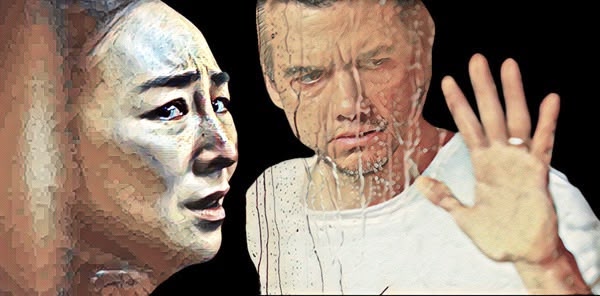
In the end, The Last House leaves us with a curious feeling. It has a premise directly connected to one of the greatest collective traumas of our generation, two excellent leads, and an environmental metaphor that is perfectly easy to understand.
And yet it never becomes particularly frightening. It does not move us as much as it wants to, nor does it leave behind the uncomfortable reflection that the best monster stories carry with us long after the credits.
Perhaps because monsters are more frightening when they reveal something about ourselves that we had not already understood.
Here, they mostly tell us something we have heard many times before.
Descubra mais sobre
Assine para receber nossas notícias mais recentes por e-mail.

