
We had to wait until the very last day. For practically the entire third season of House of the Dragon, Ramin Djawadi allowed his new score to exist only within the episodes themselves. The sole exception had been the new version of the main theme, now driven by stronger, more insistent percussion, almost announcing that the Dance of the Dragons had finally become a war. At the time, I joked that Westeros had been given something close to an Olodum beat.
Now, listening to the complete score, it becomes clear that this change was only the beginning.
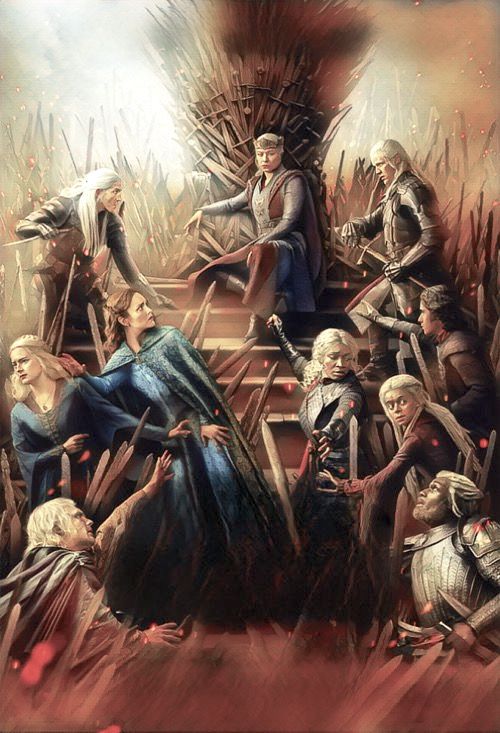
Djawadi has created a spectacular score for Season 3. It is darker, heavier, more orchestral, and, at times, surprisingly distant from the sound we immediately associate with Game of Thrones. And yet he does not break with the past. He does something far more interesting: he takes the themes that taught us to recognize characters, houses, prophecies, and destinies and begins to blend them, distort them, and place them within an entirely different context.
Since Game of Thrones, Djawadi has trained us to know who is entering a scene before we even look at the screen. His music has always carried identity. Daenerys had such a distinctive musical universe that part of it eventually evolved, in House of the Dragon, into a broader musical language for the Targaryens themselves. The Hightowers were given a beautiful and instantly recognizable theme. Rhaenyra developed her own musical identity, as did Daemon, Alicent, and other central figures in the story.
But perhaps the piece that best represents House of the Dragon is The Prince That Was Promised.
It is one of Djawadi’s most beautiful compositions for the series, and it has always carried something ancestral, spiritual, almost religious. Voices were essential to creating that feeling. Throughout the first two seasons, Djawadi used them extensively, particularly whenever the story moved closer to Rhaenyra, the prophecy, and the idea that the Targaryens were connected to something larger than a simple struggle for the Iron Throne.
In Season 3, those voices almost disappear.

In their place come the strings. Cellos, violins, lower registers, repeating movements, denser layers, and an almost circular quality. The music moves forward, grows and transforms, yet often seems to revolve around itself. Djawadi uses repeated musical structures that shift in intensity, harmony, and texture, creating an overwhelming sense of inevitability.
It is impossible not to think of the Dance of the Dragons itself.
This is, after all, the story of a family condemned to repeat its own mistakes. Parents and children, kings and heirs, misunderstood prophecies, ambition, resentment, and violence form circles that seem impossible to break. The war moves forward, yet everyone seems increasingly trapped by the destiny they once believed they could control.
The score does exactly the same thing. The themes are still there, but they no longer return untouched. Djawadi blends them together.
This becomes particularly striking in Rhaenyra Triumphant, one of the album’s most impressive tracks. Djawadi brings back The Prince That Was Promised, returns to the musical world associated with Rhaenyra herself, and blends it with elements of Ashes and Blood. This is not simply a reprise of familiar themes. They intersect, contaminate one another, and eventually become something new. And perhaps that is the musical key to the entire season.
Rhaenyra reaches power, carrying all these identities at once. The heir chosen by her father. The woman who believes she occupies a place within a prophecy. The Targaryen. The queen at war. The character who is beginning to blur the boundaries between destiny, birthright, and divine purpose.
Djawadi puts all of them into the same piece of music.
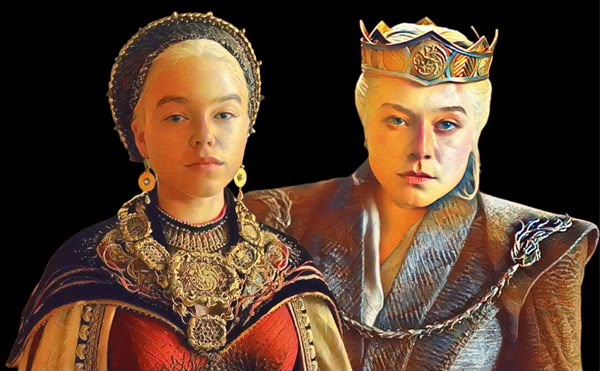
The title Rhaenyra Triumphant suggests victory, but the track does not sound like a clean celebration. There is grandeur, certainly, but there is also weight, menace, and something deeply unsettling. The triumph already feels contaminated. It is as though the music is following Rhaenyra into an increasingly dark spiral: she believes she is finally fulfilling her destiny while everything around her begins to take on the texture of a nightmare.
In Salt and Sea, Fire and Blood, this transformation is equally powerful. And Dark Hours may represent the other extreme of the new score. It is a far more orchestral, almost symphonic composition, with very little of the immediate shadow of Game of Thrones. The strings are no longer there simply as a code telling us who is on screen. They carry a dramatic piece that could almost exist independently of the images.
That matters because it shows how completely House of the Dragon has finally developed a musical identity of its own.
In the earlier seasons, it was still natural to search the music for echoes of Game of Thrones. Djawadi was, after all, returning to the same universe and needed to build a bridge between the two series. Now that the bridge no longer needs to remain so visible. Westeros is still there, but the Dance of the Dragons has acquired a sound of its own.
And that sound is less vocal, less overtly grandiose, and considerably denser. It is epic without being triumphant. It is the music of war, but above all, it is the music of inevitability.
What is most impressive is that Djawadi achieves this without abandoning anything he has already created. Quite the opposite. He takes some of the most beautiful and original themes in House of the Dragon, blends them together, and allows them to carry the scars of the story. The melodies we know are still there, but they have aged alongside the characters.
Perhaps that is why listening to the complete score after the season finale is such a powerful experience. Away from the images, it becomes even clearer that Djawadi has been telling the same story through a different language.
While the characters believed they were moving toward power, the music already knew they were all entering the same circle. And in Rhaenyra’s case, going deeper and deeper into it.
What a score.
Descubra mais sobre
Assine para receber nossas notícias mais recentes por e-mail.
 miscelana.com
1 comentário Adicione o seu