
The final episode of House of the Dragon Season 3 begins exactly where the previous one dropped its biggest bombshell: Aegon is alive, Sunfyre is alive, and the two are flying together again. For Rhaenyra, the news is far worse than simply discovering that the brother she believed dead has survived. She had already announced his death, taken the Iron Throne, and tried to establish the idea that the war was essentially won. Now Aegon reappears before Westeros as someone who survived the impossible, almost a resurrected king who can turn his own survival into a political argument. For her, it is beyond imagination.
Rhaenyra’s reaction is panic and, perhaps more explicitly than ever before, anger at Viserys. She reminds Daemon that it was their father who placed not only the succession on her shoulders, but Aegon’s prophecy as well, and insists that she has spent her life being tested by it. Rhaenyra believes she has overcome every challenge because she was chosen to do so. Daemon, instead of trying to restrain her, reinforces precisely what is most dangerous about that conviction: he reminds her that the Targaryens rule because they possess a power no one else does. When Rhaenyra asks how she should act, he replies that the only quality the realm understands is strength. Something Daenerys will discover generations later.
That conversation seals Tumbleton’s fate. Rhaenyra orders Daemon to attack the city and eliminate every Hightower, without hesitation. After spending much of the season trying to prevent her dragons from reducing Westeros to ashes, she finally gives the order she had feared giving: use the full extent of the military superiority she possesses. And, man, was Daemon ready and practically praying for that command.

At the same time, Baela confronts Rhaenyra over abandoning Corlys Velaryon, who remains a Hightower prisoner in Tumbleton. Talk about choosing the worst possible moment and the worst possible tone to address your already stressed-out queen. In Baela’s view, Rhaenyra uses people while they are useful and discards them when they are not, a mantra that keeps being repeated among her supposed supporters. According to Baela, Corlys sacrificed his family, his fleet, and practically everything he had for Rhaenyra’s cause, besides serving as her Hand, only to be captured because of decisions made by the queen herself. Excuse me?? Is she watching House of the Dragon?
Obviously, Rhaenyra does not take the criticism well, but her reaction does signal the change we have watched throughout the season: the more convinced she becomes that she carries a higher purpose, the less willing she is to tolerate anyone questioning her decisions. Except, in this particular case, those decisions were not hers. Corlys blackmailed his queen; when he did not get what he wanted, he verbally attacked her, abandoned everything, and went off to kill pirates. He was captured because he was wandering around alone and carelessly. In this case, Rhaenyra bears ZERO responsibility, and an uninformed Baela apparently did not know that Rhaenyra had already sent more than 10,000 men to take Tumbleton. Obviously, Corlys would be rescued in the process. I loved watching Rhaenyra put Baela in her place, although I suppose she also lost another ally in the process.
It is in this same context that Mysaria definitively loses her place beside the queen. After their emotional and physical intimacy, and an entire season in which the White Worm’s influence over Rhaenyra continued to grow, she is removed as Mistress of Whisperers and banished from King’s Landing. Rhaenyra does not even dismiss her personally. Mysaria is given enough money to leave, but the relationship ends coldly and abruptly.
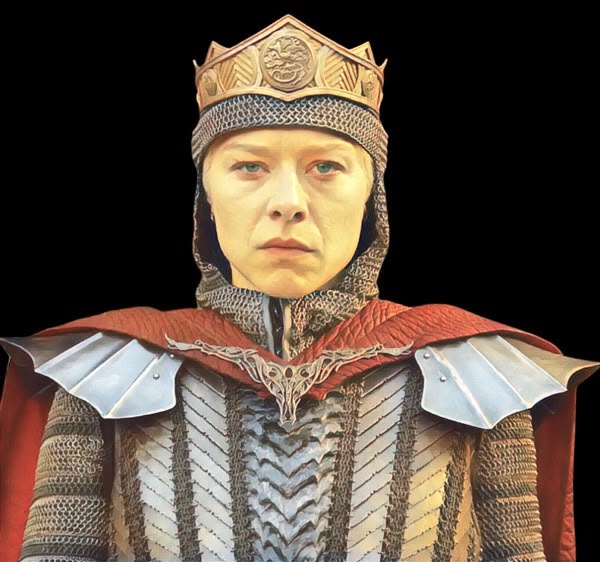
Because this is one of the most radical departures from the book, the alliance teased between Mysaria and Alicent may actually become a reality in the final stretch of the story. But if having Mysaria in her bed and whispering in her ear was dangerous, treating her like garbage and then losing sight of her is worse. Here, Rhaenyra made another serious mistake.
Before leaving, however, Mysaria runs into Helaena and delivers perhaps the most brutally honest sentence of the entire episode: Rhaenyra will never release her.
Helaena has already practically given up on living. Imprisoned in King’s Landing, pregnant, and refusing food, she understands that she is no longer a sister or even a political opponent. She has become a bargaining chip. When Rhaenyra tries to convince her that she would never hurt her, Helaena dismantles her sister’s moral illusion. She asks whether Rhaenyra truly believes that being alive means nothing more than not being dead and says Viserys would hate what she has become.
Rhaenyra answers with an equally important truth: it was Viserys’s inability to settle the succession clearly that put the entire family in this position. But Helaena ends their confrontation with something even more devastating. To her, everything Rhaenyra has come to value is ugly: King’s Landing, power, the Throne, and, finally, Rhaenyra herself.
Soon afterward, the queen’s order makes the contradiction impossible to ignore. Helaena is force-fed by the guards. Rhaenyra may continue to think of herself as merciful, but she is the one who authorizes violence against a pregnant woman who is imprisoned and desperate.
Meanwhile, Rhaenyra also decides that she needs to transform her political conquest into a legitimate religious coronation. She goes to the High Septon and demands that he anoint her queen. He refuses. Oh, if only Cersei had lived before her time, Rhaenyra could have copied her.
Her reaction shows just how far Rhaenyra’s conviction has gone. She does not accept the refusal as religious or political resistance but as treason. Alyn is ordered to kill the High Septon, and the execution takes place in front of the people. It is a huge departure from the book and another point of no return for the character.
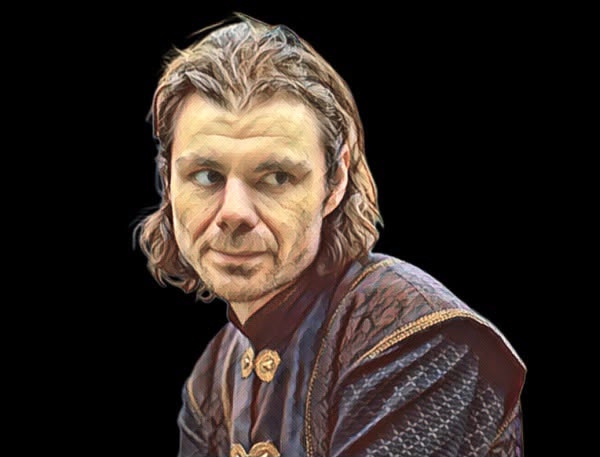
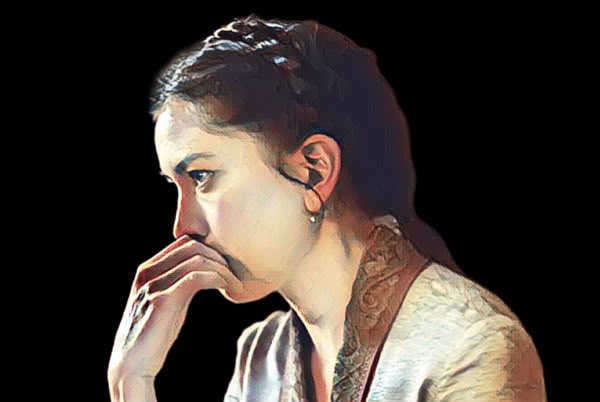
Afterward, Rhaenyra addresses the people and publicly reveals something that, for generations, was supposed to remain a secret within House Targaryen. She tells them about the prophecy and declares: “I am the Prince That Was Promised.” It is probably the most revealing moment of the entire season. Rhaenyra no longer believes she should sit the Throne simply because Viserys chose her or because she is his legitimate heir. She now believes she has an almost messianic purpose. The war is no longer merely a dynastic dispute. In her mind, defeating her means putting the future of humanity itself at risk.
At Harrenhal, another major change takes place. Aegon seeks out Aemond and the brothers finally reunite. After everything that happened between them, including Aemond’s responsibility for the fall that nearly killed Aegon, the king decides to forgive him. It is an unexpected and important development in Aegon’s arc: he is different now, more aware of what he needs to do to regain power and willing to rebuild alliances that once seemed impossible. The two begin discussing how they can take King’s Landing back. The war Rhaenyra believed she was winning is, in fact, nowhere near over.
Harrenhal also delivers another important revelation involving Alys Rivers. The series establishes that she was Lord Harren’s wife, adding a new layer to the character and changing her position within the history of the castle itself. Alys is no longer simply the mysterious figure who seemed to exist almost outside Westeros’ traditional structures. She now has a much more direct connection to Harrenhal’s past.
While the brothers regroup, Tumbleton finally reaches the moment the season has been building toward for several episodes.
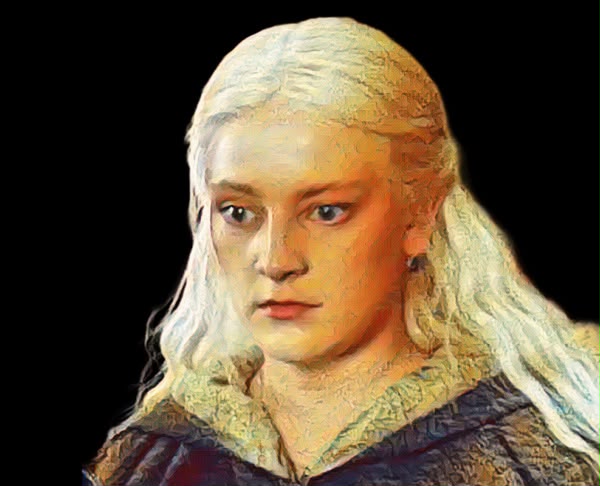
Gwayne Hightower tries to prevent the massacre and save his nephew’s life. Corlys also believes there is still a political way out. The proposal involves sparing the city and finding a solution that preserves Daeron, including the possibility of allowing him to hold power in Oldtown. The war could end there without thousands of people dying. Daemon refuses. By the way, I found it confusing that Gwayne introduces himself to him when, back in the very first episode of Season 1, the two already faced each other in the tournament and Gwayne lost.
It is particularly ironic because, before the attack, Daemon still instructs his men to avoid unnecessary casualties, insisting that the queen’s moral standing must remain absolute. Except he is carrying out an order that makes any claim to moral superiority almost impossible: Rhaenyra ordered him to eliminate every last Hightower.
Tumbleton is prepared for the siege. Ormund knows he cannot face Rhaenyra’s dragons directly, so he turns the population itself into part of the city’s defenses. Boiling oil is poured over soldiers trying to climb the walls, and, in one of the battle’s cruelest decisions, children are placed in front of Daemon’s army in the hope that his men will hesitate to attack them. They do not.
Roderick Dustin, the feared Roddy the Ruin, tears through Tumbleton’s defenses with brutal efficiency. Caraxes finally breaks through the gates, and the Blacks’ military advantage appears to make a Hightower defeat inevitable. But the two dragonriders who were supposed to represent Rhaenyra’s greatest advantage are in completely different situations.
Hugh Hammer is still not interested in changing sides. Unlike in the book, he enters Tumbleton trying to find Kat and save her. The series keeps Hugh aligned with the Blacks during the battle and turns whatever comes next for him into something far more emotional than simple ambition for power. Ulf, meanwhile, is already almost completely out of control.
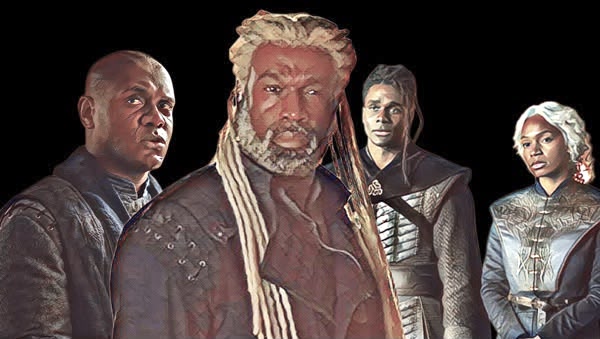
After searching for him everywhere, Ormund finds Ulf drunk and unconscious in a bathroom. Furious, he beats and humiliates him, ordering him to mount Silverwing and do what he is told. It is one humiliation too many after a long series of insults and resentments. Ulf obeys only until he gets into the sky. He had already put up with Daemon, and now Ormund too?
Then everyone finally meets the real Ulf: first, he betrays the Blacks all by himself. Silverwing begins burning Tumbleton indiscriminately. There are no Greens or Blacks for Ulf anymore. He burns soldiers from both armies, houses, and civilians. The entire city becomes a fire trap.
In the middle of the battle, Daemon fights Jon Roxton while Roderick Dustin reaches Ormund. The two engage in a grotesque, violent fight. Ormund manages to cut off one of Roderick’s arms, but the Northman still finds enough strength to strike him from below in a death as brutal as it is absurd.
Ormund Hightower dies at Tumbleton, both from Roderick Dustin’s fatal blow and from Ulf’s dracarys to Silverwing, which blankets the area in fire and consumes everyone in its path. The irony is impossible to miss. Ormund bet on Ulf as the weapon that could balance the war against Rhaenyra’s dragons. Instead, Ulf turns his final battle into complete chaos because Ormund treats him exactly as Daemon did.
Apparently, Gwayne survives, and so does Daeron. Ormund’s death, therefore, does not mean the Hightowers disappear from the war.
For Hugh, the battle ends very differently. He finds Kat dead among the ruins. The series, therefore, avoids, at least for now, having both Dragonseeds betray Rhaenyra together as they do in Fire & Blood. At Tumbleton, only Ulf openly breaks with Rhaenyra. Hugh ends the season devastated and unpredictable, but not as a declared traitor.
Daemon also survives but emerges from the battle deeply shaken. He walks through a destroyed city and sees mothers carrying the bodies of their dead children. What Rhaenyra feared from the beginning of the war has finally happened: her dragons helped turn thousands of innocent people into victims of a fight for the Throne. Ironically, it is Corlys who manages to pull Daemon out of his state of shock.
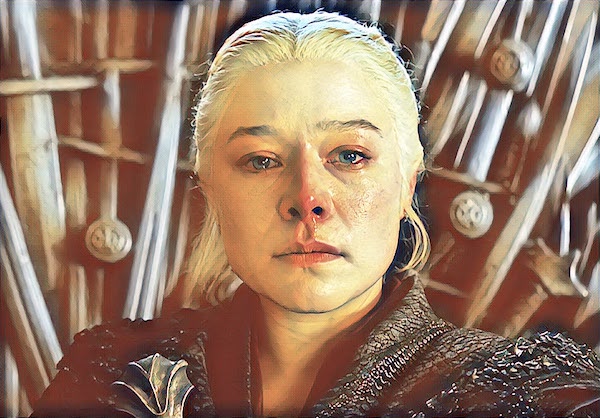
And then comes Helaena.
After being force-fed and speaking with Mysaria, she finishes her final embroidery. As so often happened with her drawings and seemingly disconnected phrases, it contains a vision of the future. Helaena finally walks to the window and jumps to her death, essentially following the fate she has in the book.
When Rhaenyra discovers what happened, she finds the final piece her sister left behind. The image shows Helaena falling and then Rhaenyra sitting on the Iron Throne surrounded by dragonfire. It is not simply a farewell or confirmation of anything, but a coded prophecy. Rhaenyra, however, looks at it coldly, almost as though it reinforces her own interpretation, and closes the window.
That is how House of the Dragon Season 3 ends. Aegon is alive and reunited with Aemond. Daeron survived. Gwayne possibly survived. Ormund is dead. Ulf has broken with the Blacks and become an independent force. Hugh has lost Kat and ends the battle without knowing exactly where his loyalty now lies. Corlys is still searching for a political way out of a war that already seems impossible to control. Mysaria has been expelled from King’s Landing. Helaena is dead.
And Rhaenyra, who began the season trying to prove that she could win a war without becoming the kind of ruler she feared, ends it convinced that she is the very figure foretold by prophecy, after ordering a religious execution, keeping Helaena prisoner, authorizing her force-feeding, and sending Daemon to exterminate the Hightowers at Tumbleton.
She conquered the Iron Throne.
The problem is that, by the end of the season, she appears to have lost almost everything she once wanted to prove made her different from her enemies.
Descubra mais sobre
Assine para receber nossas notícias mais recentes por e-mail.


1 comentário Adicione o seu