
Book spoilers below
“It was the best of times, it was the worst of times.” Few opening lines in literature are as instantly recognizable as the one Charles Dickens wrote in 1859 for A Tale of Two Cities. More than 160 years later, it also helps introduce the new adaptation of the classic, coming to MGM+ in September with Kit Harington as Sydney Carton.
The casting is far more interesting than simply placing the eternal Jon Snow inside another period epic. Since the end of Game of Thrones, Harington has made a fairly conscious effort to move away from the kind of hero that made him famous. Jon Snow was honorable, idealistic, and almost defined by his obligation to do the right thing. The actor has spoken more than once about the weight of playing such a morally upright character for so many years and, after the HBO series, began seeking out men who were much more flawed.
His Sir Henry Muck in Industry may be the best recent example of that shift. Privileged, unstable, self-centered, manipulative and frequently difficult to defend, Henry is almost the opposite of Jon Snow. Harington has also pursued darker characters in film, including Blood for Dust, in which he plays a criminal and arms dealer.
That is what makes Sydney Carton such an intriguing choice. Harington is, yes, returning to the territory of the romantic hero, but Dickens offers a much less comfortable version of the archetype.

Who is Sydney Carton in A Tale of Two Cities?
Before going any further, spoilers are coming. And yes, we are talking about spoilers for a novel published in 1859, but they are still major spoilers for anyone hoping to watch the new series without knowing how the story ends.
A Tale of Two Cities unfolds between London and Paris in the years leading up to and during the French Revolution. At the center of the story is Lucie Manette, a young woman who discovers that the father she believed to be dead is still alive. Dr. Alexandre Manette spent 18 years unjustly imprisoned in the Bastille and emerged deeply traumatized. Lucie brings him back to London and, little by little, helps bring him back to life as well.
It is within this world that Charles Darnay and Sydney Carton appear, two men who look remarkably alike but seem very different in almost every other respect. Darnay is a French aristocrat who rejects both his family and the privileges attached to it. He belongs to the Evrémonde family, whose brutality toward the peasantry embodies the very system of exploitation that helps fuel the Revolution. Darnay abandons his position, moves to England and falls in love with Lucie.
Sydney falls in love with her too.
But Sydney Carton is far from a conventional hero. He is a brilliant lawyer who wastes his own talent, drinks too much, lives in a state of disillusionment and seems to have given up on himself long before the story even begins. He loves Lucie knowing that she is unlikely ever to choose him and, when he finally declares his feelings, promises that he would do anything for her or for anyone she loves.
Dickens saves that promise for much later.
The love triangle that ends at the guillotine
Lucie marries Darnay, and the French Revolution transforms what initially resembles a romantic melodrama into something much larger. Darnay returns to France and is imprisoned. His attempt to separate himself from the crimes committed by the Evrémonde family no longer matters within a revolution that begins by demanding accountability from the aristocracy and eventually often blurs the line between justice and revenge.
Sentenced to the guillotine, Darnay appears to have no way out. That is when the physical resemblance between the two men, established by Dickens early in the novel, finally reveals its purpose.
Sydney enters the prison, drugs Darnay, takes his place, and allows his rival to escape and return to Lucie and their family. Carton remains in the cell knowing exactly what will happen to him. The following morning, he goes to the guillotine in Darnay’s place.

That is why reducing A Tale of Two Cities to a love triangle would be a mistake, even if the new adaptation chooses to explore that dynamic more deeply. Sydney’s story is not simply about loving a woman who chose someone else. His real arc is one of redemption.
He spends much of the novel convinced that his own life is worth very little. By saving Darnay, he also saves Lucie, her children, and a future in which he willingly accepts that he will have no part. A man who believes he has wasted his existence finds, at the last possible moment, a way to give it meaning.
That is also where another of Dickens’ most famous lines comes from. Near the end, Sydney believes that what he is doing is far better than anything he has ever done before. The celebrated phrase, “It is a far, far better thing that I do, than I have ever done,” became inseparable from both the character and the novel.
From Jon Snow to much more difficult men
And that is precisely what makes Kit Harington such an interesting choice for Sydney.
For eight seasons of Game of Thrones, Jon Snow did the right thing because he practically did not know how to behave any other way. His sense of duty was his greatest strength and, frequently, also his problem. He sacrificed himself for others because he believed that was what an honorable man was supposed to do.
Sydney begins at the opposite extreme. When we meet him, he does not seem to believe in duty, destiny, or even himself. He is not a good man trying to preserve his goodness in a corrupt world. He is a broken man who discovers, too late and exactly in time, that he is still capable of doing something extraordinarily good.
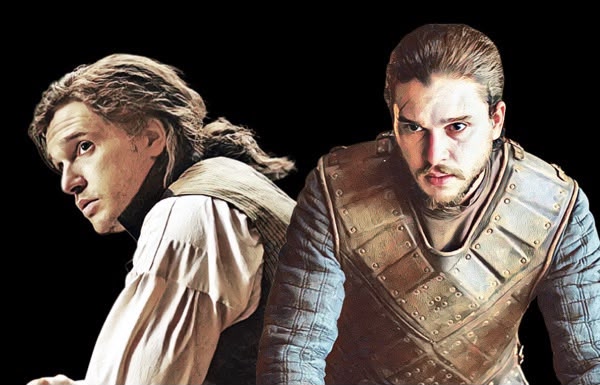
Harington has spent the years since Game of Thrones actively seeking characters like that. In Industry, Sir Henry Muck uses charm, privilege, vulnerability and manipulation almost simultaneously. In Blood for Dust, the actor embraced a criminal character who could hardly be further removed from the idealism that shaped his public image for so long.
Sydney Carton, then, may be less of a reversal than a synthesis.
The role allows Kit Harington to return to heroism without abandoning the flawed men he has deliberately pursued since Game of Thrones. He returns to sacrifice, impossible love, honor and even another memorable death, but reaches all of them through alcoholism, frustration, self-loathing and the feeling of having wasted an entire life.
A Tale of Two Cities has been adapted many times before
Harington also joins a long tradition of actors who have played Sydney Carton. A Tale of Two Cities began reaching the screen in the earliest years of cinema and has been adapted numerous times throughout the 20th century.
Among the best-known versions is the 1935 Hollywood film directed by Jack Conway and starring Ronald Colman as Sydney. In 1958, Dirk Bogarde took on the role in a British adaptation. The BBC has also returned to the novel several times for television, with different versions produced across several decades.

The new MGM+ production consists of four episodes, with Mirren Mack as Lucie Manette and François Civil as Charles Darnay. Kit Harington not only stars as Sydney but also serves as an executive producer.
For anyone who knows the book, there is an unavoidable sense of anticipation in watching him in the trailer. We know where Sydney is heading. Every expression of disillusionment, every moment with Lucie and every image of the triangle between the three characters already carries the weight of a decision that will only be made at the end.
The kind of hero Kit Harington can play now
There is also an irony that is difficult to ignore for anyone who watched Harington play Jon Snow for so many years.
Jon died and came back to life so he could continue being a hero. Sydney Carton spends much of his life almost dead inside and has to die before he finally discovers that he can be one too.
The distinction matters. Jon always knew what kind of man he wanted to be. Sydney spends nearly the entire novel believing he has already lost that possibility.

Perhaps that is exactly why A Tale of Two Cities is such an interesting choice for Kit Harington at this point in his career. After spending years deliberately moving away from the idealistic, morally upright man who made him famous, he is not simply returning to the romantic hero.
He is choosing a hero who first has to fail, destroy himself, and give up on himself. Only then does he do the right thing and pay for it with his life.
But far from Westeros, there are no magical resurrections.
Descubra mais sobre
Assine para receber nossas notícias mais recentes por e-mail.

