
As published on CLAUDIA
Traumatized or socially awkward women have always made compelling detectives on screen. But even after finally moving to the center of the story, they spent decades having to prove they were every bit as capable as the men around them. Furious, the new Hulu series available on Disney+, belongs to a different moment in the thriller. Here, two women are at the heart of the story, and neither fits comfortably into the categories of hero, villain, or victim.
Alice Black, played by Emmy Rossum, is an FBI agent who begins investigating a series of deaths and eventually finds herself hunting Catherine, played by Lola Petticrew. Catherine is a serial killer, but discovering whom she killed and why quickly turns what could have been another straightforward police chase into a far more uncomfortable discussion about violence, justice, and revenge. It is precisely in this gray area that the series, created by Liz Meriwether of New Girl and Dying for Sex, finds its strongest argument.

I previously interviewed Liz for CLAUDIA when we talked about Dying for Sex. I have always been a big fan of hers, and I was not disappointed by what I found here.
Loosely inspired by the 1987 film Black Widow, Furious begins with a familiar thriller question — what goes on inside the mind of a female killer? — before arriving at one that feels far more contemporary: what happens to a woman after she experiences violence and fails to respond in the way we expect a victim to respond?
And here I need to make a different confession: I loved Black Widow. Debra Winger was at the height of her popularity, opposite an extraordinarily sensual and enigmatic Theresa Russell. More than the pursuit between investigator and killer, there was an almost erotic fascination between the two women, an attraction that made their relationship far more ambiguous than the traditional game between cop and criminal. It was bold in 1987. And it is remarkable that, nearly 40 years later, the idea of two women watching each other, recognizing something in each other and crossing the line between hunter and hunted can still feel so contemporary.
Meriwether uses one particularly important expression when explaining the premise of Furious: “perfect victim.”
In real life, women who report violence are still frequently subjected to a kind of parallel moral test. They are expected to be completely consistent, behave impeccably, display their suffering in the “correct” way and never do anything that might complicate the clean narrative of victim and abuser. Furious deliberately refuses to offer that simplicity.
And this discussion was not developed through fiction alone. While creating the series, Meriwether and Emmy Rossum spoke with female FBI agents, police officers and prosecutors to understand how cases involving violence are handled within the system itself, as well as the far rarer phenomenon of a female serial killer.
Catherine experienced violence, but that does not automatically make her later choices justifiable. Alice works for the justice system, but she also carries trauma that affects the way she sees the case. The two begin on apparently opposite sides and gradually reveal uncomfortable points of connection.
There is an echo of Olivia Benson in the way Alice takes victims’ experiences seriously and refuses to treat them simply as pieces of an investigation. But the similarity ends there.
Benson, on Law & Order: SVU, turned empathy into an extraordinary form of social competence. She knows how to comfort people, read them, establish trust and move through emotionally extreme situations with a confidence that has become essential to the character.
Alice is almost the opposite.
She notices a great deal and feels deeply, but seems constantly out of place in human relationships. There is a rigidity to her, a social awkwardness and a difficulty turning sensitivity into connection. That makes her empathy less reassuring and perhaps more dangerous. The more Alice understands Catherine, the harder it becomes to preserve the division between the woman who represents justice and the woman who decided to take justice into her own hands.
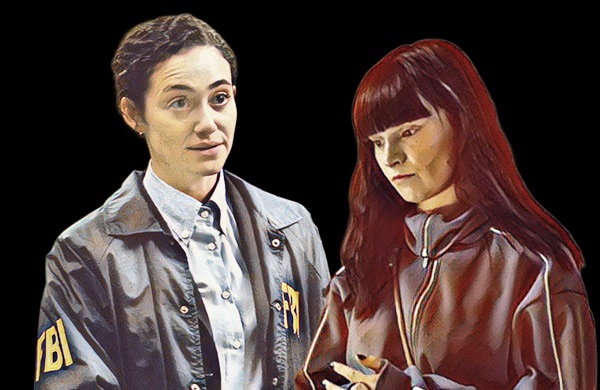
That discomfort helps explain why Alice works so well as the protagonist of Furious. Institutionally, she is on the right side, but she never seems entirely at home within that system. And the series appears especially interested in this kind of character: women who do not fit easily even into the roles that should, in theory, define them.
It marks an important shift in the way female characters are being written. For decades, complicated women in film and television often had to be explained or punished when they expressed anger, ambition, desire or violence. Contemporary thrillers seem increasingly willing to allow something different: contradictory, difficult and even unlikeable women whose humanity does not depend on their being examples of virtue.
That does not mean turning a killer into a heroine. It means accepting that understanding a character is not the same thing as absolving her. Emmy Rossum and Lola Petticrew sustain precisely that tension. Hunter and hunted keep shifting emotional positions as the story unfolds, while the series refuses to give viewers the comfort of deciding too quickly who deserves their empathy.
The critical response suggests that this ambiguity works. Furious debuted with a 100% critics’ score on Rotten Tomatoes and earned the Certified Fresh seal — especially notable because the police thriller is one of television’s most heavily explored genres, and the series has still managed to stand out within it.
Perhaps that is one reason thrillers led by women are finding so much room right now. Not simply because there are finally more women at the center of these stories, but because they are being granted something male characters have always had: the right to be morally complicated.
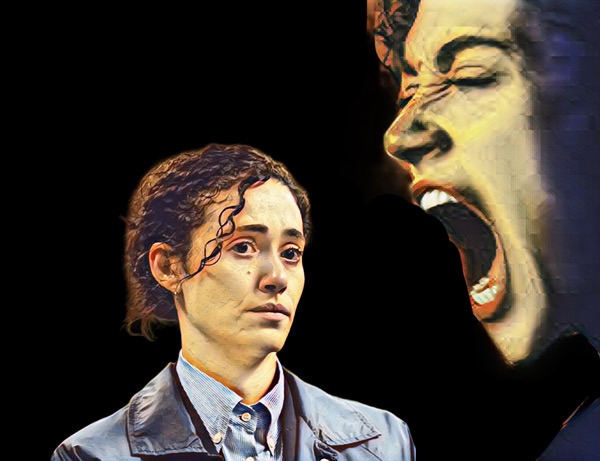
Furious is not simply asking who killed whom, or who will catch whom. Its most interesting question is something else entirely: when a woman stops conforming to the image of the victim we would like her to be, are we still willing to see what happened to her?
The first five episodes of Furious are now available on Disney+, with new episodes arriving on Mondays.
Descubra mais sobre
Assine para receber nossas notícias mais recentes por e-mail.

