
Today is the first of many Sundays until 2028, when we return to Westeros to watch the conclusion of the Dance of the Dragons. Speculation will be inevitable until then, and certainly explored to exhaustion. We have Alys Rivers, the Green Men, prophecies, altered destinies, missing dragons, unexpected survivors, and a book that no longer works quite as a map. There will be no shortage of material. But while everything we have just watched is still fresh, it is worth looking back first, because the third season of House of the Dragon was finally the season the series had been promising us since 2022. It was not perfect, not even close, but it was the season in which the Dance truly began.
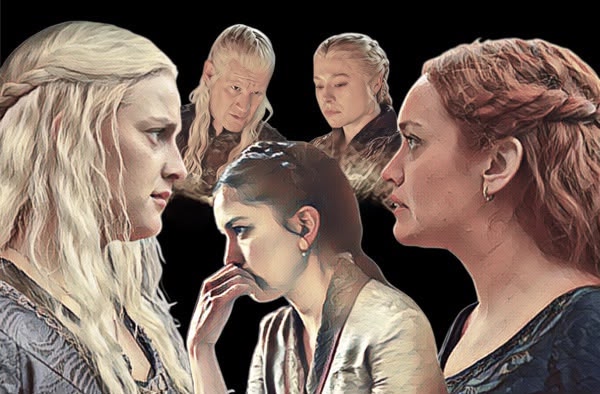
The thankless task of returning to Westeros
House of the Dragon always had an unfortunate mission. It had to convince us to return to Westeros after the disastrous reception of the Game of Thrones finale while simultaneously living under the enormous shadow of that show’s success. The comparison was practically impossible to avoid, and theoretically there was one major advantage this time: the story was finished. The Dance of the Dragons already had a beginning, middle, and end in Fire & Blood. Ryan Condal would not face the problem David Benioff and D.B. Weiss did when they overtook George R.R. Martin’s books and had to find their own way to an ending.
That advantage quickly became another burden. With the story already published, every alteration could immediately be compared with the original. Characters removed, others combined, motivations changed, timelines shifted, and events invented for the show were dissected almost frame by frame by readers. At times, the disagreement even extended to George R.R. Martin himself. It cannot be easy being Ryan Condal, I admit.
There is also an important distinction that often gets lost in this debate: people who have read the book and people who have not are not necessarily watching the same series. For us, the disappearance of one character may immediately mean that someone else will have to absorb their fate. An early death changes five future events at once. A seemingly minor decision raises an alarm because we already know what is supposed to happen next. Most of the audience does not have that map.
For viewers who have never opened Fire & Blood, House of the Dragon certainly has plot holes, pacing issues, and decisions that are difficult to justify, but many of the choices that infuriate readers simply do not exist as problems for them. Some things fail as an adaptation and others fail as television. They are not always the same things.

A better series than it sometimes seems
Looking back at these three seasons, there have been more successes than failures, and the cast has been one of them from the beginning. House of the Dragon blended established actors with a huge number of faces that had not yet become major international stars and found almost every one of its characters.
Emma D’Arcy perhaps carried the most difficult responsibility of all. They had to take over Rhaenyra after the enormous impact of Milly Alcock, carry the central character of a massive franchise, and play a woman who became increasingly difficult to defend as the story progressed. Today, D’Arcy is adored by the audience in a way that, allowing for all the differences, recalls the affection that developed between Emilia Clarke and Game of Thrones fans.
Tom Glynn-Carney accomplished something even harder with Aegon: he humanized a man without erasing what is reprehensible about him. Olivia Cooke, Ewan Mitchell, Steve Toussaint, Sonoya Mizuno, Fabien Frankel, and so many others helped turn characters whom Martin often presents almost as names in a historical account into people we came to love, distrust, or despise. Even so, for a long time, House of the Dragon remained a more lukewarm series than its potential suggested.
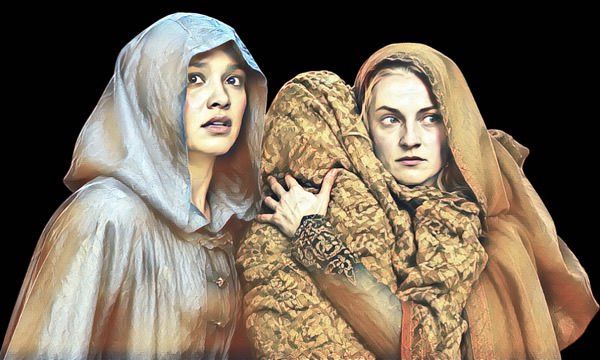
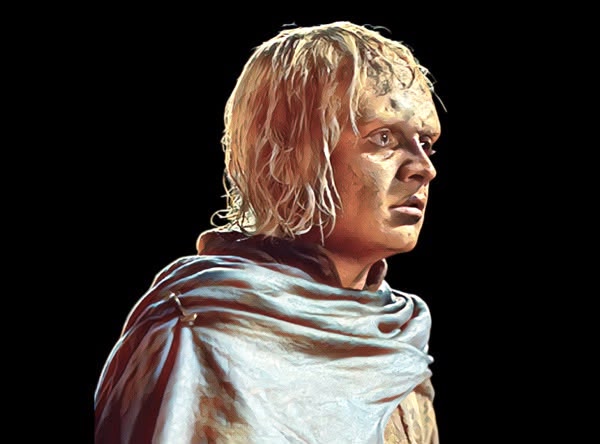
A strong first season and a second that seemed to go on forever
The first season had enormous problems to solve. It had to cover decades, replace a significant portion of its cast along the way, build emotional relationships in very little time, and still make us care about a war that would only truly begin later. It managed all of that much better than we had any reason to expect and, when Lucerys died, the promise seemed clear: the attempt to prevent war was over. Now the war would begin.
Except Season 2 decided to keep postponing much of it. It was slower, more repetitive, and strangely defensive. Rhaenyra wanted to avoid war, Alicent wavered, and Daemon was sent to Harrenhal, where Matt Smith, one of the show’s greatest assets, spent much of the season wandering its corridors, hallucinating, revisiting the dead, and being forced to confront his own ghosts.
I understand what Condal wanted to do with Daemon and, after Season 3, I understand it even better. That does not change the problem: dramatically, it went on for too long. An idea can make sense for a character arc and still damage the rhythm of an entire season. Harrenhal did both, and Season 2 ended with the uncomfortable feeling that we had spent eight episodes preparing for something that should have happened sooner.

In Season 3, there was finally a war
The third season had to pay that debt, and it did. We got battles, deaths, blood, betrayals, dragons, changing allegiances, and consequences. War stopped being a threat discussed in council rooms and started destroying people, cities, and alliances, immediately making House of the Dragon feel more alive.
That did not happen simply because dragons fighting are visually spectacular, although they certainly are. The difference was that decisions finally began to demand their price almost immediately. Ulf got Silverwing, and we saw the danger of handing something close to a nuclear weapon to a man with no moral or emotional framework for understanding the power he had been given. Hugh underwent a similar transformation without necessarily following the same path, making both men much more interesting than the simple pair of “Two Betrayers” we know from the book.
Tumbleton was where all those stories finally collided, and it worked because it was more than spectacle. By the time everything starts burning, we know who these people are, what each of them believes they are defending, and what they stand to lose.

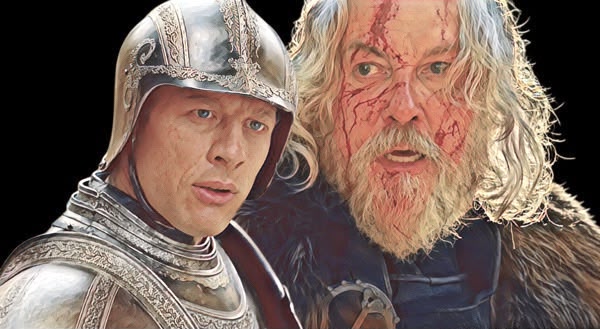
James Norton and Tommy Flanagan arrived late but left a mark
The third season also showed how good House of the Dragon can be at introducing someone new and making them feel as though they have always belonged in that world. James Norton had only a handful of episodes to turn Ormund Hightower into a presence impossible to ignore, and he managed to make a pompous, authoritarian, manipulative, ambitious, and occasionally almost ridiculous character work without allowing him to become a complete caricature. There was pleasure in hating him, something a series so full of tormented characters sometimes needs.
Ormund found the perfect opponent in Roderick Dustin. Tommy Flanagan entered Westeros as though he had lived there his entire life and gave Roddy the Ruin that quality the best Northern characters in Game of Thrones always had: few words, no doubts, and the permanent impression that dying was already part of the plan.
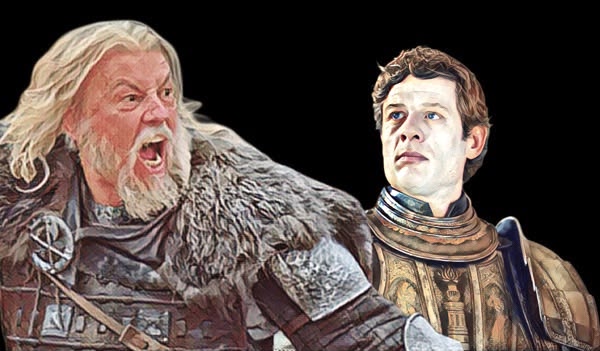
Their farewell at Tumbleton was brutal, absurd, and strangely funny, exactly as it needed to be. Roddy manages to kill Ormund before both are consumed by Silverwing’s fire, bringing two relatively recent arrivals to an end after they had nevertheless claimed a surprisingly large space in the season.
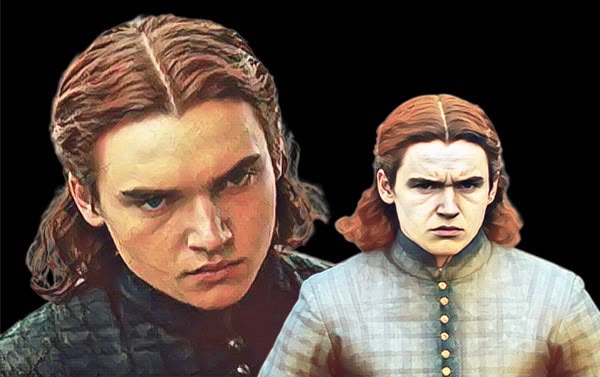
And then we finally met Daeron
Daeron carried another problem created by the adaptation itself. For two seasons, we heard about Alicent and Viserys’ fourth child without ever seeing him. For readers, his absence was always strange because we know how important he is to the Dance. When he finally arrived, Benjamin Evan Ainsworth needed to do more than simply introduce another Targaryen riding a dragon, and the series found an interesting solution by turning Daeron into the center of a moral contest between two Hightowers.
Ormund sees power, succession, and opportunity in him. He wants to shape him, use him, and turn him into the king he needs. Gwayne, on the other hand, sees the boy. That difference allowed Daeron to enter the story quickly without feeling like just another piece on the board and, at the same time, produced one of the season’s biggest surprises.
Gwayne Hightower’s extraordinary rise
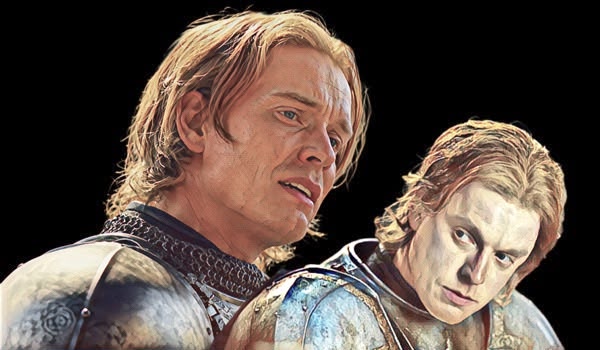
Freddie Fox had already made Gwayne interesting, but Season 3 turned him into much more. In a family that has spent much of House of the Dragon building a terrible reputation — Otto manipulating everyone around him, Alicent helping place Aegon on the throne, Aemond burning the realm, and Ormund using Daeron as a political tool — Gwayne emerged as an unexpected kind of moral correction.
Not because he suddenly became a saint, which would have been much less interesting, but because he began to show a quality that is surprisingly rare in that family: care. His relationship with Daeron made this especially clear. Ormund offers the young prince an idea of greatness, while Gwayne offers protection, affection, and the possibility of choosing who he wants to become.
It is also an interesting transformation for the Hightower name itself. For a long time, the series almost trained us to distrust it. Gwayne restored some dignity to the family precisely when Ormund represented its most opportunistic face. And he survived, something that was hardly guaranteed for anyone familiar with Fire & Blood and which creates another significant change for the final season.
Criston Cole wanted to become a song
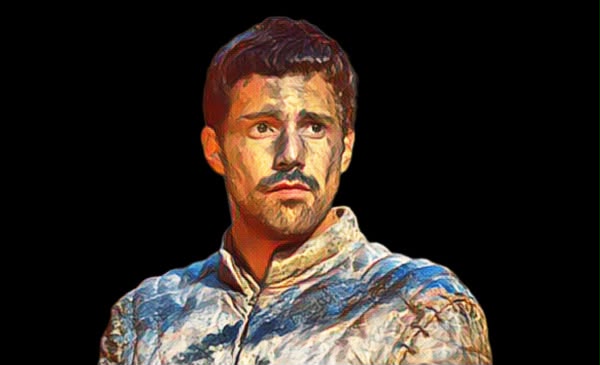
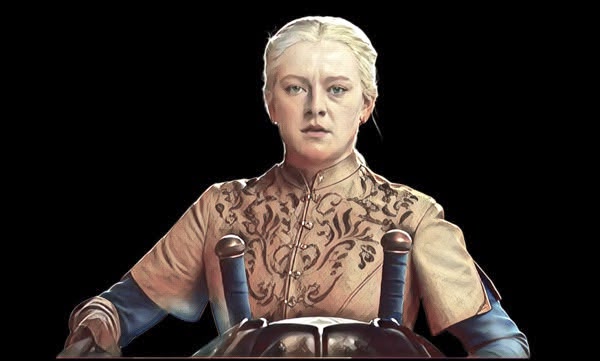
Others were not as fortunate. Ser Criston Cole spent three seasons collecting reasons for us to hate him. He began as the knight idealized by Rhaenyra, turned rejection into resentment, killed impulsively, became Alicent’s ally and lover, put Aegon on the throne, and earned the title by which he would be remembered: the Kingmaker.
Season 3 did something I did not expect and made Criston more interesting precisely when it began dismantling everything he believed about himself. War looked glorious when it was discussed behind closed doors; it stopped looking glorious once he began walking among burned bodies. Criston wanted meaning, honor, and perhaps, deep down, to turn his life into one of those stories men tell about knights centuries later.
Westeros denied him that gift. His death was almost cruel precisely because it was so lacking in grandeur. There was no memorable duel and no chance to choose his own farewell. The man who helped manufacture a king could not even control the way he would be remembered. Fabien Frankel left the series just when Criston had finally become more complex than simply the man we loved to hate, and perhaps that is why his death felt so abrupt. Perhaps that was exactly the point.
Helaena and one of the saddest farewells
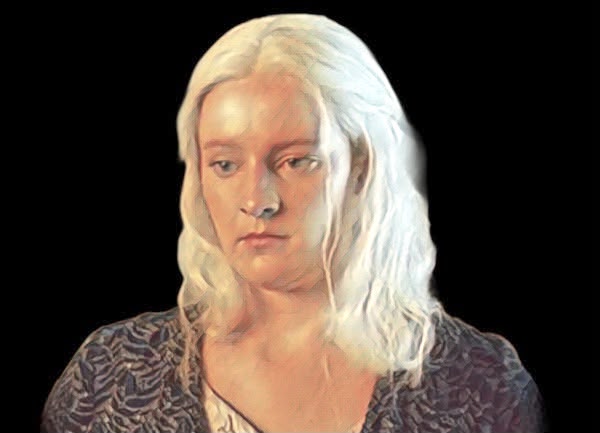
Helaena’s death was known to everyone who had read the book and, even so, it hurt. Phia Saban did extraordinarily delicate work with a character who could easily have been reduced to the family’s “strange one.” Her Helaena always seemed half a step outside everyone else’s reality, not because she failed to understand the world, but because perhaps she understood too much of it.
The series greatly expanded this aspect of the character and transformed her seemingly disconnected comments into visions. In Season 3, the realization that Helaena knows far more than she can or wants to explain stopped being a curiosity and began to carry real weight in the story.
She dies as she does in Fire & Blood, throwing herself from a window, although the adaptation significantly altered the path that brings her there. The absence of Maelor forced the series to build a different emotional sequence toward the same destination, and Phia Saban managed to make that farewell intimate in a season dominated by enormous battles.
Helaena leaves the story as she lived in it, seeing something everyone else still cannot understand. And looking back now, there is a great deal she said, drew, and embroidered that deserves another look. We will return to her, because her death ends the character but certainly does not end everything she left behind.
Aegon was the great surprise
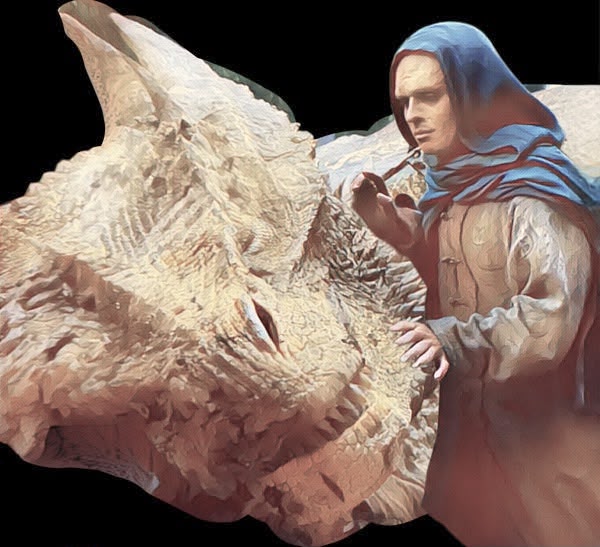
If there is one character whose third season completely changed the way we see him, it is Aegon. That does not mean absolution, nor should it. The series has never erased who he was: abusive, drunk, irresponsible, unprepared, and cruel. The great achievement of Tom Glynn-Carney’s performance is that he does not need to pretend any of that never happened in order to find humanity in the character.
Aegon lost children, body, power, dragon, autonomy, and practically every illusion about the family that placed him on the throne. Curiously, it was only after losing almost everything that he began to learn. I have written before that his may be the best arc of the season because there is a fascinating inversion taking place between him and Rhaenyra: Aegon begins to change when he learns to listen to things he does not want to hear, while Rhaenyra begins to change when she increasingly listens only to what confirms what she already believes.
Aegon’s return to Aemond in the finale completes that transformation in an almost unexpected way. After everything, including the attempt on his life, the brothers end up facing each other again and must recognize that the war still binds them. It is not simple forgiveness. It is politics. And perhaps the fact that Aegon is finally beginning to understand that is precisely what makes him far more dangerous.
Rhaenyra got what she wanted. That is the problem
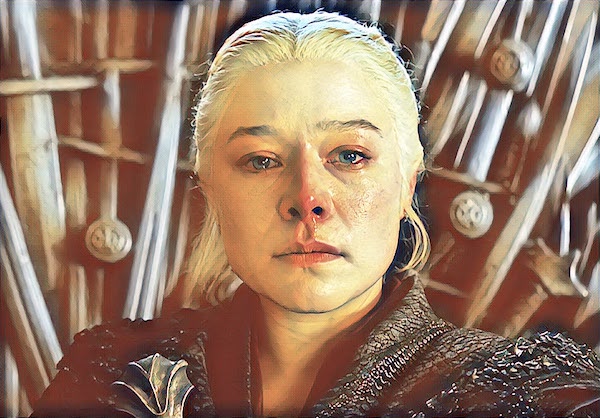
Rhaenyra ends the season exactly where she spent her entire life saying she belonged: on the Iron Throne. Yet the conquest no longer looks like victory. Emma D’Arcy had an extraordinarily difficult season because Rhaenyra needed to undergo a transformation the series had been postponing. For a long time, Condal seemed reluctant to embrace the character’s less defensible qualities. The television version of Rhaenyra wanted peace for longer, tried to prevent deaths, searched for alternatives, and often seemed to react to the war rather than lead it.
That finally began to change in Season 3. Her insecurity did not disappear. It transformed. Rhaenyra stopped believing merely that Viserys had chosen her and began to believe that the choice was part of something greater. The prophecy, once a secret inherited from her father, became a tool of legitimacy and finally almost a form of divine confirmation.
When she declares that she is the Prince That Was Promised, she is no longer simply defending a claim to succession. She is saying that she has to win, and there is an enormous difference between wanting power and believing the universe requires you to possess it. The execution of the High Septon, her treatment of Helaena, the break with Mysaria, and her increasingly violent orders reveal a woman who has finally taken the throne while beginning to lose the very people she will need to keep it.
This Rhaenyra is far more interesting, even when she is much harder to like.
And finally, Daemon is on Rhaenyra’s side
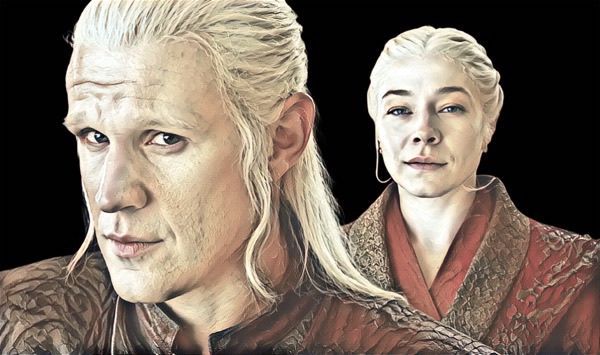
After spending an entire season in Harrenhal fighting mainly with himself, Daemon entered Season 3 transformed. Not domesticated, thank the old gods and the new, because that would make no sense either, but finally aligned with Rhaenyra.
Perhaps that was the real purpose of everything that exhausted us so much in Season 2. Daemon needed to abandon the fantasy that the throne could or should have been his to choose Rhaenyra without turning every alliance between them into another struggle for power. In Season 3, they finally began fighting the same war.
That does not mean they respond to it in the same way. Quite the opposite. Tumbleton creates a terrific irony: just as Rhaenyra increasingly begins to accept the logic of fire and blood that Daemon always defended, Daemon is forced to confront the real consequences of that logic. The man who so often considered Rhaenyra weak for hesitating looks at the destruction created by dragonfire and no longer seems quite so comfortable with what he spent his life preaching.
Matt Smith works much better when Daemon can act, provoke, fight, love, hate, and contradict himself than when he spends episode after episode sleepwalking through the same corridors. Season 3 restored that character without erasing what Harrenhal had changed in him. Daemon and Rhaenyra reach the final stretch on the same side, perhaps for the first time in a truly meaningful way, but that does not mean they are becoming the same person.

Westeros has never looked this beautiful
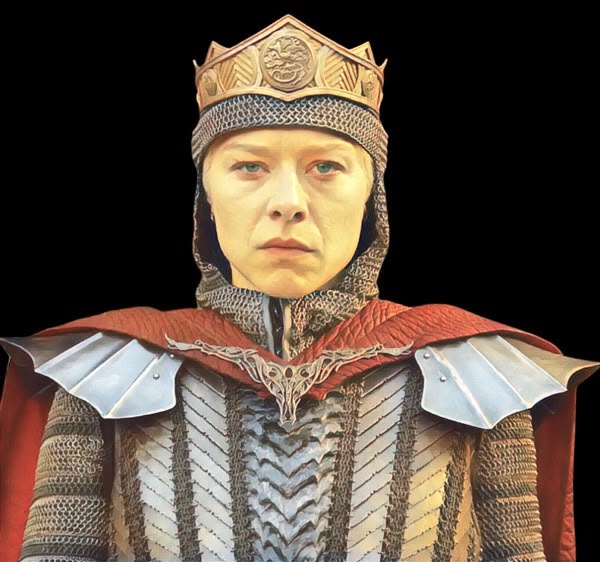
Technically, it is difficult to find major faults. House of the Dragon is stunning and now looks richer than Game of Thrones had the resources to look during much of its eight-season run. The dragons have gained weight, behavior, and individual personalities. They are no longer simply creatures distinguished by size or color. We recognize how they move, how they attack, and even how they relate to their riders.
Season 3’s battles finally took full advantage of that while still managing not to depend on spectacle alone. Game of Thrones had sequences that caused a greater emotional and narrative impact for me because scale can never replace construction, but technically House of the Dragon has reached an extraordinary level.
My major visual reservation remains the costumes. They are beautiful, expensive, and far more elaborate than those of almost any other series on television, but they have never come close to what Game of Thrones achieved. Michele Clapton could tell a story of ascent, grief, power, sexuality, and political transformation through a sleeve, a color, or a piece of embroidery. In House of the Dragon, even with some beautiful designs, I rarely feel the same narrative force.
Ramin Djawadi found another Westeros
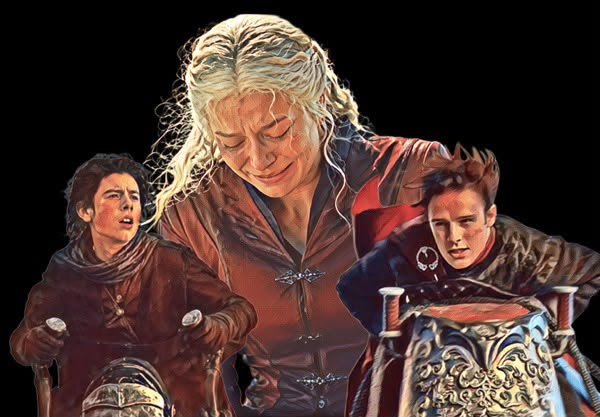
I have already written separately about the score, so I will not repeat everything here, but Ramin Djawadi deserves a place in any assessment of the season. The music became darker, more orchestral, and less dependent on themes inherited from Game of Thrones. Gradually, motifs that began as variations on a familiar legacy gained their own identity until House of the Dragon finally found a musical language that truly belongs to it.
Djawadi achieved something particularly difficult by preserving the musical memory of Game of Thrones without turning the new series into a succession of references to the past. In Season 3, his music often seems to understand before the characters themselves that the story has definitively entered its tragic phase.
The problem with changing the book is not the change itself
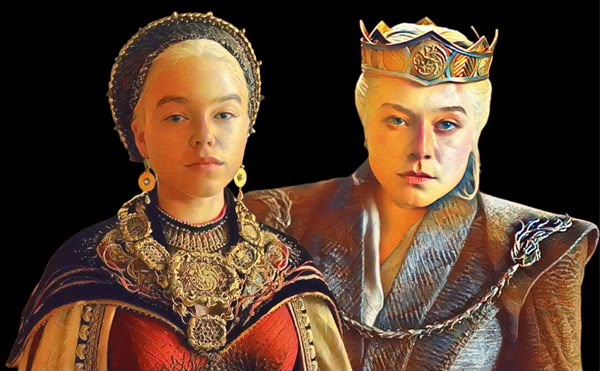
And then we reach the most delicate point. Season 3 continued to alter Fire & Blood significantly. In some cases, those changes improved characters. In others, they produced very good solutions for television. In several, I still cannot see why the alteration was necessary. But perhaps the more interesting debate is no longer simply about fidelity.
Changing the book has never been the problem in itself. The problem is that every change creates a new narrative obligation. If Hugh did not betray Rhaenyra alongside Ulf, there needs to be a reason and a destination for that choice. If Gwayne survived, his survival has to mean something. If Mysaria has been taken to a completely different place from the one she occupies in the book, the road to her eventual fate will also need to change, assuming that fate remains the same.
If Helaena has been given a far more explicit prophetic ability, what she saw cannot simply disappear. If Alys Rivers now carries a history that changes our understanding of who she is, we will have to understand why. If the Green Men have been placed physically before the characters, they are no longer merely an obscure footnote in the mythology of Westeros.
The fourth season will not simply have the responsibility of ending the Dance. It will also have to pay off all the promises created by the adaptation itself.
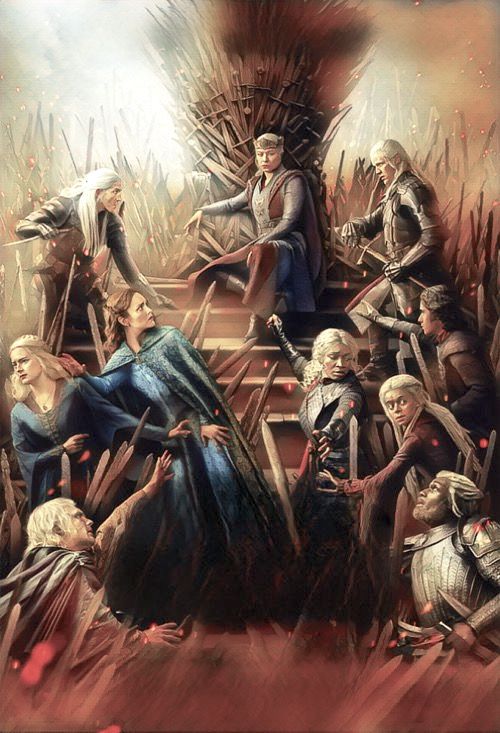
So, was Season 3 the best one?
Perhaps this is the closest House of the Dragon has come to the series it always had the potential to become. I still find the first season more cohesive in some respects. The third inherited problems, continued creating some new ones, and made decisions that can only truly be judged once we know where they are meant to lead. But it was more exciting, more dangerous, and more surprising.
James Norton and Tommy Flanagan arrived and departed after leaving enormous marks. Benjamin Evan Ainsworth finally gave Daeron a face and a personality. Freddie Fox turned Gwayne Hightower into an unlikely moral reference point. Fabien Frankel and Phia Saban said goodbye through two very different deaths that were equally fitting for their characters. Tom Glynn-Carney continued doing the impossible with Aegon. Emma D’Arcy was finally given a more difficult, contradictory, and interesting Rhaenyra. Matt Smith once again had a Daemon who participates in the story instead of merely dreaming it.
Tumbleton made it clear that there is no turning back now, and perhaps that is the best compliment I can pay Season 3: it ended and immediately made us want to know what happens next. The curious thing is that we do know. More or less.
Fire & Blood still tells us where many of these characters will end up, but House of the Dragon has altered enough of the road to remove our confidence about how they will get there. After a series that sometimes seemed overly concerned with explaining and preparing everything, a little unpredictability feels very welcome.
Now we have many Sundays ahead of us, and we will talk about Alys Rivers, the Green Men, Helaena, the Gods Eye, Daemon and Aemond, Rhaenyra and Daenerys, Aegon, prophecies, dragons, and all the changes still capable of blowing apart a perfectly constructed theory. We have until 2028. For the first time since House of the Dragon began, that feels more like a promise than a threat.
Descubra mais sobre
Assine para receber nossas notícias mais recentes por e-mail.

