
Reading The Hollywood Reporter, as I usually do, I stumbled upon yet another box I had apparently been placed in without knowing it. Hollywood loves a box. Marketers seem incapable of working without reducing audiences to labels and, whenever something works, it suddenly becomes essential to figure out what to call it, who consumes it, and, above all, how to reproduce the formula. A few years ago, Netflix even had its “gourmet cheeseburger,” an internal expression for that much-desired combination of popular entertainment with a layer of prestige. Now we have a new category: white wine thrillers.
If you watched and enjoyed Big Little Lies, The Undoing, The Perfect Couple, Nine Perfect Strangers or All Her Fault, you may be in this box with me. These are the shows being used to define Hollywood’s latest favorite: female-led thrillers, often adapted from bestselling novels, that can get dark but never too dark. There are crimes and murders, but the violence usually remains controlled. There is money, beautiful clothes, spectacular houses, marriages that only look perfect from the outside, and a world aspirational enough that, despite the dead body, we may still find ourselves wondering where they bought that sofa.
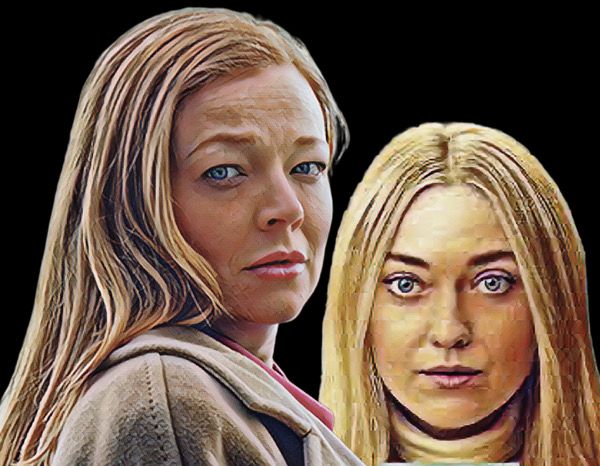
The white wine may appear on screen, but that is not really the joke. The imaginary glass is in the viewer’s hand. It is the woman relaxing on her couch while watching wealthy women emotionally disintegrate inside fabulous kitchens. The description is funny because we instantly recognize the kind of show we are talking about. It is also revealing because Hollywood is not merely classifying a genre. It is classifying the woman watching it.
That is when I started laughing, because apparently I have been drinking this vintage for years without knowing it.
I have written extensively about many of these shows on MiscelAna, and the dead body was rarely what interested me most. Big Little Lies was never simply about finding out who died and who killed him. It was about domestic violence, motherhood, female friendship, marriage, privilege and women finding in one another a solidarity they may not even have realized they needed.
The Undoing used a murder to dismantle the life of a woman who believed she knew her husband. The Flight Attendant began with a flight attendant waking up beside a dead man in a luxury hotel room, but what kept me watching was Cassie’s self-destruction, her relationship with alcohol and her painful attempt to understand who she was when she was not running away from herself.
More recently, I followed All Her Fault episode by episode and, once again, the disappearance of a child eventually interested me less than what was underneath it: motherhood, guilt, marriage and the disturbing ease with which women end up carrying responsibilities that did not begin with them. Apparently, I was already a loyal white wine thriller consumer before anyone decided to put a name on the bottle.
The funniest part is that the formula also allows us to look backward. Desperate Housewives, for instance, now looks like a witty spiritual ancestor of the category. Wisteria Lane already had perfect houses, immaculate lawns, women desperately trying to maintain appearances and bodies turning up along the way. There was simply more comedy and less cashmere.
Little Fires Everywhere lives close to the same territory, with two families, a carefully planned community, motherhood, class, race, resentment and secrets exploding beneath a perfect surface. The Couple Next Door trades millionaire privilege for an idyllic suburb where desire, marriage and neighborly intimacy become a dangerous combination. Doctor Foster practically dismantles the fantasy of the successful wife when suspicion of an affair turns a respected doctor into an obsessive investigator of her own life, while Anatomy of a Scandal takes the formula into Britain’s political elite, placing privilege, marriage, sex and consent inside the suspense.
There is also a tradition we were already calling domestic noir long before anyone opened the wine cellar. Women, houses, marriages, motherhood, secrets and threats hidden inside everyday life did not suddenly appear in 2026. White wine thrillers did not invent these stories. What the label did was add a specific layer of visual comfort and turn them into an extremely easy commercial category to sell.
And then there are the houses. The Hollywood Reporter invokes the famous Nancy Meyers kitchens as an aesthetic reference, and I cannot think of a better image. Nancy Meyers has practically created her own signature within the romantic comedy. Put an adult woman in a beautifully lit house, give her an enormous kitchen, immaculate cashmere, beautiful food and an emotional crisis, and we recognize the territory before the director’s name even appears. The white wine thriller takes some of that fantasy and puts a body in the dining room. The kitchen is still wonderful; now there is just a chance someone murdered the husband.
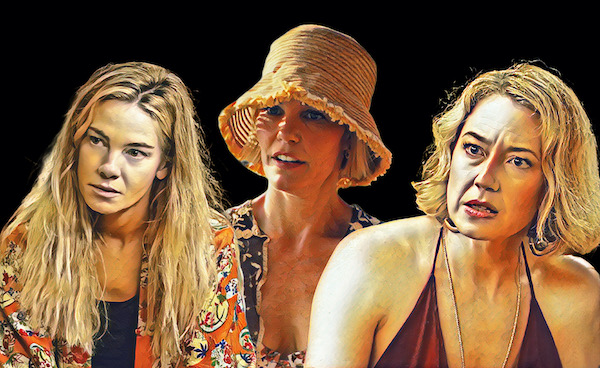
That distinction matters, because not every expensive-looking show about wealthy women automatically becomes a white wine thriller. The White Lotus shares the voyeuristic pleasure of watching privileged people destroy themselves in places where we would happily spend a vacation, and even throws in a few bodies, but social satire is essential to its identity. Expats has Nicole Kidman, Hong Kong, luxury and a family tragedy, but it is much more a drama about loss, guilt and displacement than a thriller. The Morning Show has powerful women, very expensive wardrobes, conspiracies and backstage secrets, but it remains fundamentally a corporate drama.
Likewise, The Gilded Age and Palm Royale may offer the pleasure of costumes, mansions and women navigating vicious social codes, but beautiful production design and fashion are not enough to turn every story into white wine. The formula needs suspense.
Bad Sisters, on the other hand, comes much closer. There are women, breathtaking scenery, a truly terrible man we would very much like to see dead, and sisters trying to work out how to make that happen. The black comedy may make it a slightly less conventional vintage, but the bottle can stay on the same table.
Nicole Kidman, incidentally, could be declared the honorary sommelier of the entire cellar. Big Little Lies, The Undoing, Nine Perfect Strangers, The Perfect Couple: if Nicole is in the cast and somebody owns a house with a spectacular view, it may be wise to pay attention to who is pouring the wine and, more importantly, who may not survive until the final episode.
The Perfect Couple may be the most obvious distillation of the formula. We have Nantucket, an obscenely rich family, a wedding, a death, and Nicole Kidman moving through the scenery with the confidence of someone who seems to know every vintage already. Nine Perfect Strangers trades the mansion for an expensive wellness retreat and places nine people seeking transformation under the command of a woman whose methods would probably not appear in the spa brochure.

Netflix also understands this kind of compulsive domestic suspense very well, even when the same level of luxury is not present. Fool Me Once, adapted from Harlan Coben, begins with a widow seeing on a nanny cam the husband who is supposed to be dead. It may not be the purest white wine thriller, but it understands perfectly the mechanism that keeps these stories moving: delivering the next revelation exactly when we have sworn we are going to bed after “just one more episode.”
Naturally, once Hollywood invented a category called white wine thriller, it could not stop at one bottle. The THR story practically builds an entire wine list. Five Star Weekend, starring Jennifer Garner, apparently does not have enough suspense and might be more of a rosé. Ride or Die, with Octavia Spencer and Hannah Waddingham, has too much comedy and action to fit comfortably into white wine. Its creator, Tessa Coates, likes the term because it makes clear that part of the pleasure is simply having fun. In her view, the truly insulting label would be a prosecco thriller, because then we would be talking about something sweet, sugary and silly.
Lucky, starring Anya Taylor-Joy, also circles the formula, but the perception in the industry is that its audience skews too male for the label. And perhaps no detail sums up the problem more efficiently than that. A show can have a woman at its center, but to qualify as white wine, apparently marketing also needs to imagine women on the other side of the screen.
Then come the red wine thrillers, which keep some of the same ingredients while removing much of the comfort. There is more violence, more grime and a considerably worse emotional hangover. Sharp Objects, starring Amy Adams, is the perfect example. Women, family, trauma, crime and a small town are all there, but nobody finishes that story feeling refreshed.
Furious, with Emmy Rossum, has also been placed by the industry in this heavier glass. And if we want to continue the game beyond the titles mentioned in the THR story, Mare of Easttown certainly lives much closer to red than white. There are no aspirational mansions or Nancy Meyers kitchens; there is a gray town, exhausted women, grief, and a murder weighing on everyone. Love & Death, based on a true crime, also begins in the domestic and suburban world but crosses a line of violence that leaves very little room for the comfort of a chilled glass.
The joke goes so far that one producer quoted by THR divided the platforms by taste. Peacock and Hulu are thirstier for white wine, Netflix and HBO Max appear more receptive to red, while Paramount, according to him, still does not seem entirely sure what it wants. The article itself also points out the imbalance in the classification game by joking that, if we applied the same logic to male-oriented television, perhaps Tires should be called a Kirkland Signature comedy.
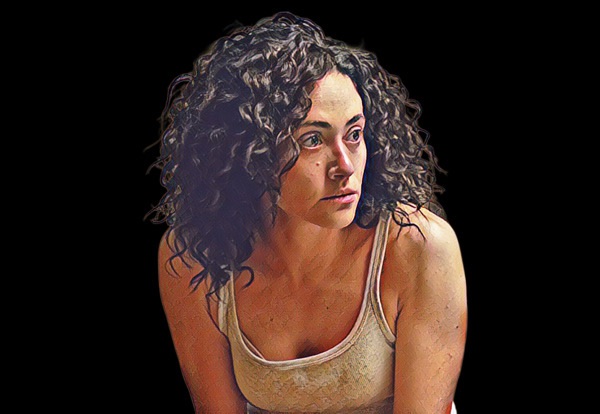
All of this would remain a very good Hollywood inside joke if the labels had not started influencing what actually reaches our screens. THR recounts the story of a screenwriter who, worried that a project was stuck in development, was told that buyers were currently interested in white wine thrillers. The term had stopped simply organizing existing hits after the fact. It had begun helping determine what would be bought.
And Hollywood may like wine, but it likes money much more. All Her Fault became a huge Peacock success, received seven Emmy nominations and, until the arrival of Five Star Weekend, was the platform’s most-watched original. Soon afterward, Peacock announced that it had finally reached profitability. That does not prove one caused the other, but it certainly makes it easy to understand why executives immediately began looking for the next bottle.
This is where the glass starts bothering me.
Stories centered on men rarely need this kind of qualifier. Reacher does not have to become a bourbon thriller. Landman is not suddenly whiskey television. Nobody seems especially interested in imagining what a male viewer is drinking while watching another man solve his problems through oil, guns, money or physical force. Those shows are simply allowed to belong to genres: action, drama, thriller, western.
Women still have a harder time earning that privilege. Women’s fiction, chick lit, women’s movies, female television and now white wine thrillers. The names change, but the urge to turn half the population into a niche remains remarkably resistant.
And there is a very real danger in every box: not only what we put inside it, but what it starts excluding. An agent quoted by THR points to the risk of an executive looking at a programming slate and deciding they already have “their female thriller.” It is a small sentence containing an enormous problem. Nobody imagines that a network with Reacher has already fulfilled its need for male protagonists.

In the same way, Big Little Lies, The Undoing, All Her Fault, The Flight Attendant, Bad Sisters, Sharp Objects and Mare of Easttown are not variations of the same show simply because women occupy the center. In fact, perhaps their differences are precisely why I have enjoyed so many of them.
These stories allow women to be protagonists without demanding that they be exemplary. They are mothers who fail, wives who cheat, friends who envy, traumatized women, selfish women, ambitious women, generous women, manipulative women, frightened women, cruel women, funny women, and contradictory women. We do not always have to like them and, better yet, we do not always have to defend their choices.
Male characters have enjoyed that freedom for decades. Tony Soprano never had to represent men. Don Draper did not need to provide a positive image of masculinity. Walter White could become monstrous without carrying the burden of proving that men deserved complex stories.
Perhaps the real pleasure of the so-called white wine thriller, then, has very little to do with wine, houses or even murder. It is watching women slowly gain the same narrative freedom: the right to be interesting before being exemplary.
Nancy Meyers created such a recognizable signature that her kitchens practically became characters in their own right, yet we never needed to reduce Something’s Gotta Give or It’s Complicated to whatever drink we imagined their female viewers were holding. Perhaps these women full of secrets, flaws, desires, and crimes deserve to escape the shelf too. But as long as Hollywood insists on keeping the cellar stocked, pour me a glass. I am still here for the women.
Descubra mais sobre
Assine para receber nossas notícias mais recentes por e-mail.

