
It is almost impossible not to think of the Menendez brothers when looking at Nick Reiner’s battle to gain access to money left to him by his parents, director Rob Reiner and photographer and producer Michele Singer Reiner. There is even a law at the center of both stories, the so-called slayer statute, which prevents someone from financially benefiting from the death of a person they killed. But despite the obvious comparison, there is a major difference between the cases — and that is precisely what has turned Nick’s fight over his trust into such a fascinating legal impasse.
In the case of Lyle and Erik Menendez, there was never really a dispute over who killed José and Kitty Menendez. The brothers admitted to the shootings. What their trials debated was why they killed their parents and how those deaths should legally be interpreted. Prosecutors argued that the murders were premeditated and included a financial motive; the defense maintained that the brothers acted after years of abuse and because they believed they were in danger. Once convicted of murder, they were barred from inheriting their parents’ fortune under the principle that no one should be allowed to financially benefit from a death they intentionally caused.
The slayer statute provides that a person who intentionally and feloniously kills another person loses certain rights to property, inheritance, and benefits arising from the victim’s will or trust. For inheritance purposes, the killer is essentially treated as though they had died before the victim. But Nick Reiner has not yet been legally found to be his parents’ killer. He claims he is innocent.

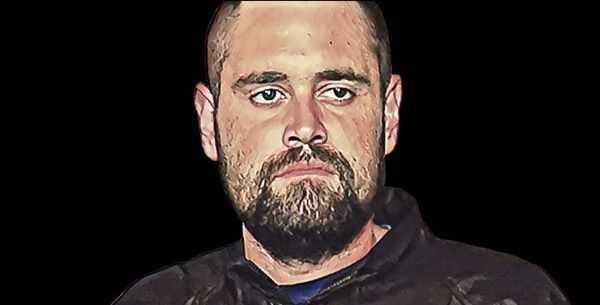
Rob and Michele were found stabbed to death at their Brentwood home on December 14, 2025. Nick was arrested hours later and now faces two murder charges, along with special allegations involving multiple murders, lying in wait and the use of a knife. He was indicted by a grand jury on July 20, with the indictment unsealed on August 12. Nick has pleaded not guilty. The Los Angeles County District Attorney’s Office itself stresses that the charges are allegations and that he is presumed innocent unless and until proven guilty. And this is where the situation becomes much more complicated than it first appears.
Nick has a trust created by his parents in 1993, currently valued at about $1.5 million. He claims he should have begun receiving part of that money when he turned 30, in 2023. The portion now at the center of the dispute is approximately $558,000. His lawyers therefore argue that this is not simply an inheritance created by Rob and Michele’s deaths: Nick’s right to the money, they say, already existed while both of his parents were still alive. It may sound like a small distinction. Legally, it could be enormous.
If Nick had already acquired the right to receive that distribution when he turned 30, the question becomes whether the money can still be treated as a benefit resulting from his parents’ deaths. The current trustee disputes that interpretation and also argues that Nick had previously agreed to leave the money inside the trust. He denies it, saying he never authorized any trustee to indefinitely withhold his distribution and did not authorize Michele to make that decision on his behalf.
All of this would be a relatively dry probate dispute if it were not for one almost Kafkaesque detail: Nick wants the money precisely so he can pay for his defense against the accusation that he killed the people who created the trust.

His first criminal attorney, Alan Jackson, withdrew from the case in January after the expected funds for a private defense failed to materialize. Nick has since been represented by a public defender. Jackson, however, remains involved in the trust dispute and said after the August 17 hearing that Nick should be allowed to use what he considers to be “his own money” to choose who will represent him in the criminal case. The judge did not immediately release the funds and scheduled another hearing on the trust for October 23.
On the other side, the trustee faces an equally understandable problem. If hundreds of thousands of dollars are released now and Nick is later found legally responsible for his parents’ deaths, the money may already have been spent and could be impossible to recover. His siblings, Jake and Romy Reiner, are also contingent beneficiaries and could receive the funds if Nick is legally barred from doing so. The trustee’s position, therefore, is to keep the distribution frozen until the court determines how the slayer statute applies. But there is an important distinction that some headlines risk oversimplifying: being accused is not, by itself, enough to legally turn someone into a “slayer.”
California law is explicit on this point. A final criminal conviction for an intentional and felonious killing conclusively establishes the issue for probate purposes. However — and this is a particularly important detail — a probate court does not necessarily have to wait for such a conviction. In its absence, it can independently determine whether the killing was intentional and felonious using the lower civil standard of preponderance of the evidence, rather than the criminal standard of proof beyond a reasonable doubt. The burden falls on the party seeking to disqualify the beneficiary.
That means there could effectively be two courts looking at the same central question under different standards. In the criminal trial, prosecutors must prove beyond a reasonable doubt that Nick killed Rob and Michele. In the trust proceedings, it may eventually be enough for the court to find that it is more likely than not that he intentionally and feloniously committed the killings. That difference makes the comparison with the Menendez brothers even more interesting.
Lyle and Erik reached the inheritance question after admitting they had killed their parents and, eventually, being convicted. The dispute over the fortune came after a basic fact that no one contested: they had caused the deaths. With Nick, that is precisely the fact that still has to be proven.


At the same time, he is already experiencing a direct financial consequence of the suspicion against him. The money he says belongs to him is frozen because of the possibility that he killed his parents. And he says he needs that very money to hire the legal team he wants to prove that he did not.
That does not mean the trustee is declaring Nick guilty. Quite the opposite: the legal filings acknowledge his presumption of innocence. The argument is more pragmatic — and more uncomfortable. Faced with charges this serious and a law that could make any improper distribution impossible to reverse, releasing the money now would mean taking a risk the trustee does not believe it can take.
That is where the case stops being just another Hollywood inheritance fight. The slayer statute is built on a principle that seems impossible to argue with: no one should profit from their own crime. Nick Reiner’s problem lies in the moment before that certainty exists. Because before preventing someone from profiting from a murder, you first have to establish that there was a murderer. And in his case, that is still precisely the question that remains unanswered.
The criminal case returns to court on September 15. The fight over the money continues on October 23. Until then, Nick Reiner remains in an unusual position: legally presumed innocent, accused of murdering his parents and, for now, unable to access hundreds of thousands of dollars that he says had already been his for two years before their deaths.
Descubra mais sobre
Assine para receber nossas notícias mais recentes por e-mail.

