
After almost three seasons of asking the same question — what happened to the world? — Silo has finally begun to offer an answer. And “Gray Goo,” the eighth episode of Season 3, confirms that we were looking for the catastrophe in the wrong place. It was not simply a nuclear war, a pandemic, or destruction caused by climate change. It was something both more sophisticated and more terrifying: nanotechnology transformed into a weapon.
But that is still not the whole truth. At least not for anyone who has read Shift, the second book in Hugh Howey’s trilogy. Because the silos were not built merely to protect humanity from an inevitable apocalypse. They are part of the apocalypse itself.
Per Stensen, the billionaire played by Colin Hanks, explains to Daniel and Helen that the same technology that made him the richest man in the world had already been developed into a weapon by Iran. The black cloud that brought down Charlotte’s squadron was not a storm, a chemical weapon, or some unknown phenomenon. It was a concentration of nanorobots capable of acting collectively, infiltrating equipment, and destroying everything in their path.
Hence the title “Gray Goo,” associated with the hypothesis that self-replicating nanomachines could escape control, continue multiplying, and consume or destroy all available matter. In the series, the idea seems slightly less literal. We are not necessarily facing a gray mass devouring the planet, but an invisible, inexpensive, programmable technology that could be used by governments, terrorist groups, or anyone capable of mastering it.

For Stensen, the end of the world can no longer be prevented. It can only be survived. The 50 silos would therefore be a kind of underground Noah’s Ark: they would store seeds, food, equipment, books, works of art, and, most importantly, human beings. After centuries of protection, that population could return to the surface and repopulate Earth. That is the apparently humanitarian version of the project. The problem is that Silo has already shown us the result.
The underground communities do not know their own history, remain unaware of one another’s existence, have their reproduction controlled, are given substances capable of erasing their memories, and live under rules that transform any curiosity into a threat. If a silo becomes unstable, central command can carry out a collective reset or simply release the Safeguard and kill approximately 10,000 people. The shelter is also the weapon.
Daniel still does not fully understand that dimension when he arrives at the construction site. An architect and congressman, he looks at the enormous digging machine and offers a seemingly innocent technical solution. Stensen had planned to build ten machines and transport them from one excavation site to another. Daniel suggests manufacturing 50 and leaving each one at the bottom of the silo it helped construct. That is why a gigantic digger exists beneath Silo 18. Without realizing it, Daniel has just contributed to the structure that will imprison entire generations.
This is one of the most important ways the episode moves closer to Shift. In the book, Daniel is named Donald Keene and is recruited by Senator Paul Thurman to design what he believes is a nuclear-waste containment facility. Because he has training in architecture, he also designs a self-sustaining shelter for the workers. Donald spends years on the project without knowing he is helping to construct the system intended to replace civilization.
In the adaptation, Daniel receives more information, participates directly in the discussion about the 50 silos, and appears to recognize the danger earlier. Even so, he continues to be manipulated by people who know far more than they reveal.
That also explains his apparent passivity toward Charlotte’s treatment. Daniel initially believes Victor is simply treating the neurological consequences of the accident. When he discovers that medication is keeping his sister’s memories blocked, he is alarmed, but the doctor presents the manipulation as an act of compassion. Why force Charlotte to remember the deaths of all her fellow pilots? Why return a truth that could destroy her?
It is a seductive question because it presents itself as care. Victor explains that he can select which memories will be recovered and which will remain inaccessible. Daniel is necessary because he knows his sister’s history. He can tell her stories from childhood, show her photographs, and provide objects capable of reopening certain neurological pathways. The rosemary works as one of those triggers: their mother used to prepare chicken with the herb, and its scent evokes a family memory in Charlotte.
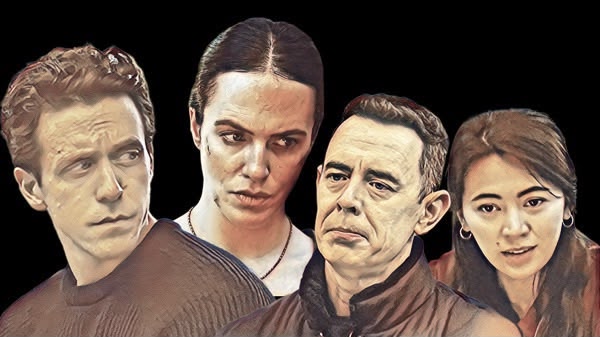
Daniel believes he is helping his sister recover who she was. Victor is using his affection to reconstruct her according to a predetermined narrative. The memory of their mother may return. The truth about the mission may not. But memories do not remain in perfectly isolated compartments. The rosemary opens a door, and Charlotte begins to recover what happened before the plane crash. She then discovers that her squadron never had a genuine chance.
The pilots were sent to provoke Iran and force it to reveal how far its nanotechnology weapon had advanced. While Charlotte and her colleagues served as bait, another team had spent two years digging a tunnel approximately 75 miles beneath the Iranian facility. The real attack would be carried out with a low-yield nuclear weapon. Charlotte and the others were not merely defeated. They were sacrificed by their own government.
Even so, she agrees to join the silo project as a drone pilot. The decision is disconcerting, especially because Daniel and Helen have just realized that Stensen, Thurman, and Victor are not philanthropists concerned about the future. They are people who consider it acceptable to sacrifice some, manipulate others, and choose who deserves to survive.
But Charlotte may conclude that remaining inside the system is the only way to understand what happened — or to give some meaning to the deaths of her squadron. It is also possible that her decision is already the result of Victor’s reconstruction. How much of Charlotte truly chose to join the project, and how much of her was prepared to accept that role?
The question is not incidental. In the present-day timeline, Camille is doing exactly the same thing to Juliette. Both women survive situations that should have killed them. Both wake with essential parts of their histories erased. Both are surrounded by people who claim to be caring for them. And in both cases, someone attempts to fill the space left by memory with a more convenient narrative.
Victor uses Daniel, Rosemary, and family memories to reconstruct Charlotte. Camille uses Sims, medication, and a false version of events to manufacture a compliant Juliette. The difference is that Daniel takes too long to recognize that he is helping the doctor edit his sister, while Sims finally understands what Camille is doing and refuses to continue collaborating. That is why he ends the episode imprisoned beside Juliette.
Daniel and Helen, meanwhile, reject Stensen and Thurman’s invitation. He says he would rather become “gray goo” than spend the rest of his life underground with those people. Helen replies that she would rather become gray goo with him, and the two kiss before boarding the helicopter.
The entire scene feels like a farewell. They have learned the government’s most important secret, refused to participate, and made it clear that they do not support the project. The episode does not show the helicopter exploding, but it wants us to suspect that they will not simply be allowed to go home.
The change from the book makes that risk even more significant. In Shift, Helen is Donald’s wife. In the series, she has been transformed into a journalist, and her relationship with Daniel is developing before us. Anna, Thurman’s daughter and Donald’s former love in the novel, also remains in the story, creating a new emotional configuration among the characters.
In the book, when the catastrophe finally begins, Donald is taken into the silo complex, but Helen ends up in the wrong section. He spends decades being awakened from periods of cryogenic sleep, medicated, and called by another name, unable to fully understand what happened to his wife. The adaptation may follow a different path, but placing Daniel and Helen together in that helicopter appears to be a deliberate way of preparing them for a separation as brutal as the one in Shift.
Charlotte has also been given a much larger role. In the book, she is already a drone pilot and will be awakened in the future by her brother to help him investigate the surface. In the series, we are seeing how she is incorporated into Operation Fifty before the end of the world. Her presence brings the two timelines closer together and may explain why the character will become so important in the story’s final stretch.

The biggest difference, however, is still to come. In Shift, Thurman, Victor, and the others responsible for Operation Fifty do not build the silos merely because they believe a nanotechnology war will happen. They conclude that humanity will inevitably use nanorobots to destroy itself and decide to carry out that destruction in a controlled manner. In other words, they kill the world first.
The so-called “bad nanos” were already widespread and could be activated to kill almost the entire population. The nuclear explosions create the visible appearance of the apocalypse, but it is the nanorobots that make the destruction global. The people who have been protected in advance and brought into the silos survive. Everyone else is eliminated.
The project is not intended to save all 50 communities. For approximately 500 years, each silo will be observed, controlled, and evaluated. Only one will be chosen to inherit the Earth. The others will be exterminated. The Algorithm that speaks to Camille in the series appears to be the most direct update of that logic: turning human survival into an equation and treating freedom, memory, and truth as dangerous variables.
While the past reveals how the prison was built, Juliette is trying to prevent it from becoming an extermination chamber. Lukas and Kennedy manage to reach Silo 17 and discover how Jimmy’s mother died. She found the Safeguard pipe, cut into it, and attempted to weld it shut while burning off the deadly agent escaping from it. When she realized she could not finish before her fuel ran out, she sealed herself inside the compartment. She did not abandon her son. She sacrificed herself to stop the poison from continuing to enter the silo.
The discovery gives Juliette a concrete possibility of saving Silo 18: crimp the pipe shut, cut it beyond the blocked point, and weld a cap over it. Bernard’s drawing shows that the silos are connected to central command through large branching lines. Gus, Knox’s father, confirms the logic of the installation. Instead of 49 independent pipes, the system would divide the silos into seven groups supplied by main lines.
But Juliette realizes too late that Silo 17 has a different orientation. Shirley has been sent to the wrong compartment just as Sandy manages to warn them, through a coded message, that Judicial has uncovered the operation.
Juliette surrenders so that Shirley can escape and continue searching for the correct pipe. Her decision is even more painful because the episode all but confirms that Shirley is pregnant. She and Knox secretly removed her contraceptive implant because they decided to have a child. In a society that controls even who is allowed to be born, the pregnancy is also an act of resistance: the two are placing their faith in the possibility of a future.
Now, however, the group must decide between rescuing Juliette and completing the mission. Blowing up Judicial could kill the woman everyone wants to save. Abandoning the search for the Safeguard would leave 10,000 people under the Algorithm’s permanent threat. Juliette has already made her choice. She allowed herself to be captured so that Shirley could remain free. Saving the silo matters more than saving her.
“Gray Goo” finally explains why the silos were built, but the comparison with Shift makes the revelation even darker. The true villain is not merely nanotechnology. It is Stensen, Thurman, and Victor’s certainty that they alone possess the intelligence, authority, and courage to decide everyone else’s fate.
The end of the world may have begun with nanorobots. The dystopia, however, began earlier: when a small group came to believe that saving humanity gave them the right to destroy it.
Descubra mais sobre
Assine para receber nossas notícias mais recentes por e-mail.

