
As published on Blog do Amaury Jr./Splash UOL
I had gone some time without writing about Harry and Meghan because, knowing at least something about this couple we have followed so closely for nearly ten years, I knew something big was coming. And it came. The Sussexes are returning to England for an as-yet undefined period, enrolling their children in British schools while keeping their Montecito home and, therefore, one foot firmly planted in the United States.
Of course, maintaining their American base makes sense for professional, financial and emotional reasons. But it also works as an escape route. If the British experiment fails, if the Royal Family closes its doors again or if the marriage itself ever ends, Meghan will have somewhere to return to. This is not necessarily a permanent move, much less a surrender. Once again, it is an attempt to inhabit two worlds, precisely the hybrid model they wanted in 2020 and Queen Elizabeth II rejected.
Since the news broke, critics have claimed that the Sussexes are returning because they failed in America, lost contracts, ran out of money or discovered they could not sustain their relevance away from the monarchy. There may be small elements of truth in that, just as there are elements of delusion in the unconditional defence mounted by their fans. With Harry and Meghan, both extremes usually see something clearly and exaggerate everything else.
The couple’s pathology — and I use the word as an interpretation of a dynamic, not as a clinical diagnosis — is to provoke. Harry and Meghan seem absolutely certain of their own truth, which is always presented as “the truth”. The world is against them, but they will change that world. The criticism they claim not to seek ultimately feeds precisely the position from which they draw their strength: that of two people persecuted by a powerful establishment because they dared to challenge it.
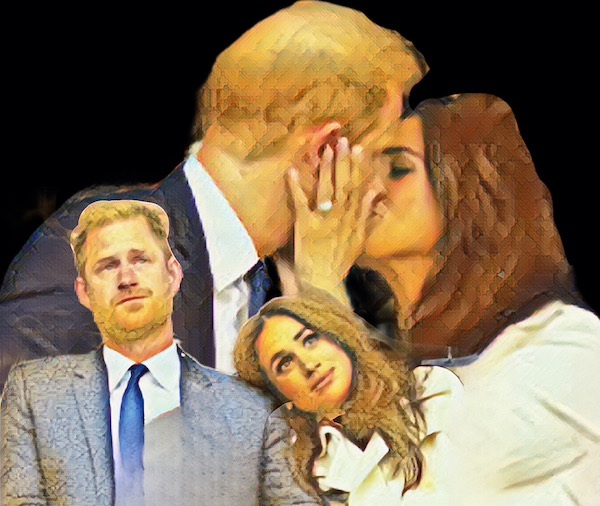
It is undeniable that they thrive on adversity. The more they are attacked, the more fuel they find to continue. Conflict gives them a mission, an identity, a narrative and even a language. That is why this dynamic should be regarded with both the critics’ suspicion and some of the sensitivity retained by their fans. Harry and Meghan may manipulate the symbols of their own exclusion, but they were also genuinely wounded by a rigid institution, a brutal press and deeply unresolved family relationships.
Before turning their return into an admission of failure, however, there is one fact that cannot be ignored: the King has cancer.
We do not know what kind of cancer Charles has, what his prognosis is, or how much time he has left. The Palace has never disclosed those details. It would therefore be irresponsible to declare that the King is living through his final years. Harry, however, was the person who fuelled that concern when he said in May 2025: “I don’t know how much longer my father has.” In the same interview, he spoke about reconciliation, the brevity of life and his desire to become closer to his family again. The comment prompted speculation precisely because Charles remains in treatment.
In July, Charles was finally reunited with Archie and Lilibet at Highgrove, four years after he had last seen his grandchildren in person. Meghan also attended the meeting. Soon afterwards came the decision to move the family to England for an extended period. The sequence does not prove that the King’s health has deteriorated, but it makes it impossible to dismiss the possibility that something changed in Harry after that meeting. The reunion marked a genuine thaw between father and son.
And here we must acknowledge what is genuine. Regardless of the interviews, the accusations, the book, the Netflix series and the money made from exposing his family, Harry is a son who wants to recover some time with his father before it is too late. That should not be criticised. It makes far more sense for him to return now than to remain in California and once again experience the final years of someone fundamental to his life from a distance.
Harry lost his mother in an extraordinarily violent way. He also lived far from his grandmother during the final years of her life and arrived too late to say goodbye at Balmoral. For someone whose psychological history is shaped by loss, returning to be near his father is understandable, human and, on some level, admirable. But that is not the whole story.
Harry is not returning only for Charles. He is returning to the system and, within it, to William.
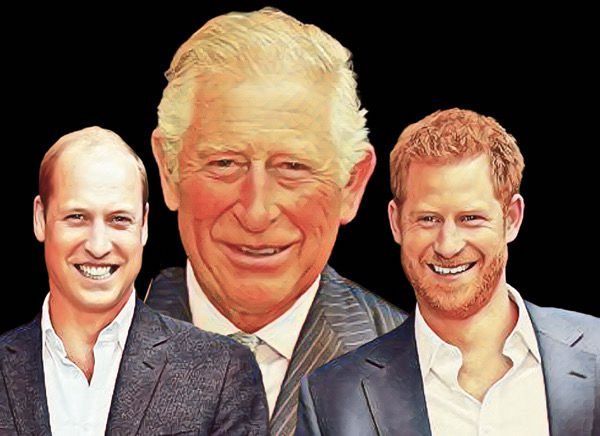
Harry himself described William as his “beloved brother and archnemesis” and acknowledged that there had always been competition between them, partly determined by the heir-and-spare structure. This is not an interpretation invented exclusively by critics: Harry chose those words and recognised the rivalry. He explicitly connected their competition to the “heir/spare” dynamic.
My interpretation is that when Harry talks about William, he is often talking about himself. He accuses his brother of jealousy, envy and an inability to accept Harry’s brilliance, but Harry is the one who has spent his life facing the man destined to occupy a position he could never attain. Harry is the one who must come to terms with William’s supposed superiority — not necessarily as an individual, but as a function: the firstborn, the heir, the future king.
It is a classic mechanism of projection. What becomes unbearable to acknowledge in oneself is attributed to someone else. This does not mean that William is innocent, generous or free from rivalry. It only means that Harry’s truth never arrives unfiltered. It comes drenched in emotion, resentment, trauma and a profound need to reorganise his own history around an identifiable culprit.
The system genuinely damaged Harry. He was raised to be important, but never as important as his brother. He was given global visibility without the corresponding power. He was indispensable until William had children. Then every birth — George, Charlotte and Louis — pushed their uncle further down the line of succession and made institutionally explicit what he had always feared: his own replacement.
Harry’s life appears to have improved away from his brother. William’s did too. The problem is that William’s apparent serenity in the face of their separation may be intolerable to Harry. Everything suggests that the Prince of Wales does not want to talk, negotiate or reintroduce Meghan and Harry into his life. The brothers reportedly remain out of contact, even as Harry and Charles move closer again. The return to England has not, so far, changed that estrangement. For Harry and Meghan, rejection does not end the conflict. It establishes a goal.
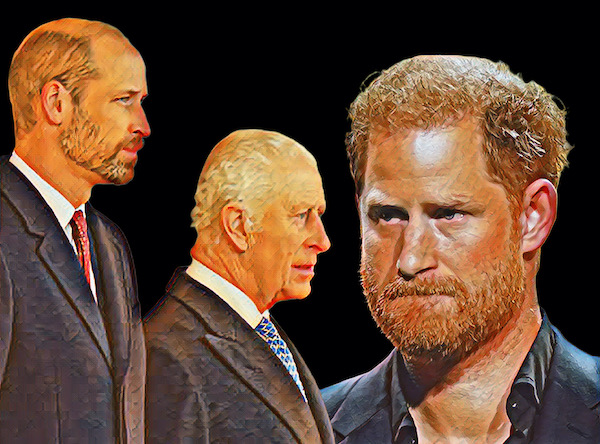
If William will not accept them voluntarily, they will make themselves impossible to ignore. They will live in the same country again, place their children in British schools, remain close to the King and reclaim a symbolic space within the family. If you want to reduce everything to a binary war between the Sussexes and the Waleses, you could call it reconciliation or provocation. It is probably a little of both.
There is one apparently minor episode that, to me, helps explain the move. When a reporter called Harry an “ex-royal,” he bristled and corrected the description. His reaction revealed something essential: he may no longer be a working member of the monarchy, but he refuses to accept that he has ceased to be royal. Nearly every choice he has made since has reinforced that connection. The title remains visible, his children are a prince and princess, his royal origins sustain his public profile and the institution continues to be the gravitational centre of his narrative.
Harry achieved fame, money, contracts, interviews, documentaries and freedom. He managed to demonstrate happiness away from England. What he did not manage was to affect William and the monarchy from within the space that truly matters to him. From the other side of the Atlantic, he could cause scandals, but he also began to face the most dangerous possibility of all: being erased.
And Harry cannot bear being treated as an ex-royal because his identity remains entirely attached to the institution he claims to have abandoned.
William’s approaching accession makes the problem even more urgent. Charles is a father carrying guilt, affection and a well-known aversion to confrontation. He also knows what it means to be cast as the villain in a public family war. Harry understands those vulnerabilities and knows how to apply pressure to them. I use the word “manipulate” deliberately: not because his desire to be close to his father is false, but because a genuine emotion can also be used strategically.
By returning during Charles’s reign, Harry reinserts himself into the picture before William can redraw it. He recovers his presence, brings his children closer to their grandfather, establishes British ties, and ensures that any future exclusion can be attributed to his brother. If William maintains the Sussexes’ exile after becoming king, the rupture will become his. Charles could have prevented this and chose not to. The father opened the door; the brother will have to decide whether to close it.
There is, however, an important factual correction. William could not simply remove Harry and his children from the line of succession, as that would require legislation. Nor could he abolish the Dukedom of Sussex on his own. But the Andrew precedent showed that the monarch can remove the titles of prince and princess, as well as the HRH style, through Letters Patent, which would already be a warning sign for Harry.
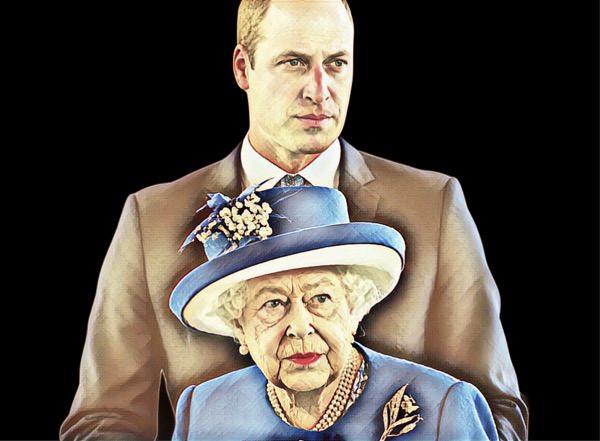

Nor would it be enough to argue that they are “American” or were raised far from the Royal Family. Residence and nationality do not automatically exclude them. But that does not diminish the symbolic importance of this move. Harry knows that titles, belonging and legitimacy do not survive through documents alone. They depend on presence, recognition and a story that can be told publicly.
Enrolling Archie and Lilibet in British schools turns them, in the eyes of the public, into the King’s grandchildren living in the country whose Crown they could theoretically represent one day, however remote that possibility may be. They will never come close to the throne under normal circumstances, but one does not have to believe that either will become king or queen to understand why Harry considers it essential to preserve their place. He has spent his entire life defined by a position in the line of succession. Naturally, he projects onto his children his fear of losing what remains.
Their return, therefore, does not mean that the Sussexes will resume official duties. The available information indicates that they will continue as non-working members of the Royal Family, maintaining their private ventures and their American home. Living in England does not restore the “half in, half out” model rejected in 2020. At least, not formally. Informally, however, Harry is attempting to reconstruct precisely that position.
He wants American freedom and British relevance. He wants to denounce the institution and continue to be recognised by it. He wants distance when proximity hurts him and proximity when distance threatens to erase him. He wants to say that he escaped, but cannot accept that the monarchy carried on perfectly well without him.
That is why I do not see this move simply as a consequence of failure, financial difficulties or a sudden longing for the English rain. I see love for an ailing father, fear of another loss, rivalry with a brother, concern for a legacy and a carefully constructed operation to return to the board before the reign changes.
Harry is not asking to become a prince again. He is reminding everyone that he never stopped being one. And, in an aristocratic version of Brazilian football legend Zagallo’s famous line, Harry is returning to England with a very clear message for William, the monarchy and everyone who had already begun calling him an ex-royal: you will have to put up with me.
Descubra mais sobre
Assine para receber nossas notícias mais recentes por e-mail.

