
The world is saying goodbye to Dolly Parton, and she will most likely be remembered with Jolene. And, inevitably, with I Will Always Love You. I’m saying goodbye with 9 to 5.
Not because either of the other songs matters less. Jolene, with that instantly recognizable guitar and almost unbearable combination of vulnerability and restraint, may be the purest example of Dolly the storyteller. I Will Always Love You is one of the great farewell songs ever written — and perhaps the most spectacular proof of her stature as a songwriter. Whitney Houston turned it into one of the greatest vocal performances in pop history. Still, the song itself was Dolly’s: the melody, the words, the extraordinary ability to make complicated feelings sound simple. But 9 to 5 tells me more about the woman behind it all.
Dolly Parton died on Tuesday, August 25, at 80, after more than six decades in a career that began in Tennessee and eventually stretched far beyond country music. Singer, songwriter, actress, businesswoman and philanthropist, she became one of those rare figures who no longer belonged only to their profession. Dolly was an American cultural icon. And she knew exactly what she was doing.
The huge hair, endless nails, rhinestones, heels, plunging necklines and deliberately excessive makeup created a persona she never tried to deny. Quite the opposite: she made the joke before anyone else could. Her famous observation that it cost a lot of money to look this cheap was funny because it revealed the secret. Everything was excessive. Nothing was accidental.
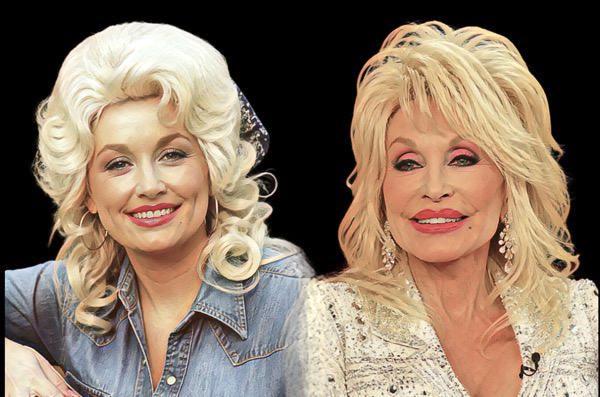
While the world looked at the packaging, she was writing Jolene, Coat of Many Colors, I Will Always Love You, and a catalogue that would eventually transcend country altogether. That same intelligence reached the movies in 1980.
When Jane Fonda invited Dolly to make her acting debut in 9 to 5, alongside Fonda and Lily Tomlin, she also wrote the title song. During breaks on set, she began tapping her acrylic nails together, imitating the sound of a typewriter. From that rhythm came one of the defining songs of her career. It is one of those stories that sounds as though it must have been invented later to improve the legend. In Dolly’s case, it happened.
9 to 5 is funny, bright and irresistibly catchy, yet it is about bad pay, exploitation, lack of recognition and men taking credit for women’s work. The film was dealing with exactly the same things. And its inspired move was putting Dolly at the center of that story as Doralee Rhodes, a secretary sexualized by her boss, judged by her colleagues, and mistaken for the image she projected.
Doralee was smarter than everyone assumed. Dolly knew something about that too. Without giving up humor or adopting the solemnity so often demanded of women who want to be taken seriously, she turned exaggerated femininity into power. There was no contradiction between looking like a rhinestone fantasy and being a meticulous songwriter, a formidable businesswoman and someone who understood very well how a male-dominated industry worked.
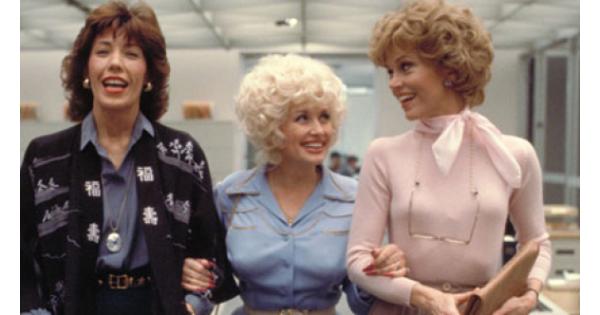
The success of 9 to 5 opened another important chapter. The Best Little Whorehouse in Texas, Rhinestone and, above all, Steel Magnolias followed. As Truvy, the hairdresser watching the lives of a small Southern community pass through her salon, Dolly revealed on screen something her songs had demonstrated for years: an extraordinary ear for people.
Surrounded by Sally Field, Shirley MacLaine, Olympia Dukakis, Julia Roberts and Daryl Hannah, she did not need to fight for attention. She had timing, warmth and an instinctive understanding of how to make a character immediately familiar. Film was not an attempt to escape music. It was simply another form of storytelling. Which is why calling her merely a country star was always insufficient.
Dollywood became both a major business and a permanent declaration of loyalty to the Tennessee region she came from. Her Imagination Library, created in honor of her father, who could not read or write, grew into an enormous literacy program distributing books to children. Her philanthropy extended to education, disaster relief and medical research. And none of it required a reinvention.
Perhaps that was one of Dolly Parton’s most remarkable achievements: she never needed to dismantle Dolly Parton for us to understand the woman underneath.
Now the retrospectives will come. We will hear that hypnotic opening of Jolene. We will see Whitney Houston turning I Will Always Love You into something almost superhuman. Both songs deserve to be part of the farewell. But I still choose the sound of those nails tapping like a typewriter.
There is something especially perfect about remembering Dolly through a song that turned one of the most exaggerated elements of her appearance — those enormous fake nails — into the sound of women at work.
Dolly was 9 to 5: funny, popular, sharp, musically brilliant and far more complex than she first appeared. And that is exactly why there will never be another one.
Descubra mais sobre
Assine para receber nossas notícias mais recentes por e-mail.

