
Warning: this article contains spoilers for Episode 9 of Silo Season 3 and for Hugh Howey’s books.
The more Silo answers the questions we have carried since Season 1, the more questions it creates. And the excellent ninth and penultimate episode of Season 3, Farewell, may have placed the biggest one directly in front of us: who exactly is inside Silo 1, controlling the Algorithm and deciding the fate of the other 49 silos?
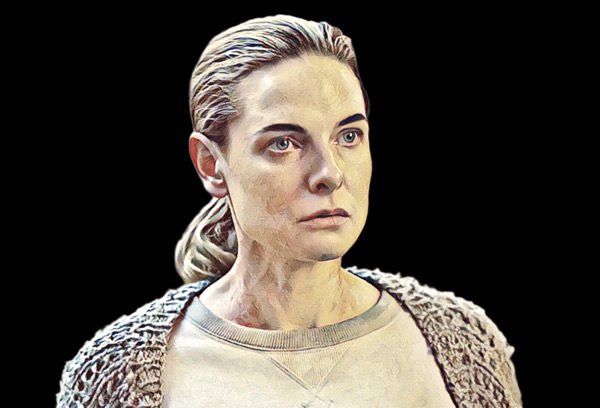
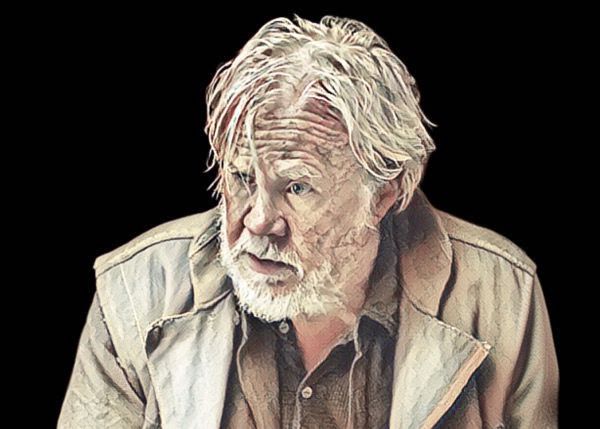
The most obvious answer would be Artificial Intelligence. That is what virtually everyone believed for centuries, including Bernard (Tim Robbins). But before his sacrifice, he gives Juliette (Rebecca Ferguson) his most important discovery: the voice coming from the wall is not some superior entity making decisions on its own. There is a flesh-and-blood person inside Silo 1. A human being deciding who lives and who dies.
Bernard uses the perfect reference: the Wizard of Oz is nothing more than “a man behind the curtain.” And he leaves Juliette with a mission — find a way to defeat him. More importantly, he tells her that she is the one “their numbers missed,” not simply a disruptive force, but someone capable of bringing people together.
Then Silo returns to the past. And perhaps introduces us to the very man behind the curtain.
Daniel Was Chosen Before He Even Knew It
Ever since Daniel Keene (Ashley Zukerman) appeared, we have known that he corresponds to Donald Keene in Hugh Howey’s books, even though Graham Yost has significantly altered his story.
Daniel seems, essentially, like a good man. He was pulled into Per Stensen’s (Colin Hanks) project, realized there was something deeply wrong with it, and chose Helen (Jessica Henwick), walking away from everything else. When he had the opportunity to officially join the silo project, he refused.
But Farewell insists, more than once, on reminding us why the people behind the project regretted losing him. Victor (Matt Craven) tells Daniel that he has a special talent for seeing what other people miss. He is not merely a good engineer. He is someone capable of looking at a problem and finding the variable everyone else failed to notice.
Related Post: Peter Gabriel Sings the End of the World in Silo
Shortly afterward, Stensen essentially repeats the same point. He reminds Daniel that it was his idea to use 50 digging machines, one for each silo, rather than repeatedly moving just a few of them around. Without Daniel’s solution, he says, construction would have been five years behind schedule. He then admits that he wishes he had been able to use “that brain” to solve all the other problems they encountered along the way.
Those are not two random lines placed in the same episode. They are foreshadowing. The organization creating a system designed to function for 500 years has just identified exactly the kind of man it wants nearby when an impossible problem appears. And that is precisely what Silo 1 does in the books.
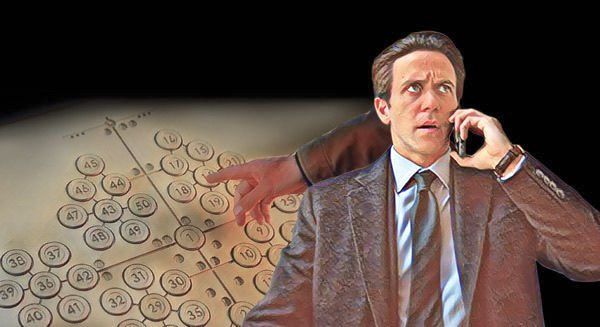
Helen in 18. Daniel in 1. Too Much of a Coincidence
Daniel and Helen arrive at the silo inauguration with absolutely no intention of living there. Quite the opposite: they had already turned down Stensen’s offer. Helen is pregnant, they are happy, and then the small, strange details begin.
The identification system leaves very little room for mistakes. Visitors wear RFID badges, and the guides’ glasses add facial recognition on top of that. The public-address system repeatedly tells everyone to visit the silo indicated on their own badge.
Helen has been assigned to Silo 18. Daniel is taken to Silo 1. Henry appears, saying that the senator wants to speak with Daniel. Daniel immediately asks whether Helen can come along. The answer is that it would be a long walk; Charlotte, Anna, and the senators are supposedly already in Silo 1. Helen decides to continue her tour and meet Daniel afterward. It might be possible to dismiss all of this as coincidence if the episode did not go out of its way to establish that these people had already been selected and organized in advance. And there is something even more suspicious.
Rosalind Thurman (Laura Innes) finds Daniel and asks him to stick around because she wants to discuss something with him. We never learn — at least not in this episode — what she intended to say. Moments earlier, Stensen had just said that he needed Daniel’s brain to solve problems encountered during construction.
Daniel entered Silo 1 as a visitor. Perhaps nobody ever intended to let him leave.
And Anna Knows Something
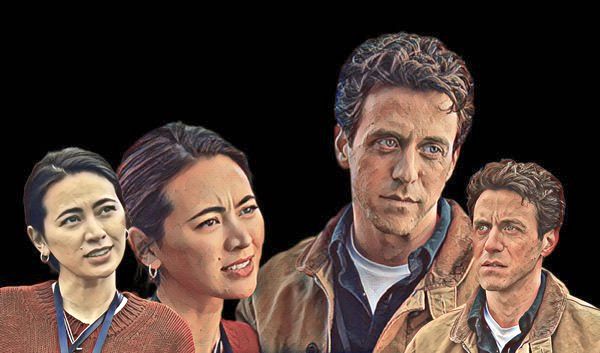
Then there are Charlotte (Jessica Brown Findlay) and Anna (Morven Christie).
There is already an odd tension at dinner the night before when Daniel talks about seeing them the following morning. Anna says that they may have to arrive at the complex early. The next day, she apologizes for missing breakfast and simply explains that “they” needed both women there earlier. Except Charlotte has disappeared.
Anna tells Daniel that she does not know where Charlotte is and that the last time she saw her, Charlotte was finishing a mocha in the cafeteria. Daniel then sends his sister the beginning of their old family joke: “If Mom and Dad were alive right now…” A response arrives, but it is the wrong response.
Daniel immediately understands that Charlotte probably did not write that message. Someone has her phone. Or someone has access to her communications. And that is where knowing Shift becomes dangerously useful.
Related Post: “Farewell” and Bernard’s Definitive Twist
In the book, Donald is also manipulated into ending up inside Silo 1 while Helen is separated from him. Anna participates in that manipulation. But the series has made one crucial change: here, Anna is not Daniel’s former romantic interest. She is Charlotte’s wife.
The romantic motive is gone. So if Anna is helping keep Daniel inside Silo 1, her involvement no longer feels personal. It feels institutional. She knows about the plan. Or at least part of it.
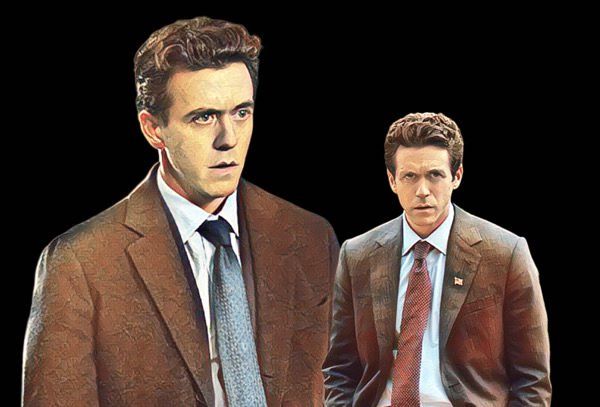
Daniel Does Not Have to “Turn Evil”
This may be the most interesting part of all. Daniel does not resemble the cold and ruthless person who appears to be controlling the silos centuries later. And perhaps that is precisely because he is no longer Daniel by then.
In the books, Donald ends up inside Silo 1 and becomes part of the cryogenic system used by its administrators. The men responsible for overseeing the other silos are awakened periodically to work shifts. When Donald wakes in the future, he believes his name is Troy. His memory has been altered, and medication helps keep his past suppressed.
Troy eventually participates in horrifying decisions. Silo 1 can intervene in the other silos and, when a community is judged beyond saving, order its destruction. Donald becomes part of that machinery before gradually recovering his memories and understanding what was done to him. He does not simply “become a villain”; the system turns Daniel/Donald into a tool.
And Season 3 has spent weeks showing us that memories can be manipulated. Victor even explains to Daniel in Farewell why he remained with the project: he realized that, if the silos were ever needed, their inhabitants would have just experienced an enormous collective trauma. His real challenge would therefore be managing that trauma. It is in this conversation that Daniel mentions the Pact, largely written by AI and then edited by Victor and Anna.
The combination is practically assembled in front of us. Victor understands memory and trauma. Anna is involved in the rules that will govern the population. Charlotte understands drones and military systems. Stensen has money, technology, and infrastructure. Thurman represents political power. And Daniel possesses the quality everyone openly admits they need: the ability to solve the problem nobody predicted. Silo 1 does not appear to be gathering privileged people simply to save them. It is gathering the people required to manage all the other silos.
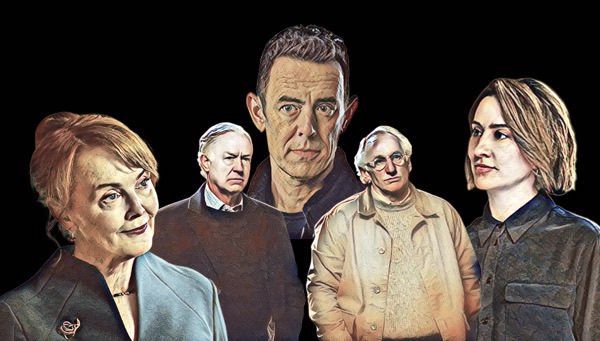
The Algorithm May Be a Mask
There is one important detail: the Algorithm’s voice already exists when the explosion occurs. After the blast, an artificial voice orders people to seek shelter immediately in the nearest silo.
So Daniel obviously did not create that voice in that instant. But that does not contradict Bernard. The voice may be artificial. The decisions behind it may still be human. The Algorithm could simply be the interface: an invisible, apparently omniscient authority. Behind it sits an administrator inside Silo 1. And once again, the books help. Silo 1 operates by waking people during different periods to run the system. Therefore, perhaps “the Wizard of Oz” is not even one specific person. Perhaps it is a position.
Centuries of different men sitting behind the same curtain. But in Juliette’s era, there is an especially obvious candidate to be sitting in that chair: Daniel.
In the book, Donald eventually runs Silo 1 and becomes involved in the case of the woman who walks out of Silo 18 and, inexplicably, does not die: Juliette Nichols. The two eventually communicate directly.
And Helen Is Pregnant
This is where the series moves away from the book in a potentially enormous way. In the original story, Helen and Donald are separated, but she continues her life inside another silo, remarries, and has children. Donald discovers this much later when he searches through records of her life.
Graham Yost made a very different choice for the series. Helen is already pregnant with Daniel’s child when she enters Silo 18. That means that, while Daniel is taken into the brain of the entire system, his unborn child enters the very silo that, centuries later, will produce Juliette. It hardly feels like irrelevant information. Especially because Helen is also connected to the small object that survives centuries of Silo 18 history: the PEZ dispenser.
Helen is a journalist. She questions everything. She investigates what she has been told not to investigate. She rejects official narratives and distrusts people in power. Her child is Daniel’s child, the son or daughter of the man who sees what everyone else misses. And then, centuries later, Juliette appears: an engineer, obstinate, and incapable of accepting an explanation simply because an authority tells her it is true.
Juliette combines exactly the two qualities that define Daniel and Helen.
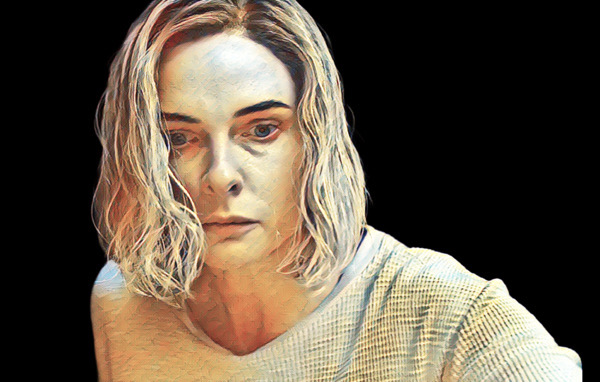
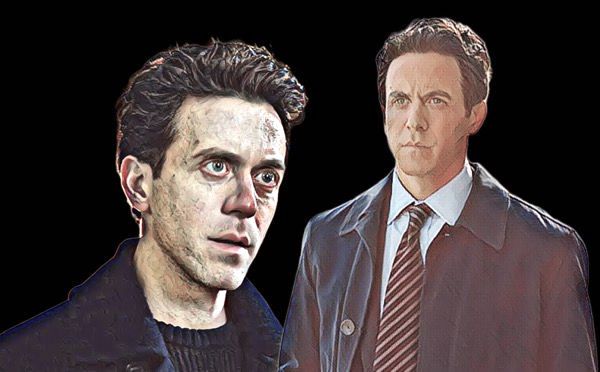
Is Juliette Their Descendant?
We still do not know. But now there is a concrete reason to consider the possibility. Helen enters Silo 18 while pregnant. Daniel’s child will therefore be born there. That necessarily creates a Keene/Drew bloodline inside the original population of Juliette’s silo. The series may eventually reveal that Juliette descends from that child.
But there is another fascinating possibility: George Wilkins. George is deeply connected to the Flamekeepers, the underground tradition devoted to preserving objects and knowledge from before the rebellion. His mother, Anne, belonged to that tradition as well. And it is through George that Juliette begins her own search for the truth. Helen could be an ancestor of that lineage.
In that case, Helen and Daniel’s child would not need to lead biologically to Juliette. The family line could instead lead to George, who then gives Juliette the thing that truly matters: memory.
Narratively, the effect would be almost identical. Helen begins the resistance. Daniel ends up at the center of the system, and Juliette inherits both.
Daniel and Juliette Are Mirrors
Perhaps the biggest clue lies in two apparently unrelated lines from the episode. Victor tells Daniel that he can see what other people miss. Bernard tells Juliette that she is what their numbers failed to predict. Daniel is the perfect problem-solver to keep the system functioning. Juliette is the problem the system cannot solve. It is a beautiful symmetry.
A man with an exceptional ability is captured and used by the machine. Centuries later, a woman with a similar ability appears on the other side and begins dismantling it.
And perhaps there is something even more powerful connecting them than that similarity: blood.
And We Still Have an Entire Season Left
The Season 3 finale arrives on September 4, 2026, but Silo does not end there. Apple has already officially renewed the series for a fourth and final season, designed to complete the adaptation of Hugh Howey’s trilogy.
That changes what we should expect from next week. We do not need every answer immediately. The finale could finally reveal what happened to Daniel after the doors of Silo 1 closed, confirm Helen’s fate inside 18, and explain where Charlotte was when that false message was sent.
It could even reveal who caused the explosion — and whether Per Stensen was building an ark to survive the end of the world or, far more horrifyingly, created the end of the world to justify his ark.
But the final confrontation can still wait. Bernard died after giving Juliette one piece of information that completely changes her mission. She does not need to defeat an omnipotent Artificial Intelligence. There is someone behind the curtain. And people can be defeated.
If that man is Daniel Keene, however, the great irony of Silo may be even better: Juliette could eventually discover that the enemy controlling her world is not truly a villain at all, but the first victim of the very same system she was born to destroy.
Descubra mais sobre
Assine para receber nossas notícias mais recentes por e-mail.


3 comentários Adicione o seu