
Alfred Hitchcock used the term MacGuffin for an object that sets a story in motion, drives the characters, and appears to hold all the answers, even though its real purpose is to lead us toward what actually matters. The briefcase in Pulp Fiction, the secret documents in countless thrillers and, in Silo, an innocent duck-topped PEZ dispenser.
Relic 1175 does not contain a secret map, a coded message or a revelation about the end of the world. Even so, it has traveled through all three seasons of the series, connecting George, Juliette, the door hidden beneath Silo 18 and, now, a love story torn apart by the apocalypse. The object is not the answer. It is the path toward it.
When George Wilkins gave the PEZ dispenser to Juliette in Season 1, he left an equally enigmatic message: he had found what he was looking for. What he had discovered was not the origin of the toy, but the enormous metal door hidden beneath the water at the bottom of Silo 18.
George used a small piece of wire attached to the PEZ to lead Juliette to the spool that revealed where he had hidden the hard drive. It contained the Silo’s blueprints, forbidden records, and the video in which he confirmed that he had located the door, which was approximately 15 feet high. George found the entrance to a much larger secret, but died before he could understand the entire structure.
After him, Lukas reached the same place by following Salvador Quinn’s coded instructions. That was when the door activated and a voice spoke to him. The entity knew that Quinn, Mary Meadows and George had already been there, although it claimed that it had never spoken to George. It also knew who Lukas was and threatened to activate the Safeguard if he revealed what he had discovered.
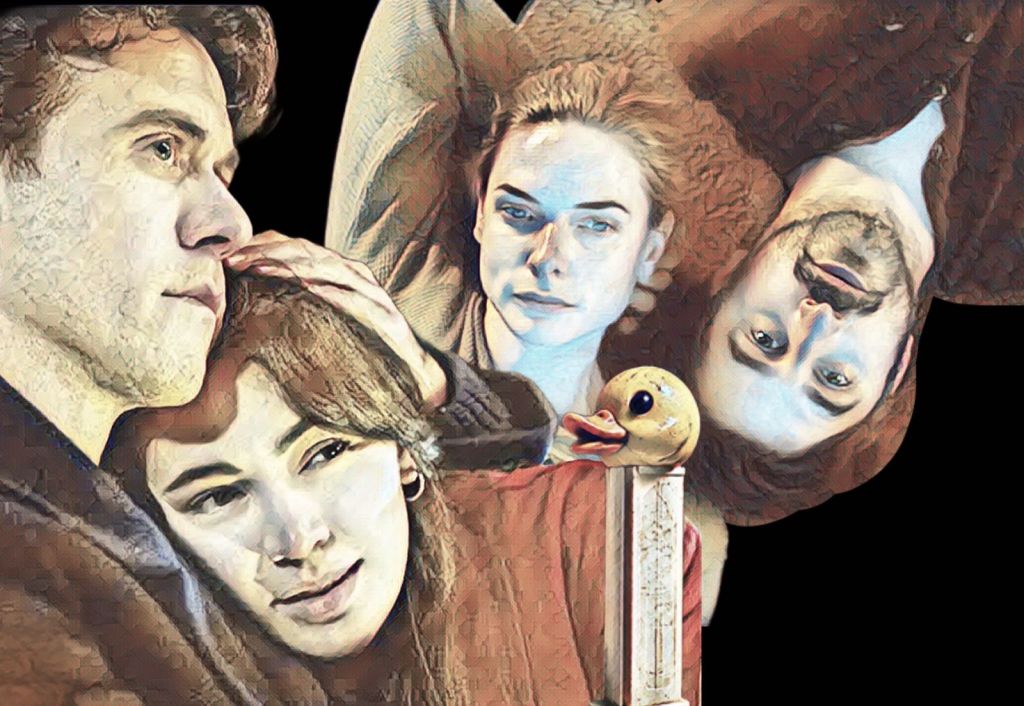
It is important to separate the elements that the series deliberately placed so close together. The door is a physical structure, possibly connected to the tunnels and the Silos’ original exit plan. The voice is the so-called Algorithm, the intelligence that monitors each community and decides when it represents a threat. The Safeguard is the weapon: the mechanism capable of releasing a lethal substance through the system and killing all 10,000 inhabitants of a rebellious Silo.
We still do not know whether the Algorithm is truly an artificial intelligence or a person in Silo 1 pretending to be omniscient. Bernard began to suspect the second possibility after detecting something unmistakably human in the voice: irritation. If there is a person behind the curtain, as in The Wizard of Oz, that person can also be defeated.
But it was only at the end of Season 2 that the PEZ ceased to belong exclusively to George’s story. Centuries earlier, Daniel Keene had rushed to buy it at a convenience store near his apartment — a “panic purchase” before meeting Helen Drew. The duck was not chosen at random: it referred to the University of Oregon, where she had studied, and its Oregon Ducks mascot.
Read also:
Who Is the “Wizard of Oz” Behind the Algorithm?
Why Did We Start With Allison and Holston Only to Forget Them?
At that moment, therefore, the object held no secret meaning. It was simply a cheap, funny and personal gift chosen by a man who had paid attention to the woman he hoped to impress. Helen was the one who kept it — and history transformed that small romantic token into a forbidden relic capable of threatening the entire system around 500 years later.
In Season 3, it acquired another purpose. Because the drugs used by the system do not necessarily erase memories but block access to them, emotionally significant objects can work as anchors. When Sims returned the PEZ to Juliette, she remembered George, recovered part of her own history and eventually reached the crucial memory of how Silo 17 had managed to stop the Safeguard.
The PEZ, therefore, has no powers. What holds power is everything it preserves: love, memory and a history the system tried to erase.
A Major Change From the Books
This is precisely where the series introduces a question that did not exist in the same way in Hugh Howey’s books: Who descends from Helen and Daniel?
In the books, Daniel is named Donald Keene, and Helen is already his wife when he becomes involved in the Silo project. Anna Thurman, the senator’s daughter and Donald’s former college girlfriend, is still in love with him. She joins forces with Mick Webb, Donald’s friend, to separate the couple when the world ends.
Donald is taken to Silo 1, has his memories manipulated, and comes to believe his name is Troy. Helen is sent to Silo 2, assumes the name Karma, eventually marries Mick and has two children with him. Only centuries later does Donald discover that Anna and Mick deliberately interfered with his fate. Anna wanted Donald; Mick wanted Helen.
The series has completely rewritten that dynamic. Anna is not competing with Helen for Daniel, and Mick Webb is not even part of the story. Helen and Daniel do not begin as a married couple; we watch them fall in love. When the apocalypse arrives, she is pregnant with his child.

Helen is forced into Silo 18 while Daniel is trapped on the other side and eventually taken to Silo 1. The separation remains deliberate, but it carries a different emotional weight. Daniel does not lose only the woman he loves. He also loses the son or daughter who has not yet been born — and his memories of that family will have to be removed so that he can function as Troy.
If he retained his memories, he would never obediently manage the other Silos. He would try to locate Helen, follow the life of his own child, and protect his descendants. To transform Daniel into a tool of the system, it was necessary to erase precisely what might drive him to fight it.
Read also:
Peter Gabriel Sings the End of the World
Hugh Howey, who serves as an executive producer on the series, has expressed enthusiasm for this new construction. Writing about the season, he praised the chemistry between Daniel and Helen and described the beginning and ending of Silo as two different love stories. The adaptation has changed characters, motivations and relationships, but it has preserved the central idea: everything the people behind the Silos believe they can destroy — love, curiosity and memory — continues to resurface.
Who Inherited the PEZ?
If Helen entered Silo 18 while pregnant, it is natural to assume that the baby survived and that their descendants remain there. The question now is who carries that bloodline nearly five centuries later.
Juliette is the candidate most frequently discussed by fans because she seems to combine qualities belonging to both of them: Helen’s restless curiosity and Daniel’s practical intelligence. But so far, the series has presented no genealogical evidence directly connecting the Nichols family to the couple.
George may be the more convincing possibility. He owned the PEZ before Juliette, investigated the origins of the Silo, and seemed to have a particular relationship with its relics. The object may have traveled through generations as a family heirloom, even after everyone had forgotten who Helen Drew was.
That would also change Juliette’s significance. She would not have to be Daniel and Helen’s biological descendant. She could be the heir to George’s investigation, chosen not by blood but by love. George received the object from his family and gave it to the woman capable of finishing what he had started.
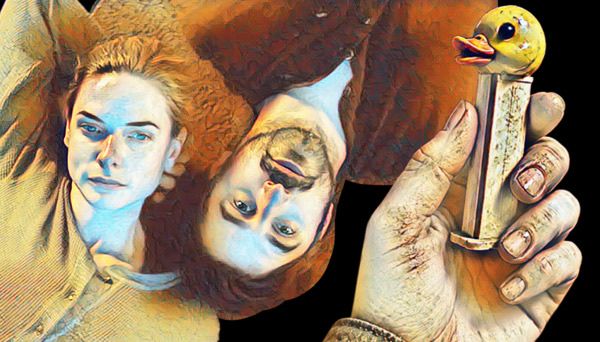
For now, the essential part of the journey remains missing: How did the PEZ leave Helen’s hands and reach George? The answer could reveal the baby’s fate, the identity of their descendants, and the origin of a resistance that may have survived inside Silo 18 since its first generation.
The dispenser remains a perfect MacGuffin because we keep looking at it while the real story unfolds around it. George found the door. Lukas heard the voice. Juliette recovered her memory. Daniel still has to recover his identity. And somewhere between Helen and the present is a family that survived for centuries without knowing — or perhaps knowing perfectly well — what that little yellow duck represented.
Descubra mais sobre
Assine para receber nossas notícias mais recentes por e-mail.


1 comentário Adicione o seu