
Some shows make a huge splash with their premiere and then spend the following seasons trying to recreate that initial impact. Silo has almost done the opposite. It was never a small series — it has been one of Apple TV’s most important productions since 2023 — but it has quietly grown in ambition, audience and complexity, reaching an excellent third season that, with only one episode left, has completely transformed the question that once drove the story.
At the beginning, all we wanted to know was one thing: what is outside? Now we know that was practically the least important question. And, needless to say, spoilers for every season follow.
When we first met Juliette Nichols, played by an exceptional Rebecca Ferguson, around ten thousand people had been living for generations inside Silo 18, believing the outside world was deadly — and that questioning their reality too much could be even more dangerous. Allison and Sheriff Holston asked to go outside, cleaned the camera lens for everyone watching, and died. George, Juliette’s great love, left behind clues about forbidden relics and a past someone was making an enormous effort to erase.
Juliette, an engineer from Mechanical who has never been particularly talented at obeying orders, literally climbed through the levels of the silo until she discovered that Bernard, IT, Judicial, the hidden cameras, and the Pact itself were all pieces of a gigantic surveillance machine. When she was finally sentenced to go outside, she survived thanks to Walker’s switch of the sealing tape and reached the top of the hill. That was when Silo delivered its first major twist: there were other silos. Many of them.

The second season expanded that universe without rushing its answers. Juliette reached Silo 17, destroyed after a rebellion, met Solo — actually Jimmy — and discovered that not everyone had died. Meanwhile, Silo 18 was heading toward the exact same tragedy as its neighbor, with Knox, Shirley and Mechanical rebelling against Bernard and the system.
By the end, Juliette understood the scale of the danger: if her former neighbors believed they could simply open the door and walk outside, they would die just as the people of 17 had. Her return to Silo 18 ended in that extraordinary sequence inside the airlock, with Bernard stepping in behind her.
But Silo saved the revelation that would change the entire series for its final minutes: a man named Daniel and a journalist named Helen, living in a world recognizably similar to ours, long before the silos. It was the beginning of Season 3 — and of a very risky change.
Graham Yost, who adapted Hugh Howey’s books for television, has explained why he could not simply film Shift, the second novel in the trilogy, as written. Juliette virtually disappears for much of the book. To keep Rebecca Ferguson at the center of the series, the adaptation transformed the past into a parallel narrative and turned Daniel and Helen into more than pieces of exposition: they became the protagonists of a political, technological, and romantic thriller. Daniel corresponds to Donald Keene in the books, but his journey has been substantially changed.
It was a smart decision because, for much of this season, the past has been more compelling than the present. Back in Silo 18, we found Juliette as mayor, but unable to remember parts of what had happened to her. The device initially irritated readers and part of the audience — Rebecca Ferguson herself even addressed the fans’ reaction — until it became clear that the memory loss was not a cheap storytelling trick.
It was the story itself. Hugh Howey has always placed memory, forgetting and the repetition of history at the heart of Silo, and the series has now turned those ideas quite literally into instruments of the State.
The mysterious Vitamin D+, distributed through the water supply, stopped looking like a minor detail. Memories can be manipulated. Rebellions can be erased. A population that cannot remember its own history can be led into making the same mistakes again.
And when Juliette begins recovering George, her past and her own identity — even a tiny PEZ dispenser becomes an emotional anchor — we realize that the battle this season is not simply about physical survival.
It is about the right to remember. At the same time, Daniel and Helen showed us how this monstrosity began. He is an engineer and congressman. She is a journalist. Together they follow clues pointing toward a technological threat capable of destroying civilization, eventually reaching a project controlled by powerful men, among them Senator Thurman, billionaire Per Stensen and Dr. Victor Crnkovich. What initially presents itself as an attempt to save humanity gradually reveals the project behind the silos, the Pact and the terrifying philosophy sustaining it all.
The question is no longer simply who built the silos. It becomes: who earned the right to decide how humanity should survive?
That past also explains why the present is so perverse. The Safeguard, capable of condemning an entire silo, the manipulation of memory, the rules, the surveillance, and even the possibility that someone — human, artificial intelligence, or something somewhere in between — may still be coordinating that system centuries later are all part of the same project.
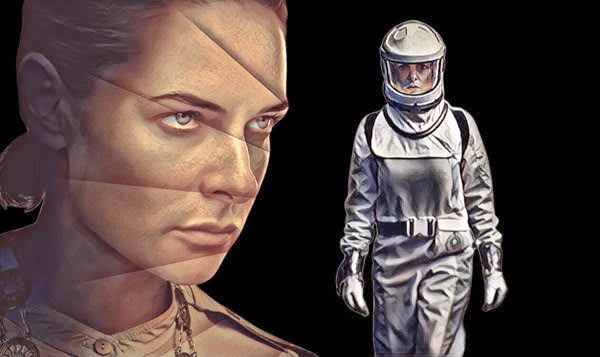
While Juliette tries to prevent Silo 18 from being eliminated and save the survivors of 17 as well, Robert Sims begins to realize that his wife, Camille, has ultimately chosen the system. Bernard, meanwhile, has received one of the most interesting changes from the books. Instead of ending simply as a villain, the series has transformed him into someone who realizes far too late that he, too, has spent his entire life being manipulated.
His farewell in the penultimate episode is beautiful.
Sent outside without the protection that saved Juliette, Bernard walks toward the tree he has watched on screens his entire life. For a few moments, he sees what he always dreamed of seeing: green leaves, light, life.
It is his redemption and his punishment at the same time. Tim Robbins leaves behind a character far more tragic and fascinating than he initially appeared to be. And it is precisely in this episode, “Farewell,” that the two timelines finally seem to be moving toward the same point.
Helen is pregnant. Daniel and Helen already know too much. People are visiting the silos as though they were still part of an extraordinary project designed to preserve humanity. There is ceremony, curiosity, invited guests — and among them is Peter Gabriel, playing Peter Gabriel.
He is rehearsing Here Comes the Flood. It is impossible to believe this is a coincidence.
Peter Gabriel has been scattered throughout the story of Silo. In Season 2, Red Rain plays in Silo 17. Season 3 began with Come Talk to Me. Now, when we finally witness the moment the old world is about to disappear, he sings Here Comes the Flood, from 1977.
Rain. A plea for communication. The flood. And there is another delicious layer to it: Victor says Gabriel and his family will be assigned specifically to Silo 17. The series does not need to establish that Jimmy or anyone else is descended from him for Red Rain, heard so many years later in that very same place, to acquire an entirely different meaning in retrospect.
Music has become surviving memory.
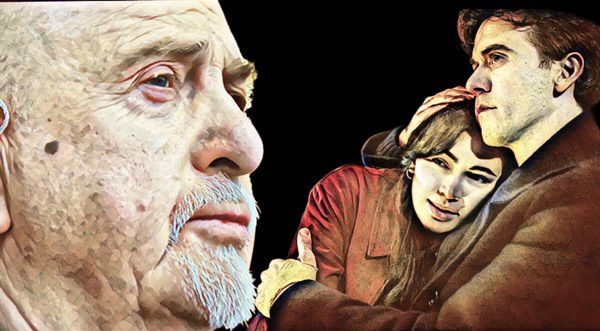
Daniel is taken to Silo 1. Helen is sent toward Silo 18. They are still able to speak to one another when catastrophe strikes. Then comes the explosion. The world we had been watching as the past becomes the world we know as Silo.
Perhaps this balance between answers and new questions helps explain the show’s remarkable consistency. The publicly available numbers — Apple does not routinely disclose complete global viewing figures — suggest a series that has not lost momentum over time. The first season holds an 88% critics’ score on Rotten Tomatoes; the second, 92%; the third reached 96%. Luminate data had already shown the opening episodes of Season 2 outperforming Season 1 in viewership, while Season 3 remained for weeks among Nielsen’s most-watched streaming originals in the United States. Silo also reached the impressive milestone of 500 days in Apple TV’s U.S. Top 10 and continued competing for the platform’s worldwide No. 1 position in August.
Curiously, the more critics embrace the series, the more it seems to provoke its fans. The audience score on Rotten Tomatoes dropped this season, particularly because of the changes from the books and Juliette’s initial memory-loss storyline.
It is an interesting contradiction: its boldest season has also been its most divisive. But perhaps that is exactly what good science fiction is supposed to do.
Silo is no longer merely that claustrophobic series about thousands of people living underground. It is a story about power, memory, artificial intelligence, political manipulation, fear, History and the arrogance of those who believe they should be allowed to decide which version of humanity deserves to survive.
And there is still Juliette Nichols. Surrounded by conspiracies, nanotechnology, computers, silos, algorithms and plans devised centuries before she was born, she remains the one variable nobody can control. Not because she is a chosen one or a messianic hero, but because she insists on questioning, remembering and acting. For anyone who loves science fiction, it is difficult to ask for much more.
Season 3 ends on September 4, and Silo already has a fourth and final season guaranteed. So there is still time to answer the question that truly matters now.
The series began by asking what was outside. It is approaching its end by asking something far more disturbing: who decided that, for humanity to survive, it first had to forget what it was?
Descubra mais sobre
Assine para receber nossas notícias mais recentes por e-mail.

