
They say August is the month of sorrow. And if psychoanalysis teaches us to be suspicious of coincidences — or at least to pay attention to the meaning we give them — it is hard to ignore that two of the greatest female myths of the 20th century died in the same month, at exactly the same age. Marilyn Monroe at the beginning of August 1962. Diana on the last day of August 1997. Both were 36.
Separated by 35 years and by seemingly very different worlds, one manufactured by Hollywood and the other by the British monarchy, they would end up sharing something far greater than a coincidence of dates. Marilyn and Diana became women whom culture seems unwilling to let die. More than six decades after Marilyn’s death and nearly three after Diana’s, new photographs, letters, biographies, documentaries, exhibitions and testimonies still emerge promising to bring us closer to the “real” woman hidden behind the myth. Perhaps, then, the question is not why we are still interested in them, but why we still need to keep them alive.
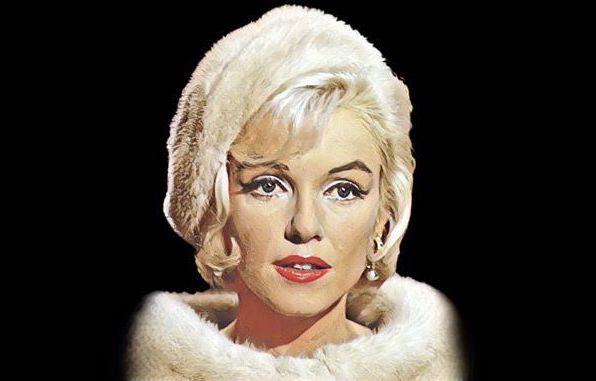
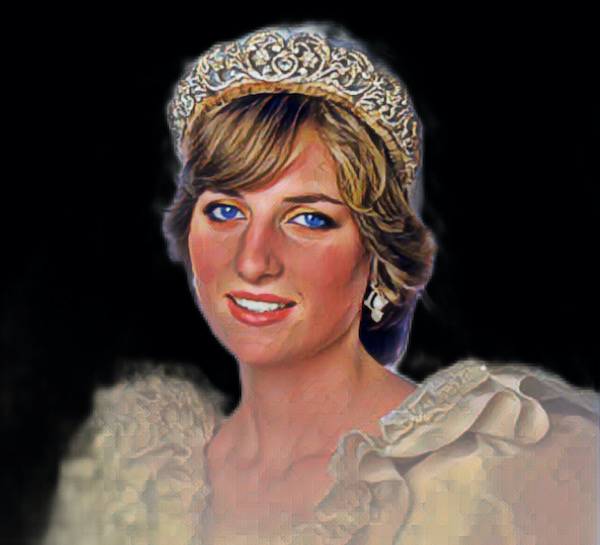
That is precisely where grief offers a clue. In Mourning and Melancholia, Freud begins with loss to consider what happens to the psychic investment placed in the person who disappears. In the work of mourning, reality forces us, painfully, to recognize that the loved object is no longer available. This does not mean forgetting. It means being able to accept the absence without needing to deny what happened.
Freud was not writing a theory about dead celebrities, much less diagnosing entire societies. But the question of what we do with what we lose did not remain confined to the individual. Decades later, Alexander and Margarete Mitscherlich published The Inability to Mourn, examining how a society can build defenses against fully processing certain losses, guilt, and identifications. Their context was postwar Germany and could hardly be more different from the worlds of Diana and Marilyn. What matters here is something else: groups, too, construct narratives, rituals, and forms of repetition around what they cannot simply leave behind.
Perhaps this is exactly where Diana and Marilyn become so interesting. They are not merely famous women who died. They are cultural losses that are continuously revisited, reinterpreted and ritualized, as though each new photograph, film, book or testimony might finally complete a story that death left suspended.
Both were eventually transformed into what we might call pop saints. Their dresses became relics, their photographs took on the force of icons, their homes and graves attracted pilgrimages, people who knew them emerged as witnesses to some intimate truth, and new books, series and documentaries appeared almost like scriptures capable of revealing what we still do not understand. Even after decades, there is always the promise of a new Marilyn or a new Diana.
Jung helps us think about another layer of this phenomenon. Not collective mourning itself, but the moment when a biography seems to transcend the individual and touch images far older than the person. Diana gathered almost every element of an archetypal narrative: princess, mother, betrayed woman, rebel, victim, compassionate figure and, finally, a heroine whose story was tragically cut short. Marilyn ceased to be merely an actress and became a muse, lover, woman-child, sacrificial victim and symbol of a beauty destroyed by the very machine that produced it.
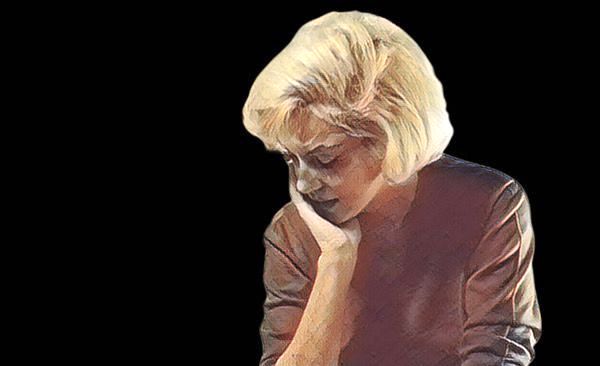
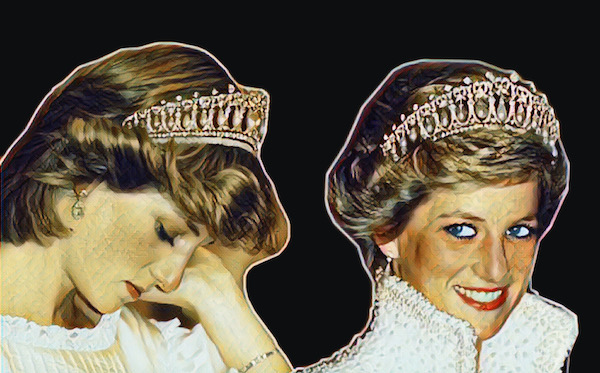
At some point, the two stopped belonging only to their own stories and began functioning as symbols. And there is an extraordinary advantage to turning a person into a symbol after death: she can no longer challenge our interpretation.
A living person ages, changes her mind, fails, contradicts herself, becomes inconvenient or simply stops matching what we have projected onto her. The dead do not.
Marilyn never had to show us who she would have been at 60, 70 or 80. Diana never reached the age at which she might have been a 65-year-old woman, divorced for decades, a grandmother, mother-in-law to two famous women, perhaps reconciled with some people and disappointed in others, possibly politically inconvenient or simply less fascinating to the public. We will never know. And it is precisely in that empty space that fantasy goes to work.
Diana died at an especially fertile moment for mythmaking. She had been divorced for only a year and seemed to be beginning to discover who she might become outside her marriage and, to a large extent, outside the character the monarchy had created for her. At 36, her story appeared to be starting again when the crash in Paris interrupted the narrative.
There was no time for a second half. We did not see the aging, the contradictions of the decades that followed, or the inevitable banality of a long life. Reality lost its chance to correct our imagination.
Marilyn also died at a moment when she was trying to gain greater professional autonomy and escape the reductive image of the desirable woman Hollywood had constructed around her. Both remained frozen just as they seemed to be trying to leave behind the characters imposed upon them.
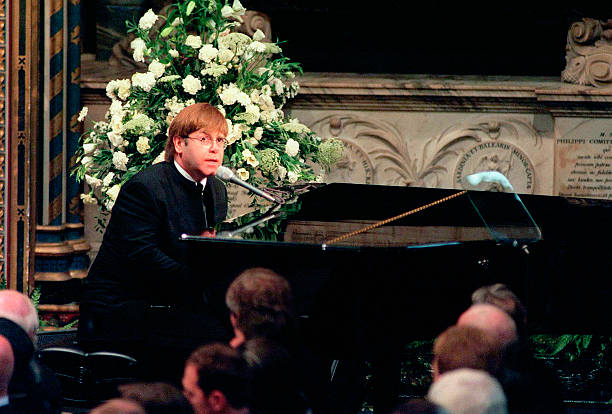
Perhaps that is why Candle in the Wind served both women so perfectly. Elton John and Bernie Taupin originally wrote the song with Marilyn in mind. Twenty-four years later, its lyrics were rewritten for Diana and performed at her funeral. The same song came to serve two women transformed into metaphors for a flame that was too bright, too exposed, and extinguished too soon.
There is, however, a less comfortable part of this sanctification. Marilyn and Diana were consumed in life by the very cultural machines that later mourned their deaths. Hollywood needed Marilyn’s image. The press needed Diana because millions of people wanted to buy magazines, newspapers and photographs of her. It is impossible to tell the story of Diana’s pursuit solely as one between a woman and the paparazzi. Consumers were waiting for those images.
After death, that same culture moved quickly from consumption to mourning. And perhaps sanctification also serves this psychic function: turning a measure of guilt into tribute. We are no longer looking out of curiosity, but to “preserve her memory.” We are no longer buying intimacy, but trying to “understand who she really was.” We are no longer consuming an image, but “celebrating a legacy.”
That does not mean the tributes are false. Love can be genuine, as can longing. A brother can write a book about his dead sister because he still grieves for her and, at the same time, publish a commercial product. A son can turn his mother’s memory into a life cause. Millions of people can feel genuine affection for someone they never knew. It is precisely the coexistence of affection, memory, fantasy and consumption that makes the phenomenon so interesting.
There is also a particularly cruel dimension when the eternally young dead are women. Our culture tends to construct famous women around beauty and youth and then subject them to the judgment of aging. Diana and Marilyn never reached that second stage. They died young enough to remain forever inside the photographs through which we learned to love them.
Death made their images impossible to update. That is why each generation can produce its own Diana: the unhappy princess, the rebel, the victim of the monarchy, the victim of the press, the extraordinary mother, the sexually liberated woman, the humanitarian pioneer. And it can produce its own Marilyn: sex symbol, victim of Hollywood, underestimated actress, traumatized woman, feminist avant la lettre.
None of these versions has to be entirely false, but none of them is the woman herself. They are projections built around someone who permanently lost the ability to say that it was not quite like that.
Perhaps that is why we keep asking who Diana would be today. The question appears to be about her, but it is impossible to answer. The 65-year-old Diana we imagine never existed. What exists is what we need her to have become.
And perhaps that is one reason some forms of collective mourning seem never to end. The idealized dead offer a security no living person can provide. They do not age, reject our interpretation, change their minds, or abandon us again. We can keep investing in them because reality can no longer interfere with the fantasy.


The work of mourning requires exactly the opposite movement. We do not need to stop loving the dead, much less forget them, but we do need to tolerate the idea that the lost object can never be fully recovered — not through an unseen photograph, a preserved dress, another biography or the hundredth witness promising to reveal who that person “really was.”
Perhaps Diana and Marilyn remain culturally alive because we keep trying to solve stories that death made insoluble. And perhaps truly honoring someone does not mean keeping them eternally available for our projections, but accepting something far more difficult: the emptiness their absence left behind.
Descubra mais sobre
Assine para receber nossas notícias mais recentes por e-mail.
 miscelana.com