
This article contains spoilers for Silo Season 3 and references to Hugh Howey’s books.
The third season of Silo accomplished something the second took far too long to achieve: it answered several questions without diminishing the mystery. We discovered how the silos were built, watched Daniel and Helen being separated, learned the origin of the Safeguard, gained a clearer understanding of Silo 1’s role, and finally discovered who Troy is.
Even so, the finale leaves us feeling that we understand the mechanisms but not the entire plan. We know how these populations are controlled. What we still do not know, at least in the series, is why that control must continue more than three centuries after the catastrophe.
“Troy” ends the season with Daniel beginning to recover his memories of Helen and Juliette determined to attack Silo 1. Before that war begins, however, Silo still needs to answer some essential questions.
Was the United States Actually Attacked?
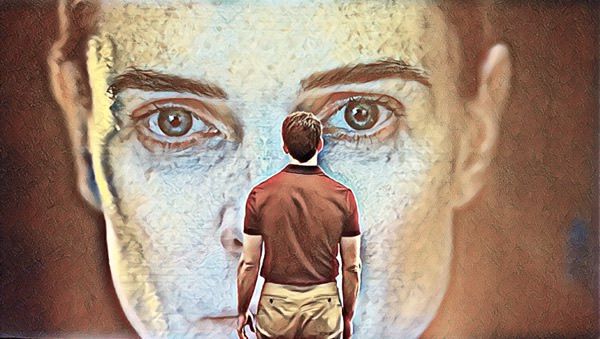
The explosion witnessed by Daniel and Helen initially appears to confirm that the United States was attacked. The problem is that everything surrounding it suggests a planned operation.
The guests attending the inauguration had already been assigned to specific silos. Helen, who was pregnant, was directed to Silo 18. Daniel was kept close to Silo 1, alongside Victor, Rosalind Thurman, Per Stensen, and other people involved in the Project. Charlotte disappeared, and someone answered her phone in her place. When Daniel and Helen realized something was wrong and attempted to leave, the bomb exploded.
The series has not yet revealed who authorized the attack, but it is difficult to believe that Stensen and Thurman merely took advantage of a coincidence. Everything suggests that the explosion was caused or permitted by them to force the preselected people into their assigned silos.
In Hugh Howey’s books, the answer is clearer: the same group that built the silos also causes the apocalypse. Convinced that advances in nanotechnology had already condemned humanity, its members decide to destroy the world in a controlled manner to preserve a small part of the species.
The series may still alter the people responsible and their motivations. What is unlikely to change is the most disturbing idea: the silos were not simply a response to the end of the world. They were probably part of its execution.
Did the Bomb Destroy the Entire World?
No. A single explosion in Atlanta, however powerful, could not explain global extinction or make the whole planet uninhabitable for centuries. The bomb is merely the visible part of the catastrophe.
The real threat is connected to the gray goo: nanotechnology capable of spreading, contaminating organisms, and transforming microscopic machines into almost invisible weapons. It was precisely this danger that led Stensen to finance the construction of the silos.
We still do not know whether the explosion was used to release the nanobots, conceal a wider operation, or simply create the panic necessary to seal the doors. Nor is it clear whether other cities were attacked simultaneously.
The final season will have to explain who destroyed the world, how they did it, and whether the threat used to justify the Project was truly inevitable or merely the paranoid conviction of men with too much power.


Is the Air Already Breathable and Are the Cleaners Being Poisoned?
After the Silo 17 massacre, this has gone from an unlikely theory to one of the strongest possibilities in the series. The residents manage to leave, walk around, and breathe outside. They do not begin collapsing like the cleaners we have seen before. They die because Troy sends drones, gas, and ammunition to exterminate them before they can reach the other silos.
The scene is particularly disturbing because of Troy’s coldness. Charlotte, now called Susan, still tries to establish a limit. She accepts the idea of eliminating the rebellion’s leaders but refuses to kill entire families. Troy dismisses her from the operation, assumes control of the drones, and proceeds with the massacre without the slightest hesitation. To him, those people are not men, women, and children. They are fugitives threatening the isolation imposed by the Project.
If the air itself were capable of killing them, the entire operation would be unnecessary. Troy would only need to wait.
This forces us to reconsider the cleaning ritual. Before leaving, the condemned person is hit with a spray inside the airlock. Officially, the procedure might be interpreted as decontamination or preparation of the suit. The theory proposes the exact opposite: the spray introduces the poison—or the nanobots—that will kill the person a few minutes later.

The inferior tape used by the silo would also be part of the mechanism. Because it does not seal the suit properly, it allows the agent applied inside the airlock to reach the body. Juliette survives because Walker replaces it with the tape used in Mechanical, which actually works. Perhaps Juliette was not protected from the outside air. She may have been protected from the poison sprayed over her before the door opened.
Bernard does not necessarily disprove this theory either. Although he goes outside without a suit, he still passes through the same airlock and is exposed to the procedure intended for the condemned. His death may have begun there, before he even stepped outside.
The devastated landscape is still real. The green world displayed inside the helmets is a recording designed to encourage the condemned to clean the camera. But a dead world is not necessarily a world with unbreathable air. There may be no vegetation around the silos, while it is already possible to survive on the surface.
The Silo 17 massacre appears to show us exactly that: the outside did not kill those people. Troy did.
If the Outside Is Habitable, Why Is Everyone Still Imprisoned?
This becomes the central question of Silo. If the air can already be breathed, the communities are not remaining underground out of necessity. They remain there because the Project is not over.
In the books, the silos are not simply shelters. They are isolated social experiments, observed and compared over centuries. Each community experiences crises, rebellions, political changes, and periods of stability. Silo 1 analyzes the results to decide which population will be considered suitable to return to the surface.
The intention was never to release everyone. Only one silo would be chosen to repopulate the planet. The others would be eliminated.
The series has not yet confirmed that it will follow precisely the same conclusion, but it has already introduced almost every necessary element: the ban on communication, constant surveillance, the internal Safeguard, the external drones, and Thurman’s reference to Charlotte’s role at “the end of the Project.”
Keeping everyone underground makes it possible to control the development of each society. The residents do not know the past, are unaware of the other communities, and cannot compare their versions of history. Each silo functions as a sealed human laboratory.
When a population discovers the truth or decides to leave before the predetermined time, it becomes impossible to control. That is what happened in Silo 17. Its residents were not killed because the outside was dangerous to them. They were killed because they were dangerous to the Project.
What Does Per Stensen Gain From All This?
Probably not money. Money loses all usefulness once the world ends. Per Stensen’s reward is far greater and more megalomaniacal: he becomes the architect of future humanity.
Stensen believes that nanotechnology will make extinction inevitable. Instead of merely trying to save as many people as possible, he decides how the species will survive, who has the right to participate, and what kind of society will inherit the planet.
It is a fantasy of absolute control disguised as salvation.
He chooses the people, distributes families among the silos, finances the structures that will organize their lives, and gives Silo 1 the power to erase memories, suppress rebellions, and eliminate entire communities. Even if he does not remain alive until the end of the Project, his vision will continue to rule people born centuries after his death.
That is Stensen’s real gain: not personally surviving the end of the world, but becoming the man who decides what comes after it.
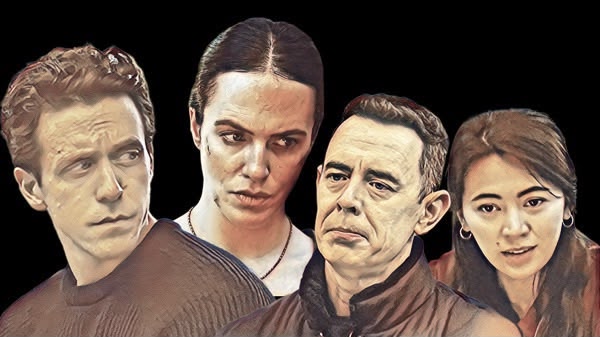
There is also an almost eugenic dimension to the Project. If only one community will be chosen, someone must establish which characteristics deserve to survive. Obedience? Stability? Reproductive capacity? An absence of rebellion? The Project stops preserving humanity as it is and begins trying to manufacture the humanity Stensen considers acceptable.
The problem is that, by eliminating curiosity, conflict, memory, and freedom, he risks destroying the very thing he claims to be saving.
Why Can’t the Silos Communicate?
Communication would destroy the system’s central lie: the idea that each community is alone.
If the residents knew other silos existed, they would begin comparing information. They would discover that they all obey similar versions of the Pact, experience the same manipulation, and can be exterminated by the same mechanism. A successful rebellion would stop being an isolated event and become a model for everyone else.
Silo 1 must monopolize communication because shared information creates solidarity—and solidarity creates resistance.
Silo 17 demonstrates precisely what makes this so dangerous. Its residents neutralized the internal Safeguard and managed to leave. Silo 1 had to deploy drones to prevent them from reaching the other communities. It was not enough to kill them because they had disobeyed. The system needed to prevent them from proving to their neighbors that disobedience was possible.
If the silos communicate, they stop being isolated experiments and can become a network capable of challenging the control center. Communication would also compromise any attempt to compare the communities. A laboratory remains controlled only for as long as its subjects cannot talk to one another.

How Much Time Has Actually Passed?
The safest reference is that approximately 352 years separate the creation of the silos from Juliette’s story. The finale, however, mixes the intervals in a deliberately confusing way.
When Daniel awakens as Troy to deal with Silo 17, he is given a reference to seven years. This does not mean that only seven years have passed since the explosion. The number of notes in which he asks about Helen shows that Daniel has already gone through several periods of activity and stasis.
The seven years probably refer to the time since his previous awakening or mission. After the Silo 17 massacre, Troy returns to stasis and is awakened 35 years later to control the crisis in Silo 18.
That interval corresponds with Solo’s age. Jimmy was still a boy when his silo fell and is now a middle-aged man. Silo 18, meanwhile, has gone through many generations before reaching Juliette.
Daniel was not transformed into Troy only once. He was awakened, used, subjected to the erasure process again, and returned to stasis over more than three centuries. The file filled with questions about Helen suggests that this violence had to be repeated many times.
What Happened to Helen and Daniel’s Child?
We know that Helen was pregnant when she was taken into Silo 18. We still do not know whether she gave birth, what identity she received after the collective erasure of memories, or what happened to the child.
The possibility that her descendants remain inside Silo 18 naturally leads to Juliette. Troy studies her face during their exchange in front of the door, and the series seems to want us to recognize something in his expression. But that still does not prove Juliette is descended from Helen and Daniel.
More than three centuries have passed. Even if their child survived, many families could now be descended from them. It is also possible that Troy’s reaction is not biological but emotional: Juliette may remind him of Helen through the way she speaks, confronts authority, or refuses to accept convenient answers.
The connection exists. Its nature remains unresolved.
What Happened to Anna, Thurman, and Stensen?
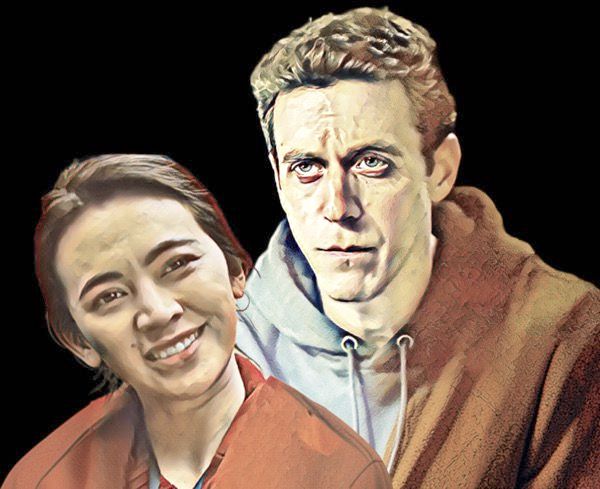
“Troy” shows that Thurman survived inside Silo 1, became its director, and continued controlling the Project. Victor also crossed the centuries by alternating periods of activity and stasis. But the series has not yet explained what happened to Per Stensen, Anna, or Henry.
Anna is especially important because Thurman spares Charlotte, claiming that she remains necessary to her daughter and to the end of the Project. This means Anna continued to exert some influence over the system and may also have been preserved inside Silo 1.
In the books, some of these roles belong to different characters, and the series has redistributed relationships, responsibilities, and motivations. This means the original material cannot provide every answer. We still need to know who remains in stasis, who died, who controls Silo 1 after Victor, and what role Charlotte was meant to play in the Project’s conclusion.
Is the Algorithm an Artificial Intelligence or a Person?
The finale confirms that Victor was the voice speaking to Camille during the attempt to activate the Safeguard. This explains the hesitation, changing tone, and emotional reactions that led Bernard to conclude there was a man behind the machine.
But this discovery does not mean the Algorithm is entirely fake.
There is clearly a system capable of monitoring conversations, calculating probabilities, identifying threats, and advising those in charge of Silo 1. The question is how much of this power belongs to the artificial intelligence and how much depends on human interpretation.
Victor spoke on behalf of the Algorithm, but he could also alter deadlines, negotiate, and make decisions. Troy now occupies his position. The voice, therefore, may not be a single entity but a combination of technology, protocol, and people presenting themselves as an infallible authority.
It is the old Wizard of Oz: the machine is impressive, but someone still has to be behind the curtain.
What Is Behind the Door Called the Forward Vault?
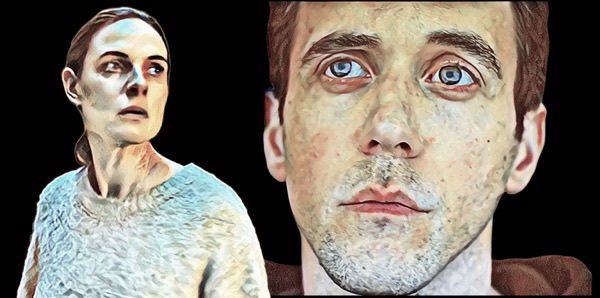
The door found beneath the digger has become far too important to be merely another exit. Silo 1 calls it the Forward Vault and reacts immediately when Juliette approaches it. Troy offers protection to Silo 18 on one condition: no one can attempt to open the door or establish contact with another community.
This practically confirms that the passage is connected to the infrastructure linking the silos, the control system, or the route to Silo 1 itself.
Juliette accepts the agreement because she knows Troy is listening, but later reveals that she intends to do exactly the opposite. She understands that blocking the Safeguard pipe will not be enough. As long as Silo 1 exists, another person can take Victor’s place and attempt to exterminate them.
The door may be the physical route to the enemy. It may also provide access to the truth about what the Project intends to do when it finally decides the experiment is over.
And Who Is Troy Now?
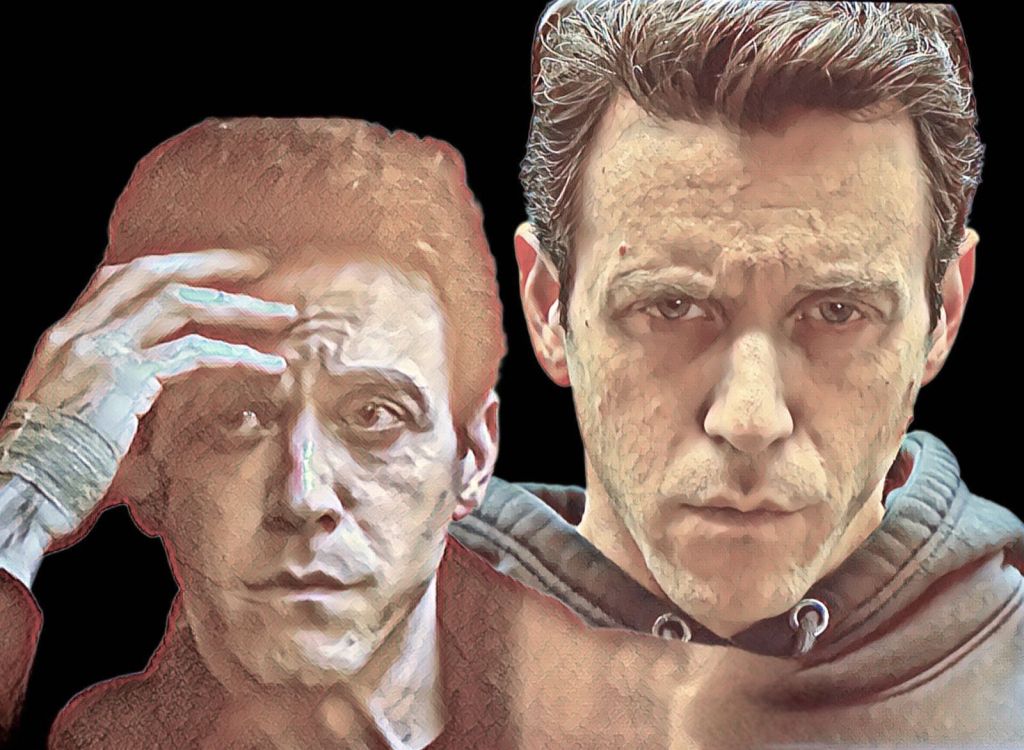
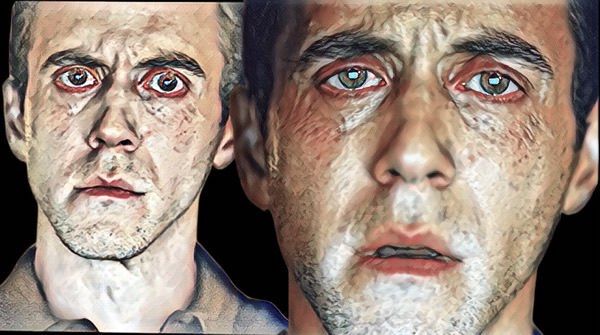
This may be the most important question because it no longer has a simple answer. Troy is Daniel without access to the memories, relationships, and ethics that once organized his personality. But when Victor reveals Helen’s name, something returns.
A scene already filmed for the fourth and final season takes this uncertainty into Troy’s meeting with Juliette. She asks him who he is. Troy answers, “I don’t know.”
And he truly does not.
He is not simply Daniel because he carries the crimes committed as Troy. But he can no longer remain only Troy after discovering that his identity was manufactured. To help Juliette confront Silo 1, he will need to recover his history and decide what to do about the man he became without it.
Season 3 answered who Troy was. The final season has a much harder task: discovering who he will choose to be.
Silo 17, meanwhile, answered one question and opened another, far worse one. Its residents did not die because they breathed the outside air. They died because they discovered that they could. Troy was not protecting those families from an uninhabitable world. He was protecting the Project from a humanity beginning to realize it no longer needed it.
Descubra mais sobre
Assine para receber nossas notícias mais recentes por e-mail.


1 comentário Adicione o seu