
Every Oscar race has that moment when a performance stops being merely praised and begins to feel inevitable. Andrew Scott appears to have found his in Elsinore. Since its first screening at the Telluride Film Festival, he has emerged as a serious Best Actor contender for playing Ian Charleson, the Chariots of Fire star who took on Hamlet at the National Theatre while dying of AIDS.
It is the kind of role the Academy traditionally loves: a great actor playing another great actor, a true story, physical transformation, Shakespeare, and the proximity of death. But Elsinore seems interested in something more complex than turning suffering into an award. The film rescues an actor whom cinema failed to recognize fully while he was alive and reconstructs a theatrical season that became legendary for all the wrong reasons before being redeemed by an extraordinary performance.
Directed by Simon Stone and written by Stephen Beresford, Elsinore opens in the United States on November 20. Scott already appears among the leading names in a race that includes possible contenders such as Matt Damon, Tom Cruise, John Malkovich, and John Turturro. It is still too early to declare a definitive favorite, but not too early to recognize that he has finally been given a role worthy of everything he has already shown himself capable of doing.
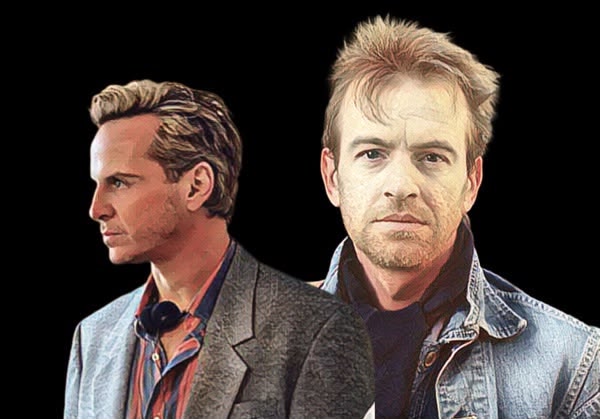
The Film Is About Ian Charleson, Not Daniel Day-Lewis
Elsinore begins with one of the most famous incidents in British theater history. On September 5, 1989, Daniel Day-Lewis was playing Hamlet on the Olivier stage at the National Theatre when he stopped during the scene with his father’s ghost, walked off, and never returned.
The revelation that the actor is Daniel Day-Lewis works almost like a joke within the film. For a few minutes, we might imagine that Elsinore is going to tell the story of his breakdown. But that incident merely creates the opening for the real protagonist.
The film is about Ian Charleson, played by Andrew Scott. Born in Edinburgh, Charleson became internationally famous as Eric Liddell in Chariots of Fire, which won four Oscars, including Best Picture. He also appeared in Gandhi, which won the same award the following year. Handsome, charismatic, and technically admired, he seemed destined for a major film career.
That career never materialized as it should have. At 39, Charleson was still identified almost exclusively with Chariots of Fire and was trying to balance less significant work with his desire to return to the great roles of the theater. He was gay at a time when publicly acknowledging his sexuality could end professional opportunities. He lived fully within London’s gay circles but knew that his public image remained subject to the demands of a predominantly heterosexual industry.
Then Daniel Day-Lewis abandoned Hamlet, and the opportunity Charleson had waited for throughout his career arrived at the worst possible moment.
The Incident That Became a Legend
Directed by Richard Eyre, the production of Hamlet was already one of the major theatrical events of the season. Daniel Day-Lewis had distinguished himself in My Beautiful Laundrette and had just finished My Left Foot, which would earn him his first Oscar only a few months later. Judi Dench played Gertrude. The cast also included John Castle, Michael Bryant, Oliver Ford Davies, and Stella Gonet, as well as younger performers who would later become internationally known.
Day-Lewis had always worked with extraordinary intensity, but his approach to Hamlet appeared to be pushing him toward a particularly dangerous limit. Richard Eyre would later say that there had been no distance between the actor and the character. By the time the collapse occurred, the production was already surrounded by stories about his emotional immersion.
That night, during Hamlet’s encounter with the ghost of his father, Day-Lewis stopped. He left the stage, collapsed backstage, and could not return. The incident was officially attributed to exhaustion, but the press found a far more irresistible explanation: Daniel had supposedly looked at the actor playing the Ghost and seen his own father, the poet Cecil Day-Lewis.
Cecil had died in 1972, when Daniel was 15. The story of an actor confronted by his father’s ghost while playing a son confronted by his father’s ghost was simply too perfect to disappear. It began to be repeated as fact, helping to construct the image of Daniel Day-Lewis as a performer capable of crossing the boundary between character and reality.
The episode ceased to belong solely to theater history and entered popular culture. It became one of the best-known anecdotes about so-called Method acting, frequently used either to celebrate or ridicule performers who immerse themselves so completely in their roles that they lose sight of where the performance ends. The fact that Day-Lewis never returned to the stage gave the story an irresistibly dramatic conclusion.
What Daniel Day-Lewis Actually Said
Day-Lewis never denied that the memory of his father dominated his experience of playing Hamlet. What he later denied was having literally seen an apparition that night.
In 2003, he described the incident as a vivid, almost hallucinatory moment in which he felt himself engaged in a dialogue with his father. But he explained that this was not what forced him to leave the stage. He walked away because he had reached a state of complete exhaustion: he felt empty, with nothing left to say or give.
In 2012, he returned to the subject and said that he probably “saw” his father every night in an emotional sense. Working on Hamlet meant exploring the relationship between father and son through his own experience of loss. There was, therefore, a psychological communication with his dead father, but not necessarily a material ghost standing on the stage. The Guardian
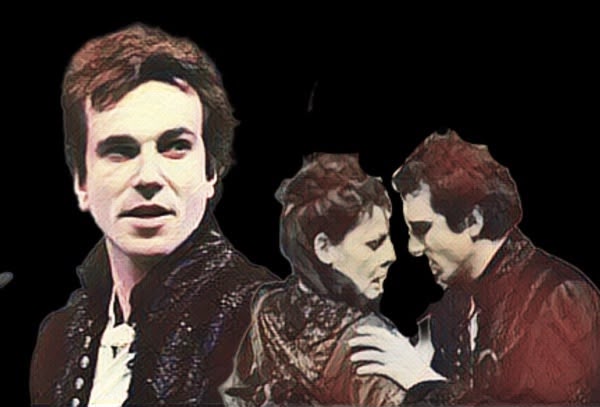
The distinction never acquired the same force as the legend. To this day, the story continues to be summarized as “the night Daniel Day-Lewis saw his father’s ghost.” His permanent departure from the theater made it even more mythical: it was the final time he ever appeared onstage.
When Day-Lewis reunited with Judi Dench in the musical Nine two decades later, he sent her a message promising that he would not run out on her this time. Even he understood that the incident had become part of his public persona.
What Judi Dench Saw
Judi Dench was onstage as Gertrude and later offered a far less sensational account of the incident. She said that she had noticed no signs of turmoil during the run. She knew only of Day-Lewis’ profound love for his father and believed that something had suddenly overwhelmed him during the performance.
When the play was stopped, Dench ran to find Jeremy Northam, Day-Lewis’ understudy. She asked when he had last rehearsed Hamlet. The answer was alarming: approximately three weeks earlier.
Northam went on anyway.
Dench remembered that he was brilliant. She also refused to treat Day-Lewis’ breakdown as a whim, an eccentricity, or another example of a Method actor’s excesses. For her, Hamlet’s physical, vocal, and emotional demands were so immense that it was perfectly understandable for someone to reach a point at which he could no longer continue.
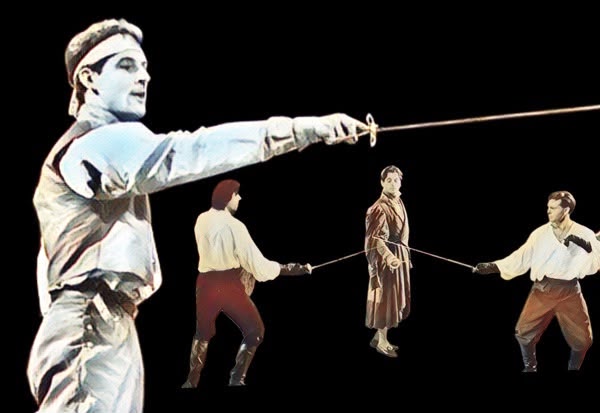
Jeremy Northam: The Hamlet Who Saved the Night
Ian Charleson did not replace Daniel Day-Lewis immediately. That detail frequently disappears from the best-known versions of the story — and is also omitted from many reports about Elsinore.
The person who finished the performance that night was Jeremy Northam, then a young member of the company. He had been playing Laertes and was Day-Lewis’ understudy. Called upon without any recent preparation, he assumed one of the most difficult roles in theater and prevented the performance from ending there.
Northam continued playing Hamlet while Richard Eyre rehearsed Ian Charleson. The National Theatre’s own archive describes the 1989 production as the story of three Hamlets: Day-Lewis began it; Northam sustained it through the crisis; Charleson took over and transformed a disastrous season into a legendary theatrical event. National Theatre/Google Arts & Culture
Everything about the production appeared destined for greatness. Richard Eyre was beginning his tenure as artistic director of the National Theatre. Judi Dench was onstage as Gertrude, surrounded by some of the leading names in British theater. No one could have imagined how the production would ultimately achieve immortality.
Ian Charleson Receives the Role of His Life
Charleson had already played Hamlet in 1974, at the age of 25, and believed that he had been too young to understand the character fully. Fifteen years later, he was artistically prepared — but his body was beginning to fail.
Diagnosed with HIV in 1986, he was already gravely ill when the opportunity arrived. He was suffering from septicemia, enduring intense pain, and would later undergo chemotherapy. The swelling in his face was publicly attributed to sinus surgery. Richard Eyre knew the truth and understood that casting him represented an enormous risk.
Charleson, however, wanted Hamlet. He had told Eyre that he was hungry for the great Shakespearean roles. When the opportunity emerged, it was Charleson who persuaded the director that he was still capable of taking it on.
The meeting between actor and role acquired an almost unbearable dimension. Hamlet is a man surrounded by death, by the memory of his father, and by the question of what it means to continue existing. Charleson performed every word while knowing that his own time was running out.
Why Elsinore Is So Personal for Andrew Scott
Andrew Scott did not join Elsinore only as its leading actor. He also produced the film and has admitted that he fought fiercely to get it made. His identification with Charleson extends through Hamlet, sexuality, the experience of loss, and the challenge of building a career in an industry that, for decades, allowed gay actors to play anyone — provided they did not reveal who they were offscreen.
Scott has said that, while still a teenager, he realized being gay could prevent him from appearing in the films he dreamed of making. Apparently well-meaning people advised him to keep his sexuality private because he could “pass” as straight. For a time, he omitted parts of himself in interviews. That allows him to understand intimately what happened to Charleson, who lived his sexuality among friends and within London’s gay spaces but knew that publicly coming out could destroy the career he was still trying to build.
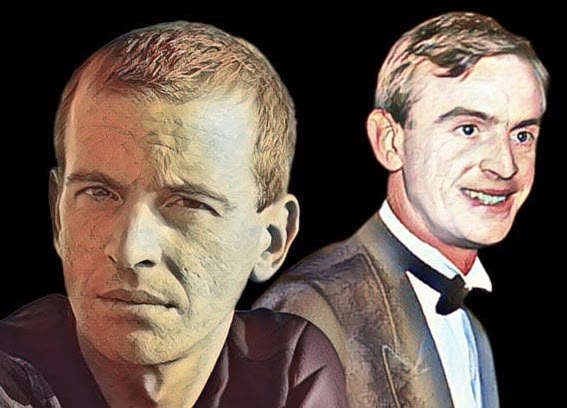
There is also the memory of the epidemic. Scott grew up at a time when AIDS was treated not merely as an illness but as a threat and a punishment. He remembers the fear surrounding even a sexual health screening and the abandonment of a community by governments that avoided speaking the name of the disease. In playing Charleson, he does not view that period as distant history.
The recent death of Scott’s mother made the connection even more personal. Approaching his 50th birthday, he has acknowledged thinking more frequently about his own mortality. For him, Elsinore became a question about time: what do we do with what we still have?
Staying Alive Is Not the Same as Living
Charleson underwent treatment in the morning and faced Hamlet at night — a kind of Everest for any actor. His decision appears almost incomprehensible when viewed exclusively through medical logic. But the film asks another question: what would be the point of extending his existence if doing so required him to abandon the very thing that made him feel alive?
In Elsinore, Olivia Colman plays Margaret Johnson, the doctor attempting to prolong Charleson’s life and opposing his decision to take on such an exhausting role. Ian knows that playing Hamlet may accelerate his deterioration. Even so, he refuses to accept that surviving for a few more weeks is necessarily the same as living.
For him, playing Hamlet is not an act of irresponsibility in the face of death. It is the final assertion that his life still belongs to him.
Scott did not want to fetishize Charleson’s death or make a film crushed by its own importance. Elsinore therefore preserves his humor, vanity, sexuality, music, and pleasure. Ian does not appear merely as a heroic man dying of AIDS. He is someone who dances, provokes, desires, and finds in the theater a way to continue belonging to the world.
That is the key to Andrew Scott’s performance. He is not merely playing a dying man. He is playing an actor who refuses to allow death to become his final character.
Scott also performed Hamlet approximately 150 times in London in 2017 and understands the role’s demands. When he speaks about Charleson, he insists that Ian did not take on Hamlet to prepare for his own death. He did it because he was still alive and wanted to use the time he had left to be among people, create beauty, and remain beneath the stage lights.
It is precisely this resistance to easy sentimentality that appears to have placed Scott’s performance at the center of the Oscar race.
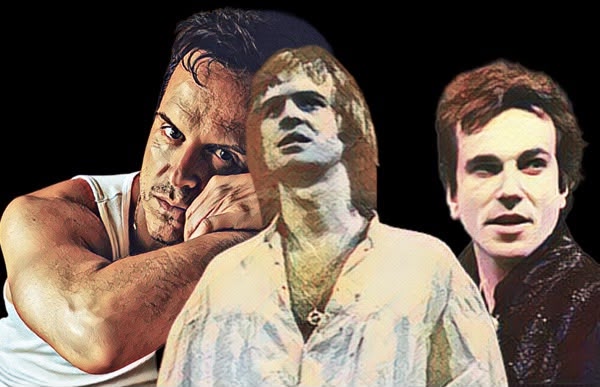
A Legendary Season for All the Wrong Reasons
The production began as a prestige event. It became famous for Daniel Day-Lewis’ collapse, for the ghost that probably never existed, for Jeremy Northam’s desperate entrance, and for Judi Dench being onstage as everything fell apart.
It could have survived merely as a story about the dangers of an actor’s absolute commitment. Ian Charleson gave it another meaning.
His run as Hamlet lasted only a few weeks, but it came to be regarded as one of the finest interpretations of the character ever seen on the British stage. Ian McKellen gave Charleson the Best Actor award he had received from the Evening Standard. Charleson’s final performance took place on November 13, 1989. He died on January 6, 1990, less than two months later, having requested that AIDS be publicly recorded as the cause of his death.
Shortly before the end, he was still writing to Richard Eyre about the possibility of playing Hamlet again and taking on other great Shakespearean roles. Charleson did not see himself as ending a career. He still believed that he might resume it.
His Hamlet was never filmed. No recording exists that can prove what happened on that stage. All that remains are photographs, reviews, and the memories of those who watched him transform the awareness of death into an affirmation of life.
Elsinore is not merely attempting to reconstruct a lost performance. It is trying to return to cinema an actor whom cinema failed to recognize while there was still time.
Any eventual Oscar nomination will not belong to Andrew Scott alone. It will return Ian Charleson to an audience that remembers Chariots of Fire but may never have known that the actor ran one final time — not on an Olympic track, but toward the stage — when he already knew that time was running out.
Descubra mais sobre
Assine para receber nossas notícias mais recentes por e-mail.

