
There are still eight days to go before the main 2026 Emmy ceremony, but television’s biggest awards have already begun. This weekend, the ceremonies formerly known as the Creative Arts Emmys — now officially presented as the first two nights of the Emmys — are handing out more than one hundred statuettes and beginning to indicate which series will arrive with real momentum at the September 14 broadcast.
There are always favorites when awards season begins. But television has a short memory. More important than the expectations built over several months is reaching the Emmys as the series everyone is talking about at that particular moment.
That is exactly what happened to The Studio last year. The series won nine awards before the main ceremony had even begun and finished its campaign with 13 Emmys, setting a new record for a comedy. By the time the big night started, there was no longer a real competition. A coronation was already underway.

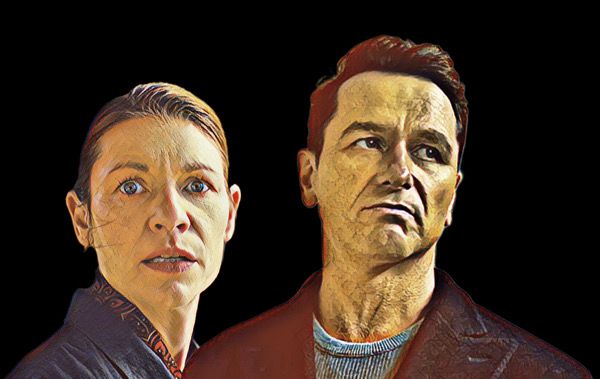
In 2026, the series of the moment is something else. Widow’s Bay, one of the best things television has given us this year, arrived later, surged at precisely the right time, and earned 19 nominations. It now threatens to take over, without asking anyone’s permission and with every possible justification, the place that belonged for years to Hacks and The Bear.
Hacks is saying goodbye with 24 nominations, a record for a comedy in a single season. There is, naturally, a desire to give Jean Smart, Hannah Einbinder and the series itself one last triumphant lap. The Bear, which the Emmys continue to call a comedy despite being almost entirely a drama, is also ending its run as one of the most heavily rewarded shows of recent years. But Widow’s Bay has what is often decisive: novelty, enthusiasm and perfect proximity to the voting period.
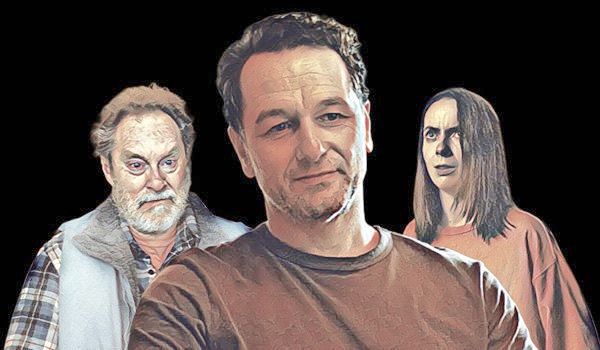
Matthew Rhys is competing twice this year. He is nominated as a comedy lead for Widow’s Bay and as a limited-series actor for The Beast in Me. There may be room for debate in the second category, where he faces Oscar Isaac, Jason Bateman, Charlie Hunnam and Riz Ahmed. In comedy, however, there should be no question. This is Matthew Rhys’ Emmy.
Kate O’Flynn would also receive my vote for supporting actress. It is a funny performance that never needs to announce the joke, eccentric without turning the character into a caricature, and essential to defining the series’ strange universe. But Widow’s Bay also has the equally excellent Dale Dickey in the same category, as well as Stephen Root among the supporting actors. Splitting the vote internally is a risk, although it also demonstrates the extraordinary strength of the cast.
In Kate O’Flynn’s case, there is an additional cruelty: if she wins, we will not see her speech during the main ceremony.
The Emmys Have Decided to Hide Some of Their Biggest Awards
The main broadcast, which presented 26 categories in 2025, will feature only 19 this year. Six awards have been moved to the earlier ceremonies: Supporting Actor and Supporting Actress in a Limited or Anthology Series or Movie, Writing and Directing for a Limited or Anthology Series or Movie, Writing for a Variety Series, and Outstanding Variety Special (Live).
In addition, Outstanding Talk Series and Outstanding Scripted Variety Series have been combined into a single category, eliminating one more spot from the broadcast.
Limited series have essentially been dismantled within the main ceremony. Only Outstanding Limited or Anthology Series and the two lead acting awards will remain. Supporting performers, writers and directors — the very people responsible for transforming a good story into great television — will receive their statuettes earlier.
And these are not obscure categories filled with names unknown to the general public. The supporting actor nominees include Jason Bateman, Richard Gadd, Richard Jenkins, David Harbour, Nick Offerman and Charles Melton. The actresses include Dakota Fanning, Linda Cardellini, Joy Sunday, Laurie Metcalf, Constance Zimmer and Youn Yuh-jung.
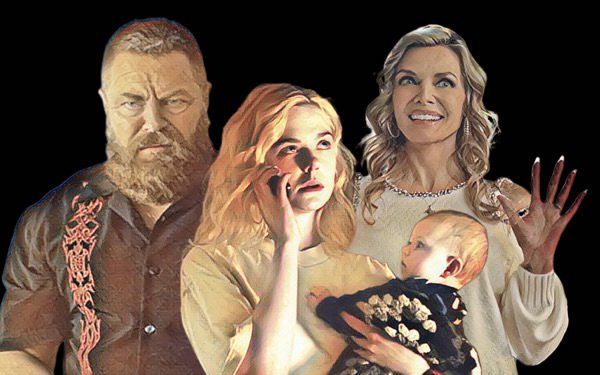
These are some of the most respected and recognizable performers in television and film. The Academy has removed them from the main broadcast, supposedly to make the Emmys more appealing to people who watch television.
The justification is the same old need to fit everything into approximately three hours. But the math does not help the Academy’s case as much as it may think.
In 2025, each winner was given 45 seconds for an acceptance speech. Five complete speeches would amount to only three minutes and 45 seconds; six would total four and a half minutes. Of course, an award also requires presenters, an introduction, the announcement of the nominees, the opening of the envelope, the winner’s walk to the stage and the exit afterward. Taking all of that into account, removing six categories may save between 18 and 24 minutes. Add the merger of the two variety categories, and the total could approach half an hour.
That is not an insignificant amount of time during a live broadcast. The question is why those minutes must be taken away from actors, writers and directors — rather than from overlong monologues, sketches that rarely work, promotional tributes or any other element supposedly designed to make the ceremony more “entertaining.”
In recent years, the Creative Arts Emmys had already absorbed dozens of technical categories, guest performances, animation, documentaries, reality programs and a significant portion of variety television. The difference now is that categories traditionally considered central have begun to follow the same path.
Even the name has been softened. The Academy now prefers to describe this weekend’s ceremonies simply as the first and second nights of the Emmys. It is an attempt to suggest that all the winners belong to the same celebration and that every award carries the same value.
Symbolically, perhaps they do. In terms of visibility, we know they do not. There is a ceremony broadcast live to millions of viewers, and there is another shown later in a condensed version.
The problem was never acknowledging that the Emmys have too many categories for a single broadcast. The problem is pretending that a supporting performance, a screenplay, or the direction of a limited series has somehow become expendable — while monologues, sketches, and commercial breaks continue to find room.
Who Has Already Won at the 2026 Emmys?
The biggest winner on the first night was Bad Bunny’s Super Bowl halftime performance. The production collected seven awards, including Outstanding Variety Special (Live), directing, choreography, music direction, lighting, sound mixing, and technical direction and camerawork. It marked the singer’s first Emmy.
The Traitors won six statuettes. Alan Cumming received the award for Outstanding Host for a Reality or Reality Competition Program for the third consecutive year. He no longer functions merely as a host: he is practically a character within the program’s atmosphere, humor, and game itself.
The Late Show with Stephen Colbert collected five awards, including Outstanding Writing for a Variety Series. Mariska Hargitay, who will host the main ceremony, won as both director and producer of My Mom Jayne, the documentary about her mother, Jayne Mansfield.

Sabrina Carpenter received her first Emmy as a producer of The Muppet Show, named Outstanding Variety Special (Pre-Recorded). It defeated, among other nominees, the recording of the final performance of Taylor Swift’s The Eras Tour.
Love on the Spectrum won Outstanding Unscripted Reality Program, Jeopardy! was named Outstanding Game Show, Jimmy Kimmel won as a game show host, and Mr. Scorsese received the award for Outstanding Documentary or Nonfiction Series.
The most significant tribute of this first weekend will go to I Love Lucy. The series starring Lucille Ball and Desi Arnaz, which celebrates its 75th anniversary in October, will become the first production to receive the new Legacy Award, created to recognize programs whose impact remains alive in television and culture.
It would be difficult to find a better choice. I Love Lucy helped establish the language of the sitcom, popularized the multicamera system before a live audience, and played a crucial role in consolidating the rerun market. Lucille Ball and Desi Arnaz did not merely make one of the greatest comedies in television history. They helped invent the way television would be produced, sold, and watched again.
Who Are the 2026 Emmy Favorites?
In drama, The Pitt remains the safest choice. It leads the Emmys with 25 nominations, is attempting to repeat last year’s victory, and keeps Noah Wyle ahead in the actor race. Pluribus, however, arrives with 18 nominations and the possibility of finally giving Rhea Seehorn the Emmy she should have received long ago for Better Call Saul.
Among limited series, Beef leads numerically with 16 nominations but faces an open contest against DTF St. Louis. Carey Mulligan appears to be ahead among the actresses, while Oscar Isaac may prevent Matthew Rhys from completing a rare double victory.
Comedy, however, is where the most interesting contest lies — and also where I have a longstanding problem with the Emmys.
For years, The Bear and Hacks have dominated a category that should occasionally remember that comedy is also the thing that makes us laugh. The Bear was never a comedy. Hacks has humor, naturally, but it has always been a comedy-drama increasingly interested in pain, loneliness and the price of ambition.


Meanwhile, Abbott Elementary and Only Murders in the Building, two genuinely funny series, watched the major awards being absorbed by more dramatic productions — and perhaps considered more “prestigious” precisely because of it.
I continue to regret how many opportunities both shows lost. Quinta Brunson, Martin Short and their respective ensembles sustained television comedy while the Emmys rewarded anxiety attacks in kitchens and existential crises in dressing rooms.
Nor do I share the widespread enthusiasm for Shrinking. The series managed to scatter nominations across much of its cast and appears to have become one of the Academy’s favorites. To me, it remains far below its competitors. It is sentimental, uneven, and frequently less profound than it believes itself to be. I feel no sense of injustice when it loses.
Perhaps Widow’s Bay can finally reconcile what the Emmys have separated: aesthetic ambition, prestige, strangeness and genuine humor. There is still the powerful farewell narrative surrounding Hacks, and we should never underestimate voters’ love for Jean Smart. But the wind has changed.
My vote would go to Widow’s Bay. So would my prediction.

What the Emmys Reveal About the Power of Streaming Platforms
When I look at the Emmys, I do not see merely a competition between series and actors. I see a portrait of business, alliances, and the distribution of power within the industry. Because awards are never exclusively about merit — and perhaps they could not be. Art does not compete. Studios, platforms, campaigns, reputations, and carefully constructed narratives compete to persuade voters that a particular work represents the best of that moment.
That does not mean the winners are undeserving. Sometimes quality, strategy, and opportunity do meet. But that alignment is rarer than we like to admit. Winning depends on the quality of the work, naturally, but also on arriving at the right time, keeping the conversation alive, investing in an effective campaign, and knowing how to sell a narrative to voters.
The 2026 Emmys seem relatively more predictable than some recent editions. The Pitt should remain ahead in drama. Hacks has a carefully prepared farewell, and no one seems willing to deny Jean Smart another award. Widow’s Bay, however, arrived late as the series of the moment and now looms over the favorite. Even if it does not take Outstanding Comedy Series away from Hacks, it should find room in the acting, writing, directing, and production categories beginning with Matthew Rhys and, I hope, Kate O’Flynn.
Behind those titles lies an even larger contest. HBO remains television’s old royalty. It leads the 2026 nominations with 122, driven by The Pitt and Hacks, and has never entirely lost its position as the benchmark for prestige. It may change its name and owners and now face yet another merger, but it still knows how to produce and sell the idea of “quality television” better than virtually any competitor.

Netflix follows with 111 nominations. It is no longer the challenger trying to overthrow the traditional studios: it has become one of the Goliaths. It should win, particularly with Beef and The Beast in Me, alongside a presence spread across limited series, documentaries, reality shows, and technical categories. Its volume is so immense that even a year without absolute dominance still looks like a demonstration of strength.
But the most interesting transformation belongs to Apple TV. With a smaller catalogue, the platform earned 87 nominations and concentrated an impressive amount of prestige in relatively few productions. Last year, The Studio set a record with 13 victories, while Severance also kept Apple at the center of the conversation. Now come Widow’s Bay and Pluribus, alongside Shrinking, Slow Horses, and other titles.
Not everything receives the same recognition. Silo, for example, remains virtually ignored despite its narrative and technical ambition. Science fiction continues to face resistance in the major categories, even when series such as Severance and Pluribus manage to break through that barrier. Even so, no other platform currently brings together stars, creators, and productions from such different genres with the same consistent signature of prestige.
Apple may not finish 2026 with the highest number of statuettes. HBO and Netflix have many more nominations and much larger catalogues. But it could emerge as the symbolic winner: the platform that now best represents where actors, writers, and directors want to take their most ambitious projects. It has fewer titles, but an extraordinary proportion of series treated as events.
The contrast with Amazon is unavoidable. At the beginning of the streaming era, Prime Video seemed destined to occupy that position. Transparent helped legitimize streaming platforms at awards shows, and The Marvelous Mrs. Maisel turned Amazon into an Emmy powerhouse. Today, however, Amazon MGM appears increasingly absent from the prestige race. It produces a great deal and has immense resources, but it has lost a recognizable editorial identity.
Paramount+ also remains in a peculiar position. It carries the weight of a traditional studio and is home to one of contemporary television’s greatest commercial phenomena: the universe created by Taylor Sheridan. His series attract enormous audiences, yet rarely receive the same enthusiasm from the Academy.
Sheridan and Ryan Murphy represent almost opposite extremes of this cultural politics. Murphy understands Hollywood’s institutional language perfectly. Even when uneven, his productions arrive surrounded by stars, campaigns, and subjects that speak directly to voters. Sheridan has built an empire around a rural, conservative, masculine America that remains distant from the industry’s prevailing sensibility. He is one of the most successful men in television, yet the Emmys almost always behave as though he does not exist.
That does not mean political orientation automatically determines nominations. It means that cultural, aesthetic, and institutional affinities exist. Ryan Murphy knows how to speak to Hollywood. Taylor Sheridan frequently seems to speak to the audience that Hollywood does not understand or would rather not acknowledge.
That is why the Emmys are never merely an assessment of the best television of the year. They are also a map of who possesses prestige, who dominates the conversation, who knows how to campaign, and which platform has managed to become the industry’s most desirable destination.
In 2026, HBO and Netflix are still the giants. But Apple is the company that most clearly represents the future of that prestige. It may not win numerically. Culturally, however, it already seems to have won.
Descubra mais sobre
Assine para receber nossas notícias mais recentes por e-mail.

