
Moira Shearer spent her life trying to explain that she was much more than Victoria Page, the red-haired ballerina who dances herself to death in The Red Shoes. She failed. Some roles are so perfect, some images so powerful, and some encounters between an artist and a character so definitive that any attempt to separate them becomes futile. Cinema turned Shearer into a legend, but it also imprisoned her within a fantasy she had never fully wanted to inhabit.
In 2026, Moira Shearer would have turned 100. Born on January 17, 1926, in the Scottish town of Dunfermline, she died just days after her 80th birthday, on January 31, 2006. The precise date of her centenary passed in January, almost silently. But this September 6 marks 78 years since the general British release of The Red Shoes, following its London premiere in July 1948. It is the perfect opportunity to revisit not only the film, but also the woman who paid an unexpected price for starring in it.
The Scottish ballerina raised in Africa
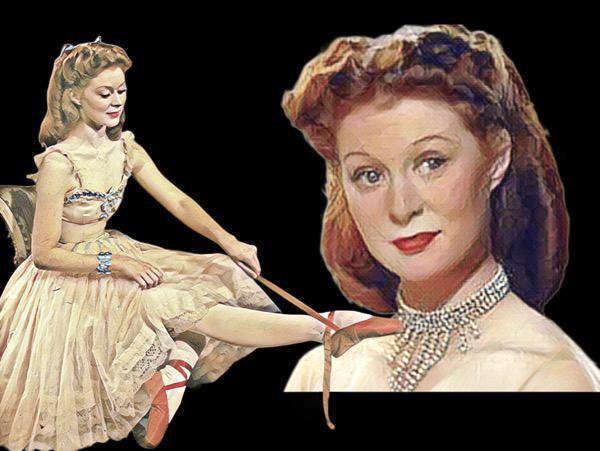
Moira Shearer King was five when her family moved to what was then Northern Rhodesia, now Zambia, where her father worked as a civil engineer. It was there that she began dancing, taught by a former student of Enrico Cecchetti, one of the great masters of ballet pedagogy. After returning to Britain, she studied with the Russian teacher Nicholas Legat, whose school valued a technique and expressiveness different from the rigid British tradition she would later encounter.
The war interrupted her training in London and took her family back to Scotland, but it did not interrupt her determination. Shearer made her professional debut with Ballet International in 1941 and joined the Sadler’s Wells Ballet the following year. The company, directed by Ninette de Valois, would help establish what we now know as the Royal Ballet.
Shearer was not merely extraordinarily beautiful, although her red hair, pale skin and aristocratic presence made it impossible to look away. She was a ballerina of rigorous technique, refined musicality and a dramatic quality that remained visible even when she stood still. She danced Giselle, Swan Lake, Coppélia, The Sleeping Beauty, Cinderella and works by Frederick Ashton. In a company dominated by Margot Fonteyn, Shearer became the ballerina immediately beneath her in the hierarchy—a prestigious but unenviable position. She was too famous to be merely another company member, but as long as Fonteyn remained there, Shearer was unlikely to become its undisputed star.
Her relationship with Ninette de Valois was not simple either. Shearer had been shaped by Legat’s Russian school and resisted the more regimented, standardised style favoured by the director. Over time, she began demanding greater freedom in her interpretation of steps and characters, an attitude that could be viewed either as artistic individuality or insubordination. When she replaced an injured Fonteyn in Cinderella, her success reportedly created resentment within the company. Long before cinema interfered with her career, Moira already understood the undelicate politics of the ballet world.
The film nobody wanted to make
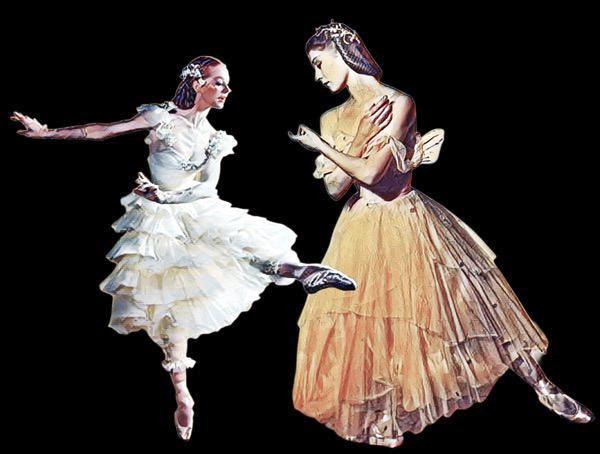
The story of The Red Shoes began before Moira Shearer ever entered the picture. In 1937, producer Alexander Korda asked Emeric Pressburger to develop a screenplay for Merle Oberon, the actress with whom he was in love and whom he would later marry. The idea combined Hans Christian Andersen’s cruel fairy tale—about a girl condemned to dance without stopping after putting on a pair of enchanted shoes—with elements from the history of Sergei Diaghilev, Vaslav Nijinsky and the Ballets Russes.
When Korda’s project lost momentum, Pressburger reclaimed the material with Michael Powell. The two formed the partnership known as the Archers and had already created an extraordinary succession of films, including The Life and Death of Colonel Blimp, I Know Where I’m Going!, A Matter of Life and Death and Black Narcissus. They did not simply want to record a performance. They wanted to use cinema to enter a ballerina’s mind and film something that could never exist on a stage.
Michael Powell had no intention of casting an actress and concealing a ballet double through quick shots and convenient cuts. He needed someone who could truly dance, act before a camera, and make audiences believe that art was as fundamental to Victoria Page as breathing. When he met Moira Shearer, he concluded that he had found his leading lady.
She, however, said no.

The ballerina who tried to escape Victoria Page
Shearer was 21 and at a decisive point in her career with Sadler’s Wells. Appearing in a film meant leaving the company for months, losing roles and risking no longer being considered a serious ballerina. Cinema was still regarded with suspicion by parts of the ballet world, which could interpret popularity as vulgarisation and individual fame as a betrayal of the company’s collective spirit.
Powell persisted for nearly a year. Shearer repeatedly refused until she was persuaded, including by Ninette de Valois, that the exposure could benefit not only her career but British ballet itself. She finally accepted in 1947. The decision would change her life, although not in the way she had been promised.
The similarities between Shearer and Victoria Page were obvious. Both were young, red-haired, ambitious, and on the verge of achieving a greater position in ballet. But there was one essential difference. Vicky wanted to be chosen by Boris Lermontov, the impresario played by Anton Walbrook. Moira distrusted the man who wanted to choose her. Victoria ran towards the myth; Shearer tried to escape it.
Lermontov’s famous question—“Why do you want to dance?”—receives an equally famous answer from Vicky: “Why do you want to live?” For the character, there is no life beyond dance. For Shearer, there was. She loved literature and wanted to act, have a family, write, discuss art, and exist in a wider world than a ballet company would allow. It was precisely this complexity that the film could not preserve. After seeing her as Victoria Page, audiences wanted Moira to remain Victoria forever.
Six weeks to create an impossible ballet
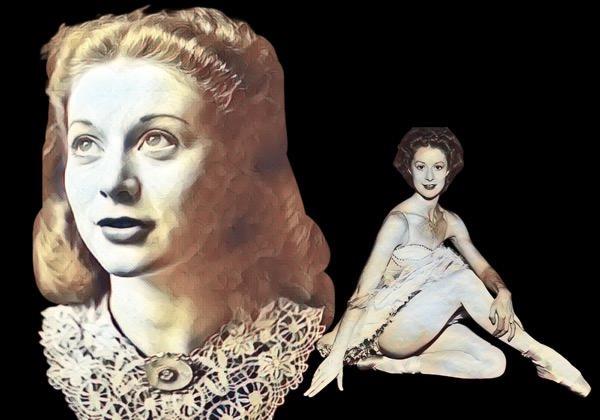
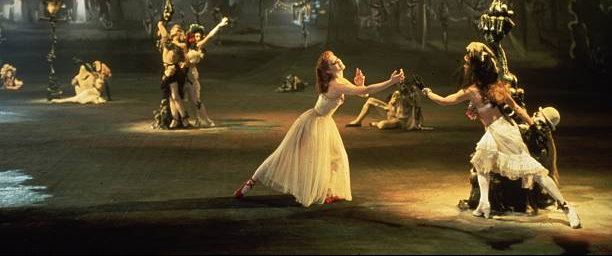
Filming began in June 1947 and continued for approximately 15 weeks, taking the production through London, Paris, Monte Carlo, the Côte d’Azur and Pinewood Studios. The central sequence, “The Ballet of the Red Shoes,” alone required approximately six weeks of work. Lasting around 17 minutes, it does not attempt to reproduce the perspective of someone sitting in the audience. The camera crosses the stage, alters dimensions, transforms objects, replaces dancers with ghostly figures, and blends memory, desire, fear and imagination.
Robert Helpmann choreographed the sequence, while Léonide Massine, one of the historic figures of the Ballets Russes, played the teacher Grischa Ljubov. Ludmilla Tchérina portrayed prima ballerina Irina Boronskaya. By surrounding Shearer with genuine dancers, Powell and Pressburger gave authenticity to the company’s everyday world and, paradoxically, earned the freedom to abandon realism completely once the ballet begins.
Cinematographer Jack Cardiff pushed Technicolor to its limits, while Hein Heckroth’s sets and costumes transformed red into desire, danger, creation and blood. Shearer’s hair was not simply a characteristic of the actress: it became part of the film’s colour design. The blues and pale shades surrounding Vicky make her red hair and shoes look even more vivid, as if her fate had been announced before she ever put them on.
The work also carried a physical cost. Shearer later spoke about the mental and physical toll of the production. When an injury sent her to hospital, dancer Joan Harris worked as her stand-in. The fantasy we see on screen was born from exhausting repetition, heavy cameras, intense lighting, and a working method Shearer considered cold. Years later, she would describe Powell as a man of tremendous insensitivity during filming.
A woman between two men or two prisons?
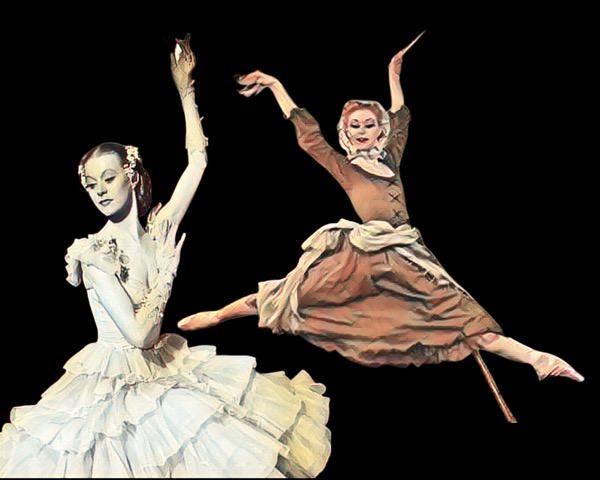
The simplest reading of The Red Shoes is that Victoria must choose between her love for Julian Craster, the composer played by Marius Goring, and the career offered by Lermontov. But neither man accepts Vicky as a whole person.
Lermontov desires her art provided that he can possess and control it. Julian claims to love her, but he also demands that she abandon dancing and accept a life organised around him. One offers glory in exchange for her humanity; the other offers love in exchange for her vocation. There is no truly free choice because both men treat Vicky’s desire as something they have the right to manage.
This is what makes the film far more modern than its appearance as a romantic fairy tale might suggest. Vicky does not die because she cannot choose between two men. She dies because the world around her cannot accept that a woman might desire creation, love and an identity of her own at the same time. Her body becomes the battlefield for two male designs.
Women are still told that they must choose between ambition and affection, career and motherhood, independence and belonging. The film simply makes this violence literal: Vicky is pushed back towards the stage by the shoes while simultaneously running towards the husband who intends to keep her away from it. Death is the only escape the screenplay offers her.
When success becomes punishment
The Red Shoes was not immediately understood in Britain. The production had exceeded its budget, and the Rank Organisation, responsible for its distribution, treated the film almost as a problem. Its British release was modest. In the United States, however, it remained at New York’s Bijou Theatre for approximately two years, became a sensation, and won Academy Awards for art direction and music.
When Sadler’s Wells travelled to the United States in 1949, Moira Shearer was more famous than Margot Fonteyn to much of the audience. Something that was supposed to benefit the company produced the opposite effect within it. Shearer said that her colleagues no longer trusted her and that the attention placed on one ballerina generated jealousy and resentment. Although she had never sought such celebrity, she was made to feel guilty for receiving it.
Decades later, Shearer was blunt: The Red Shoes had ruined her ballet career. She returned to the company, danced important roles, participated in American tours and worked with George Balanchine on Ballet Imperial. But she said it was never the same. To the public, she was a star. Within the company, she could be seen as someone who had allowed cinema to elevate her above everyone else.
There is an almost perfect cruelty in this. In the film, Vicky is punished for wanting to dance. Outside it, Moira was punished for becoming famous by dancing.
The life Victoria Page never had
Moira Shearer met journalist and writer Ludovic Kennedy at a charity ball in February 1949. He had already seen her in The Red Shoes. They married in February 1950, had four children and remained together for 56 years, until her death.
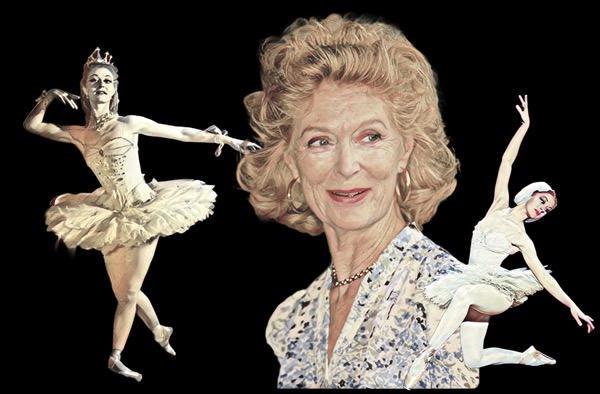
Shearer left Sadler’s Wells in 1953 and made one final appearance as a guest artist the following year. She was only 28 when she brought almost her entire classical career to an end. The decision was partly connected to injuries, motherhood, the company’s atmosphere and her realisation that she would never replace Fonteyn as its central figure. But Shearer also possessed a curiosity that the closed world of ballet could no longer satisfy.
Unlike Victoria Page, Moira was able to choose love without disappearing. More importantly, she could choose other forms of creation.
She worked with Powell and Pressburger again in 1951’s The Tales of Hoffmann, an even more radical fusion of music, dance, painting and cinema. She played the doll Olympia, a character who allowed her to transform the technical precision of ballet into something both enchanting and disturbing. In 1960, she appeared in Michael Powell’s now-celebrated Peeping Tom. She played Vivian, an aspiring actress filmed by a murderer obsessed with recording the fear of his victims. Once again, Powell transformed Shearer’s body and image into a spectacle before destroying them.
She also acted onstage, playing characters by Shakespeare, Chekhov, Noël Coward and George Bernard Shaw. She was Sally Bowles in I Am a Camera, Titania in A Midsummer Night’s Dream, Barbara in Major Barbara and Ranevskaya in The Cherry Orchard. She became a lecturer, presenter, and literary critic, wrote about dance, and published a biography of actress Ellen Terry. In 1972, she hosted the Eurovision Song Contest in Edinburgh. The woman cinema had frozen at 22 continued changing languages and identities for decades.
The film that taught cinema to dance
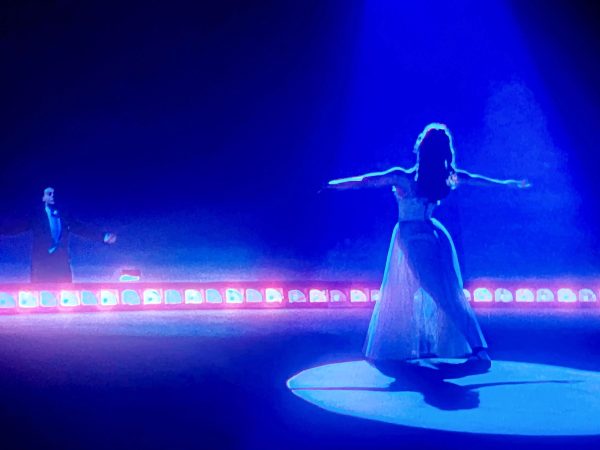
Before The Red Shoes, there were films that recorded dance. After it, there was a new possibility: cinema itself could dance.
Gene Kelly used the film to persuade the producers of An American in Paris to accept an extended ballet sequence. Its influence can also be seen in Singin’ in the Rain, Suspiria, Black Swan and La La Land. Martin Scorsese considers it one of the true miracles of film history and participated in its restoration; one pair of pointe shoes associated with the film belongs to the director’s private collection. Francis Ford Coppola, Steven Spielberg, Brian De Palma and Guillermo del Toro are among the filmmakers who have acknowledged its influence.
Kate Bush carried its imagery into her 1993 album The Red Shoes and the musical film The Line, the Cross and the Curve. Matthew Bourne travelled in the opposite direction, transforming the film about ballet into a ballet for the stage. Even A Chorus Line carries its legacy, since some of the dancers whose testimonies inspired the musical said they had decided to dance after seeing the film.
Shearer reacted with a certain embarrassment whenever she heard such stories. In a 1970 interview, she even said that the dancing in the film was not particularly good. Perhaps it was modesty, perfectionism, or the discomfort of knowing that millions of people had transformed into a dream what had been, for her, an exhausting and painful experience.

The shoes kept dancing
Moira Shearer never entirely made peace with The Red Shoes. Perhaps that is precisely what makes her story so fascinating. Audiences look at Victoria Page and see the consecration of a ballerina. Moira looked at her and also recognised everything the film had taken away.
But the work survived because the camera found something in her that could not be manufactured. Shearer did not need to convince anyone that dancing was vital. Her training, discipline, ambition, fear, intelligence and even her resistance to the film were already inscribed in her body. She understood, perhaps better than Victoria, both the pleasure and the violence of surrendering one’s life to art.
Her red hair remains ablaze in every restoration. Her eyes still change when Lermontov asks why she wants to dance. And those shoes continue moving forward, independent of the character’s will, the actress’s wishes, and everyone who tried to control them both.
Moira Shearer spent her life insisting that she was not Victoria Page. She was right. Victoria could not survive the conflict between love and art. Moira survived, raised a family, and became an actress, writer, and intellectual. Yet it was she who gave the character the body she needed to become immortal.
At 100, Moira Shearer is still trying to escape the red shoes. Fortunately for the history of cinema, they never stopped dancing.
Descubra mais sobre
Assine para receber nossas notícias mais recentes por e-mail.

