
The second season of The Gentlemen follows Guy Ritchie’s signature style to the letter. The script is designed down to the smallest detail: rapid-fire dialogue, abrupt cuts, violence transformed into humor, a soundtrack that dictates the rhythm of the scenes, and characters who enter and leave the story like pieces in a criminal machine. Everything appears chaotic until we discover that, naturally, it was not.
This is a season of luxury, fantasy and violence. Spectacular estates, impeccable clothes, cars, works of art, Italian lakes, hotels in Gstaad, alliances between aristocrats and criminals, and an almost offensive number of well-dressed men make terrible decisions in beautiful places.
The Italian section is practically a journey borrowed from The Godfather, the Bible of male cinema. This is not merely a distant reference. The series brings back marriage between families, the union of love and business, the Italian landscape as an illusion of peace and, finally, the brutal destruction of that fantasy before the protagonist’s eyes.
At other moments, particularly among the cars, boats, hotels and landscapes of Gstaad, we are also inside a James Bond movie. Bella appears almost like a Bond girl with greater autonomy: beautiful, aristocratic, intelligent, connected to organized crime and perfectly comfortable in that world of seduction and danger. But the homage to The Godfather runs even deeper because it defines what really matters this season: Eddie Horniman’s moral transformation.
In Season 1, Eddie was still pretending that he wanted to remove his family from the criminal operation hidden beneath the Halstead estate. Deep down, however, he had already discovered that he was very good at it. Now, he no longer wants to escape. He wants to grow, expand, acquire political power, and build something that truly belongs to him.
The gentleman is no longer a victim of circumstance. He has become an ambitious man.

Eddie and Susie’s Plan
One year after the events of the first season, Eddie and Susie have expanded the Glass family’s marijuana operation and reached Italy with the help of the unstable Francesco “Cico” Maldini.
At the same time, Eddie intends to secure a hereditary seat in the House of Lords. Officially, his mission is to prevent the legalization of marijuana and protect Bobby Glass’ illegal business. Secretly, however, he sees legalization as an even greater opportunity: use illegally produced cannabis within a legitimate commercial structure, undercut competitors, and transform the empire into a kind of “Starbucks of weed.”
To secure political support, Eddie approaches the corrupt Lord Hawthorne, played by Hugh Bonneville with precisely the combination of elegance, hypocrisy and absurdity the series adores. He must also negotiate with Marco Moretti, the head of the Italian Mafia and Bella’s godfather, after discovering that Cico has been deceiving everyone by attempting to make them buy a Botticelli he already owns.
When Moretti discovers the betrayal, Cico ends up being fed to a tiger. It is exactly the kind of death that exists only in a Guy Ritchie production: grotesque, absurd, funny, and presented with the casualness of a minor business inconvenience.
Bella takes her husband’s place in the Italian operation and grows closer to Eddie. Their relationship begins as a convenient alliance between two people who understand the codes of aristocracy and organized crime. She strengthens his business; he offers her space, protection, and power. But it develops into love.
Bella is neither innocent nor morally “good” by conventional standards. She knows exactly who Moretti, Eddie, and Susie are. She fully understands the criminal operation in which she participates and shows no ethical conflict about belonging to that world.
Even so, she is loyal and genuine. The series teaches us to distrust everyone, and so we spend much of the season waiting to discover her secret agenda. The revelation is that there is none. Bella truly loves Eddie and represents the possibility that he might combine everything he wants: power, aristocratic legitimacy, a wife capable of moving naturally between his two worlds, and some form of happiness.
That is precisely why she has to die.
Eddie and Susie Are Not a Couple, But They Are a Couple
Bella’s arrival could have turned Eddie and Susie’s relationship into a conventional love triangle. Fortunately, the series avoids that path. Susie immediately recognizes Bella’s interest in Eddie, establishes the hierarchy within the operation, and later comes to respect her as an equal. There is no banal rivalry between the two women. Bella does not have to be transformed into an enemy for the bond between Eddie and Susie to continue to exist. Because they are not a couple, but they are a couple.
Theo James and Kaya Scodelario have sustained that contradiction since the first season. Eddie and Susie cannot completely trust each other, come from different worlds, and possess ambitions that will inevitably place them in conflict. Even so, they understand each other almost instinctively. They are always present when the other needs them and function as partners even as both attempt to achieve independence.
There does not need to be sex or a romantic declaration for that bond to exist. The relationship lies in their complicity, their struggle for power, and the way each recognizes something in the other that no one else can see.
Bella awakens in Eddie the possibility of another life. Susie recognizes and even respects that. But she also observes his volatility, sees the transformation underway, and begins to understand that she may not be able to depend on him as a partner.
The season explores the psychology of both characters more deeply. Eddie wants to prove that he does not belong to Bobby. Susie begins to realize that she cannot continue living under her father’s name and power either. Both want independence, but they may be dreaming of incompatible empires.
It is this tension, far more than a traditional romance, that makes them a couple.

The Rebellion Against Bobby Glass
While Eddie attempts to advance his legalization project, Bobby Glass appears increasingly unstable. Imprisoned in a kind of luxurious penal retreat, he begins listening to the advice of the Bannik, a creature from Slavic folklore associated with bathhouses and saunas.
The series preserves some ambiguity around this presence. The Bannik may simply be a manifestation of Bobby’s psychological deterioration, but some of its predictions make it difficult to dismiss entirely. The supernatural quietly enters a universe that had previously been ruled by money, violence, and strategy.
When Bobby discovers Eddie’s plan, he reacts like a betrayed Mafia boss. Lord Hawthorne dies after falling from a window, the legislation collapses, and Eddie is beaten almost to death. Abandoned in a shallow grave, he must literally dig his way back to life.
It is not a subtle image, but it is effective. The man who emerges from the earth is not the same one who went into it. After surviving, Eddie asks Bella to marry him. The union still has a strategic dimension — powerful families have always married to consolidate alliances — but the feeling is genuine. During the ceremony by Lake Maggiore, the season fully embraces the language of The Godfather.
The wedding offers Eddie the illusion that he can have everything. A few hours later, Bella leaves in a seaplane and challenges her husband to reach Switzerland first. When she flies above Eddie’s car to wave goodbye, the aircraft explodes before his eyes. It is not only Bella who dies. The fantasy of reconciling love, respectability, power, and crime without paying a price dies with her.
Eddie’s Michael Corleone finally awakens.
Who Killed Bella?
Destroyed by his wife’s death, Eddie searches for the person responsible for the attack. A surviving mercenary from the assault on the Halstead estate appears to confirm what Eddie already wants to believe: Bobby Glass ordered Bella’s death and attempted to kidnap young Tarquin. But it is not a reliable confession. Eddie tortures the man and puts the answer in his mouth. The mercenary merely repeats what his torturer wants to hear.
Convinced that Bobby is guilty, Eddie hires Marco Moretti to arrange his murder inside prison. Before the plan can be completed, Uncle Stan reveals that he sold Eddie’s debt to Bobby on the day of the wedding. If Bobby had invested in Eddie and intended to control him, it would make no sense to destroy his family at that moment.
Eddie realizes that he has made a mistake and races with Susie to stop the killing. Bobby survives, personally finishes off the assassin, and temporarily recovers his position of power. That does not mean Eddie returns to being his subordinate. Bobby may have bought his debt, but Eddie makes it clear that he will no longer accept being anyone’s property. If he returns to the Glass empire, it will be on his own terms.
The investigation eventually leads to the person truly responsible: Gospel John. The religious criminal approached Freddy during his stay in rehab and nurtured his resentment toward Eddie. Freddy never overcame the fact that their father chose his younger brother to inherit the title and estate. Gospel John transforms that jealousy into a biblical narrative, comparing the brothers to Esau and Jacob and convincing Freddy that his birthright has been stolen.
Freddy knew about the plan and helped him. He may not have understood the full extent of the revenge, but he participated in setting in motion the events that killed Bella and placed his own family in danger.
The betrayal did not come from Bobby, Moretti, or any of the enemies Eddie had accumulated. It came from inside his own home.
It could hardly be more Godfather.

What Does The Gentlemen’s Ending Mean?
When Freddy admits his involvement, Eddie beats him and points a gun at him. But he cannot kill his brother. That does not mean forgiveness. Eddie opens the door of a van where Gospel John is tied up beside a chainsaw. He puts Freddy inside and declares that someone has to die. When the door opens again, Freddy emerges covered in blood and carrying Gospel John’s severed head.
Eddie lights a cigar and says, “Good boy, Freddy.”
It is a horrifying, funny, and deeply revealing scene. Eddie punishes both men simultaneously. Gospel John dies for Bella’s murder. Freddy is forced to execute the man who manipulated him and to take tangible responsibility for what he helped cause.
Within Eddie’s distorted logic, it is vengeance, justice, therapy, and redemption. By forcing Freddy to kill Gospel John, he breaks the criminal’s psychological hold over his brother. But he also symbolically castrates Freddy, demonstrating who has authority and who decides who lives or dies in that family.
The scene is not merely about what Freddy has become. It is primarily about Eddie. The man who entered Season 1 trying to protect his family and remove criminals from his estate has become capable of planning an act of cruel, psychological, and utterly calculated violence. He still avoids killing Freddy with his own hands, as though some moral limit remains within him. But he turns his brother into an instrument of revenge.
Like Michael Corleone, Eddie becomes more efficient and powerful as he loses parts of himself.
What Does Season 2 Set Up for Season 3?
Netflix confirmed Season 3 before the second season had even premiered. It has not officially been announced as the final season, although the current shape of the story would allow it to work perfectly as a conclusion.
Bobby ends the season imagining an even larger Glass empire, one capable of absorbing Moretti’s operation and advancing across Europe. He still believes he can control Eddie and Susie, but both are already planning paths of their own.
Eddie has survived his rebellion against Bobby, lost Bella, and discovered that his ambition carries a price. He is stronger than ever, but also far more dangerous. He no longer wants merely to participate in the business. He wants to rule it.
Susie, meanwhile, begins building contacts and distribution routes with Carlos Vargas without her father’s knowledge. She understands that she must step out of Bobby’s shadow and may no longer be able to trust Eddie as a permanent partner. Not because she has stopped loving him in her own way, but because she recognizes that the man before her may no longer be willing to share power.
Freddy survives his brother’s judgment but emerges from the van transformed. It remains to be seen whether killing Gospel John will finally end his cycle of resentment or create an even more unstable and dangerous version of the character.
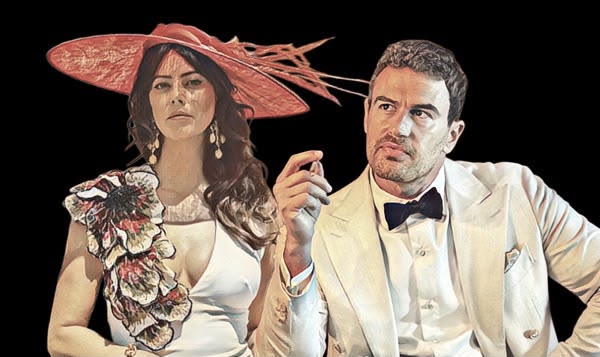
We are therefore left with three competing projects of power: Bobby attempting to preserve his empire, Susie building an independent organization, and Eddie determined never to obey anyone again.
At the center of everything remain Eddie and Susie: separate, united, far too close to be merely partners and far too ambitious to live peacefully as a couple.
The second season of The Gentlemen works because it does not abandon Guy Ritchie’s fantasy. It remains violent, luxurious, masculine, funny and consciously exaggerated. But this time, there is something else beneath the immaculate suits, the guns and the soundtrack. There is the psychological price of power. Eddie began the series as a gentleman surrounded by criminals. He ends this season by proving that he may be the most dangerous of them all.
Descubra mais sobre
Assine para receber nossas notícias mais recentes por e-mail.


1 comentário Adicione o seu