
How much of who we are is something we are born with, and how much is built through experience? The old opposition between nature and nurture seems to offer two alternatives, but psychoanalysis has never understood the formation of a person in such simple terms. Since Freud, the subject has been understood as the result of an interaction between what we bring into the world and what we encounter in it, particularly through the relationships that come to shape us.
That is why Silo offers such an interesting illustration of a question psychoanalysis has been discussing for more than a century. Daniel undergoes a process in which his memories are erased and, centuries later, exists as Troy, still capable of thinking, making decisions, and solving problems, but without conscious access to much of the experience and many of the relationships that shaped the man he once was.
What disappeared? What remained? And, more importantly, how much of a person’s history can be removed before we alter what we call character?
Daniel has always been an exceptional problem solver. As an engineer, a veteran, and later in politics, he could remain calm under pressure, think quickly, and find effective, often unconventional solutions. Troy retains these qualities inside Silo 1. His intelligence has not disappeared, nor have his strategic thinking and pragmatism.
What seems to be missing is something else: the history that taught Daniel what to do with those abilities.
Freud and what we bring into the world
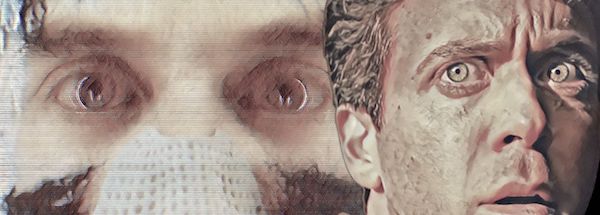
Freud offers a useful starting point precisely because he does not simply choose one side of the opposition between nature and experience. In what he called the complementary series, psychic development is understood as the result of an interaction between an individual’s dispositions and the events of that person’s history. We are not blank pages onto which the environment writes everything, but neither do we arrive in the world with a finished and immutable personality.
Some of Daniel’s characteristics appear to survive the erasure because they belong to a relatively stable organization of his personality. Troy still thinks like someone accustomed to crises, quickly reads a situation, calculates possibilities, and makes decisions. But character is not simply a collection of abilities.
Throughout his life, Daniel also learned whom to trust, when to be suspicious, whom to protect, which authorities should be questioned, and which consequences needed to be considered before acting. Those references were formed through experience, relationships, and choices. His history did not merely provide him with memories; it helped construct the man who knew how to use his intelligence.
That difference helps us understand one of the most disturbing moments in Silo: the massacre of Silo 17. Troy is capable of making a monstrous decision while retaining many of the qualities that always defined Daniel, including efficiency, pragmatism, and the ability to act under pressure.
This does not necessarily mean that there was always a murderer hidden inside Daniel, waiting for his memories to be removed before finally emerging. The more interesting psychoanalytic question is different: what happens when we preserve certain characteristics of a person but remove part of the history that gave those characteristics moral direction?
Troy still knows how to solve a problem. What he may have lost is whatever made Daniel ask whether he should solve it that way.
Winnicott and the continuity of being
Donald Winnicott adds a fundamental dimension to the discussion because he reminds us that nobody develops in isolation. For Winnicott, there is a tendency toward maturation, but the development of the self depends upon relationships and upon the environment in which that process takes place. Identity does not first appear fully formed and only later encounter other people. We also become who we are through those encounters. That idea changes the way we can think about memory.
Our relationships are not merely events stored somewhere in a mental archive. They participate in the formation of the person we become. Loving, being loved, trusting, experiencing loss, feeling protected or abandoned are experiences that affect the organization of the self itself.
Winnicott used the idea of a continuity of being, a sense of existence that persists over time. There is something very close to this in Daniel’s story.
Daniel had a history connecting the adult man to the younger man he had once been, to the people he loved, the choices he made, and the consequences he faced. That continuity allowed him to recognize all of those experiences as belonging to a single life. Troy exists after that sequence has been ruptured. He has not necessarily lost everything Daniel knew how to do. What he has lost is the ability to place those capacities inside a narrative about himself. And that brings us to one of memory’s most fascinating paradoxes.
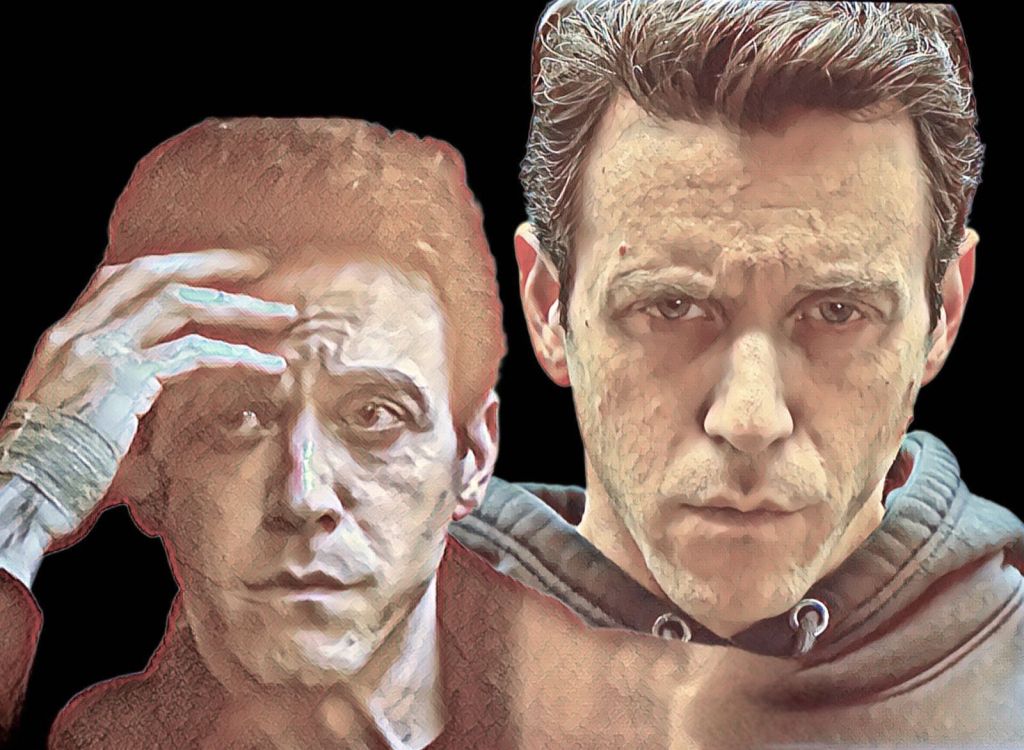
If our memories change, how can they sustain our identity?
We like to imagine memories as accurate records of the past. Something happens, the brain stores it and, years later, we simply open the correct drawer and retrieve the experience.
Human memory is far less stable than that. To remember is also to reconstruct. Details disappear, new meanings are added, and events may be reinterpreted over the course of a lifetime. At 50, we may understand something that happened in childhood very differently from the way we understood it at 20. Two people can live through the same event and preserve very different memories of it. And yet we depend upon these imperfect memories to answer one of life’s most fundamental questions: who am I?
We do not need to remember every lunch, every conversation, or every morning of our childhood. We do, however, need some kind of narrative capable of establishing continuity between the child we once were, the people we loved, the losses we suffered, the decisions we made, and the person we believe ourselves to be now.
Memory can be unreliable and still be essential to identity. Psychoanalysis adds something even more unsettling to this paradox: we can be profoundly shaped by experiences that we are unable to recall consciously.
Freud: what we cannot remember may still remain
In Remembering, Repeating and Working-Through, Freud shows that what cannot appear as conscious recollection may return in other forms. Instead of remembering, the subject may repeat. We may act, react, establish relationships and reproduce certain positions without immediately recognizing where they came from.
Forgetting, therefore, is not necessarily the same as erasing. An experience can leave traces even when we are unable to retrieve it as a clear narrative. This is one of the ideas that makes Helen so interesting in Silo.
The drugs and procedures used by Victor Crnkovich seem able to block much of Daniel’s autobiographical memory, but flashes of Helen continue to break through. More intriguingly, Charlotte does not appear to provoke the same response.
Ashley Zukerman, who plays Daniel, has described Helen as the spark capable of waking him up. In the actor’s interpretation, she restored Daniel’s hope and became, metaphorically, something that had found its way into his “DNA.” Helen is obviously not literally written into Daniel’s DNA, but the metaphor is remarkably useful from a psychoanalytic perspective.
Melanie Klein and the people we carry within us
This is where Melanie Klein and object-relations theory help deepen the question.
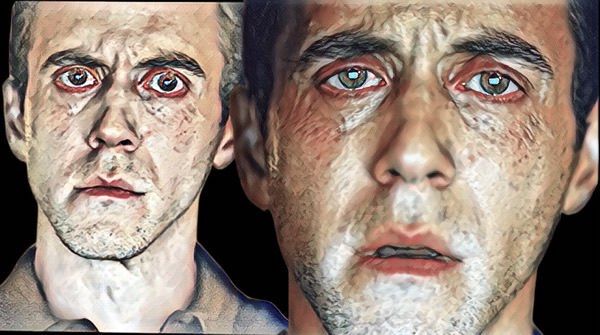
In psychoanalytic language, an “object” does not mean turning a person into a thing. The word refers to the person or thing toward which our emotional investment is directed. Significant relationships do not remain solely outside us; they are also internalized and become part of our psychic world. We carry representations of the people we love, fear, desire, or lose. These internal relationships participate in the way we interpret the world, establish new bonds, and understand ourselves. Helen, then, can be understood not simply as a woman Daniel remembers, but as someone whose relationship with him became part of the organization of his psychic life.
This helps explain why erasing a conscious memory may not be enough to eliminate the effects of a relationship. Daniel may initially be unable to say who Helen is, reconstruct their history, or explain why her face provokes a particular reaction. Something nevertheless responds. Affect appears before narrative. Is it possible to consciously forget a person while continuing to carry what our relationship with that person produced in us? This may be one of the most beautiful questions Silo asks without ever needing to state it directly.
Charlotte belongs to Daniel’s history and certainly has a place within his emotional life, but Helen seems to occupy a different position. She is linked not merely to events from his past, but to the man Daniel became, to the hope he recovered, to the future he imagined and to the meaning he came to attach to his own existence.
Some people are part of our history. Others participate in the construction of who we are.
When a word reorganizes the past
That is why the moment Victor tells Daniel the name “Helen” is so important. Until then, there are fragments, images, and sensations he cannot integrate. Something feels familiar but has no defined place within a narrative. The name creates a connection.
Here Lacan can be useful without requiring a long detour through his theory. The name operates as a signifier, something capable of organizing and connecting elements that had previously been scattered. Helen ceases to be merely a face that provokes an inexplicable feeling. She becomes someone again.
From that point on, Daniel can begin making connections. That woman has a name, that name belongs to someone he knew, that person belongs to a history, and that history belongs to the man who existed before Troy.
Perhaps recovering an identity is not simply a matter of recovering lost files. It may mean becoming capable of establishing relationships between the fragments of our own experience once again.

“I don’t know who I am”
That is why the sentence Daniel says to Juliette in the trailer for the fourth season is so significant: “I don’t know who I am.” He does not merely say that he cannot remember who he was. He says that he does not know who he is. The difference between those two statements summarizes much of the psychoanalytic question. “I don’t remember” concerns memory. “I don’t know who I am” calls into question the continuity of the subject itself. And this is where Silo becomes far more interesting than the technological fantasy of erasing memories. If we removed every conscious memory of a person’s history, would that person still be the same?
Freud would probably prevent us from simply choosing between nature and experience. Winnicott would remind us that the self is constituted through relationships and depends upon continuity. Klein would show us that the significant people in our lives also become part of our internal world.
The answer, then, may be both yes and no.
Troy retains aspects of Daniel. His intelligence remains, as do his strategic reasoning and certain personality traits. But the man who used those abilities was also constructed through experience, loss, choice, and attachment. Erasing memories may interrupt his narrative, but perhaps it is not enough to eliminate every trace left by what he lived. That is the paradox of memory: we forget much of what we experience, and yet we continue to be changed by what we have forgotten.
Silo 1 managed to erase much of Daniel’s autobiography. What we still do not know is whether anyone can truly erase what an entire life has made of a person.
Descubra mais sobre
Assine para receber nossas notícias mais recentes por e-mail.

