
As published on Blog do Amaury Jr./Splash UOL
The letter sent on behalf of King Charles to reaffirm that Harry and Meghan remain outside the working monarchy may appear merely to repeat what has already been established since 2020. Its timing, however, is significant: the document arrives just as RAVEC, the committee responsible for protecting members of the Royal Family and other public figures, reassesses the Sussexes’ security in the United Kingdom.
The Royal Household’s presence on RAVEC has always been one of the most sensitive points in Harry’s battle. The committee includes representatives from the Home Office, the police and the Palace. The prince has said he only fully understood how it operated after losing his automatic protection and gaining access, during the legal proceedings, to documents related to the decision.
Following his latest court defeat in May 2025, Harry said he did not expect his father to intervene on his behalf, but that Charles could “step out of the way and let the experts do their jobs.” According to Harry, the Royal Household had influenced a decision that should have been based primarily on the risks faced by his family. The Palace rejected that interpretation and maintained that any intervention by the King would have been constitutionally improper.
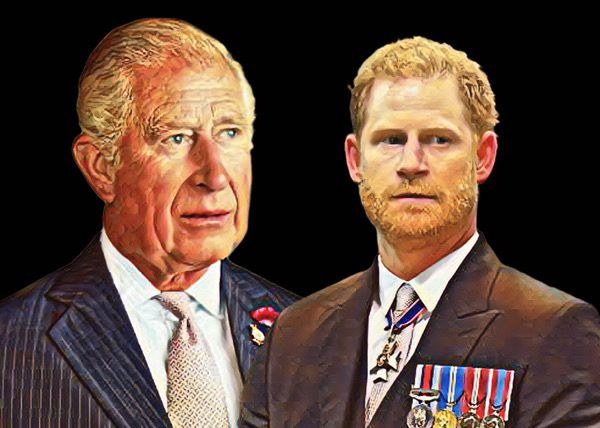
As with almost everything involving Harry, however, the argument is contradictory. He no longer works for the Crown, but he remains a prince, the King’s son, a war veteran and the target of threats. In his view, his security should be assessed according to the risks attached to that identity, not merely his institutional role. The system, however, has always placed considerable weight on the fact that he no longer officially represents the monarchy.
The issue is also not simply that Harry wants the government to pay for his bodyguards. In the United Kingdom, private security officers cannot carry firearms or access the same intelligence available to the police. He even offered to pay for police protection himself, but the courts ruled that this state service could not be purchased by a private citizen.
After losing the legal battle, Harry changed tactics. In October 2025, he wrote to the Home Secretary requesting a full risk assessment. In December, RAVEC authorised a new review, gathering information from the police, security services and the prince’s team. Records of threats and incidents during his visits to the country were also submitted.
This is why his return may have a strategic dimension. While Harry lived in the United States and made occasional visits, his protection could be decided on a case-by-case basis. Now, with a home, a family routine and his children enrolled at a British school, he removes any suggestion that he spends too little time in the country to justify continuous protection.
The move does not prove that security is the only reason for his return. There may be a genuine desire to bring his children closer to their grandfather and cousins, as well as the reported project about Diana. But, in my reading, protection is not merely a consequence of this decision. It may be one of its principal causes.
The Risk Management Board must now determine whether the threat level justifies permanent police protection or, at the very least, broader coverage than the current arrangement. Its recommendation will be considered by RAVEC. No decision has yet been announced, and the committee is expected to discuss the case this week, although the government may never disclose the details of its conclusion publicly.
In that context, the King’s letter carries a different weight. It does not decide the case, but it officially reaffirms, on the eve of the meeting, that Harry and Meghan do not represent the Crown and should be treated as private citizens. The prince’s personal risk does not disappear because of that, but the connection between automatic protection and official royal service remains the greatest obstacle to his request.
Harry has done everything available to him outside the courts: he requested a new assessment, submitted evidence of the threats, returned to the country, and transformed occasional visits into family residence. If this was one of the reasons behind the move, he has attempted to remove distance as an argument against his protection. The answer has not yet arrived. And by repeating that “nothing has changed,” Buckingham Palace’s letter rekindles his greatest fear: reorganising his family’s life in Britain and still failing to secure what would be his greatest personal victory.
Descubra mais sobre
Assine para receber nossas notícias mais recentes por e-mail.

