
It may be too early to place any bets, but I have already mentally circled one date on the calendar: November 8, 2026, Remembrance Sunday. If there is one event capable of turning all the confusion surrounding Harry’s return to the United Kingdom into a single image, it is the ceremony at the Cenotaph, when the King, members of the Royal Family, government officials, military representatives, and veterans honor those who died in war. Harry is a veteran, served ten years in the British Army, completed two tours in Afghanistan, and turned the Invictus Games into one of the most important causes of his life. He is also a prince, the King’s son and fifth in line to the throne. What he is no longer is a working royal, and therefore he does not represent the Crown. It is hard to imagine a better stage on which to test whether, six years later, he has finally accepted the difference between all those things.
There is a precedent, and it is almost perfect for understanding everything that came afterwards. In 2020, on the first Remembrance Sunday after stepping away from royal duties, Harry asked for a wreath to be laid on his behalf at the Cenotaph. The request was refused because he no longer officially represented the monarchy. In California, Harry and Meghan then visited the Los Angeles National Cemetery, where they laid flowers at the graves of two Commonwealth servicemen and placed a wreath at a memorial.
So far, there was nothing particularly strange about a veteran wanting to honor other veterans. The detail is that it was not exactly a private ceremony. A professional photographer accompanied the couple, and the photographs were later distributed to the press by the Sussex office. The scene offered an early summary of a pattern that would appear again in the following years. The institution said Harry no longer occupied a certain role, and he responded by creating, through other means, something that reproduced part of the appearance of that role. If his wreath could not be included in the official British ceremony, he would have his own ceremony, his own image and his own public communication.
It is difficult not to see in this one of the characteristics that have made Harry’s trajectory increasingly exhausting: a recurring resistance to institutional reality whenever that reality does not correspond to the way he understands his own place.

That does not mean Harry is always wrong, nor does it mean every institution he has challenged is right. His war against the British press, for example, produced real victories. He won an important part of his case against Mirror Group, which acknowledged unlawful information-gathering practices, and he reached a historic settlement with News Group Newspapers, which apologized and agreed to pay damages. Reducing all his lawsuits to the whims of a resentful prince would simply be inaccurate.
There have also been defeats, however, and some have been received as though an unfavorable ruling were, by definition, proof that the system itself had failed. In July 2026, Harry and other claimants lost their case against Associated Newspapers, publisher of the Daily Mail and Mail on Sunday. The judge concluded that the allegations of unlawful information-gathering had not been proven, and Harry responded by calling the ruling a complete whitewash.
The security dispute follows an equally complicated dynamic. Harry has legitimate reasons to be concerned about his protection, especially after years of threats and intense exposure. But he challenged in court the security arrangements created by RAVEC after he left royal duties and lost at the Court of Appeal in 2025. Now that he has returned to Britain, circumstances have changed, and a new assessment is entirely reasonable. The problem was never that he asked for a review. What is striking is how often an institutional answer he dislikes immediately becomes, in his narrative, evidence that the structure itself needs to be reconsidered.
Security, the press, the monarchy. These situations are different, and it would be irresponsible to pretend they are the same. But one question keeps returning in all of them: how readily does Harry accept a limit when that limit contradicts the reality he believes should exist? Perhaps we have finally found the word that organizes much of this story: authority.
Harry did not lose everything when he left active royal life. Quite the opposite. He remains a prince, the Duke of Sussex, the sovereign’s son and fifth in line to the throne. It would therefore be inaccurate to treat him as someone completely outside the constitutional architecture of the monarchy. His position remains extraordinary. What he lost was the representative role and the authority that came with it.
For much of his life, Harry entered a room not simply because he was famous: he was the Queen’s grandson, later the Prince of Wales’s son, an active member of the Royal Family and a representative of the Crown. When he spoke at certain events, visited countries or attended military ceremonies, there was a centuries-old institution behind his presence. That authority was always lent by the institution and subordinated to a very clear hierarchy.
William is essential to understanding this. Harry grew up as the second son, the “spare,” an expression he later used as the title of his autobiography. William had a position that no personal effort by Harry could ever surpass because monarchy does not operate as a competition based on merit or popularity. William was born first. Then came George, Charlotte and Louis, pushing Harry further down the line of succession. That may be psychologically frustrating, but it is also the rule on which the entire system rests.
When Harry stepped away from active royal life, he gained the freedom he said he wanted. He took with him the title, fame, access, his place in the succession, and extraordinary symbolic capital. What he could not pack into a suitcase and take to California was the authority to represent the Crown. Perhaps much of what we have watched since then has been an attempt to rebuild something similar by other means.
Harry speaks about veterans, mental health, philanthropy, conflict, misinformation and humanitarian causes. The Invictus Games remain probably the initiative that gives him the strongest form of authority of his own, built over the years and supported by his genuine military experience. It is also one of the few areas in which his relevance does not depend solely on being Charles’s son or William’s brother.
That is why what has just happened with Uganda is so significant. The country had been welcomed into the Invictus community in July and was expected to participate in the 2027 Games in Birmingham. Days after the Lord Chamberlain’s new guidance on Harry and Meghan’s status was circulated, Uganda’s Chief of Defence Forces, General Muhoozi Kainerugaba, announced that the country was withdrawing. He said he did not want Uganda to be seen as opposing Charles III, stated that his country would not participate in anything that did not have the King’s approval, and made his loyalty to the monarch unmistakably clear.
The Sussex team responded by saying that, intended or not, Uganda’s withdrawal was clearly a consequence of the letter. Perhaps it was. But the irony is almost too perfect.
There is no indication that Charles opposes the Invictus Games. The King was involved with the initiative in its early years and has long supported causes connected to service personnel and veterans. Even so, the Ugandan general apparently interpreted the new guidance as drawing a line between Harry’s project and the authority of the sovereign. And when he believed he had to choose between the two, he chose Charles. Few situations could illustrate the difference between influence and authority more clearly.
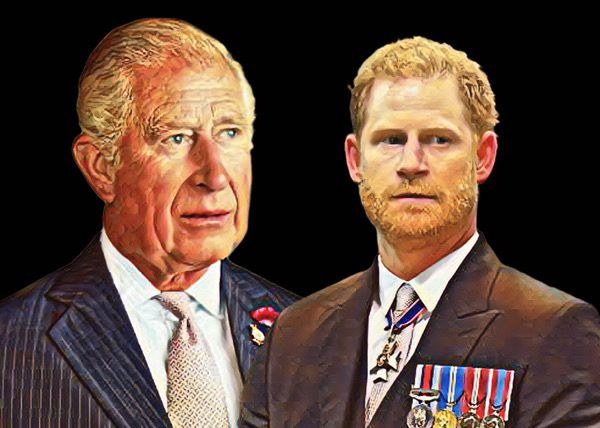
Harry created Invictus, built an international organization, brought countries together, attracted sponsors, drew global attention, and has a real impact on the lives of veterans. All of that gives him legitimacy and influence. But when a foreign military leader wanted to know where British institutional authority rested, Harry was no longer the point of reference. The answer was the King. And that brings us to the letter that triggered this latest round of confusion.
Sent by the Lord Chamberlain on the instructions of Charles III to government officials, military authorities and official representatives, it reaffirmed that Harry and Meghan are not working royals, do not represent the sovereign, conduct their commercial and charitable activities privately and should be treated, in those institutional relationships, in a position akin to private citizens.
The Sussexes were particularly unhappy with the phrase “private citizens.” Sources close to them made it known that they would prefer to be described as “public figures” and would also like the letter to acknowledge that, on a personal level, they remain members of the Royal Family. Both things are obviously true.
Harry and Meghan are international public figures. Harry remains the King’s son, the Prince of Wales’s brother, a prince and fifth in line to the throne. Archie and Lilibet remain Charles’s grandchildren. But none of those answers really address the question the letter was answering. It was not measuring fame, family ties, or position in the succession. It was explaining to British authorities whom Harry and Meghan officially represent. The answer is simple: they do not represent the Crown. And Uganda has just demonstrated why that distinction is not merely bureaucratic.
This also helps explain Meghan’s influence in a far more interesting way than the tired narrative that she changed Harry or simply drove him away from his family. Meghan did not invent the rivalry with William, the discomfort of being second, or Harry’s problems with the press. All of that existed long before she arrived. But Meghan comes from Hollywood, and Hollywood operates according to a logic almost opposite to that of monarchy.
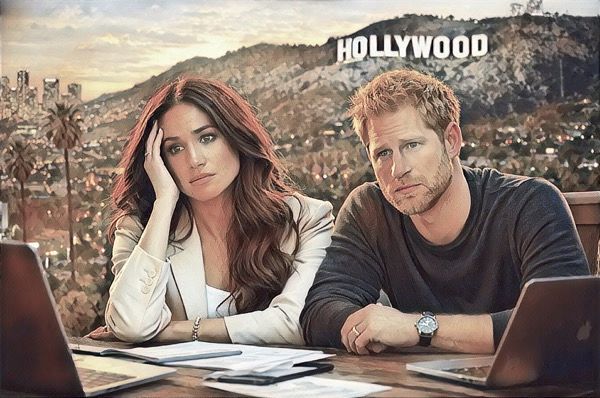
In American celebrity culture, fame creates a platform, a platform creates influence, and influence is frequently treated as authority. Actors speak about international politics, singers endorse candidates, celebrities create foundations, appear at international organizations, meet heads of state and make causes part of their personal brands.
There is not necessarily anything wrong with that. Some develop real expertise and sustained work in the areas they support. Others simply have a much larger microphone than the people who actually know the subject. Having a microphone, however, is not the same as having a mandate.
Hollywood also teaches another lesson: control your own narrative. Define your image, choose the outlet, decide when to speak and determine the terms in which your story will be presented. It is a perfectly understandable logic for an American actress and celebrity. When a structure prevents that kind of autonomy, the natural response in that world is to challenge the structure. That is precisely where Hollywood met monarchy.
Meghan entered an institution that is rigid, hierarchical, and full of rules that can genuinely appear archaic because many of them are archaic. The problem is that hierarchy is not simply an imperfection of monarchy that can be removed with a better communications strategy. It is the essence of the system.
William has certain prerogatives because he was born first. Harry has others because he was born second. That is profoundly undemocratic, of course, but we are talking about a hereditary monarchy. If we remove that logic entirely, we also remove the reason Harry is a prince, remains in the line of succession, and Meghan is a duchess. There lies the Sussex Catch-22.
It is difficult to argue that the hierarchy is unfair when it places William above Harry and then turn to that same hierarchy to argue that Harry deserves special consideration because he is the King’s son and fifth in line to the throne. In the same way, it is difficult to defend complete independence from the institution while expecting the private relationship with it to continue producing institutional consequences when convenient.
Meghan may have shown Harry a world in which his original inequality with William appeared surmountable. In America, he could build his own platform, sign multimillion-dollar deals, produce documentaries, publish a bestselling book, create organizations and turn his name into an independent global force. He could even surpass William in visibility, but visibility is not authority. Harry may generate more headlines in a given week, sell more books, provoke far larger arguments on social media, and prove more attractive to streaming platforms. He may even exercise greater influence over certain audiences. Still, William possesses something no algorithm can deliver to Harry: institutional authority derived from the role he occupies. William has position and function. Harry retains an exceptional position, but he gave up the representative function. It is an impossible competition because they are no longer competing on the same ground.

Perhaps that is what makes the reaction to the letter so revealing. For years Harry and Meghan have insisted, quite reasonably, on their freedom to decide what they say about the Royal Family, when they say it, where they say it and which words they use. That is part of the independence they gained. Yet when the institution speaks about them, an expectation of consultation, clarification, and adjustment of language appears again. They want the freedom to define their relationship with the monarchy, but remain uncomfortable when the monarchy defines its institutional relationship with them.
I would not call that insubordination, because Harry no longer works for the King. It is something more complex and perhaps harder to resolve: a persistent resistance to limits imposed by a structure when those limits reduce the exceptional nature of the place he believes he still occupies.
The old desire for “half-in, half-out” may have disappeared formally, but at times it seems to survive symbolically. Harry does not necessarily want to return to cutting ribbons on behalf of the King. He wants independence, but also recognition of a special category that is neither exactly that of a working royal nor quite that of a private citizen. The difficulty is that such a category has no clear institutional function. Which is why I return to Remembrance Sunday.
Harry has every right to honor fallen soldiers. More than that, he has an authentic connection to the Armed Forces that nobody can erase simply because he left active royal life. But the Cenotaph is not merely a gathering of people who care about veterans. It is a national ceremony in which position, role and representation matter.
In November we will see whether Harry attends, how he attends and in what capacity. Perhaps absolutely nothing will happen. Perhaps the solution will be simple and discreet. But the question will still be there, exactly as it was in 2020: does Harry want to honor the dead as a veteran, or does he also need the institution to publicly recognize the prince’s place within that ritual?
In 2020, faced with a no, he created another image. Now, before we even reach the Cenotaph, Uganda has already offered an unintended preview of the dilemma. Harry has extraordinary personal legitimacy among veterans. Charles has the authority of the Crown. When a foreign government confused or confronted those two things, it immediately became clear which one carried greater institutional weight. Perhaps, six years after Megxit, the real question is no longer whether Harry managed to leave the monarchy. He did. It is whether he managed to accept everything that leaving the role actually meant.
Hollywood can offer fame, money, access, influence and a global platform. It can produce speeches, photographs, international meetings and almost every outward sign of importance that once accompanied Harry’s royal life. What it cannot give him back is the authority to represent the Crown. And perhaps that is precisely the reality he is still trying to negotiate.
Descubra mais sobre
Assine para receber nossas notícias mais recentes por e-mail.


1 comentário Adicione o seu