
We have reached the end of The Shards, and I have to admit that my complicated relationship with the series did not improve much. After nine episodes filled with excess, performances that were often over the top, an ’80s soundtrack used almost as a crutch, and a story that became increasingly camp as the season went along, I expected the finale to at least tie a few things together. It didn’t. Quite the opposite. Stairway to Heaven ends by opening even more questions and confirming something that had become increasingly obvious: this is no longer exactly the story Bret Easton Ellis wrote.
The episode begins at the end, with Terry Schaffer falling from the upper floor of his house during a party and crashing through a glass table. We don’t know who pushed him, whether he was actually pushed at all, or why. Then we go back a few hours to understand how everyone got there, but, as happened so often this season, the promise of an answer turns out to be much bigger than the answer itself.
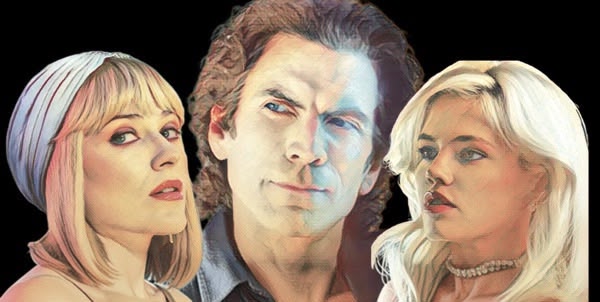
Debbie, who ended the previous episode discovering the recording of Bret with her father, immediately realizes she now has a weapon. She confronts Terry and blackmails him: if he wants his secret to remain a secret, he will have to turn her into a star. Terry doesn’t even try to soften the blow and tells his daughter she has no talent. Debbie agrees that talent may be lacking, but information certainly isn’t. It is probably one of the few scenes in which the absurd tone of the series works exactly as it should.
Meanwhile, Susan tries to end things with Thom once and for all. He is increasingly out of control, continues insisting that Robert is dangerous and, in the middle of a disastrous conversation at Hamburger Hamlet, decides to propose to her. Yes, after threatening her with a knife. Susan obviously says no, and Debbie arrives to rescue her from the situation.
The lightness doesn’t last long. Debbie and Susan find the head of Spirit, Debbie’s horse, inside her bed. It is yet another crime attributed to the Trawler and another direct threat against the group. Curiously, though, trauma lasts very little in the logic of this series. Soon afterward, Debbie is already negotiating with Bret over her future campaign to become prom queen, because apparently even a decapitated horse has to respect Buckley’s social calendar.
Susan, meanwhile, finally grows closer to Robert. The two appear to be genuinely beginning a relationship, something that makes Bret even more obsessed. But before the story can move forward, Susan receives a call from the Trawler and discovers that he is already inside her house. She is chased by a masked man with a knife until she manages to lock herself in the bathroom. Thom appears, saying he fought the intruder and threw him off the balcony, but there is no body below, and Thom shows no sign of having been in a fight. Another doubt. Another possibility. No answer.
And then we arrive at the Schaffers’ Halloween party, curiously a costume-free Halloween party. Bret finally confronts Robert and tells him everything he believes he has discovered during the season. But Robert does something much more interesting: he turns the investigation back on Bret.
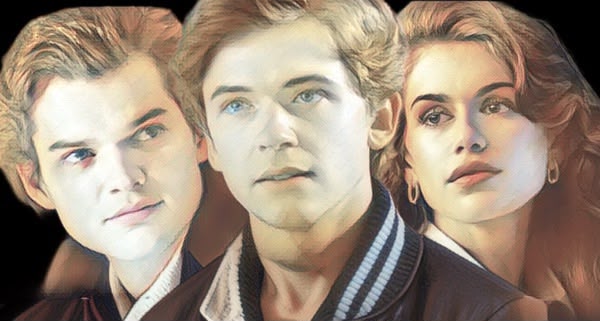
When Bret mentions the night they spent together in the previous episode, Robert reacts as though it never happened. So we now have a far more disturbing possibility: Bret may have imagined the whole thing. Robert also reveals that he tried to find out where Bret’s parents are, supposedly traveling for months, and discovered that Bret’s father simply stopped showing up at work. He then asks whether perhaps Bret did something to his own parents. Finally, he accuses Bret of being the Trawler.
That reversal is probably the most interesting part of the episode because, for the first time, the series directly places us in the territory the book always inhabited: Bret is not a reliable narrator. Maybe Robert is dangerous. Maybe Bret is right about some things. Or maybe he is completely obsessed, paranoid, and turning desire, jealousy, and fear into a narrative of his own.
Before we can go any further, Terry falls from the balcony. No one sees who was with him. Steven, his assistant, exchanges a very suspicious look with Robert, in a moment that became important precisely because of the editing, even though actor Jordan Roth later revealed that the exchange between the two was not originally scripted.
Everyone ends up at the police station. Bret believes he will finally be able to denounce Robert. Robert also believes he has enough information to accuse Bret. But they walk into a room and find Susan, Thom, Debbie, Liz, Steven, and Ryan. The detectives announce that they have concluded the person responsible for the crimes is inside that room.
And it ends. Yes, it ends like that.
And What About the Book?
This is where things become really important. The series did not simply change a few details from Bret Easton Ellis’ novel. It stopped the story before the book’s real climax and transformed events that were part of Bret’s psychological deterioration into cliffhangers for a possible second season.
In the novel, Bret and Robert never have the sexual relationship shown in the series. The attraction exists, as does Bret’s obsession with Robert, but the consummation was created for television. So when Robert says in the finale that he has no idea what Bret is talking about, the series introduces a disturbing possibility that does not exist in quite the same way in the book: Bret may have invented that entire night.
More importantly, the novel continues far beyond the point where the season ended. Susan and Thom are violently attacked by a masked man; Susan manages to bite him during the struggle and, afterward, Bret goes to Robert’s apartment determined to confront him. The two fight, and Robert dies after falling from the building. Bret tells a version of events that leads everyone to believe Robert was the Trawler.
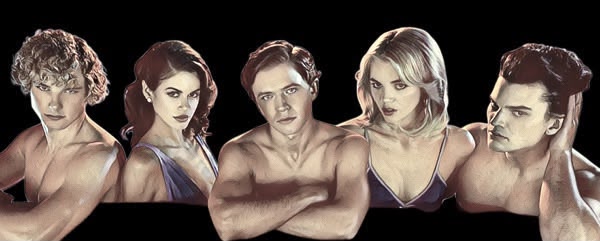
But then comes one of the novel’s biggest twists: the real Trawler kills again and sends a message making it clear that Robert was not the murderer. The crimes had supposedly been committed as a kind of tribute to Robert, who is referred to as “the God.” And then comes an even more disturbing revelation. Susan notices a bite mark on Bret’s arm, exactly where she had bitten the man who attacked her that night. In other words, if there is one answer the book almost gives us, it is that our greatest threat may never have been Robert.
Even then, Ellis does not offer a comfortable solution. The Trawler’s definitive identity remains ambiguous, as does part of what Bret has told us. And that is exactly the strength of the novel. The mystery is not there merely so we can discover who killed whom. It exists because we are trapped inside the memory of a man trying to reconstruct who he was at 17 and perhaps also trying to build a version of himself that he can live with.
The series changed that. By dividing the point of view among several characters, expanding secondary figures and turning the Trawler into a collective murder mystery, The Shards moved outside Bret’s mind and became a kind of macabre teen soap opera, complete with murders, sex, adults as out of control as their children, and enough suspects to sustain more episodes.
And perhaps that is my biggest problem with the season. The book is about obsession, memory, desire and the frightening possibility that the person telling the story is exactly the person we should trust the least. The series began there, but gradually fell more and more in love with the spectacle.
Now the question is whether there will be a second season. There is still no official renewal, but the finale was obviously designed to continue. Ryan Murphy knows who he intends to make the Trawler; even the actors themselves were not given that answer.
So we have not finished The Shards. We have merely finished the first part of an adaptation that, by now, has clearly decided to follow its own path. And considering how far it moved away from the book in just nine episodes, almost anything can happen next.
Se quiser, eu também faria um título em inglês mais SEO e mais provocador, porque esse recap tem um ótimo gancho de busca: Who Is the Trawler? The Shards Finale vs. the Book.
Descubra mais sobre
Assine para receber nossas notícias mais recentes por e-mail.

