
It was supposed to be an event. After seven years away from movie theaters, Star Wars chose Din Djarin and Grogu to lead its return to the big screen. It makes sense: The Mandalorian was the series that helped launch Disney+, recaptured some of the franchise’s adventurous spirit, and introduced the world to the creature immediately nicknamed Baby Yoda. The problem is that The Mandalorian and Grogu feels less like a necessary movie than an extended — and infantilized — episode of the series.
There is nothing wrong with making an adventure for children. Star Wars has always spoken to younger audiences, sold toys, and created adorable characters. The original trilogy, however, understood that children can also cope with fear, sadness, failure, and loss. Luke Skywalker found his aunt and uncle dead, lost Obi-Wan, discovered that Darth Vader was his father, and ended The Empire Strikes Back defeated and mutilated. It was family entertainment, not entertainment without consequences.
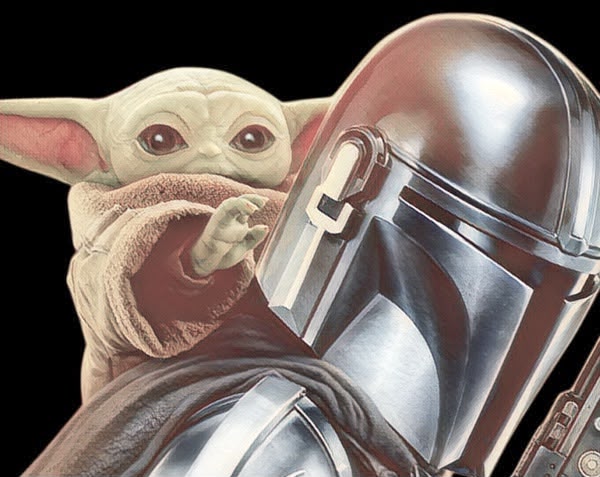
The new film does the opposite. Din Djarin and Grogu make their way through an endless series of explosions, chases, monsters, and battles, but none of it inspires genuine apprehension. We know everything will turn out fine. More than that: the film itself seems determined to remind us constantly that everything will turn out fine.
So-called plot armor, the invisible protection granted to protagonists because the story needs them to survive, is nothing new. It exists in practically every action film. The difference is that a good narrative can make us forget about it. For a few minutes, we believe Ethan Hunt might fall, Indiana Jones might not find a way out, or Luke might fail to escape. In The Mandalorian and Grogu, the script’s armor is as visible as the beskar worn by Din Djarin.
That is why the action sequences can be technically efficient and still fail to move us. They keep the film moving without moving the story forward. We are not waiting to discover whether the characters will escape, only how — and even that “how” rarely surprises us.
The story follows Din and Grogu on a mission involving Rotta, Jabba the Hutt’s son, now transformed into an unlikely fighter. The New Republic also enters the equation, with Sigourney Weaver playing Colonel Ward, while familiar faces, creatures, and references appear to remind fans that they are still inside that universe. Something is always happening, but very little is genuinely at stake.
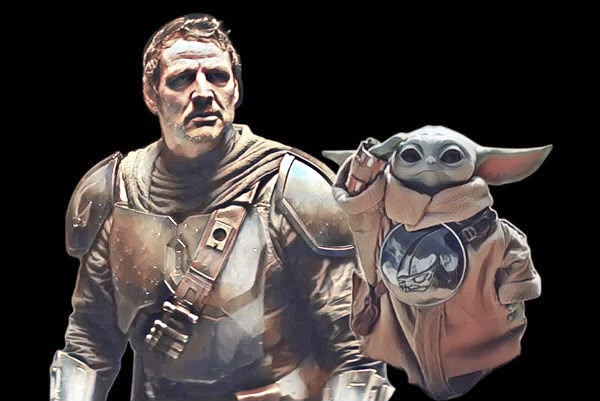
Grogu remains adorable. It would be nearly impossible for him not to be. His movements, expressions, small displays of power, and comic pauses have been calculated with the precision of people who understand perfectly well the character’s emotional — and commercial — value. He remains the film’s greatest strength, but he also exposes its limitations. Almost every moment of tension is interrupted by something cute, as though the screenplay were afraid to leave the audience uncomfortable for more than a few seconds.
Jon Favreau has never hidden his desire to introduce Din and Grogu to a new generation and create an experience parents and children could share. The result confirms that intention. Children are not the film’s exclusive target audience, but the narrative follows an infantilized logic: danger must be spectacular but never disturbing; violence may exist as long as it carries no weight; the heroes may be threatened as long as their invulnerability remains evident.
There is an important difference between making something accessible to children and treating every viewer like a child who must be constantly reassured. That is precisely the difference the film seems unable to understand.
Din Djarin also suffers because of this choice. The character who first appeared as a mysterious, solitary, and morally ambiguous figure has gradually been reduced to the roles of protective father and infallible hero. His relationship with Grogu remains the heart of the story, but it no longer faces a conflict capable of transforming either of them. They begin the film together, face every danger together, and end exactly where we expected them to end. There is no emotional price to pay for the adventure.
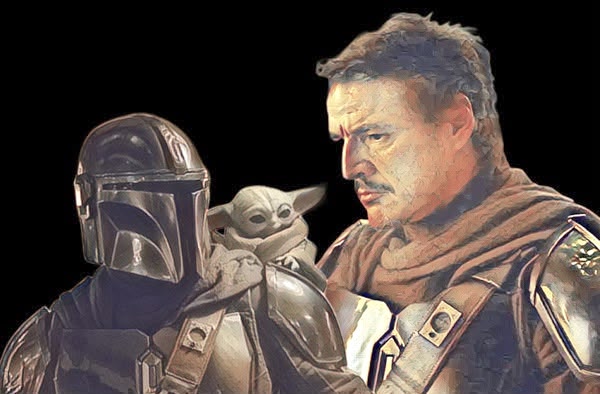
Perhaps this explains the gap between the critics’ lukewarm response and the audience’s greater enthusiasm. The Mandalorian and Grogu delivers exactly what it promises on the most immediate level: action, nostalgia, creatures, references, and Baby Yoda being Baby Yoda. For anyone who merely wants to see these characters again, that may be enough. As a film, however, it lacks weight, ambition, and even a convincing reason to exist on the big screen.
This is a production built to offend no one. It does not challenge the fans, frighten the children, profoundly change its characters, or threaten Grogu’s commercial future. Everything has been carefully protected. Including the emotion.
In the end, The Mandalorian and Grogu is an adventure in which everything happens, yet nothing ever seems truly capable of happening. There is plenty of movement, plenty of noise, and no real danger. The Force may be with them. Fear most certainly is not.
Descubra mais sobre
Assine para receber nossas notícias mais recentes por e-mail.

