
“It was the best of times, it was the worst of times.” Few lines in literature have crossed so many years while retaining such relevance. Charles Dickens published A Tale of Two Cities in 1859, set his story between London and Paris during the French Revolution, and wrote about a world divided by obscene privilege, poverty, resentment, and violence. In 2026, as entire societies once again seem radicalized and inequality fuels a growing distrust of institutions, it would be difficult to find a classic more suited to a new adaptation.
The four-part MGM+ limited series, co-produced with the BBC, has nearly everything one expects from an ambitious period drama. It is beautiful, elegant, and very well filmed, with an international cast, and it does not attempt to turn Dickens into a contemporary writer. Inclusion appears naturally through the casting of Black actors in roles that, in older adaptations, would probably have been given exclusively to white performers. Still, the story is never interrupted to explain that choice. Diversity is present on screen without requiring the characters to speak or behave like people from 2026.
That comes as a relief, especially after so many adaptations that appear embarrassed by their source material and attempt to correct it through anachronisms. Here, Lucie Manette has been given greater agency and no longer functions merely as the idealized woman around whom men organize their destinies. Still, the change has been incorporated into the narrative without turning her into a spokesperson for ideas that do not belong to that world. It is possible to update who is allowed to occupy the screen and expand the female presence without stripping the work of its historical identity.
The problem is that, despite all these accomplishments, A Tale of Two Cities has yet to truly engage.

Kit Harington Has Found the Perfect Role
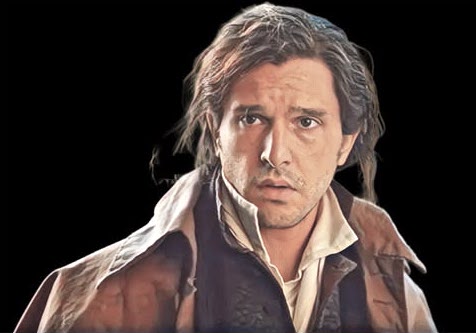
Kit Harington is the series’ great point of entry. As Sydney Carton, the intelligent, alcoholic, self-destructive lawyer who is profoundly disappointed with his own life, he brings together the qualities that have always defined his best work: melancholy, romantic presence, and the ability to suggest suffering that the character himself cannot articulate.
Harington has enough charisma to make us interested in Carton before we even fully understand who he is. There is cynicism, but also shame; arrogance, but also the certainty that he has wasted his life. Whenever he appears, the series immediately finds an emotional center. When he leaves, we return to admiring a very beautiful period production from a safe distance.
It is also interesting to see him finally occupy the position of a leading man with such confidence. Carton is not entirely removed from Jon Snow: both carry a vocation for sacrifice, guilt, a sense of inadequacy, and an almost fatalistic relationship with their own destiny. The difference is that Dickens’ character allows Harington to work with more irony, intelligence, and ambiguity. He does not need to carry a sword to look doomed.
Around him, however, something is missing. François Civil, Mirren Mack, and the rest of the cast are excellent, but the series divides its attention between the love triangle, Lucie’s reunion with her father, the secrets of the French aristocracy, the conflict between England and France, and the approaching Revolution without quickly establishing which of these stories should lead us. There are arrests, trials, journeys, conspiracies, and discoveries, but not always a sense of urgency.
A Serial Drama Embarrassed to Be One
This is curious because A Tale of Two Cities contains all the ingredients of a great soap opera: impossible love, hidden identities, physically identical men, separated families, injustice, secrets, revenge, and sacrifice. Dickens published the novel in installments, just as Alexandre Dumas did with The Count of Monte Cristo. Both writers knew how to create suspense, end a chapter at precisely the right moment, and compel the reader to return to discover what happened next.
The new adaptation of The Count of Monte Cristo, directed by Bille August and starring Sam Claflin, demonstrated how that structure can still work. Edmond Dantès’ story has a narrative engine that any audience can understand immediately: an innocent man loses everything, survives prison, discovers a fortune, and returns to punish those who destroyed his life. We may know nothing about 19th-century France, but we understand injustice and want to follow the revenge.
In A Tale of Two Cities, the center is more diffuse. Dickens is interested in doubles, resurrection, guilt, redemption, sacrifice, and the mirroring of London and Paris. His construction is more symbolic, and the series seems so concerned with preserving the prestige and solemnity of the classic that it loses part of its popular appeal. It is a serialized drama filmed as though it were embarrassed to be one.
That is why it manages to be slow without being truly contemplative, and eventful without creating tension. A great deal happens, but the events have yet to become emotionally involving. The French Revolution appears as the inevitable destination of that society, but not yet as a dramatic presence capable of setting the narrative on fire.
Have We Become Too Cynical for Dickens?
The international critical reception has also been divided. The Hollywood Reporter found the adaptation bland, while The Wall Street Journal pointed to the overly polished artificiality of some contemporary period dramas. The Los Angeles Times came closer to identifying the problem: it acknowledged the energetic opening but described what followed as dark, melancholy, and plodding, while praising the vitality of Mirren Mack and the more human construction of Madame Defarge. By contrast, outlets such as Collider considered the adaptation sweeping and timeless.
Perhaps this division reveals something that goes beyond the quality of the series. Contemporary audiences have been trained to distrust noble emotions, absolute love, and grand sacrifices. We want contradictory, morally ambiguous, and frequently cynical characters, as though every demonstration of idealism must conceal a second motive. Sydney Carton still reaches us because he begins in precisely that place: he is a disillusioned, ironic, broken man who no longer believes in himself. The rest of the story demands an emotional surrender that perhaps we have forgotten how to make.
Those familiar with the novel already know the characters’ destinies and immediately recognize the importance of the resemblance between Carton and Charles Darnay. Those who do not know it must enter a complex historical narrative, move between two countries, follow several groups of characters, and understand how a legitimate revolt against the aristocracy eventually becomes the bloodiest period of the Revolution. For an international audience, the series lacks a simple and immediate point of identification. Kit Harington provides one, but he cannot carry the full weight of Dickens alone.
Even so, it would be unfair to dismiss the limited series after only two episodes. It matters precisely because it trusts that a story written more than 160 years ago can still speak to us without being entirely reconstructed according to contemporary codes. Inequality, political radicalization, the loss of trust in institutions, and the ease with which justice becomes revenge have never stopped being relevant.
A Tale of Two Cities has beauty, intelligence, a great cast, and the perfect leading man. It lacks only what has always sustained the best serialized dramas: a simple, urgent, irresistible emotional engine. It is a series about a revolution that, paradoxically, takes too long to catch fire.
Descubra mais sobre
Assine para receber nossas notícias mais recentes por e-mail.

