
In theory, predicting the Emmys has never been harder. We have never had so many series, so many platforms, so many major film actors moving into television, or such an overwhelming amount of content available at the same time. In practice, however, almost the opposite seems to be happening. Looking at tonight’s favorites, very few wins actually feel unpredictable. And that may say more about television today than any list of winners ever could.
It is a contradiction that also appears every week when we analyze the streaming rankings. The ocean of new releases has not necessarily fragmented audience attention. Some titles arrive, make noise for a few days, and disappear, while others remain, return, grow through word of mouth or simply benefit from the loyalty, however temporary, they manage to create among viewers. In the end, abundance has made attention even more valuable.
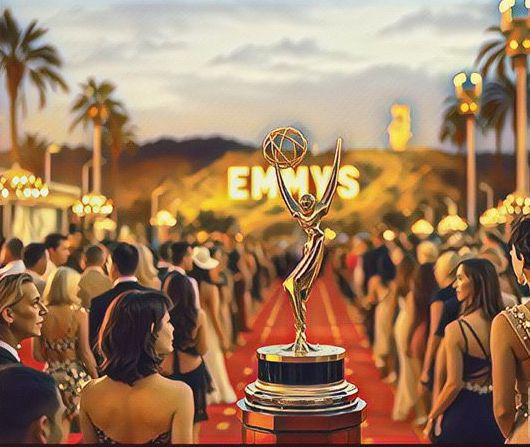
The Emmys obviously work differently from a Top 10 chart, but there is a similar logic at play. Once quality, buzz, consistency, voters’ familiarity with a show, an actor’s momentum and, most importantly, extremely well-organized studio campaigns are added to the equation, the apparently endless field of contenders narrows very quickly. By the time the ceremony arrives, many categories are already down to two names, sometimes practically one.
That is why I still find it difficult to talk only about “deserving” when discussing awards. Merit exists, of course, and some of this year’s likely winners have done extraordinary work. But the Emmys are also a snapshot of the industry, its preferences, its bets and even its emotional attachment to certain shows and performers. Art is not a horse race, although Hollywood spends a few months every year trying to turn it into exactly that.
This year’s numbers help tell that story. The Pitt arrived at the ceremony with 25 nominations and Hacks, in its final season, with 24. Just behind them are two Apple TV productions, Widow’s Bay, with 19, and Pluribus, with 18. Even before the main ceremony, Widow’s Bay had already won eight Emmys in categories announced earlier. It is not particularly difficult to understand where some of tonight’s favoritism comes from.
HBO remains television’s great historic prestige powerhouse and once again led the nominations, with 122, followed by Netflix with 111. Netflix, of course, stopped being the outsider that had to prove streaming could also be television a long time ago. Today it is part of the establishment it once helped disrupt. The most interesting number may belong to Apple TV: despite working with a much smaller volume of productions, it earned 87 nominations and had a much higher average number of nominations per submitted program than its competitors. In other words, it is small in quantity and enormous in efficiency within the prestige awards circuit.
Amazon has not disappeared, and that distinction matters. Amazon MGM Studios and Prime Video still received a respectable number of nominations, driven by series such as Spider-Noir and Fallout. What has diminished is their presence at the symbolic center of the race, especially in the major categories. Today, when we immediately think of prestige television, major stars and projects that manage to combine creative ambition with extremely strong awards campaigns, Apple occupies a space few could have imagined when it first entered streaming.
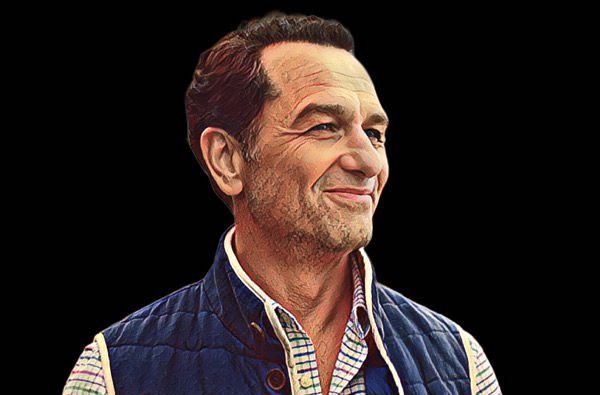
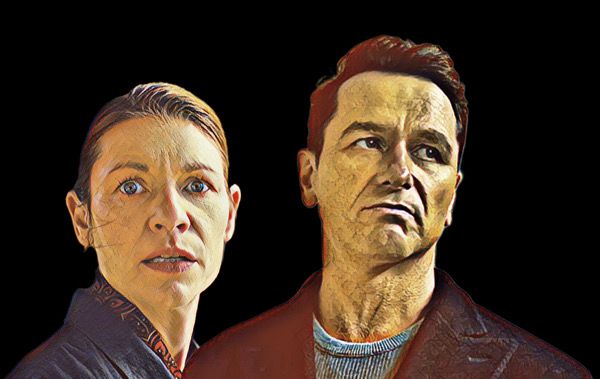
And perhaps no one represents this moment better than Matthew Rhys. He is nominated for Best Actor in a Comedy for Widow’s Bay, from Apple TV, and for Best Actor in a Limited or Anthology Series for The Beast in Me, from Netflix. The second is not officially a “drama” category, even though the performance is obviously dramatic. The double leading-actor nomination is already rare. If he wins both, Rhys would do something unprecedented: no performer has ever won two lead-acting Emmys in the same year. Since he has already won as a drama actor for The Americans, a double victory would also give him wins across the three major lead-acting fields: drama, comedy, and limited series.
And this would not be one of those records created simply so an awards show can claim that something historic happened. Rhys is having an extraordinary moment because he achieves something increasingly rare: he disappears into completely different characters without losing whatever quality makes audiences want to follow him. In Widow’s Bay, especially, he found the extremely difficult balance between absurdity, fear, and vulnerability. His comedy win feels like one of the safest bets of the night. A double victory would be the consecration.
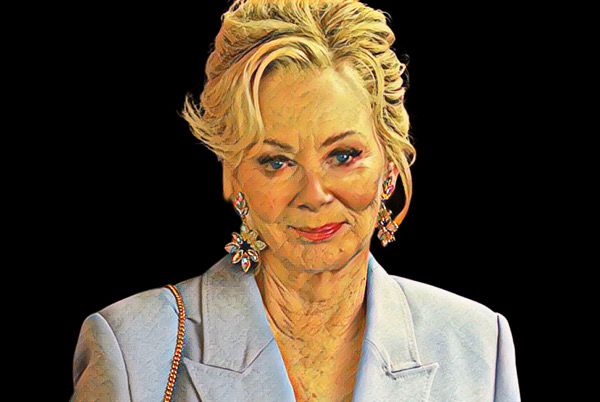
Jean Smart represents another kind of consecration. As Hacks says goodbye, another win as Deborah Vance would mean much more than an award for a single season. Smart could become the first performer to win the Emmy for Best Actress in a Comedy for every season of one series, with five consecutive victories for Hacks. At 75, it would also confirm something the show itself has always argued: talent has no expiration date, and a great character can arrive precisely when an industry that is often cruel to older women has already decided they should occupy smaller spaces.
It is almost impossible to separate Jean Smart from Deborah Vance because Hacks has always played with that very boundary. Deborah is a woman forced to survive changing tastes, younger generations, ageism, and the constant pressure to remain relevant. Smart, meanwhile, turned a character who could easily have become a caricature of the veteran diva into a woman who is brilliant, insecure, selfish, generous, cruel, and deeply human. If she wins again, it will be difficult to call it mere repetition. It will feel like a farewell.
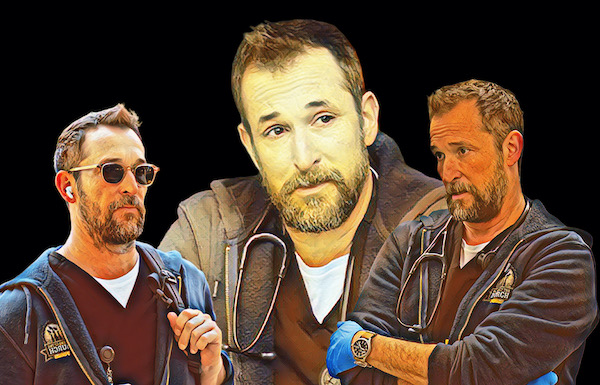
The Pitt tells another story about the industry. After winning, finding an audience and quickly establishing its identity, it returns as the favorite for Best Drama, while Noah Wyle attempts to repeat his win as lead actor. It is the kind of phenomenon that shows how the Emmys also reward confidence. Once consensus forms around a particular production, defeating it requires another series not merely to be excellent, but to generate an even stronger consensus. That is why Pluribus, even as one of the biggest shows of the moment, has to compete not only against The Pitt, but against the weight of an already established narrative.
There are also stories that awards shows simply cannot resist. Rhea Seehorn may finally win an Emmy after spending years associated with one of the most notorious injustices in recent awards history: the complete absence of wins for Better Call Saul. Harrison Ford, at 84, could win his first competitive Emmy for Shrinking. At moments like these, voting stops being only about that particular season and inevitably begins to carry career, memory, timing, and the sense that perhaps this is “the moment.” It is human, but it also confirms that we are never judging only the work printed on the ballot.
Perhaps that is exactly why the Emmys have become such an interesting snapshot of entertainment. The Oscars still carry greater symbolic prestige because cinema continues to occupy an almost mythical place in culture, but television and streaming increasingly represent what we actually consume throughout the year. Series are where we follow characters for months, discuss episodes, build theories, abandon stories, return to them, and develop forms of loyalty that a two-hour film rarely has the chance to create.
Tonight’s ceremony will probably have a few surprises. I hope it does, because a completely predictable awards show is not much fun. But the real stories may emerge tomorrow, when we can look at who lost, who was overlooked, and which few categories contradicted what already seemed decided weeks ago.
For today, however, before the envelopes are opened, the 2026 Emmys are already telling a very clear story: in an era when we have never had so much to watch, we are still concentrating our attention on very little. And Hollywood, which knows how to measure attention better than it likes to admit, knows exactly how to turn that concentration into votes.
Descubra mais sobre
Assine para receber nossas notícias mais recentes por e-mail.

