
All of Hollywood seems to want to work with Taylor Sheridan. Everyone, apparently, except Kevin Costner. The joke contains an important part of the truth about the man who turned Paramount+ into his own territory: award-winning actors accept small roles, major stars move across his shows, and lesser-known performers reappear from one production to another, forming a kind of repertory company. Sheridan did not merely create successful shows. He created a recognizable universe filled with tormented fathers, warring families, corrupt institutions, breathtaking landscapes, geopolitical speeches, distrust of the press, and characters who believe that violence, when committed by them, is merely a pragmatic response to an even worse world.
On my website, Lioness is now the biggest hit after Silo. Interest in it has grown alongside the show, which has truly found its footing in this third season. From the beginning, there was something curious about a production led by women and surrounded by strong female characters, yet still told through an essentially male sensibility. Not because Joe, Cruz, Kaitlyn, or the other women needed to behave delicately or conform to some conventional idea of what “feminine” means. They are soldiers, CIA agents, strategists, and fighters. The problem was that, at times, they seemed like Taylor Sheridan men played by women.
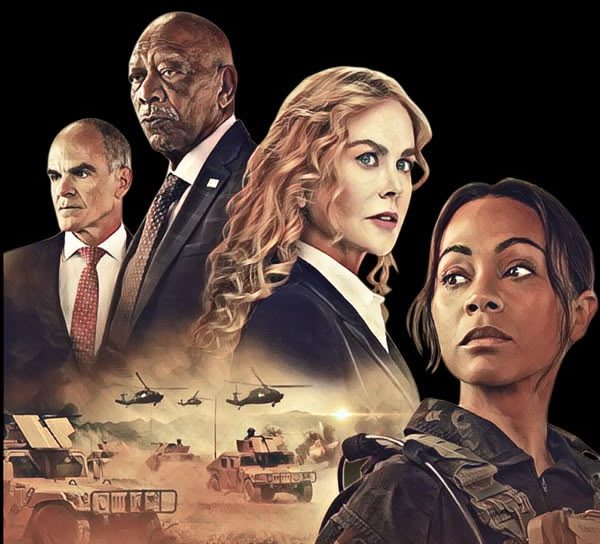
The third season has found a much better balance. The brutality remains, as do the dangerous operations, political explanations, and morally indefensible decisions made in the name of national security. Now, however, the consequences of those choices carry greater emotional weight. Joe is no longer simply the boss who storms into a room shouting orders and insisting that she will do anything to complete the mission. Her body, family, marriage, guilt, and relationship with Cruz have finally been given the same dramatic importance as the action. Sheridan has not stopped writing soldiers; he has simply remembered that soldiers also have attachments, fears and contradictions.
That is what makes this the best season of Lioness. The show remains exaggerated, violent and utterly convinced of its own geopolitical reading, but it has become more human. The mission is no longer merely a mechanism for moving the team from one country to another. It now affects the characters directly. When Joe is kidnapped and tortured, the violence is not there solely to create an action sequence. It dismantles a woman who has always believed she could control chaos. And when Cruz takes part in the rescue, the story returns to the show’s central bond: Joe created a weapon, but that weapon also learned to love her.
Sheridan tells this story with a cast that few series could assemble. It includes three Oscar winners: Morgan Freeman, Nicole Kidman and Zoe Saldaña, as well as Michael Kelly, Martin Donovan — who plays Kaitlyn’s husband Errol — and Jennifer Ehle, forever the Elizabeth Bennet of the 1995 Pride and Prejudice, as Mason. It is a cast capable of lending prestige even to scenes in which the characters simply sit around a table explaining to the audience what is happening in the world. Paramount itself highlights the three Oscar winners in its official material for the season.
Around them lies the true Sheridanverse. James Jordan may be its clearest example: he has appeared in Wind River, Yellowstone, 1883, Mayor of Kingstown, Lioness and Landman. Ian Bohen left the Yellowstone ranch for the operation in Lioness. Dawn Olivieri has also crossed between productions. Now Michael Kelly will temporarily leave the corridors of the CIA to play a powerful executive in the third season of Landman. Sheridan works like the old film directors who enjoyed reuniting with the same actors because they already understood their rhythm, discipline, and what they could draw from them. Kelly will play a different character, but he will remain within the same moral territory.
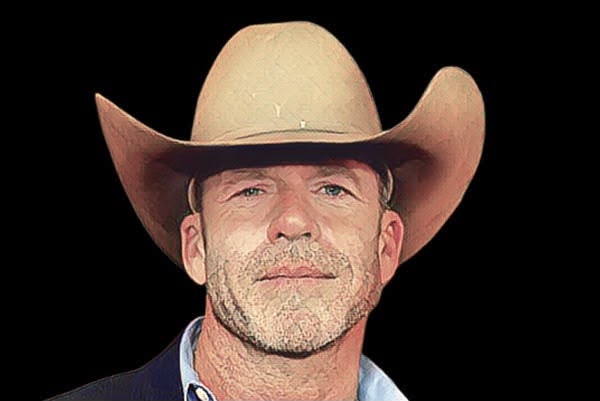
That is why I like to think of Taylor Sheridan as television’s cowboy. He does not merely write westerns; he transports the logic of the western into every genre. The frontier is no longer necessarily the Old West. In Sicario, it is the literal border between the United States and Mexico; in Hell or High Water, it is a country overtaken by banks, poverty and resentment; in Wind River, a Native American reservation abandoned by the state; in Yellowstone, the land; in Landman, oil; in Mayor of Kingstown, the prison system; and in Lioness, the invisible and constantly shifting territory of international espionage.
Sheridan replaces horses with trucks, planes, helicopters, and covert operations, but preserves the essential question of the western: who enforces the law where the law can no longer reach? His stories always feature someone trying to protect a family, property, town, company, or country, usually convinced that ordinary rules do not apply to those carrying such a burden.
There is also an unmistakable cadence. The sweeping landscapes; the conversations in which one character explains to another how the world really works; the competent man who despises bureaucrats; the hardened woman who pays a price for surviving in that environment; the respect for those who do the work and the suspicion directed at those who merely observe it. It is profoundly American and yet manages to speak to the rest of the world because, beneath the ranches, oil fields, and CIA operations, Sheridan writes family melodramas that are almost soap operas. Before asking us to care about the fate of a nation, he makes us fear for the fate of a family.
His portrayal of women, however, varies considerably. In Landman, the misogyny is harder to overlook because several female characters are initially introduced through their bodies, beauty, and the effect they have on men. It belongs to a rather old-fashioned male imagination, even when those women later reveal their intelligence or ability to manipulate their surroundings. Sheridan appears to like them, but he frequently looks at them before listening to them.
In Sicario, Wind River and Lioness, the construction is more complex. Kate Macer, the agent played by Emily Blunt in Sicario, serves as our moral conscience: she enters believing in rules and discovers that she has been used to legitimize an operation that had already decided to ignore them. Jane Banner, played by Elizabeth Olsen in Wind River, also arrives as an outsider, unprepared for that territory, but she is not treated as incapable. She learns, resists, and comes to understand the scale of the abandonment alongside Cory Lambert, played by Jeremy Renner. Hawkeye and the Scarlet Witch meet far from the visual effects of the Marvel films, in a frozen, sorrowful, and profoundly human thriller.
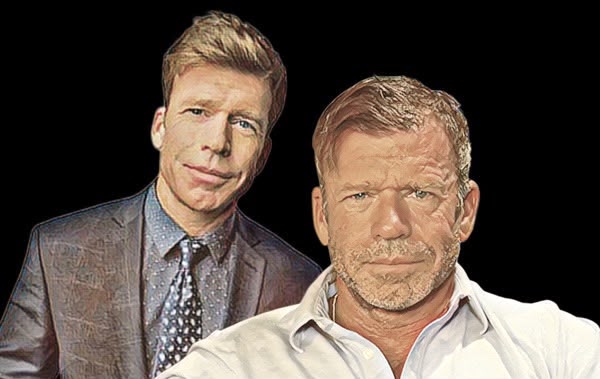
In Lioness, Sheridan goes a step further because the women are no longer observing the male machine. They command the machine, use the same weapons, repeat the same violence and pay the same price. We can still tell that a man is writing these women. Joe often feels like a male Sheridan protagonist transferred into Zoe Saldaña’s body, and the show took time to uncover the emotional dimension behind the soldier. But the point is not to demand that Sheridan write like a woman. It is to ask whether he can see his female characters as complete human beings. In this season of Lioness, he finally has.
Sheridan is a man of his time, shaped by a male and distinctly American imagination he makes no effort to conceal. Some aspects have aged badly, particularly his gaze at the women in Landman, but reducing his entire body of work to that would mean ignoring the quality of the stories he tells and the complexity he can achieve when inspired. It is possible to recognize the limitations without turning every show into an ideological tribunal. When the story is well told, the characters contain real contradictions, and the result works, I have no difficulty following him into that territory.
The press also occupies a revealing place within this worldview. Sheridan does not distrust journalists alone; he distrusts virtually every institution. His governments lie, his companies exploit, his police officers kill, his agents manipulate and his politicians treat human lives like pieces on a board. The contradiction is that he usually grants the men and women operating those machines some form of moral code, even when they commit atrocities, while rarely extending the same complexity to the press.
In Yellowstone, journalist Sarah Nguyen investigates the Duttons, receives information from Jamie, and becomes a threat that must be eliminated. The show does not suggest that her murder is just, of course, but it shifts our identification: the dramatic problem stops being that a journalist was killed for attempting to reveal the truth and becomes the danger her investigation posed to the central family. In Lioness, the press rarely exists as an independent investigative force. It appears as the vehicle for whatever version of events politicians, military officers, or intelligence services have decided to release. The news does not expose power; it is simply another tool used by it.
Perhaps that is why Sheridan appears to distrust the press more than the very government he depicts murdering, lying, and manipulating. Under this logic, the agent who kills understands how the world works and accepts the burden of the decision. The journalist is an outsider, unable to comprehend the full extent of the threat yet willing to expose those who supposedly keep the country standing. It is a deeply conservative worldview, not necessarily because it supports a particular political party, but because it places far greater faith in the competent individual than in institutional scrutiny. In Sheridan’s universe, the truth belongs to those who were on the battlefield, not to those who arrive later to ask questions.
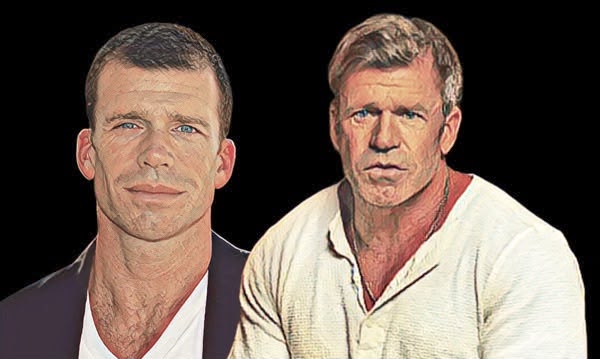
Before building this television empire, Sheridan was an actor who played supporting roles in series such as Veronica Mars and Sons of Anarchy. The turning point came when he began writing stories about an America Hollywood frequently observed from a distance. First came the excellent Sicario, directed by Denis Villeneuve, followed by Hell or High Water, the modern western starring Chris Pine, Ben Foster, and Jeff Bridges that earned Sheridan an Oscar nomination for Best Original Screenplay. He then directed Wind River, completing a kind of trilogy about borders, violence, abandonment, and characters living on the margins of the American dream. All three films were released between 2015 and 2017. It was not that long ago.
Then Yellowstone proved there was an enormous audience for that worldview and opened Paramount’s gates. Kevin Costner was essential to the process. His presence gave the series the scale of cinema and helped turn John Dutton into an instantly iconic patriarch. That is precisely why the rupture between the two men remains the great exception to the idea that everyone wants to remain inside Sheridan’s universe.
Costner said he reorganized Horizon to accommodate the series, but production was delayed, and the scripts were not ready. The opposing account held that his availability had become incompatible with the production schedule. There is probably truth and pride on both sides. More interesting than determining who was right is understanding what the rupture symbolizes. Costner and Sheridan were two cowboys, two authorities, and two competing visions of authorship inside the same ranch. The Sheridanverse, apparently, had room for only one. Sheridan continued, expanded his universe, and proved that he could survive without his first major star. Costner left to make his own western.
So, is this Taylor Sheridan’s peak? Perhaps. Lioness has found its best form, Landman has become another phenomenon, and his name can attract Oscar winners, veteran stars, and actors eager to work with him again. Very few showrunners have achieved such powerful name recognition: we do not need to know much about a new series to understand immediately what it means when we are told it is “from Taylor Sheridan.”

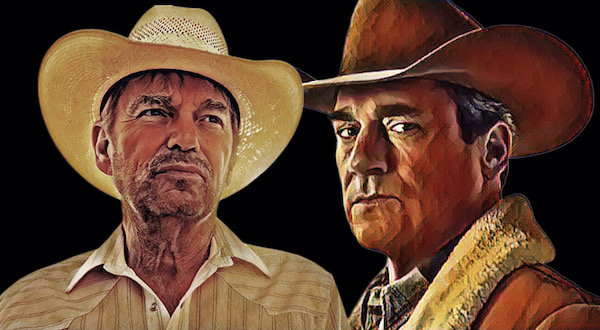
There is, however, a perfect irony. His Paramount peak has arrived when his departure is already scheduled. Sheridan has signed a deal with NBCUniversal, with the television agreement expected to begin in 2029, after his current commitments end. Paramount will retain its franchises and existing productions, but it will lose the man whose signature helped define the platform. The Wall Street Journal
Lioness, therefore, does not merely prove that Taylor Sheridan succeeded. It proves how dependent Paramount became on his continued success. The cowboy built the ranch, assembled his company of actors, established the rules, faced down his biggest star and turned his worldview into a global product. Now, just as he appears to have reached the highest point, he is already preparing to cross the border.
Descubra mais sobre
Assine para receber nossas notícias mais recentes por e-mail.

