
Before the interview even begins, Tom Cruise is already directing the scene. He talks to GQ’s Zach Baron about framing, eyelines, and which of the journalist’s eyes he should look at during the recording. It is a technical note, the kind that keeps the face properly positioned for the camera and prevents the gaze from appearing restless in the edit. It is also the perfect opening for an interview in which Cruise controls not only how he will be seen, but how far the interviewer will be allowed to see.
At 64, with a 45-year career behind him, Tom Cruise has returned to the cover of GQ after two decades as he begins the campaign for Digger, Alejandro González Iñárritu’s dark comedy, which arrives in theaters in October. After receiving an honorary Oscar, he now has the possibility of finally competing for Best Actor with a character he describes as the most challenging of his career. It is the return of the performer who worked with Stanley Kubrick, Paul Thomas Anderson, Oliver Stone, Steven Spielberg, Michael Mann and Martin Scorsese, after years in which the producer, stuntman and guardian of movie theaters almost swallowed the actor.
There is no question that Cruise is an excellent actor, as Born on the Fourth of July, Magnolia, Collateral and Eyes Wide Shut prove. Yet his place in history may be even greater when we consider him as a superstar. Very few names have sustained such global recognition, box-office power, creative control, and ability to bring audiences into theaters for more than four decades. Others came before him, and others will follow, but Cruise remains in a very particular category among the greatest stars Hollywood has ever produced.
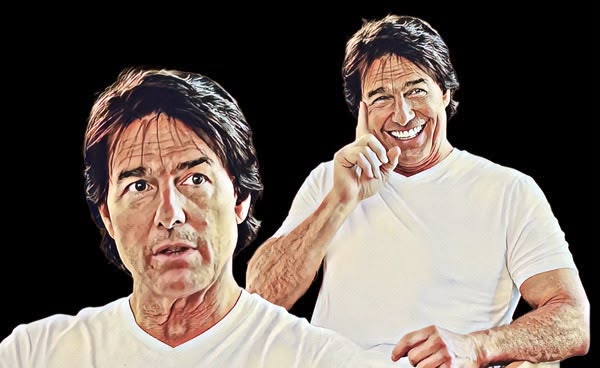
That is why a long interview with him immediately becomes an event. Cruise participates in junkets, appears at premieres, chats briefly with journalists, and distributes his apparently inexhaustible enthusiasm, but it has been many years since he sat down with a reporter for the promise of a deeper profile. The GQ interview lasts nearly half an hour and is presented as a rare opportunity to finally hear from Hollywood’s most elusive star. The problem is that, by the end, we know a great deal about his relationship with cinema and virtually nothing about his life.
Cruise discusses his unsettled childhood, the roughly 15 schools he attended in 16 years, and how the constant need to adapt awakened his curiosity about human behavior. He remembers living in rented houses and establishing a private rule for himself: to leave every place a little better than he found it. He says he wrote his dreams on a board but learned early not to share them with just anyone. He also recalls that, at 18, while making Taps, he shaved his head without consulting the director because he took the instruction to create the character literally.
Everything, however, is transformed into an explanation for the professional he would become. His childhood explains his curiosity. The constant moves explain his adaptability. His dreams explain his ambition. Even a family memory, when he mentions his mother and the respect she taught him, is quickly absorbed into the larger narrative of dedication, learning, and work. Cruise does not tell a story simply to reveal something about himself; every memory must help construct Tom Cruise.
The most interesting moment comes when Zach Baron asks why he has not given an interview like this in such a long time. Cruise does not really answer. He merely says, “I’ve been very busy,” and immediately returns to his discourse about competence, opportunities, learning, and everything he hopes to teach other artists. Baron recognizes the evasion and tries again, asking why Cruise finally decided to stop and talk. The actor mentions the time consumed by the pandemic, the effort required to keep productions running, and concludes that this is the moment to speak. To speak about cinema, naturally, never about his life.

When Baron asks what Tom Cruise does on an ordinary Tuesday away from a set, he says he is preparing for the next project. He is always studying something, learning a new skill or planning the next film. When asked where he lives, Cruise says his home is on movie sets and describes himself as a citizen of the world. When the journalist wants to know the biggest misconception about him, Cruise says he does not think about such things. When age enters the conversation, he rejects any reflection on limits and goes back to discussing future dreams.
There is not a word about his three children, including Suri, from whom he has reportedly been estranged for years. He does not discuss his former wives, Mimi Rogers, Nicole Kidman and Katie Holmes, current relationships, the possibility that he may already be a grandfather, or Scientology, an unavoidable presence in his biography and in the controversies surrounding his family. Whether through a formal agreement, an implicit condition of access, or an editorial choice, the boundaries are obvious. GQ gained access to Tom Cruise, but only to the Tom Cruise he chose to offer.
I do not entirely blame Zach Baron. In front of one of the greatest stars in film history, with such rare access, any journalist would understand that an unwelcome question could change the atmosphere, end the conversation, and perhaps prevent another meeting. I would also like to know much more, but I am not certain that, sitting across from Tom Cruise, I would choose to begin by making him uncomfortable. That, too, is part of a superstar’s power: he does not always need to explicitly forbid a question, because his presence and the conditions surrounding it can do the work in advance.
Cruise, for his part, does not deny his reputation for control or intensity. On the contrary, he claims it with intelligence and good humor. He confirms that “the rumors are true,” says he arrives before everyone else, works hard, and expects the same commitment from those around him. He says he warns his colleagues about what they are getting into and asks whether they are prepared for the experience. By confessing to his intensity before it can be used against him, Cruise neutralizes the criticism: control stops resembling authoritarianism and becomes responsibility, while his demands are reframed as commitment to the crew and the audience.
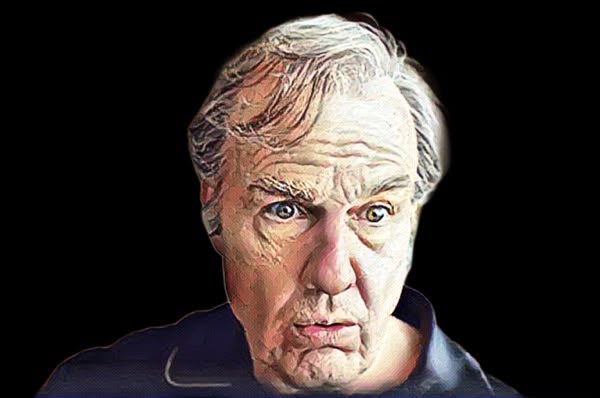
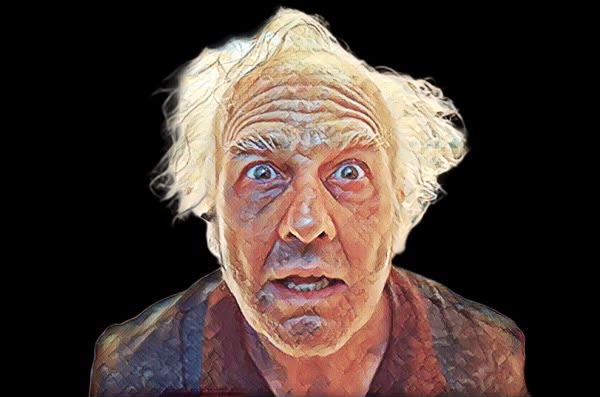
Iñárritu reinforces this image when he describes Cruise’s almost frightening ability to absorb instructions. During a complex Digger scene involving hundreds of extras and carefully coordinated movement, the director gave him seven notes. Cruise listened, registered every one of them, and executed them all, mastering rhythm, space, silence, aggression, vulnerability, and his relationship with the camera. It is an ability built over decades, but also a permanent need to understand and control every element of the experience.
That need becomes even clearer when Cruise talks about fear. Asked whether he fears death, he says no, but makes an important distinction: that does not mean he never feels afraid. The sensation exists; it simply does not bother or paralyze him. “I’m not afraid to feel afraid,” he says. When Baron attempts to discover the source of this need to live, physically and metaphorically, on the edge of a cliff, Cruise ends the inquiry: it is simply who he is.
Those two answers summarize far more than the physical risks he takes in Mission: Impossible. Cruise does not present himself as a man incapable of fear, but as someone who refuses to be governed by it. Danger becomes stimulation, uncertainty becomes movement, and fear becomes another force to be mastered and transformed into spectacle. At the same time, by declaring that this is simply part of his nature, he prevents the conversation from advancing toward the most interesting psychological question: why does he need to keep searching for the edge of that cliff?
It happens throughout the interview. Cruise allows us to see the mechanism, but not what lies behind it. He explains how he responds to fear, not why he needs to confront it. He reveals how he works, but not who he is when he stops working. He talks about his curiosity about other people but offers no access to the most important relationships in his own life.
What remains is the narrative of a man who lives to make movies, teach what he has learned, and continue learning while he teaches. Cruise presents himself simultaneously as student and teacher, artist and craftsman, star and servant of the audience. He seems to believe this sincerely. His technical knowledge, memory, and dedication would be difficult to sustain for 45 years as mere promotional strategy. When he says that making movies is not simply what he does but who he is, he is probably telling the truth.
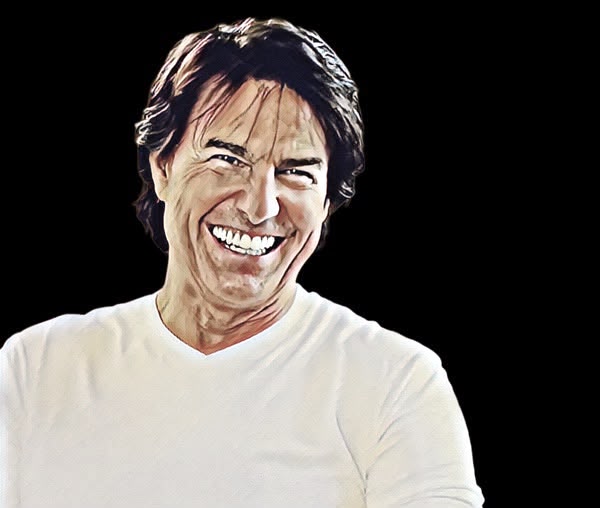
That truth, however, is also the perfect protection. By turning work and identity into the same thing, Cruise eliminates any obligation to reveal another part of himself. There is no ordinary Tuesday because he is working. There is no home because his home is the set. There is no past because he is focused on the next dream. There is no private life because cinema occupies every available space in the narrative.
Tom Cruise began the interview by directing Zach Baron’s gaze and spent the following half hour doing essentially the same thing with the conversation. Whenever the journalist tried to look at the man, Cruise gently redirected his eyes toward cinema. By the end, we know exactly as much about Tom Cruise’s life as Tom Cruise has decided we are allowed to know. Even in an interview advertised as rare, long, and personal, access ends precisely where the person would begin.
What he offers in its place is the most enduring character of his career: Tom Cruise, the man who lives exclusively for cinema. Perhaps it is a construction, perhaps it is the absolute truth or, more likely, a perfect combination of both. Either way, the control remains intact — and it is precisely that control that helped create one of the greatest superstars in Hollywood history.
Descubra mais sobre
Assine para receber nossas notícias mais recentes por e-mail.

