
It is important to begin with what Reacher is not: a show in crisis. Season 4 ends with a fifth season already guaranteed by Prime Video, and Amazon renewed the series before the current episodes had even premiered. The previous season had reached 54.6 million viewers worldwide in its first 19 days, according to the platform itself, and Season 4 returned at No. 1 among streaming programs tracked by Samba TV in the United States, a position it also held the following week. So any discussion about fatigue has to start there: Reacher remains a huge success.
Perhaps that is exactly what makes the problem more interesting. This is not about ratings, nor about a formula that has stopped working commercially. It is about a formula that works so well it is beginning to trap the show itself.
I loved the first season. I thought the second was average. By the third, I already found the story confusing and, at times, too far-fetched, and Season 4 only reinforced a feeling I have had for a while now: Reacher works best when the show is smaller than Reacher.
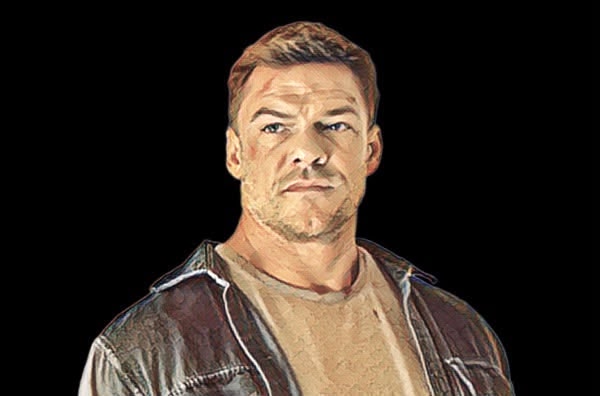
In the first season, there was something almost Western-like about his arrival in Margrave. A stranger walks into a small town, realizes something is wrong, and begins dismantling the system around him. Reacher was already enormous, absurdly strong, smarter than almost everyone else, and capable of walking into a fight with the calm of someone who already knows exactly how it will end, but the world around him still offered resistance. There was Roscoe, Finlay, a town, human relationships, a relatively contained mystery. Reacher’s strength was one element within the story, not the entire story. The bigger the show became, the more exposed the fantasy became.
Because there is an unavoidable problem when you build an almost invulnerable hero: after a while, we need to believe there is at least some possibility that he might lose. Not necessarily die — nobody expects that — but make a mistake, be caught off guard, pay a price, encounter a person or situation that genuinely unsettles him. When every new season has to create bigger villains, bigger conspiracies, bigger fights and apparently more impossible threats simply to keep up with Reacher’s size, something curious happens: the action grows, but the tension shrinks. We know he is going to win. And that certainty, which was initially part of the pleasure of the show, begins to work against it.
Critics remain very generous with Reacher. Season 4 currently sits at 94% with critics on Rotten Tomatoes, while the audience score is 68%, a gap that does not prove fatigue on its own, but is interesting. The critical consensus essentially celebrates the very thing that bothers me: the show knows its formula and knows how to execute it. Yes, it does. The question is how long knowing a formula perfectly is enough.
I am also beginning to feel this with Alan Ritchson, which may be unfair to the actor. Reacher almost always demands the same tools from him: the closed expression, the pause before answering, the economical line, the instant calculation, the precise movement and, finally, devastating violence. In the first season, all of that built a very specific character. After four seasons, it risks looking as if the actor is on autopilot, when perhaps it is the character who has increasingly little room left to surprise him. And then, on the exact day Reacher ends its fourth season, Prime Video releases all eight episodes of Neagley.
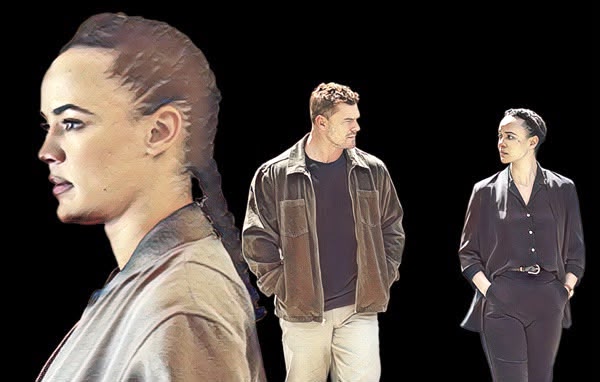
It is a smart decision by Amazon, but also an interesting narrative experiment. Frances Neagley has always worked very well alongside Reacher precisely because she is not Reacher. Maria Sten found a character who is dry, intelligent, efficient, and defined by traits of her own, including her difficulty with physical contact, but Neagley has always existed in relatively controlled doses. Now she has to carry a series. And the question changes completely. Before, we wanted to know whether Reacher could survive its own formula. Now we can find out whether the formula can survive without Reacher.
The early reception to Neagley is good. On premiere day, the first season appears at 89% on Rotten Tomatoes, still based on only 19 reviews, so this is a very early snapshot. The Guardian, which gave the series three stars, understood its proposition perfectly: it is essentially an hour-long vacation from real life, built from villains, punches, impossibly fast deductions, and that reassuringly simple morality in which we always know exactly who deserves to be hit.
That may work very well. But it also reveals the risk. Because perhaps Reacher never really created a “universe.” Perhaps it created an extraordinarily efficient character inside a structure designed to serve him. And there is a huge difference between those two things.
Marvel can remove one hero and continue exploring a world because that world has rules, institutions, conflicts, and characters that exist independently of him. Yellowstone, for all its excesses, managed to create a family and territorial mythology capable of generating other stories. Reacher, so far, essentially revolves around one man walking into a problem, his almost supernatural ability to understand it, and the satisfaction of watching him destroy whoever is on the wrong side. What happens when we remove the man?
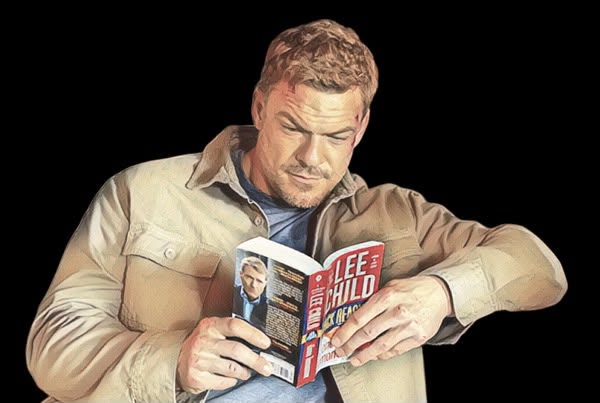
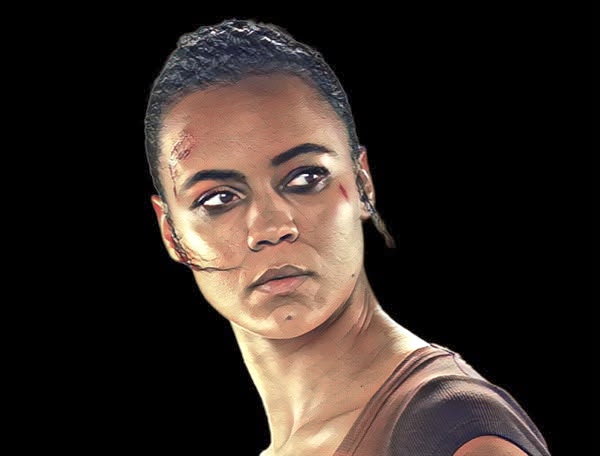
That is why Neagley interests me more as a test than simply as a spin-off. If it works only by imitating Reacher, then we will have a slightly different version of the same machine. If it can develop what Reacher himself can barely offer anymore — vulnerability, lasting relationships, emotional consequences, the genuine possibility of failure — perhaps it will find a path the original series lost precisely because its protagonist became too large for his own world.
And there is an irony in all of this. Prime Video is expanding the Reacher universe at exactly the moment when the limits of its formula are becoming more visible. Season 5 is already guaranteed, the audience keeps showing up, Alan Ritchson has become inseparable from the character, and there is no commercial reason to fix something that is still working this well.
Creatively, however, the question is different. How long do we want to watch Reacher walk into a room knowing he will be the strongest, smartest and best-prepared man in it?
Perhaps Neagley has arrived at exactly the right moment to answer something the franchise itself still does not know: whether there really is a Reacher world worth exploring, or whether, in the end, everything has always depended on Reacher being at the center of it.
Descubra mais sobre
Assine para receber nossas notícias mais recentes por e-mail.

