
I write about Jane Austen a lot, perhaps because I still keep finding things in her work that I want to talk about. I have written about her heroines, her villains, her men, her marriages, about money, class and desire, about Pride and Prejudice, Sense and Sensibility, Persuasion, Emma, about the adaptations that worked and the ones that tried so hard to modernize her that they ended up losing precisely what they were trying to update. And yet, faced with another wave of Austen arriving on our screens, I realized there was a question I may not have asked quite this way before: why do we keep remaking stories whose endings we already know?
The question feels especially relevant in 2026. Netflix will release a new six-part adaptation of Pride and Prejudice on December 3, written by Dolly Alderton and directed by Euros Lyn, with Emma Corrin as Elizabeth Bennet, Jack Lowden as Mr. Darcy and Olivia Colman as Mrs. Bennet. Netflix itself has framed the project around the idea that every generation deserves its own version of the novel. At almost the same time, Sense and Sensibility is returning to cinemas with Daisy Edgar-Jones and Esmé Creed-Miles as Elinor and Marianne Dashwood, directed by Georgia Oakley from a screenplay by Diana Reid.
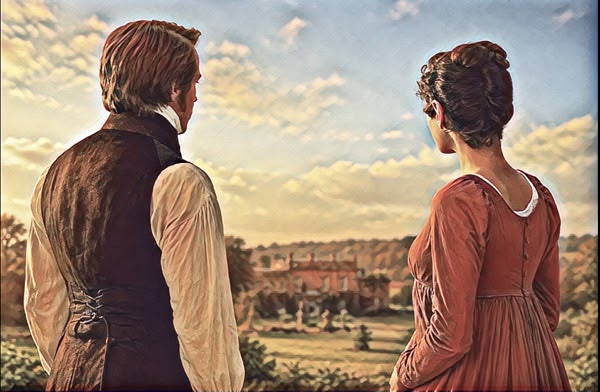
It is tempting to conclude simply that every generation wants its own Jane Austen, and that is true. But perhaps something more interesting is happening. A new adaptation does not necessarily erase the previous one. Nobody stopped loving Colin Firth and Jennifer Ehle when Matthew Macfadyen and Keira Knightley arrived on screen ten years later. Joe Wright’s film did not kill the BBC version. And now Jack Lowden does not need to defeat Colin Firth or Matthew Macfadyen in order to justify his existence. He needs to find his own Darcy.
With Austen, curiously enough, we are rarely waiting to find out what happens. We know who ends up with whom. We know who deceives Marianne, whom Elizabeth misjudges, whom Anne Elliot lost, and whom Emma Woodhouse should have realized she loved long before she finally does. The pleasure lies somewhere else. We want to see how these characters will be understood this time.
Perhaps that is why 1995 remains such a fascinating year for anyone who loves Austen. Within a matter of months, the BBC gave us Andrew Davies’s Pride and Prejudice, with Colin Firth and Jennifer Ehle; Roger Michell directed Amanda Root and Ciarán Hinds in Persuasion; Ang Lee filmed Emma Thompson’s screenplay for Sense and Sensibility, starring Thompson, Kate Winslet, Alan Rickman and Hugh Grant; and across the Atlantic, Amy Heckerling moved Emma into a Beverly Hills high school in Clueless. Austen could wear Regency dresses or miniskirts and knee socks. She was still Austen.
In fact, Clueless may be one of the clearest proofs that fidelity does not mean reproducing costumes, sets or dialogue. Amy Heckerling understood that Emma Woodhouse could become Cher Horowitz without ceasing to be Emma, because the human structure remained intact: privilege, vanity, good intentions, meddling in other people’s lives, blindness about one’s own feelings and, eventually, some degree of maturity. The world changed completely; the character, interestingly enough, did not change that much.
There is also a particularly British tradition behind this constant return. For decades, British television treated Austen, Dickens, the Brontës, George Eliot and other great writers almost the way a theatre company treats Shakespeare. There was no obligation to discover a definitive version of a classic and then leave it on a shelf forever. There was always the possibility of interpreting it again.

That is what makes the 1995 Pride and Prejudice so important within the history of British period drama. It became a phenomenon, but it was not created because nobody had ever told that story before. It came out of a culture that understands that great texts survive precisely because they can be revisited.
In the theatre, nobody finds this strange. No one seriously asks why another actor has decided to play Hamlet. No one treats a new production of Romeo and Juliet as automatic proof of a lack of ideas. We understand that the text remains while actors, directors, eras and audiences change. Perhaps Jane Austen has now reached exactly that place in film and television.
That is also why the question “why another Pride and Prejudice?” interests me less than “who will Elizabeth Bennet be this time?”. Jennifer Ehle had one Elizabeth; Keira Knightley had another. Colin Firth created a Darcy whose rigidity and self-control became almost a cultural definition of the character. Matthew Macfadyen did something different, making him more vulnerable, awkward, almost incapable of handling the intensity of his own feelings. Jack Lowden now arrives without having to decide which of the two he should imitate. There is room inside Darcy for another interpretation because Austen never reduced him to a single characteristic.
The same applies, perhaps even more strongly, to Sense and Sensibility. Ang Lee’s film remains remarkably alive three decades later, not only because Emma Thompson adapted Austen with intelligence, but because she found her own way of making the Dashwood women’s financial and social vulnerability explicit without turning the novel into a lecture about its time. The screenplay won an Oscar and the film helped consolidate the Austen fever of the 1990s.
It would be perfectly reasonable to ask why anyone would want to touch it.


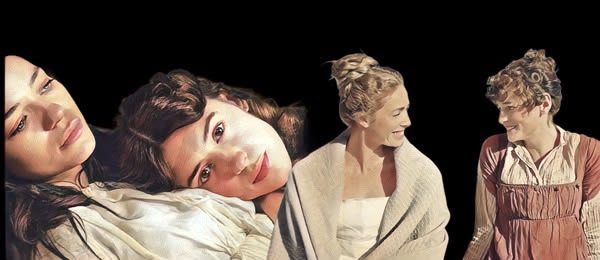
The answer may be precisely that no one needs to touch that film. Georgia Oakley is not remaking Ang Lee; she is interpreting Jane Austen. And her reading already seems to shift the center of the story slightly. Oakley has spoken about Elinor and Marianne less as opposite forces — reason on one side, sensibility on the other — and more as sisters who need to learn from each other. Their relationship gains weight of its own instead of functioning only as a counterpoint to their romantic stories. It is a small shift in perspective, but that is exactly what keeps a classic alive.
Perhaps the biggest mistake contemporary Austen adaptations make is when they fail to trust that. There is a constant temptation to prove that Austen is still modern by putting twenty-first-century awareness into the mouths of her heroines, or by turning them all into variations of Elizabeth Bennet. Austen does not need that kind of help. Her women were never interchangeable. Elizabeth is not Elinor, Elinor is not Marianne, Marianne is not Anne, and Anne is certainly not Emma. Modernizing them does not mean making them think like us. It means discovering why we still recognize them even when they do not.
That is what makes this new wave interesting. Netflix has turned the old British tradition of literary drama into a global streaming product. What might once have been a BBC miniseries shown weekly to a largely British audience now arrives simultaneously before an enormous global public that may know Darcy through memes, edits, TikTok, Bridgerton, the 2005 film, or perhaps has never read Austen at all. The repertoire remains; the stage has simply become much larger.
And there is an important difference between repetition and repertoire. Repetition tries to reproduce what has already worked. Repertoire begins with the assumption that a work can sustain new interpretations. If the new Pride and Prejudice tries to give us Colin Firth walking out of the lake again or Matthew Macfadyen flexing his hand again, then it will probably be little more than nostalgia. If it finds something different in Darcy, Elizabeth, Mrs. Bennet, Charlotte Lucas or even Mr. Collins, then there will be a reason to return to Longbourn once more.
Perhaps that is why the near-simultaneous arrival of Pride and Prejudice and Sense and Sensibility makes me feel far more curious than tired. I already know how these stories end. That was never the most important part.
When a new Jane Austen adaptation is announced, perhaps we are asking the wrong question. We no longer need to justify why Pride and Prejudice should exist again, any more than we demand that a new production of Hamlet prove every previous one obsolete. Austen has achieved something far rarer than remaining popular for two centuries: she has become repertoire.
Her stories are not remade because they have grown old. They are remade because we have grown older, changed, fallen in love in different ways, learned to see things we did not see before, and want to return to the same text to discover what it will tell us now.
Jane Austen remains exactly where she is. We are the ones who are never quite the same.
Descubra mais sobre
Assine para receber nossas notícias mais recentes por e-mail.

