
There is a particular kind of comfort in opening an Agatha Christie novel. We know, more or less, the game we are about to play. Someone will be murdered, there will be a relatively limited group of suspects, everyone will have something to hide, several of them will have perfectly plausible motives, and the clues will be right in front of us, mixed with distractions placed precisely so that we look in the wrong direction. Hercule Poirot will ask questions that seem irrelevant, notice details no one else has seen, and, in the end, rearrange everything we already knew until the solution feels both impossible and obvious.
Christie used this formula repeatedly for decades. The victim, the closed circle of suspects, the secrets, the alibis, the false clues, the investigation, and the final reveal. The setting changed — a mansion, a village, a train, a ship, a hotel — and so did the motives, but the pleasure came precisely from accepting the same rules once again and trying to beat her at her own game. What is extraordinary is that, even after dozens of murders, she still found ways to surprise us. Her genius did not lie in abandoning the formula, but in understanding it so deeply that she could move a single piece and transform the entire board.
Few books demonstrate this better than The Murder of Roger Ackroyd, which turns 100 in 2026 and remains one of the clearest examples of why Agatha Christie was, and still is, virtually unbeatable within the genre she helped define.
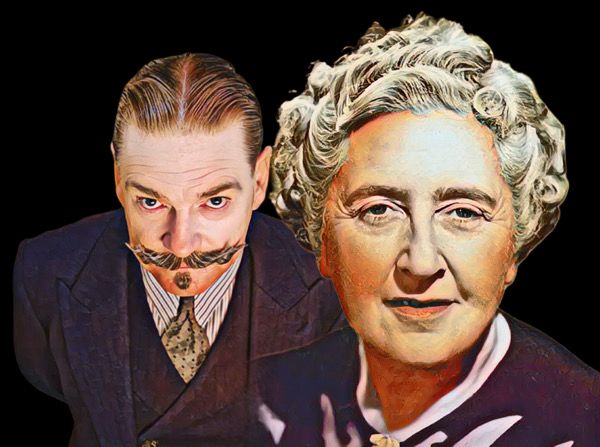
Published in book form in June 1926, The Murder of Roger Ackroyd was only the third novel to feature Hercule Poirot and Christie’s first published by William Collins, beginning her long association with the house. The story had already appeared in 54 installments in the London Evening News in 1925 under the much more direct title Who Killed Ackroyd?. It was the book that permanently changed the scale of Christie’s career.
The plot begins in the most classic Christie fashion. We are in King’s Abbot, a small English community where everyone knows something about everyone else. Mrs. Ferrars, a widow suspected of having poisoned her husband, dies in what appears to be a suicide. Before her death, she reveals to Roger Ackroyd, the man she planned to marry, that someone had discovered her secret and had been blackmailing her. Ackroyd receives a letter that may identify the blackmailer, but he does not manage to finish reading it. That same night, he is found dead in his study.
Poirot is retired in the area, trying to devote himself to growing vegetable marrows, but naturally becomes drawn into the crime. The person who follows the investigation and tells us everything that happens is the village doctor, Dr. James Sheppard, who occupies a role instantly familiar to anyone who reads detective fiction: he stays close to the detective, witnesses interrogations, records clues, and functions almost as a replacement for Hastings.
And this is where I need to place the inevitable warning: from this point on, this article completely reveals the ending of The Murder of Roger Ackroyd. Because the murderer is James Sheppard. Not merely one suspect hidden among the characters. Not someone who appears discreetly at the beginning and returns at the end. The murderer is the man who has been telling us the entire story.
Sheppard was the person blackmailing Mrs. Ferrars, and he kills Ackroyd when he realizes his identity may be exposed. The book we have just read is, therefore, essentially his own account of the crime and the investigation. And that is where Christie’s genius lies: Sheppard does not need to spend hundreds of pages openly lying to us. He selects what he tells us, carefully chooses how he describes certain moments, and omits exactly what is necessary to construct a version truthful enough to appear honest.
When Poirot finally reveals what happened, Christie is not only exposing the murderer. She is showing the reader that we participated in our own deception.
We trust Sheppard because we know the convention. Watson tells us about Sherlock Holmes. Hastings tells us about Poirot. The great detective’s companion exists to observe what we observe and fail to notice what the genius will eventually see. Christie understood that this trust was so automatic that she could use it as the best alibi of all.
That is why the book provoked debate when it appeared. Some critics and readers accused Christie of not playing fair, because making the narrator the murderer seemed to violate the implicit agreement between author and audience. Dorothy L. Sayers would later defend Christie with an answer that remains perfect: it is the reader’s job to suspect everyone. Christie’s official site still recalls the controversy surrounding the rules of detective fiction and Sayers’ defense of the novel.
The contemporary reaction, however, was more complicated than the later legend of widespread critical outrage. The book was also widely praised and enormously successful. With time, what some readers saw as cheating came to be recognized as one of the most brilliant solutions in detective fiction. Today, Roger Ackroyd is not remembered because Christie destroyed the game, but because she noticed a rule no one had thought to question.
The narrator does not lie to us; therefore, the narrator is on our side. Is he?

There is also another layer to Roger Ackroyd that feels especially modern. This is not only a story about who committed the murder. It is a story about who controls the narrative. Sheppard tries to decide what will be recorded, in what order, with which words and with which gaps. He is not merely trying to hide the crime; he is attempting to determine which version of the crime will survive. A century later, that question may be even more fascinating than it was in 1926.
Curiously, however, one of Agatha Christie’s most famous books has never received the succession of film and television adaptations one might expect. Murder on the Orient Express and Death on the Nile have returned to the screen again and again. Roger Ackroyd, often ranked among Christie’s greatest achievements, has remained far rarer.
The reason may lie precisely in the twist.
The first adaptation came quickly, but on stage. Michael Morton turned the novel into Alibi, which opened in the West End in 1928, with Charles Laughton as Poirot, and ran for around 250 performances. Christie disliked several of Morton’s changes, an experience that helped push her toward writing and adapting her own plays.
The play reached the screen in 1931, also as Alibi, directed by Leslie Hiscott and starring Austin Trevor, the first actor to play Poirot on film. It was the first sound film based on a work by Agatha Christie. But the adaptation had changed the story’s perspective and, in doing so, removed the very mechanism that had made the novel revolutionary.
On radio, curiously, Roger Ackroyd found a medium much closer to its literary nature. In 1939, Orson Welles adapted the story into a one-hour radio play and had the delicious idea of playing both Hercule Poirot and Dr. Sheppard. Decades later, BBC Radio 4 would produce another adaptation. Voice allows something essential about the book to survive, because we remain dependent on the person who has chosen how to tell the story.
On television, the best-known version arrived only in 2000, as part of Agatha Christie’s Poirot, with David Suchet as Poirot and Oliver Ford Davies as Sheppard. And this is where the problem becomes even clearer.
The adaptation keeps Sheppard as the murderer, but removes the element that makes the solution devastating in the book: he is not the narrator of the story. His sister discovers the truth through his diary, and the revelation happens without Poirot or Sheppard himself being present. The crime remains. The culprit remains. But the experience of having trusted, throughout the entire story, the very man who was manipulating it disappears.
That is an enormous difference.
The real twist in Roger Ackroyd is not simply discovering that “Sheppard did it.” It is discovering that we spent the entire novel allowing the murderer to decide what we were permitted to know. Literature can trap us inside his voice without making us aware of the trap. A camera has far more difficulty doing the same thing. If it objectively shows what happened, it reveals too much. If it hides information artificially, it risks feeling dishonest. If it removes Sheppard’s point of view, it preserves the mystery of his identity but loses exactly what made the novel extraordinary.
Perhaps that is why one of Christie’s most famous books is also one that film and television have never fully reproduced. The adaptations have managed to tell the story. None has managed to make us fall into exactly the same trap.
And now there is an interesting coincidence. A new six-part Poirot series, Hercule, is in production for the BBC and BritBox, with Edward Bluemel in the role and a 2027 premiere planned. Official information says the series will draw on three stories from Poirot’s earlier years and follow the beginning of his relationships with Hastings and Japp. The titles have not yet been announced.
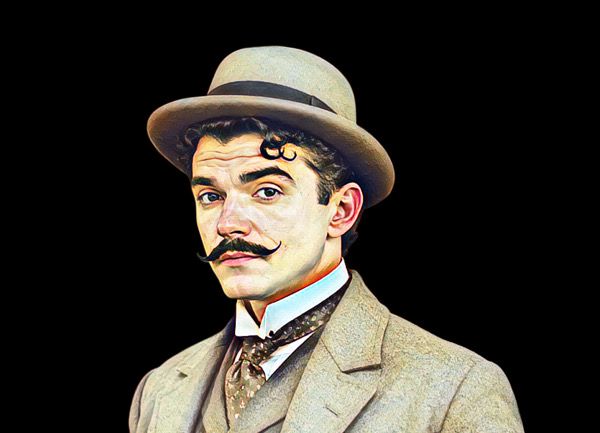
Naturally, Roger Ackroyd has already appeared among the speculative possibilities for what might be adapted, although nothing has been confirmed, and there is even a curious obstacle there, because the Poirot of Roger Ackroyd is already retired, while the new series is deliberately betting on a younger version of the character.
Still, it is almost irresistible to imagine someone trying again.
A century after Christie built one of the greatest traps in detective fiction, perhaps the question is no longer who killed Roger Ackroyd. We know that. The real question is whether film or television will ever find a language capable of doing to us what she did in 1926: allowing us to trust the murderer completely, only to reveal later that every clue had been sitting in front of us all along.
Agatha Christie returned again and again to the same elements. Bodies in libraries, families at war, inheritances, affairs, resentment, poisons, alibis and communities in which everyone seems to have something to hide. The formula was simple enough to be recognizable and strong enough to be repeated. But she never confused formula with automation.
In Roger Ackroyd, all she had to do was move one piece. And the piece was us.
A hundred years later, we know the trick, we know who the murderer is, and we live surrounded by unreliable narrators in books, films and television series that came afterward. And yet returning to the novel remains fascinating, because a great twist does not depend only on surprising us once. Once the shock is gone, the construction still has to stand.
Agatha Christie’s still does. Perhaps that is, after all, the best measure of her genius.
Descubra mais sobre
Assine para receber nossas notícias mais recentes por e-mail.

