
Forget James Bond. While much of the conversation around Jack Lowden continues to revolve around the possibility that the Slow Horses star might one day inherit the 007 tuxedo, there is a much more immediate — and perhaps even more unforgiving — test ahead of him. When Netflix’s new adaptation of Pride and Prejudice arrives, Lowden will have to convince audiences that he can be Mr Darcy. And for that, being good will not be enough. He is stepping into a role already defined by some of the most beloved performances of one of literature’s most famous male characters.
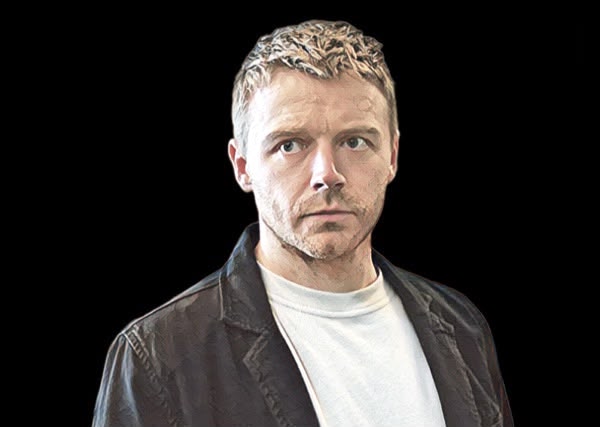
Bond, after all, has already survived six different faces on the big screen. The franchise itself has learned to absorb the changing of the guard into its mythology: the man changes, the tone changes, the era changes, and we move on. Darcy is different. Every actor who takes on the role has to contend not only with Jane Austen, but with the emotional memory of those who came before.
Laurence Olivier, in 1940, gave us perhaps the most theatrical and affected Darcy, still very much shaped by the acting traditions of his time. Colin Firth, in the BBC’s 1995 miniseries, turned arrogance, restraint and social discomfort into sex appeal, and became forever associated with a wet white shirt Jane Austen never wrote. Matthew Macfadyen, in the 2005 film, found another key: a more vulnerable, shy and openly romantic Darcy, one who ultimately conquered an entire generation. Lowden now has to find a fourth possibility without looking like a copy of any of them.
And that is where things start to get interesting.
In the filming diary written by screenwriter Dolly Alderton for British Vogue, Lowden is shown asking what sounds like a simple question: why is Elizabeth Bennet attracted to Darcy? Alderton replies that he is capable, a man of actions rather than words, and the actor immediately challenges the idea by pointing out that Darcy has servants to do almost everything for him. It is a very good question because it suggests Lowden is not starting from the assumption that Darcy is irresistible simply because we all know he is Mr Darcy. He is looking for what exists in this man that actually justifies Elizabeth’s attraction.
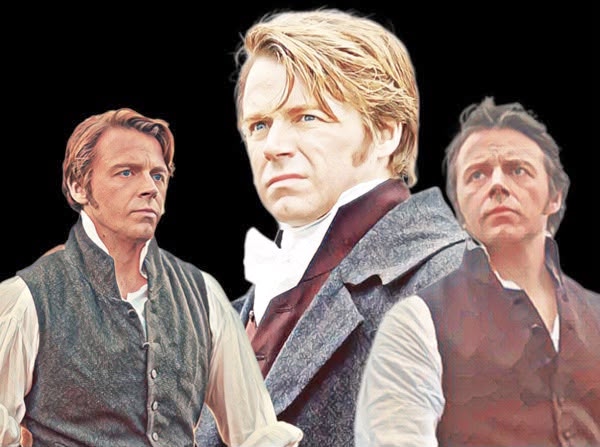
A few days later, Alderton records an even more revealing problem. Darcy is an extraordinarily difficult role precisely because he spends so much of the story closed off, brooding, observing, thinking or simply staring silently out of a carriage window. She describes much of Lowden’s first month as almost entirely mute acting, built around thoughts the character never verbalises. Later, during other scenes, the same problem returns: the actor has to look intrigued, unsettled, interested or enchanted without necessarily being given a line to explain to the audience what is happening.
Darcy has to say everything without saying anything.
That may be Jack Lowden’s real test. The audience needs to realise Darcy is watching Elizabeth before Elizabeth herself understands the importance of that gaze. We have to see attraction, resistance, pride, discomfort and, after the disastrous first proposal, a genuine transformation. Austen can guide us through that process on the page. The camera cannot. On screen, all of it has to exist in the actor’s face and body, but without excess, because an overly expressive Darcy very quickly stops being Darcy.
In that sense, Slow Horses may have been excellent training. River Cartwright is very far from Fitzwilliam Darcy, but Lowden has spent years playing a man who feels much more than he is capable of organising or saying. River is impulsive, proud, emotionally inarticulate and permanently trying to prove something, whether to MI5, Jackson Lamb, his grandfather or himself. Much of the character exists in the gap between the image he tries to project and what he is actually feeling.
Lowden has therefore learned how to let frustration, fear, affection, resentment and vulnerability surface beneath the action. But Slow Horses has never demanded exactly what Darcy demands of him: turning restraint into desire.
And that is what makes the James Bond comparison so much fun.

Lowden has already shown in Slow Horses that he can run, fight, chase enemies, handle a weapon and remain convincing in the middle of British espionage chaos. It is easy to understand why his name keeps coming up in connection with 007. River Cartwright almost works as an extended training ground for some of Bond’s physical and dramatic demands, even if he is, thankfully, a far less perfect spy.
Darcy presents a different problem. He has to walk into a room and change its temperature without necessarily doing anything.
There is also a delightful coincidence in this conversation. One of the scenes traditionally used in James Bond auditions comes from From Russia With Love, when 007 finds Tatiana Romanova waiting for him in bed. Daniel Craig and other Bond candidates had to perform it because the scene requires a very difficult combination of confidence, humour, danger and seduction. It is a test of whether an actor can be sexually convincing without looking as if he is trying too hard.
In a way, Darcy demands the same thing, only with almost all the tools taken away.
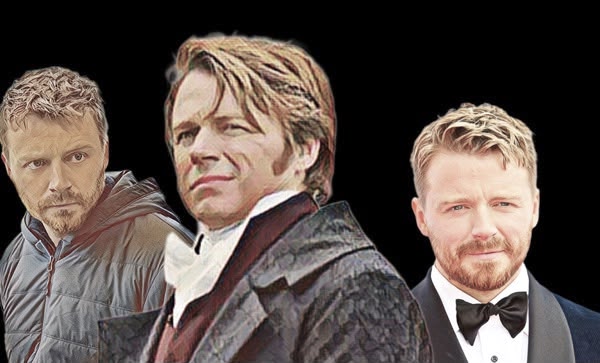
British Vogue itself joked, when introducing Lowden in costume, that his Darcy might function as a kind of 19th-century Bond audition. Perhaps it is exactly the other way around. After so many years as River Cartwright, 007 is not really the character about whom we still have the biggest questions. Darcy is.
Because Colin Firth managed to turn emotional repression into desire. Matthew Macfadyen made an almost imperceptible flex of the hand become one of the most remembered romantic images in recent cinema. These are performances built precisely on small gestures, silences and everything that is never said outright.
Now Jack Lowden has to find his own gesture.
James Bond may prove that he can seduce with a gun in his hand. Mr Darcy will have to prove that he can do exactly the same thing while looking out of a window.
Descubra mais sobre
Assine para receber nossas notícias mais recentes por e-mail.

