
Why do some people seem so surprised by what Charles Spencer is beginning to reveal in Swan Song: Diana, My Sister? The book has not even been released yet, so we know only the excerpts published in advance by the press, but they have already been enough to prompt an unusually direct response from Buckingham Palace. Perhaps the answer is generational. If you are under 30 and learned most of this story through The Crown, you may now be encountering a very different Charles from the one constructed by the series. For those who lived through Diana’s death and remember how the Royal Family was perceived in 1997, however, very little feels genuinely new.
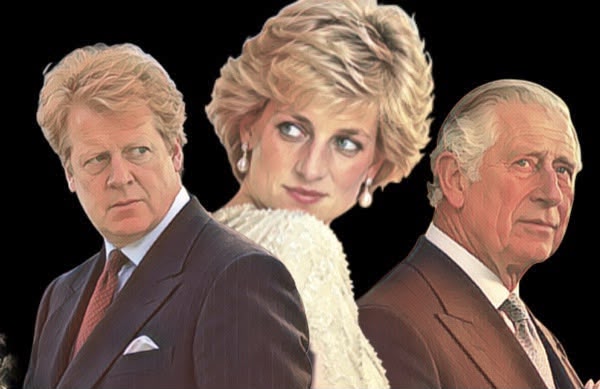
Spencer claims that when he spoke to the then Prince Charles after his sister’s death, he heard a man who sounded strangely euphoric, almost like someone who had won the lottery. During an argument about William and Harry taking part in the funeral procession, Charles allegedly lost his temper and said that everyone would soon forget Diana. The King has challenged this memory without directly denying the remark: in a carefully worded statement, the Palace said that a brother’s grief can cloud reason, affect judgment and colour memories even decades after such a loss.
It is a revealing response. Instead of saying that Charles never uttered those words, the Palace questions Spencer’s ability to remember them accurately. Spencer, in turn, maintains that he repeated the comment to friends and relatives at the time precisely because he was so shocked by it. We cannot enter that telephone conversation almost 30 years later, but we can ask whether the behaviour he describes is incompatible with what was known about the then Prince of Wales. Richard Kay, a Daily Mail journalist, a friend of Diana’s and a privileged witness to that period, says it is not. He cannot confirm a conversation he did not hear, but neither does he find anything in Spencer’s account inconsistent with the attitudes and atmosphere he witnessed.
This is the point that gets lost whenever every new revelation about Diana is treated as an entirely unexpected bombshell. Her marriage to Charles was unhappy, their separation was devastating and the divorce, finalised in 1996, unfolded amid a private and public war. Diana retained the title Princess of Wales but lost the style of Her Royal Highness. After years in which her popularity frequently eclipsed that of the Windsors themselves, she came to be treated in certain circles as a woman who had benefited from the monarchy and was now using that visibility against the institution.
The idea that Diana would eventually disappear once she no longer held a formal place in the Royal Family seems almost absurd today, but it reflects the institution’s historical instinct: anyone who leaves the centre of the monarchy loses access, relevance and, eventually, a public presence. Something similar can be recognised, despite all the differences, in the relationship with Harry and Meghan. The couple was expected to become progressively less important after stepping away from official duties. That did not happen, largely because they continued to speak. Diana also refused to remain silent, but she possessed something even more difficult to control: an almost unrivalled ability to command attention simply by appearing.
Excessive visibility was not the sole cause of her death, but it helped create the circumstances of that night in Paris, when photographers pursued the car in which she was travelling. It would be irresponsible to turn this into the single explanation for the crash, just as it would be irresponsible to ignore the investigation that identified the speed, the condition of the driver and the failure to wear a seat belt among its determining factors. Even so, Diana died because her image had become a global commodity. Everyone wanted to see her, photograph her, protect her, possess her or speak for her.
The Spencers’ Selective Silence
Charles Spencer does not occupy the simple role of a brother who has finally decided to tell the truth. He is as complex a figure as everyone else involved. Since his speech at Diana’s funeral, he has assumed the role of the Spencers’ public voice, while his sisters, Lady Sarah McCorquodale and Lady Jane Fellowes, have maintained an almost absolute silence. Spencer says he decided to write the book as the 30th anniversary of his sister’s death approaches in 2027, drawing on his memories, notes made at the time and the accounts of others.
The timing raises questions. Richard Kay has observed that Spencer not only waited until the symbolic anniversary was approaching, but published the book after the death of Robert Fellowes, Lady Jane’s husband and Queen Elizabeth II’s private secretary from 1990 to 1999. Fellowes, who died in July 2024, occupied an almost impossible position within the family: he was Diana’s brother-in-law and, at the same time, one of the Queen’s most important advisers during the separation, divorce and death of the princess.
We do not know whether the Spencers had an explicit pact never to reveal certain episodes. It is reasonable to assume, however, that a network of loyalties, affections and silences existed. Lady Jane was Diana’s sister, the wife of the Queen’s private secretary and the aunt of William and Harry. While Robert Fellowes was alive, an accusation by Charles Spencer against the Palace could also have affected his sister’s husband and the role he played during the greatest crisis faced by the modern monarchy. Now Elizabeth II and Robert Fellowes are both dead, and Charles Spencer appears to believe that the time for restraint has ended.
That does not automatically make him the definitive narrator of Diana’s life. It was Spencer himself who introduced his sister to Martin Bashir, the BBC journalist who used forged documents and deceptive allegations to win her trust and secure the Panorama interview broadcast in November 1995. The independent investigation conducted by Lord Dyson concluded that Bashir had acted deceitfully and that the BBC later failed when it investigated his methods.
William said that the lies told to his mother substantially contributed to her fear, paranoia and isolation. Harry chose to broaden the responsibility, connecting the tragedy to a culture of exploitation and unethical practices within the media. Charles Spencer also argues that Bashir’s manipulation triggered a chain of events that left Diana increasingly isolated and without adequate protection. There is truth in all these interpretations, but there is also an uncomfortable question for the Earl himself: how does he intend to address in the book his own part in bringing Diana and the reporter together?
Spencer did not invent his sister’s fears. Diana had concrete reasons to distrust people close to her, palace courtiers and a press that published stories planted by different sides in the War of the Waleses. The problem was that Bashir fed that suspicion with false information, causing genuine threats and fantasies of conspiracy to become entangled in a way Diana could no longer easily separate. She was not simply paranoid, but she was emotionally vulnerable and surrounded by people who discovered how to use her fears.
It is this complexity that makes any pure version of the story implausible. William believes his mother was manipulated and that her fragility was aggravated by those who should have protected her. Harry sees her death as the final result of a culture of exploitation that never ended. Spencer presents himself as the brother who tried to defend her, although he opened the door to Bashir. The Palace claims it was unfairly blamed, yet spent decades planting, correcting and negotiating narratives about Diana, Charles and Camilla. Everyone says they merely want the truth to be known. Everyone is also fighting for the right to decide which truth will survive.
The Charles of The Queen and the Charles of The Crown
Perhaps the best explanation for the current surprise lies in fiction. Stephen Frears’s The Queen was released in 2006, less than a decade after Diana’s death and still under the influence of the image established in 1997. Written by Peter Morgan, the film does not present Charles as the only sensitive member of the family. On the contrary, it shows an insecure and vain man, frightened that public outrage might destroy his image as well, and willing to approach Tony Blair to put pressure on his own mother.
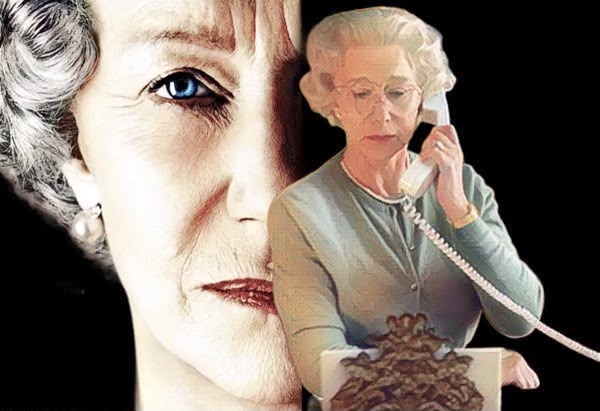
Helen Mirren’s Elizabeth II — a performance that won her the Oscar — is slow to comprehend the scale of the crisis but retains her dignity and coherence. She believes that she is protecting her grandchildren, respecting protocol and preserving the private nature of a death that, formally, no longer belonged to the Royal Family. Charles, played by Alex Jennings, understands before she does that nothing about Diana’s death will remain private. Yet this perception does not come solely from greater sensitivity. It comes from fear and a survival instinct.
With less colour and less emotion, the film had already suggested much of what Charles Spencer now alleges. Charles could have been genuinely devastated while also recognising that his former wife’s death created an opportunity to rebuild his public standing. The two things are not mutually exclusive. A person can grieve and calculate, protect his children and think about his own image, mourn a death and feel that an obstacle has disappeared. It is precisely this ambiguity that makes Spencer’s account plausible, even if every word cannot be proved.
When Peter Morgan returned to the same episode in the final season of The Crown, almost 20 years later, he presented a different Charles. The transformation had begun earlier with Josh O’Connor, who won over audiences by portraying a young, shy prince, emotionally neglected by his parents and crushed by the expectation of a throne that would take decades to reach him. The public began to understand the future King more clearly and, in many cases, to feel sorry for him.
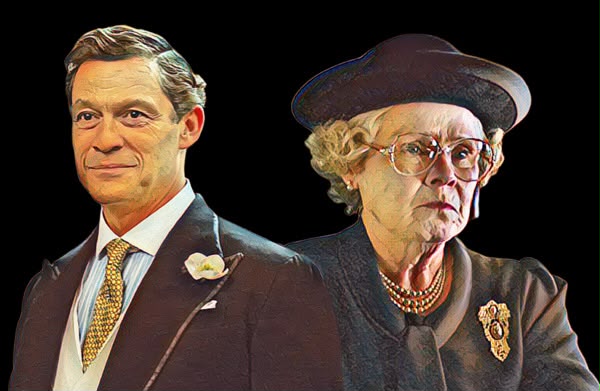
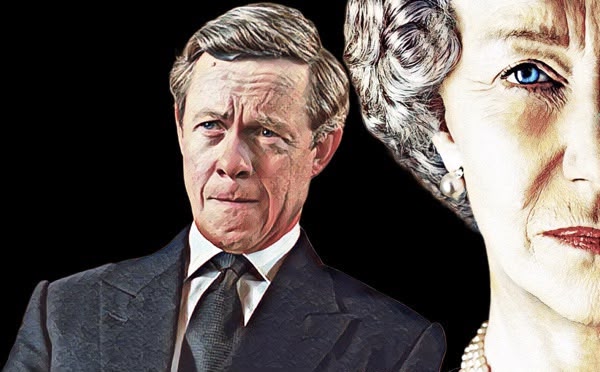
That humanisation was not necessarily dishonest. Charles waited until he was 73 to ascend the throne, after the death of a mother who reigned until she was 96. He spent almost his entire life unable to fulfil the role for which he believed he had been born, occupying the uncertain and frequently frustrating position of heir. He was also raised in a family ill-equipped to demonstrate affection and, when young, prevented from building the life he wanted with Camilla. All of this helps us understand his insecurities. None of it changes what happened to Diana.
In “Aftermath”, The Crown’s episode about the princess’s death, Charles, now played by Dominic West, becomes almost the emotional conscience of the family. He weeps before Diana’s body, worries about his sons, recognises the scale of the nation’s grief and confronts the Queen’s resistance. The series even invents a scene in which Diana appears to him and acknowledges his pain, offering a form of reconciliation that could never be verified. The same Peter Morgan who, in The Queen, showed Charles approaching Blair to protect his own image now presents him as the only Windsor capable of understanding what Diana meant to the public.
The difference between the two productions says as much about the periods in which they were made as it does about Charles. In 2006, he was still the man who had caused Diana so much pain and was attempting to make Camilla publicly acceptable. By 2023, he was King, Camilla was Queen and the rehabilitation of both was virtually complete. Mark Bolland, who handled communications for Charles between 1997 and 2002, is frequently identified as one of the principal architects of that rehabilitation. The process took decades, but it worked.
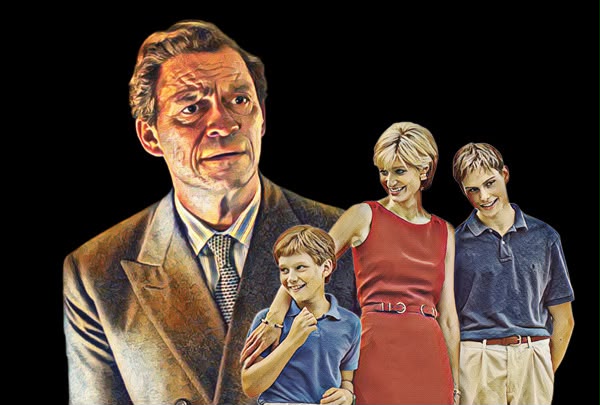
In Spare, Harry describes the less elegant side of this operation, accusing Camilla and royal advisers of using stories about him and William to improve her own image. Harry’s version may contain resentment, just as Spencer’s may, but the existence of a strategy to make Charles and Camilla acceptable is not seriously in dispute. The result itself is before us.
Understanding Is Not the Same as Absolving
It is possible to look at Charles today with more understanding than we did in 1997. We can recognise the man raised while waiting for a role, the son who never felt loved by his mother, the prince in love with someone else and the father who probably believed he was doing the best he could under terrible circumstances. We can even accept that, after Diana’s death, he recognised an opportunity for redemption and tried to do the right thing for William and Harry.
What we cannot do is allow that understanding to rewrite the facts. Diana’s popularity troubled Charles. Her natural command of the press and connection with the public provoked jealousy and resentment. The Royal Family behaved pettily at different moments, believed it could control the narrative and took far too long to understand that Diana had become greater than the role it had given her. Her death did not make her disappear. It made her impossible to overcome.
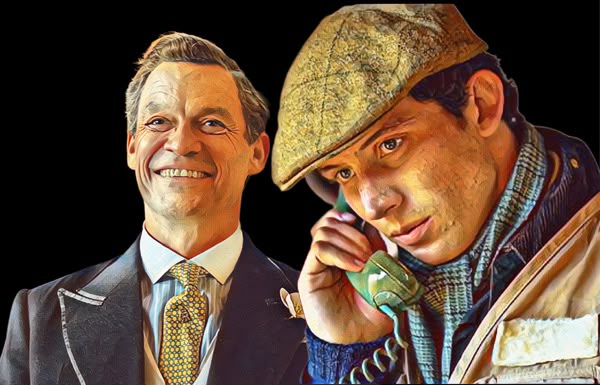
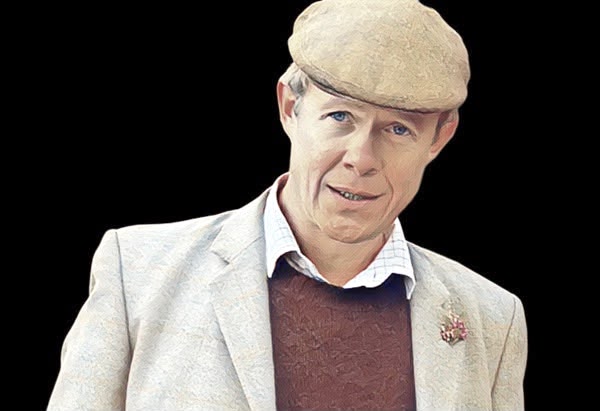
That is why Swan Song is so uncomfortable for the Royal Family today. The book does not merely reveal potentially cruel remarks; it threatens to undo part of the rehabilitation constructed over 30 years. It revives the insecure, resentful, vain and jealous Charles whom the public recognised before The Crown gave him a childhood, context, tears and an imaginary absolution from Diana.
The Palace is once again trying to control how the King will be seen, but this is the one power it has never been able to exercise completely. Charles Spencer is also trying to control his sister’s memory, as are Harry, William, journalists, screenwriters, biographers and all of us who continue to write and speak about her. Some profit financially; others gain moral authority, influence, an audience or institutional protection. No one is entirely innocent in this dispute.
The great sadness of Diana’s story is that she continues to be used so that the living can explain themselves. Her brother wants to tell his version at last. Her sons defend different memories of their mother. The King wants his life to be understood as something more than a failed marriage. The monarchy needs to preserve its legitimacy. The press continues to turn every fragment into news. And Diana, who was also contradictory, intelligent, impulsive, manipulative at times and manipulated in so many others, remains frozen at 36, unable to correct any of these versions.
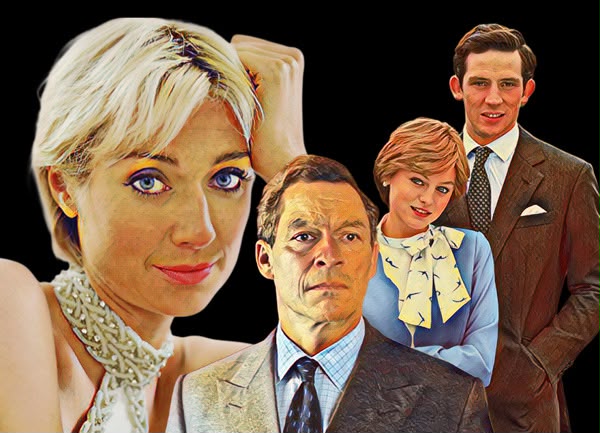
Perhaps Charles Spencer is right about every word of that conversation. Perhaps grief altered some details. What is not convincing is the pretence that the man described in Swan Song never existed. We had already seen him, discussed him and even watched him represented on film. He was merely softened by a successful image campaign and by a television series that taught us to understand him better.
Understanding, however, is not erasure. And nothing The Crown added to Charles’s story changes what Diana lived through.
Descubra mais sobre
Assine para receber nossas notícias mais recentes por e-mail.

