
Just hours ago, Kate Beckinsale turned an ordinary Sunday morning into a source of concern for those who follow her. The 53-year-old British actress posted a black square on Instagram with a single word, “bye,” while her Stories showed a rainbow over a road accompanied by the message, “congratulations you win I give up.” She also removed her previous posts from the account.
What makes the gesture more disturbing — without making it appropriate to reach conclusions Beckinsale herself has not expressed — is what appeared in her bio. She added a link to a story about Caroline Flack, the British television presenter who died by suicide in 2020, and the “Be Kind” campaign that grew out of the debate over press intrusion and online abuse. So far, Beckinsale has offered no explanation for the posts. The concern is real, but we still do not know exactly what she intended to communicate.
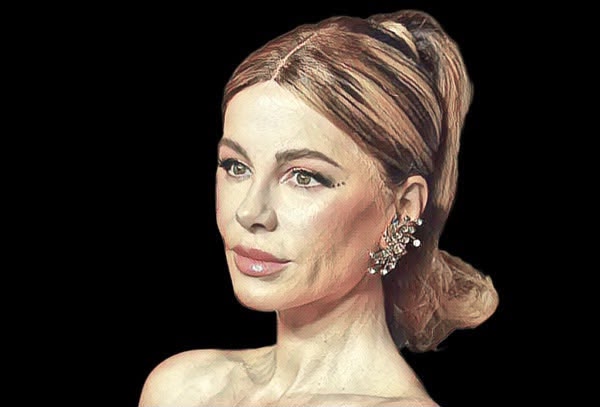
For anyone who knows Beckinsale mainly as the beautiful star of Underworld, it may be difficult to appreciate how much history exists behind that carefully constructed image. From a very early age, her life has been shaped by two apparently contradictory forces: formidable intelligence and almost defiant humor on one side, and an extraordinarily intimate relationship with loss on the other.
Kate was born in London on July 26, 1973, the daughter of two actors. Her mother, Judy Loe, built a long career in British theater and television. Her father, Richard Beckinsale, was one of the most beloved comic actors on British television, particularly known for Porridge and Rising Damp. He died suddenly of a heart attack in 1979. He was only 31. Kate was five.
It would be far too simplistic to turn an experience like that into an automatic explanation for everything that followed, but Beckinsale has never hidden the importance of that loss in her life. At 15, she developed severe anorexia. Years later, she said her weight had fallen to just over 31 kilos and that she herself had asked her mother to let her undergo Freudian analysis. She attended therapy two or three times a week for around four years and connected part of the crisis to her father’s early death and the realization, learned far too young, that an apparently healthy person could simply die.
It also complicates another simplified version of Beckinsale: the action star chosen mainly for her beauty. She was an academically gifted teenager, won writing prizes and studied French and Russian at New College, Oxford. She already wanted to act, but chose university rather than drama school because she wanted to spend time with people from different disciplines, not only actors. She eventually left before graduating when her growing career made it impossible to balance both paths.
And that career began a very long way from black leather and vampires.
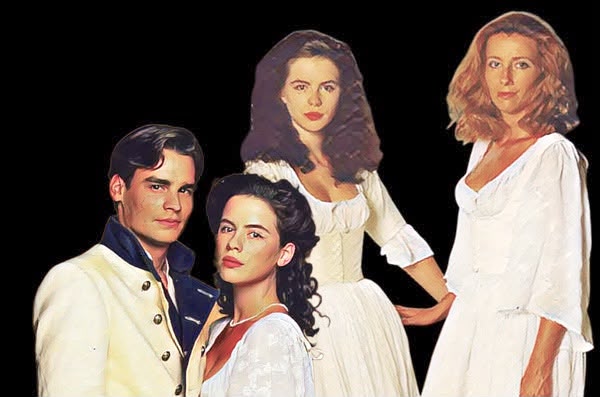
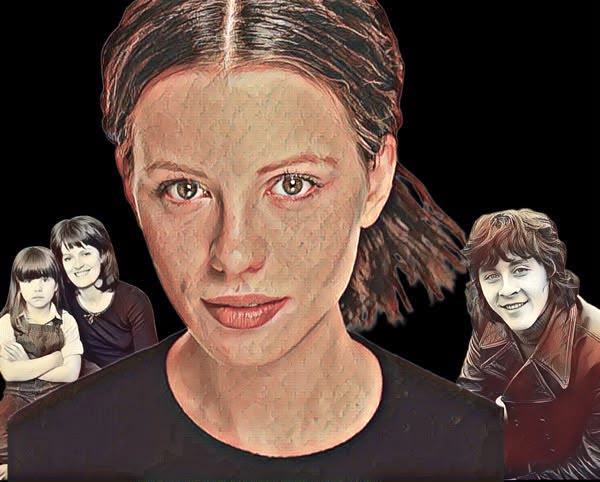
Still very young, Beckinsale appeared in Kenneth Branagh’s Much Ado About Nothing in 1993. She followed it with Cold Comfort Farm, a television adaptation of Jane Austen’s Emma and, in 1998, Whit Stillman’s The Last Days of Disco. Her trajectory was that of a British actress associated with literature, period drama, sophisticated comedy and independent film.
Hollywood changed the scale of her career. Pearl Harbor gave her enormous international exposure in 2001, followed that same year by Serendipity, which remains one of her most remembered films. Then something happened that even she did not seem to have anticipated: Kate Beckinsale became an action star.
In 2003, Underworld introduced Selene, the black-clad vampire warrior who would become the character most closely identified with Beckinsale. The franchise was never especially dependent on critical affection, but it built a huge fan base and turned her into something still relatively unusual at the time: a woman leading an action movie franchise.
The irony is that this seemed almost as far as possible from the actress she had been trained to become. Beckinsale would later acknowledge that, precisely because she had always been so afraid of being typecast, she somehow became most famous for the genre that least resembled the image she had once had of herself.
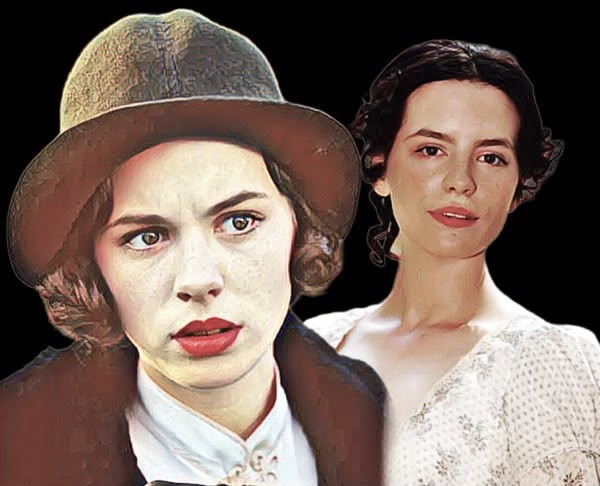
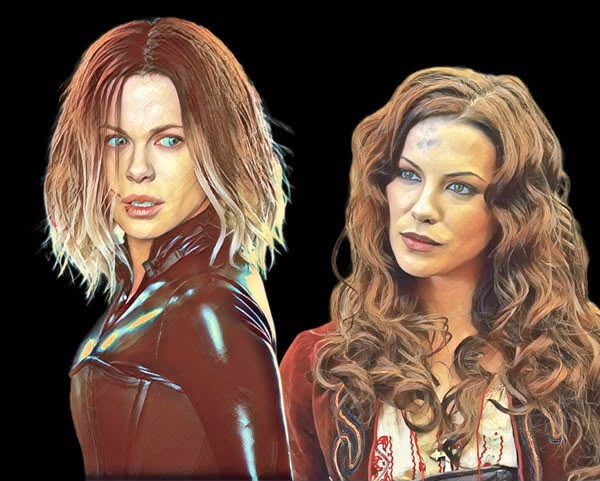
There followed Van Helsing, The Aviator, in which she played Ava Gardner for Martin Scorsese, Click, Vacancy, Nothing But the Truth and many other projects. But perhaps one of the best reminders of Beckinsale’s actual range came in 2016, when Whit Stillman cast her again, this time as Lady Susan in Love & Friendship. It was Jane Austen once more, once more built around irony, language and social manipulation — and a role much closer to the actress who existed before Selene.
In her personal life, Beckinsale had a long relationship with Michael Sheen from the 1990s until 2003. Their daughter, Lily Mo Sheen, was born in 1999, and the former couple remained close after separating. On the set of Underworld, Kate met director Len Wiseman. They married in 2004, separated in 2015 and finalized their divorce in 2019. Later, her relationships with younger men — most notably Pete Davidson — became another recurring focus of press fascination.
Age itself would become an almost obsessive subject around her. Beckinsale spent years responding to comments about her face, her body, alleged plastic surgery and how a woman in her forties, and later her fifties, was supposedly expected to dress or behave. In 2024, she publicly asked people to stop what she described as “insidious” bullying about her appearance and denied undergoing the cosmetic procedures so often attributed to her.
It was the worst possible moment for that level of scrutiny.
Her stepfather, director Roy Battersby, who had been part of her life since childhood and whom Beckinsale effectively regarded as a second father, died in January 2024 at the age of 87. She later spoke about the experience of watching him die and how profoundly it reactivated memories of losing her biological father.
At the same time, Judy Loe was gravely ill. Beckinsale revealed that her mother had stage 4 cancer. In the middle of grieving for her stepfather and caring for her sick mother, Kate herself spent around six weeks in hospital. She later said stress and grief had contributed to an injury to her esophagus and episodes of gastrointestinal bleeding.
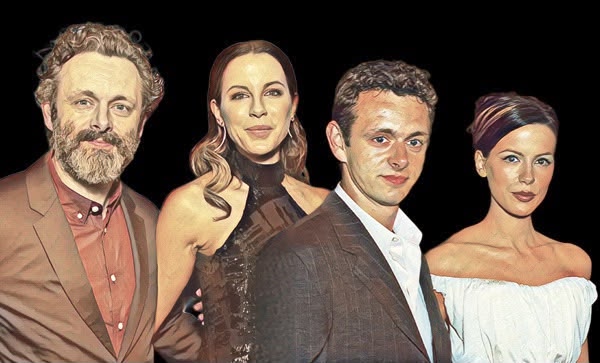
Judy died in July 2025 at 78. Beckinsale said that her mother died in her arms and described her as her “compass,” her best friend and the great love of her life. She also returned directly to the death of her father: losing her mother, she wrote, had been her greatest fear since she was five years old.
And this is where the recent history begins to move uncomfortably close to the messages posted this Sunday.
For months, social media users had been commenting on Beckinsale’s weight and appearance. In August 2026, she responded. She said she had mast cell activation syndrome, a diagnosis she says she received years ago, and explained that grief had also profoundly affected both her appetite and her weight. She then removed almost everything from Instagram.
It was not the first time. Beckinsale has always had a peculiar relationship with the platform: extremely funny when she is doing well, startlingly personal when she is not. Her absurd videos, costumes, cats, British humor and sharp responses to trolls created an online persona far less controlled than the typical Hollywood star’s account. But that is precisely why Instagram has also become a place where she expresses pain with unusual directness.
Earlier this month, she became even more explicit. Beckinsale posted videos discussing PTSD, saying that people living with trauma may appear perfectly functional from the outside while dealing with nightmares, triggers and enormous distress. She also spoke about the isolation experienced by people caring for seriously ill relatives largely on their own, and about how constantly being told “you’re so strong” can sometimes feel like almost the opposite of what someone actually needs.
These are Beckinsale’s own statements, not material from which to diagnose her from a distance now. But they are essential context.
There has also been another recent chapter of public conflict. In April 2026, Beckinsale said she had been dropped by an agent after liking a post supporting a ceasefire in Gaza. She also criticized Mark Ruffalo, saying she had tried to speak to him about what happened and received no response. The claim about being dropped came from Beckinsale herself, and the comments were later deleted.
Her career, meanwhile, has remained active. Following Canary Black, Stolen Girl and Wildcat, she remains connected to the action cinema that helped make her an international star. At the same time, she became involved in a legal dispute with producers of Canary Black, alleging that she suffered a serious knee injury during filming and was pressured to work under unsafe conditions. The producers have disputed her claims.
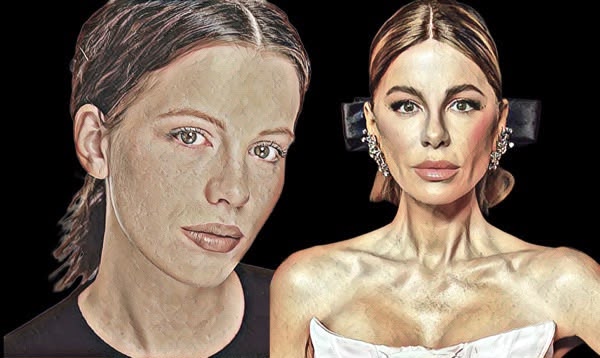
Perhaps that is exactly why this Sunday’s episode should be reduced neither to celebrity gossip nor to a conclusion we are not yet entitled to make. Kate Beckinsale has spent much of her public life being observed first as the daughter of a man who died far too young, then as an extraordinarily beautiful woman, then as somebody’s girlfriend or wife, then as the vampire in the tight black costume, and finally as the woman in her fifties whose appearance strangers somehow felt entitled to analyze.
Underneath all those layers has always been a far more interesting actress: highly educated, exceptionally funny, equally capable of Austen and physical action, the daughter of actors deeply rooted in the British theatrical tradition, a woman who has spoken publicly about psychoanalysis since the 1990s and who never quite seems to have learned — or perhaps never wanted to learn — how to turn her private life into the sanitized answers normally produced by Hollywood publicists.
Today, however, the humor disappeared.
“Bye.” “I give up.”
And the link to Caroline Flack makes the gesture impossible to dismiss, although it would be equally irresponsible to decide for Beckinsale what it means. For now, the only certainty is that her messages have caused genuine concern and that neither the actress nor her representatives have publicly explained them.
Descubra mais sobre
Assine para receber nossas notícias mais recentes por e-mail.

