
Sylvester Stallone has been telling the story of Rocky for 50 years. We already know about the unknown actor, the financial struggles, the rejections, the screenplay written when no one was offering him the role he wanted, his insistence on playing it himself, and the almost immediate transformation into a star. Few Hollywood stories have been repeated so often and, curiously, few have lost so little of their appeal. That makes the first question surrounding The Steps: A Memoir, his official autobiography arriving on September 29, almost inevitable: what could Stallone still tell us that we do not already know?
Perhaps the answer lies precisely in what usually disappears when his story is condensed. When we talk about Stallone, we almost always begin too close to Rocky. The new book goes much further back, to his childhood, the difficult birth that left part of his face paralyzed and affected his speech, his problems at school, the feeling of being constantly misunderstood, and the years when no one had any reason to imagine that this young man would become one of the most recognizable figures in cinema.
At 80, Stallone seems interested in something different from simply retelling how he became successful. The book suggests an attempt to understand where that intense need to keep climbing came from, even when almost everything around him indicated that giving up would have been the more reasonable choice.
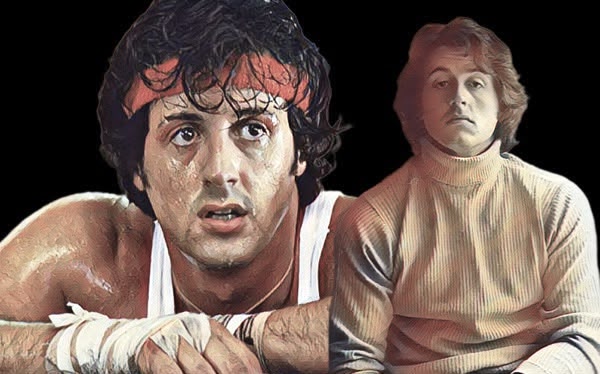
The title obviously refers to the steps of the Philadelphia Museum of Art, which Rocky turned in the first film into one of cinema’s most powerful images of perseverance. Over the decades, those steps stopped being merely a location and became a metaphor for the character, for Stallone, and for millions of people who adopted Rocky as a kind of personal story about persistence. The Steps returns to the same image, but shifts its meaning slightly. The focus is no longer only on reaching the final step, but on understanding everything it took to begin the climb.
The structure of the book makes that clear. Although Stallone moves through other periods of his life, the main narrative is framed between his arrival in New York in 1969 and the 1977 Academy Awards, when Rocky completed a rise that only months earlier had seemed unlikely. It is almost the arc of a movie: a young man arrives in the city determined to become an actor, accumulates frustrations, begins writing because no one is offering him the opportunities he wants, and ends by watching the film he created win the Academy Award for Best Picture.
We know the outcome, but Stallone seems intent on telling the road more carefully. In introducing the book, he has spoken about the struggles, victories, failures, and people who believed in him, but he has made one distinction especially important. For him, The Steps is not simply a story about success, but also one about survival and about refusing to give up on yourself.
That choice of word changes the way his life can be read. “Success” is the version Hollywood has told for five decades. “Survival” leaves room for a story that is less tidy, less comforting, and probably more honest. It is easy to turn Stallone’s life into a fable about persistence once we already know the ending. The broke actor keeps going, writes a great screenplay, refuses money to keep the role, gets the film made, and ends up at the Oscars. It sounds almost like proof that believing in yourself leads inevitably to reward, but no one living through a story knows that it will later become a legend.
Stallone did not know Rocky would work. He did not know that his stubbornness would later be celebrated as courage rather than remembered as a terrible professional decision. He had no way of knowing that his voice, his face, and his unusual way of speaking, all things that could be used as reasons not to hire him, would become some of the most recognizable characteristics of a global movie star.
That distance between the man who did not know and the man who now knows the ending is exactly what makes The Steps interesting. At 30, Stallone was looking ahead and desperately trying to build an identity. At 80, he is looking back and trying to understand how that identity was constructed, what it cost, and how much of it still belongs to the young man who needed to prove that he was capable.
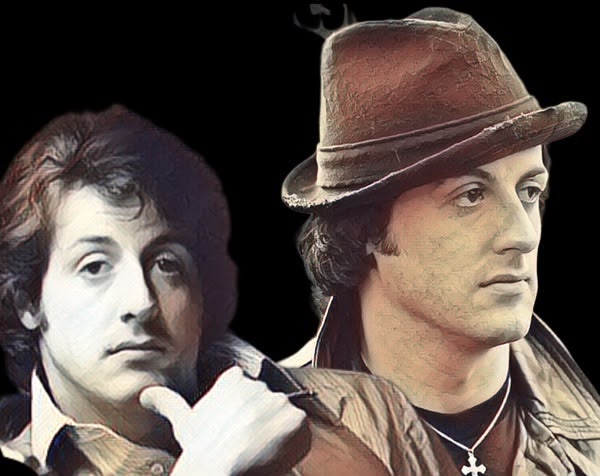
The book also promises to place writing back at the center of the story. Stallone has always been seen by the general public first as an actor, then as an action star, and only occasionally as a screenwriter, even though his career probably would not exist without his decision to start writing the characters no one else was offering him. Before the muscles, the weapons, Rambo, and the enormous box-office hits, someone was trying to solve a very simple problem through writing: how do you work when no one wants to give you work?
Rocky was the answer, but The Steps appears determined to show that the character did not simply emerge because Stallone watched a boxing match and had a good idea. Rocky grew out of years of frustration, rejection, insecurity, and the feeling that he was always trying to convince someone that there was something in him he had not yet managed to prove.
That makes the relationship between creator and character even harder to separate. Rocky Balboa is also a man other people have already decided something about. Mickey believes he wasted his talent, Apollo chooses him almost as a publicity curiosity, and the world around him treats him like someone who has reached 30 without doing anything particularly important with his life. When he receives an absurd opportunity, the question is therefore not simply whether he can win a fight, but whether what he has always wanted to believe about himself might still be true.
Stallone was almost the same age when he wrote the character, and that may be one of the most interesting ways to revisit the story now. Youth gives you the urgency of someone trying to prove something to the world. Old age allows you to ask why that proof felt so necessary in the first place.
That also means The Steps may complicate some of the mythology Stallone helped create. For decades, the story was reduced to the almost solitary saga of an artist who wrote a screenplay, fought studio executives, and refused to sell his dream. In the memoir, there is room to remember the people who helped him, the relationships that sustained that period, and the emotional costs that usually disappear once a life is turned into legend.
That may be exactly where the book has the most to add. Before publication, it would be premature to promise major revelations or treat promotional material as discovery. What is already clear is that Stallone has changed the frame. For 50 years, the most repeated question has been how he managed to win. At 80, he seems more interested in understanding why he needed to win so badly.
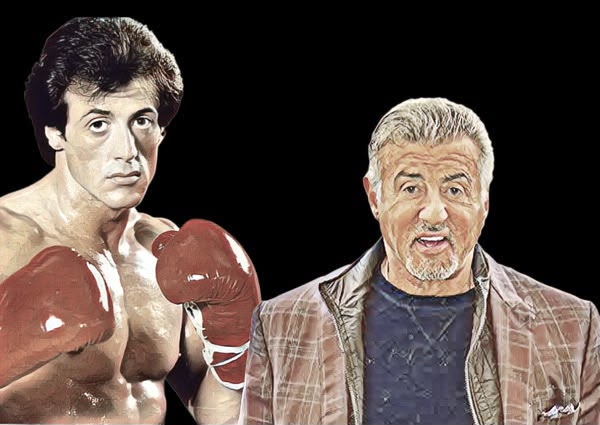
The timing could hardly be more symbolic. In 2026, Stallone turned 80 and Rocky turns 50. At the same time, I Play Rocky brings to the screen the story of the young actor who refused to let Hollywood hand his character to someone else. While Anthony Ippolito plays Stallone trying to build his own legend, the real Stallone publishes his version of it.
The two works look at the same man from opposite directions. One observes from the outside the 30-year-old who still had no idea what was about to happen. The other allows the 80-year-old to return to that period knowing everything that came afterward.
Perhaps that is why The Steps exists now. Stallone no longer has to prove that his gamble was right, because the career, the franchises, the fame, and half a century of cultural permanence have already done that for him. What remains is something more difficult: looking at the person who desperately needed to reach the top and asking what he truly expected to find once he got there.
We have known the steps for 50 years. The Steps seem determined to tell us more about everything that happened before the first one.
Descubra mais sobre
Assine para receber nossas notícias mais recentes por e-mail.

