
For anyone who lived through the 1980s and 1990s, Ted Kaczynski was never simply the bearded man in a police photograph or the subject of a notorious true-crime case. Before he had a name, a face, and a biography, he was the Unabomber, a word that for almost two decades meant fear. Opening a package could be dangerous. Universities, airlines, scientists, and people connected to technology were among his targets. Between 1978 and 1995, his bombs killed three people, injured 23 others, and triggered one of the largest manhunts in FBI history. When he was finally arrested in April 1996, in the small Montana cabin where he lived, the world discovered who had been hiding behind that name.
Thirty years later, it is inevitable that Unabomber, Netflix’s new film, arrives for an audience very different from the one that watched this story unfold in real time. For Generation X, “Unabomber” had already become almost a code word for radicalism, terrorism, and extreme isolation. For generations raised online, however, there may be something even more disturbing about Kaczynski: a man who deliberately chose to disappear from the system, live beyond technological control, stay off the radar and turn his rejection of industrial society itself into an ideology.
The problem is that Kaczynski’s ideas did not die with his arrest, or with his death in 2023. His radical rejection of technology, modern social organization, and the structures he believed stripped human beings of autonomy still finds echoes today, especially in spaces where frustration, isolation, and resentment can easily be transformed into political or philosophical doctrine. That is precisely why it remains important to understand him, and it is also why telling his story requires care.
Every film based on real events runs into simplification, poetic license and, quite often, invention. In Unabomber, directed by Janus Metz and written by Sam Chalsen and Nelson Greaves, that tension is not merely found in the details. It sits at the heart of the film.
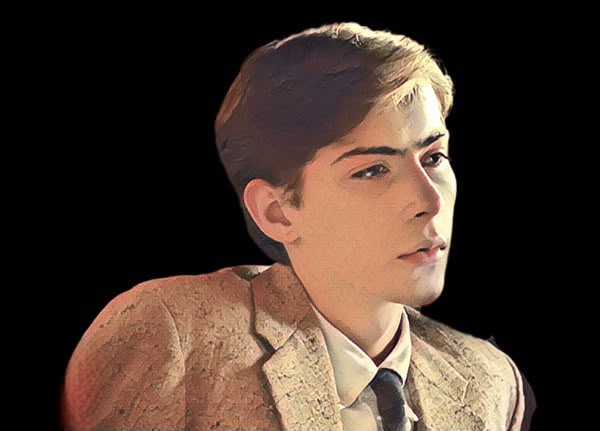
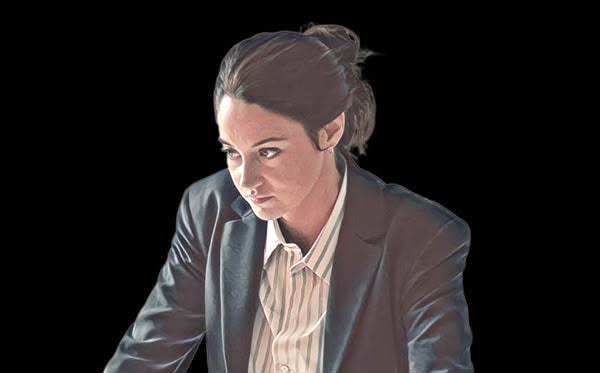
The story unfolds across two timelines. In 1958, we meet Ted Kaczynski at 16, a mathematical prodigy arriving at Harvard and trying to find his place in a world of much older, fiercely competitive and intellectually arrogant men. It is there that he crosses paths with Professor Henry Murray, played by Russell Crowe, and participates in the controversial psychological experiments conducted by the academic. Decades later, FBI agent Joanne Miller, played by Shailene Woodley, begins questioning the established profile of the Unabomber and insists that his own words may reveal more about him than years of conventional investigation ever did.
Joanne, however, is a dramatic creation. There was no single agent by that name responsible for the breakthrough in the case. The character combines the work and discoveries of several people involved in the investigation, including the linguistic analysis that helped connect Kaczynski’s manifesto to letters provided by his brother David. It is one of several compressions the film makes to turn an investigation that lasted nearly two decades into little more than an hour and a half. For those interested in separating exactly what Unabomber gets right, what it simplifies and what it invents, our fact-versus-fiction breakdown is worth reading afterward.
The project began back in 2020, when Sam Chalsen and Nelson Greaves were hired to write a feature about Kaczynski. The two writers, both former Harvard students, found their starting point not in a specific biography, but in a short NPR story Greaves heard about Kaczynski’s participation in Murray’s experiments. From there, they researched that episode and built the two timelines that structure the film. Unabomber, then, is not officially adapted from a single book, although there is extensive literature about the case, including Alston Chase’s Harvard and the Unabomber, one of the works that most extensively examined Kaczynski’s years at the university and the intellectual environment he encountered there.
The film was shot in Montreal, produced by 2.0 Entertainment in association with MRC and released on Netflix on September 25, 2026. Metz, whose previous work includes Borg vs. McEnroe and Andor, deliberately avoids making a conventional biopic. His interest lies in the same question that drove the writers: what happens between the brilliant, isolated, socially awkward teenager who arrives at Harvard and the man who, decades later, begins mailing bombs?
That is where the film finds both its strongest material and its greatest danger. Kaczynski did participate in Henry Murray’s experiments, and he was among the students subjected to sessions in which their personal beliefs were aggressively challenged while their reactions were observed and recorded. The intimate dynamic the film constructs between Murray and Ted, however, is largely dramatized, and the screenwriters themselves have acknowledged that there is no evidence the two men shared that specific kind of personal relationship.


This matters because Unabomber comes dangerously close to suggesting a clean line of cause and effect: there was an extraordinarily intelligent, insecure and isolated young man; Harvard placed him in the hands of a researcher willing to exploit those vulnerabilities; something broke; the terrorist emerged. It is a dramatically irresistible narrative, but historically it is far more complicated.
Kaczynski showed social and behavioral difficulties before the experiments, and Greaves himself has acknowledged as much. Murray certainly did not “create” the Unabomber. At the same time, ignoring what happened at Harvard would be equally simplistic. A 16-year-old teenager, intellectually exceptional and emotionally vulnerable, was subjected to experiments that would today be considered ethically indefensible. Knowing that does not absolve the adult who later chose to build bombs and kill people. It simply helps us understand one part of his formation.
This is the difficulty Unabomber never completely resolves: understanding is not the same as justifying, but cinema often makes the two feel dangerously close. Humanizing a real person is almost unavoidable once he becomes the center of a narrative. We need to see him young, humiliated, rejected, insecure and manipulated because otherwise there is no film. The danger is that the accumulation of those experiences begins to function as an emotional explanation for crimes that were choices made over many years by an adult man.
In the 2020s, that danger strikes me as even greater than it would have been two or three decades ago. We live in a period when extreme ideas can quickly find communities ready to validate them, when isolation can become an identity and when resentment can be transformed into ideology with frightening speed. In that context, turning Kaczynski into the brilliant victim of a cruel system would not only be historically debatable; it could be irresponsible. Unabomber seems aware of that and repeatedly tries to prevent Ted from becoming a misunderstood hero, even if it does not always succeed.
Much of the credit belongs to Jacob Tremblay. The Canadian actor began working as a child and gained worldwide attention in Room, opposite Brie Larson. He later appeared in Wonder, Good Boys, Luca, The Life of Chuck and, more recently, Sovereign. At 19, he has already moved beyond the stage in which he was treated simply as a child prodigy and is beginning to occupy a far more interesting space as an adult actor.
The film belongs to him because Tremblay manages to place arrogance and insecurity inside Kaczynski at the same time. His Ted knows he is more intelligent than almost everyone around him and, precisely because of that, seems unable to understand why he cannot dominate the world he has entered. There is an uncomfortable combination of superiority, need for approval and resentment. Most importantly, Tremblay does not need to foreshadow the terrorist in every scene. The seed is there without having to be announced.
When the film places Ted opposite Murray, that tension becomes especially effective because we understand exactly why this professor could fascinate him. Murray recognizes his intelligence, feeds his vanity and, at the same time, knows exactly where to wound him. It is also where Russell Crowe should have found one of his best roles in years, but the problem is that we have already seen too much of this version of Russell Crowe.
The charismatic, physically imposing, intellectually dominant and faintly threatening man has almost become one of the actor’s specialties. There was a time when Crowe, an Oscar winner for Gladiator and extraordinary in films such as The Insider and A Beautiful Mind, seemed capable of making virtually any character unpredictable. Here, as in more recent work such as Nuremberg, his presence is still enormous, but the shape of the performance feels far too familiar. It is not bad, but it is something we have seen before.
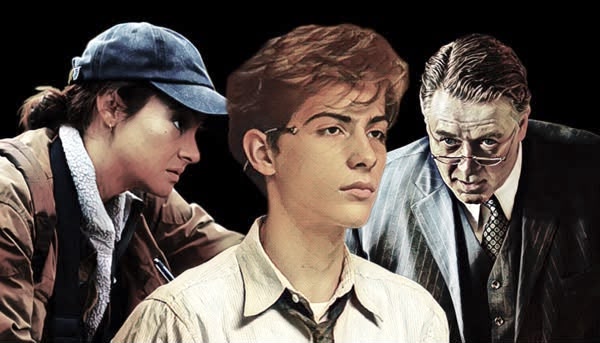
The same is true of Shailene Woodley. Joanne Miller is useful as a narrative device because she takes us through the investigation, challenges the established profile and understands the importance of the language used in the manifesto. But the film gives her a character built almost entirely around qualities Woodley has played before: intuitive intelligence, stubbornness, resistance to authority and the constant sense that she is the only person seeing what everyone else refuses to notice.
Neither Crowe nor Woodley hurts the film, but neither transforms it. Tremblay does, and perhaps that is why I finished Unabomber with the unexpected feeling of being relieved that it was made as a film rather than a series.
In an age when true-crime stories are routinely stretched into six, eight or ten episodes, there would certainly have been enough material to develop Murray, Harvard, the investigation, David Kaczynski, the victims and Ted’s intellectual evolution in much greater depth. There would also have been much more time to do exactly what concerns me most: become fascinated by the criminal.
In 97 minutes, Unabomber has to choose. It oversimplifies some moments, invents others and draws events together that are historically much harder to connect. But it keeps the story moving and, above all, restores weight to a name that time has begun to turn into little more than an entry in history.
For those who lived through that period, one of the most striking images of the 1990s remains that of a thin, bearded, almost ordinary-looking man being led away from a cabin in Montana in April 1996. After nearly two decades of fear, the Unabomber finally had a face and, more importantly, he had a name: Ted Kaczynski.
Perhaps that is the film’s greatest value now. It does not explain how someone “becomes” a terrorist, because no Harvard experiment, no professor and no humiliation offers an answer that simple. What it can do is remind us that beneath the ideas, manifestos, theories and mythology, there were choices. There were bombs, there were deaths, there were injuries and there were families whose lives were changed forever.
Knowing Kaczynski remains important, and understanding him may be important too. What we cannot do is confuse understanding with absolution.
Descubra mais sobre
Assine para receber nossas notícias mais recentes por e-mail.

