
Perhaps the most fascinating thing about Unabomber, Netflix’s new film about Ted Kaczynski, is discovering that almost everything that seems too outrageous to have actually happened did happen. Yes, Kaczynski entered Harvard at 16. Yes, while there, he took part in the controversial psychological experiments conducted by professor Henry Murray. Yes, Murray had worked for the OSS, the precursor to the CIA. And yes, decades later, Kaczynski’s own words helped identify him as the man who spent 17 years mailing bombs, killing three people and injuring another 24.
What the movie invents is precisely what seems to make sense of all of it.
Directed by Janus Metz, Unabomber takes a series of extraordinary real events and draws a much cleaner line of cause and effect between them than history actually allows. The result works extremely well as cinema. As biography, it requires a few caveats.
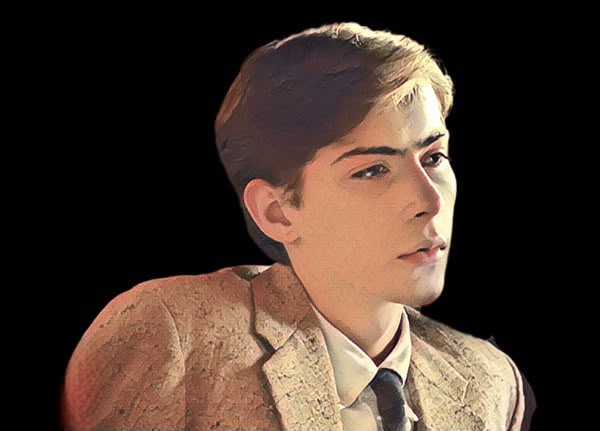
Ted Kaczynski really did enter Harvard at 16
That part is true. Kaczynski was exceptionally intelligent and entered Harvard in 1958, when he was only 16. The important detail is that he did not immediately begin the experiments shown in the film. His participation in Henry Murray’s study started the following year.
In other words, the precociousness, isolation and extraordinary intelligence of that teenager were not inventions designed to make the character more fascinating. They were part of the real story.
Henry Murray’s experiments really happened
This may be the part that feels most like fiction, and yet it is real. Between 1959 and 1962, Kaczynski participated in a study conducted by psychologist Henry Murray at Harvard. He was given the code name “Lawful” and, like the other participants, underwent extensive psychological evaluations.
In one of the most controversial stages, the students presented their beliefs, values and convictions and were then confronted by someone specifically prepared to attack those ideas aggressively. Their emotional and physiological reactions were recorded.
Yes, the experiment existed, and Kaczynski took part in it. The problem begins when the film tries to tell us what it meant to him.
Did Murray and Ted really have that personal relationship? There is no evidence
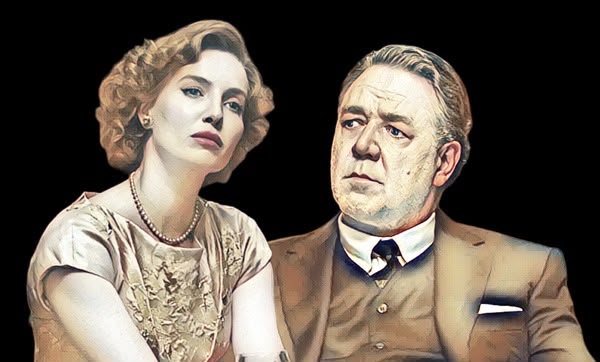
This is probably Unabomber’s biggest dramatic invention. In the film, Henry Murray, played by Russell Crowe, quickly recognizes Ted’s intelligence, draws him closer, feeds his ego and essentially becomes a mentor. Ted then discovers that this apparent intimacy was part of an experiment and feels betrayed by a man he trusted. It is an excellent dramatic relationship. But there is no evidence that it existed in that form.
The screenwriters themselves have acknowledged that the relationship between Murray and Kaczynski — with its intimacy, conflicts, betrayals and personal confrontations — was constructed for the film. We know Kaczynski participated in Murray’s study. We do not know that the two developed the almost master-and-disciple relationship we see on screen. And that changes quite a lot about how the story should be interpreted.

Did the Harvard experiments create the Unabomber?
This is exactly the question the film seems determined to answer. Historically, the answer is: we do not know.
It is enormously tempting to find an origin story there. A brilliant, socially isolated teenager enters Harvard, undergoes aggressive psychological experiments, later abandons a promising academic career, retreats to a cabin in Montana and begins a terrorist campaign against what he sees as the destruction of individual freedom by industrial and technological society. The sequence almost seems too perfect. But sequence is not necessarily causation.
Some writers have argued that the experiments may have intensified Kaczynski’s distrust of science, institutions and psychological manipulation. Others believe their influence has been greatly exaggerated. There is no evidence strong enough to establish that what happened at Harvard transformed Ted Kaczynski into the Unabomber.
The movie turns that possibility into its central dramatic explanation.
Christiana Morgan existed, but her relationship with Ted is dramatized
Christiana Morgan is not a fictional creation either. She worked with Henry Murray, collaborated with him intellectually and maintained a long and complicated professional and personal relationship with him. Among other things, the two were involved in the development of the Thematic Apperception Test, the famous TAT. But the role Morgan is given in Ted’s story belongs far more to the movie than to the historical record.
The psychological triangle between Murray, Christiana and Ted makes the Harvard period more intimate, emotional and dramatically understandable. There is, however, no documentation that allows us to treat that closeness to Kaczynski as fact. Once again, the people are real. The relationship between them was built by the screenplay.
And the CIA? Was Kaczynski part of MKUltra?
This is where things require particular caution. Henry Murray really had worked for the OSS, the American intelligence agency that preceded the CIA. And MKUltra, the CIA’s secret program involving experiments in psychological manipulation and drugs, really did exist. The proximity of those facts made it almost inevitable that a theory would emerge claiming Kaczynski had somehow been a subject in MKUltra. But there is not enough documentary evidence to establish that the Harvard study in which Kaczynski participated was part of that program.
Murray, the OSS, the CIA, psychological experiments and Kaczynski are all real elements. Putting all of them inside the same secret operation is something else entirely. It is also much more cinematic.
Moby-Dick is not there by accident
Murray’s connection to Moby-Dick also has a basis in fact. Henry Murray was deeply interested in Herman Melville’s work and studied the novel extensively. The film turns that intellectual obsession into a symbolic element in the relationship between Murray and Ted. The biographical detail is real. Its use within that personal relationship, including as part of the psychological games between the two men, belongs to the dramatization.
It is almost a perfect example of the movie’s method: it finds a true detail and places it exactly where it works best dramatically.
The manifesto really did help lead investigators to Kaczynski
Interestingly, one of the parts that feels most like a thriller screenplay happened essentially that way. For years, the FBI had bombs, fragments, patterns in their construction and very few clues capable of leading them to a suspect. In 1995, the Unabomber demanded the publication of his manifesto, Industrial Society and Its Future.
Part of the decision to allow its publication was investigative: perhaps someone would recognize not only the ideas, but the author’s distinctive way of writing. That is exactly what happened.
Linda Patrik, David Kaczynski’s wife, began noticing similarities between the manifesto and ideas she associated with Ted. David eventually provided authorities with writings by his brother. The comparison revealed parallels in vocabulary, phrasing and construction that helped strengthen the case against Kaczynski.
In the end, after so many years of following bombs, it was language that brought the FBI closer to the man building them.

Was Agent Joanne Miller real?
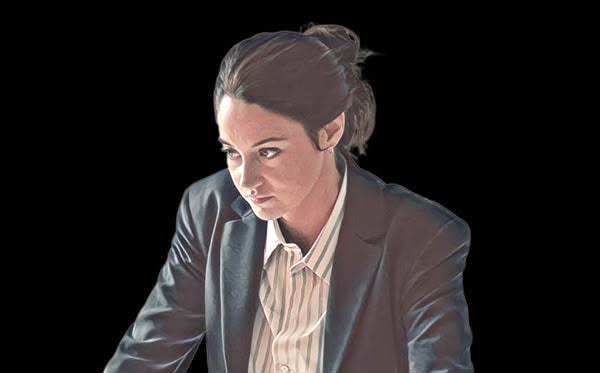
No. Joanne Miller, played by Shailene Woodley, is a fictional character.
She functions as a representation of different people involved in the investigation and, above all, as a narrative counterpoint to the story of the young Ted. The work of analyzing the Unabomber’s language and psychological profile did happen, but it cannot be attributed to that specific agent in the way the film presents it.
It is a very common kind of compression in movies based on true stories: several investigators and functions are combined into a single character so the audience has someone to follow.
What they found in the cabin is real
Here, once again, reality hardly needs screenwriters. Ted Kaczynski was arrested at his Montana cabin on April 3, 1996. Inside, agents found bomb-making components, thousands of pages of writings and records connected to the attacks. There was also a completed bomb ready to be mailed.
After an investigation that had stretched across nearly two decades, the cabin contained not only physical evidence but something close to an archive of the Unabomber’s own campaign. The man who had tried to disappear from society had obsessively documented his war against it.

So how much of Unabomber is actually true?
A lot. Perhaps that is precisely what makes the movie’s inventions so difficult to spot.
Ted Kaczynski entered Harvard extraordinarily young. Henry Murray was there. The psychological experiments happened. Kaczynski participated in them. Murray really had worked for the OSS. Christiana Morgan existed. The manifesto was published. Kaczynski’s family recognized his language. The FBI compared his writings. The cabin contained the evidence. The movie does not need to invent any of those pieces. What it invents is a way of making them fit perfectly together.
By turning Murray into the man who recognizes, encourages, manipulates and ultimately betrays Kaczynski, Unabomber gives us something real life almost never does: a precise moment of origin. A point we can look back at and say: this is where it happened. It is dramatically irresistible. Historically, it remains a hypothesis.
We know what happened to Ted Kaczynski at Harvard. We also know what he would go on to do many years later. What we cannot say with certainty is that one created the other. Between those two facts, there is an empty space. And that is exactly where Unabomber places its movie.
Descubra mais sobre
Assine para receber nossas notícias mais recentes por e-mail.

