
There are artists for whom a new nomination can still mean confirmation, consecration, or entry into a certain club. Madonna moved beyond that stage decades ago. At 68, with a career that has already crossed generations, radical shifts in the music industry, and even MTV’s own decline as the absolute center of pop culture, winning one more VMA will not alter her place in history. Perhaps that is precisely why her 13 nominations in 2026 are so interesting, because they do not work as a late validation of her career, but as proof of endurance.
Madonna arrives at this Sunday’s ceremony, September 27, as the most-nominated artist of the night, after new categories raised her initial total from 11 to 13 nominations. She is competing, among others, for Video of the Year, Artist of the Year, Best Album, Best Long Form Video and Best Dance, and she will not simply be there waiting for the results. She is opening the ceremony for the fifth time in her career, in her first VMA stage performance in 23 years, with songs from Confessions II expected and the possibility of special guests connected to the album’s current cycle.
There is no shortage of names who could join her. Sabrina Carpenter, Kylie Minogue, Charli XCX, Stromae, Feid and Martin Garrix are among the artists who have collaborated with Madonna during this phase, and Charli is already confirmed as a presenter at the ceremony. That naturally fuels speculation about a surprise appearance, although nothing beyond Madonna’s performance has been officially announced. Even so, the most interesting news is not who might join her onstage, but the fact that Madonna still occupies the center of the VMAs more than four decades later.
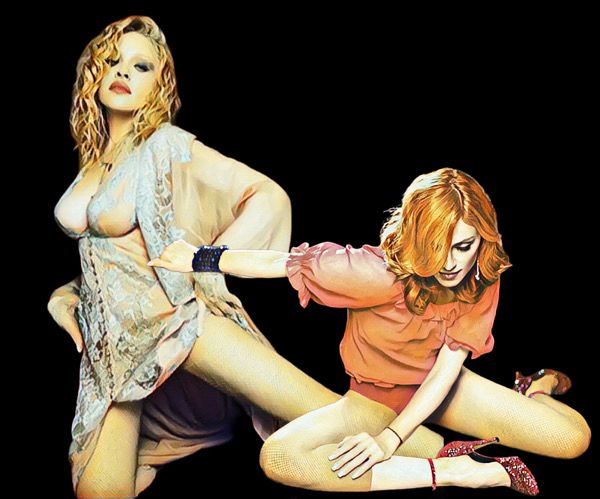
Her relationship with the awards began in 1984, at the very first edition, when she performed Like a Virgin in a wedding dress and emerged from an enormous cake. The song had not even been released when she stepped onto that stage. Madonna lost one of her shoes during the performance, improvised, ended up on the floor and gave American television an image that looked scandalous at the time and inevitable in retrospect. That moment helped define not only Madonna, but what the VMAs themselves would eventually become.
Until then, a music awards show could essentially be a sequence of trophies and performances. Madonna understood that this stage allowed for something else, because a song could become character, costume, provocation, choreography and narrative, and a performance could be remembered long after no one could recall who actually won that night. That instinct became a method and helped create a language that now feels natural, but was still being invented at the time.
Two years later, in 1986, Madonna became the first solo female artist to receive the Video Vanguard Award, when she had only been in the mainstream for four years. In 1989, she returned to perform Express Yourself, in a performance that combined confidence, choreography, live vocals and that mixture of sexuality and control that had already become one of her signatures. That same night, she won the Viewer’s Choice award for Like a Prayer and presented the Video Vanguard Award to George Michael, another especially interesting connection in 2026, when the ceremony is preparing a tribute to the singer ten years after his death.
It was in 1990, however, that Madonna perhaps showed most clearly what she understood televised performance to be. For Vogue, she completely abandoned any need to reproduce the music video and instead created a new staging inspired by 18th-century France, with powdered wigs, elaborate dresses, fans and dancers from the Blond Ambition Tour. The dress she wore had previously appeared in Dangerous Liaisons on Glenn Close, and the entire performance looked like a miniature theatrical production created specifically for television.
Madonna did not even pretend that the main objective was to display vocal virtuosity, because the spectacle was in the visual construction, the movement and the ability to create an image that could exist independently from the song itself. Today that feels natural because it became part of the language of pop. Beyoncé, Lady Gaga, Britney Spears, Taylor Swift and so many other artists have worked within a culture in which an awards-show performance can take on a life of its own, separate from the song that inspired it, and Madonna was one of the artists who helped establish that grammar.
Not all of her major VMA moments, incidentally, happened while she was performing. In 1995, during the Bedtime Stories era, Madonna seemed determined to soften her image after the American backlash against Erotica and the Sex book. She arrived at the ceremony elegantly dressed in Tom Ford, won Best Female Video for Take a Bow and was giving a calm interview to Kurt Loder when Courtney Love decided to join the conversation in the most Courtney Love way possible, throwing her makeup compact toward them and crashing the interview.
Madonna tried to stop her from coming up, failed, and responded to the chaos with the icy composure that made the exchange unforgettable. It was a viral moment years before the word “viral” became part of the vocabulary of pop culture, and it also showed how, by that point, Madonna did not need to be onstage to turn a few minutes of MTV into news. Her presence alone was enough to produce tension, humor, scandal and headlines.
In 2003, when the VMAs celebrated their 20th anniversary, the ceremony deliberately returned to the image that had helped define its first edition. Britney Spears and Christina Aguilera appeared in wedding dresses, recreating Like a Virgin, before Madonna entered dressed in black. Then came the kisses, especially the one with Britney that MTV itself would replay countless times and that would become one of the most recognizable images in the history of the awards.
Today it is easy to remember only the shock of that kiss, but something more interesting was happening there. Madonna was staging the succession of pop itself, because nearly twenty years after occupying the role of the young bride who had unsettled American television, she placed Britney and Christina in exactly that position. Both were then seen as natural heirs to the lineage of female pop stars Madonna had helped create, while she appeared not as someone trying to compete with her own youth, but as the reference point against which that new generation would inevitably be measured.
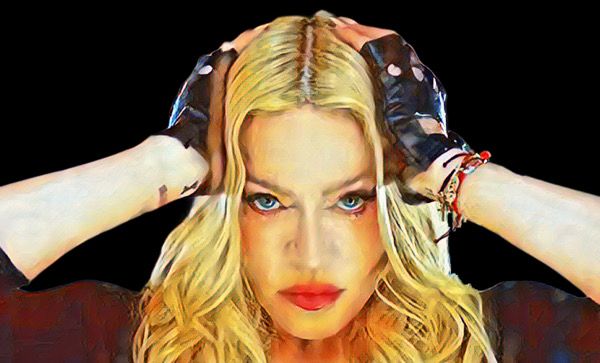
That was her last VMA performance until now. Over those 23 years, Madonna returned to the ceremony on other occasions, presented awards, paid tribute to others and appeared in special moments, but she did not return for a full performance. In total, she has appeared at the VMAs 15 times, spanning five decades of music and television history, and it is precisely that continuity that makes 2026 different from a simple nostalgic comeback.
Madonna is not arriving to receive flowers for what she did in 1984, 1990 or 2003. She arrives as the most-nominated artist of the year, propelled by Confessions II and Confessions II – The Film, which are competing in some of the biggest categories of the night. Her 13 nominations include both fan-voted awards and technical and long-form categories, showing that her presence this year is not limited to the historical dimension of her career.
In numbers, Madonna already has 19 competitive VMA wins. A 20th would be an elegant milestone, a Video of the Year victory would add another major trophy to an enormous collection; and a win in Best Long Form Video would carry another curious distinction, because she could become the first artist to win that category twice. None of those possibilities, however, would fundamentally alter her biography.
What matters more is that she is still competing, because there is a huge difference between being celebrated for a body of work and still being treated as part of the present. Madonna could easily be appearing at this edition simply to receive a tribute, introduce a younger artist or revisit an old hit. Instead, she is competing in some of the night’s biggest categories against artists who grew up in a world she helped create.
That does not mean she is the favorite in every category, especially because several of the VMAs’ major awards are decided by public voting and Madonna is facing artists with huge, young and highly organized fan bases online. Her historical importance does not automatically translate into votes, and that is precisely why her presence among the year’s most-nominated artists feels even more significant.
For part of her career, Madonna was compared with the artists who came before her. Then she spent decades watching almost every new female pop star be compared with her. Now she appears once again on the same ballot as artists who could be her daughters in generational terms, competing for the same Video of the Year and the same Artist of the Year without needing to defeat any of them to prove anything. The coexistence itself tells the story.
Madonna owes a great deal to the VMAs because that stage helped create some of the essential chapters of her mythology in front of millions of people. MTV provided the perfect platform for an artist who understood, perhaps earlier than almost anyone else of her generation, that pop music was also image, narrative and provocation, but the reverse is also true.
The VMAs owe a great deal to Madonna because she helped teach the show that its biggest moments would not necessarily be the envelopes being opened or the names being announced, but whatever happened between one award and the next, when something unexpected could instantly become pop culture. The bride rolling across the floor, Marie Antoinette doing Vogue, Courtney Love crashing an interview and Britney kissing Madonna are images that outlived winners almost no one remembers anymore.
That is why perhaps the most interesting question this Sunday is not how many awards Madonna will win. After 42 years of history with the VMAs and 23 years since her last performance, the ceremony is once again beginning with her, and for an artist who no longer needs another trophy to prove her place in history, that kind of permanence may say far more than any victory.
Descubra mais sobre
Assine para receber nossas notícias mais recentes por e-mail.


1 comentário Adicione o seu