
I must have been very young when I first saw Susana Vieira. I was living in Brasília and spending my holidays in Rio when, one day in 1976, she sat near my family on the beach, accompanied by her son Rodrigo and some friends. Susana had just played Nice in Anjo Mau, her first leading role in a telenovela.
My parents always told the story of the autograph she gave me that day. I still have it. What matters is not reconstructing, decades later, the exact words she wrote, but the effect they had on a little girl who already loved television. She became one of those actresses who seemed to be there throughout my life, turning up again and again in different roles, different decades and very different versions of Brazilian television.
Perhaps that is also a good way of understanding why new generations keep discovering her. Some first knew Susana through telenovelas; others arrived much later, through memes and social media. Now she has found yet another way of speaking to that audience and, at the same time, another first.
Because Susana Vieira can still find first times. After a career spanning telenovelas, theatre, cinema and television programmes, she is now making her reality-show debut, although even here she has found a way not to leave the actress behind.
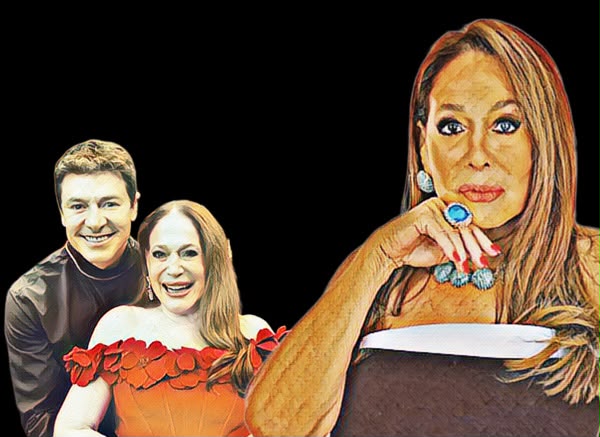
In Herança em Jogo, a new Globoplay original, Susana is not exactly herself. She plays “The Deceased,” a millionaire who leaves behind a fortune and a series of instructions for the people competing to inherit it. Thirteen contestants vie for up to R$1 million in gold bars, while Rodrigo Faro plays the role of “The Executor.”
The premise inevitably raises a question that has driven stories for centuries: what does money reveal about people?
“I believe money changes people,” Susana says. “That scares me a little, because it distances people from feelings of empathy, solidarity and compassion.”
It is an unusually serious observation inside a format designed around games, alliances and temptation, but it also explains why Herança em Jogo interested her. The programme gives Susana one more character to play while placing her at the centre of a subject she has spent decades watching in fiction: ambition, vanity, desire and the things people are willing to do when something valuable is at stake.
Susana has, of course, played women who understood power very well. Few of them are remembered as vividly as Branca Letícia de Barros Mota, from Por Amor, a character who became part of Brazilian television history and, years later, found a second life on the internet.
Susana herself understood very quickly that this new way of communicating with audiences was not something to dismiss. “I wasn’t going to miss that train,” she says.
The memes, clips and comments brought old performances back into circulation while introducing Susana to people who had not necessarily watched those telenovelas when they first aired. “That is the fun of the internet, of memes and comments: you get to talk again to the person on the other side.”
That relationship with her own image — affectionate, irreverent and very conscious of the persona that has grown around her — is also behind another new project. On October 16, Escola Susana Vieira de Atuação premieres with 12 short episodes, with final writing and direction by Caíto Mainier.
The title alone already understands the joke: after decades of a career in which Susana has become almost a genre of her own, she can now play with the idea of teaching other people how to be Susana Vieira. But when the conversation turns to legacy, she resists the word. “My legacy has not been completed yet,” she says. “Because I am still alive.”

It is difficult to argue with her. Susana Vieira has spent more than five decades refusing to behave like someone whose story belongs to the past. She continues to act, to enter new formats, to understand new audiences and, perhaps most importantly, to enjoy all of it.
The little girl on the beach in 1976 could not possibly have known how often she would encounter Susana Vieira again over the following decades. The autograph remains with me, as does the story my parents told about that afternoon.
And Susana was right about one thing: she marked my life. More than that, she remains, as she herself puts it, “very much alive and happy with life.”
Descubra mais sobre
Assine para receber nossas notícias mais recentes por e-mail.

