
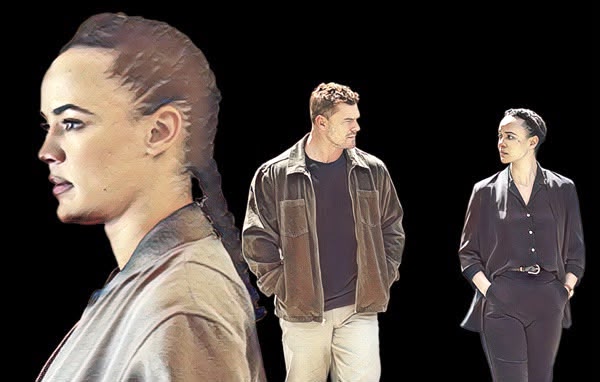
There is a question we ask all the time when faced with suffering, our own or someone else’s: what happened? We want to locate a scene, an episode, an inaugural moment capable of explaining everything that came afterward. It is almost irresistible to imagine that if we find the origin, we will also find the solution. Fiction does this all the time. When a character cannot bear to be touched, like Neagley in Reacher, we immediately want to know what trauma explains that reaction. It is not enough for her simply to be that way. We seem to need the event that can retrospectively organize her behavior and, preferably, provide the missing key to understanding her.
It makes sense that we go looking for that key. Deep down, we all want to understand our own whys and, perhaps even more, the whys of other people. The problem is that we are far less transparent to ourselves than we would like to believe. Psychoanalysis begins precisely from the idea that we are not driven only by the reasons we know or by the desires we can admit. Unconscious desires, conflicts, fantasies and defenses take part in our choices without asking permission from consciousness. In everyday language, all of that is often quickly reduced to the word “trauma”: something happened, it marked us, and now we behave this way. Sometimes there really is an identifiable trauma. But psychic construction is usually far more complex.
We also repeat. We enter different relationships that end up producing strangely familiar feelings, change jobs only to find ourselves in conflicts that resemble old family dynamics, choose new characters and unknowingly rebuild an old scene. One way of thinking about repetition is as an unconscious attempt to return to something that could not be fully worked through, perhaps with the fantasy that this time the ending might be different. We do not do this deliberately. Quite the opposite: often we only recognize the repetition after it has already happened several times. Fiction, which needs to condense entire lives into a few hundred pages or a few hours on screen, almost always simplifies this path. It gives the character a trauma, an explanation and, eventually, a resolution. Psychic life is rarely so obedient.
Perhaps this needs to find a cause, then, says as much about us as it does about the symptom we are trying to understand. While studying Lacan, I wrote down a definition that seems simple until we begin to think about it: the symptom is a painful event accompanied by an interpretation. The experience alone is not enough. The subject gives it meaning, builds an explanation around it, and creates a theory to understand their own distress. We all do this. “I am like this because my mother did that.” “I do not trust anyone because I was betrayed.” “I have trouble with relationships because my father never showed affection.” These explanations may contain elements of truth, sometimes a great deal of truth, but psychoanalysis does not end when we find a convincing narrative about the past. Perhaps it begins precisely when we realize that the narrative is not enough.

One of the distinctions I came across seems especially useful for thinking about this. The symptom as sign asks “why?” The symptom as cause shifts the question to “how?” And the symptom “without reason” brings us closer to the signifier, to that which insists even when a conscious explanation already seems available. The difference may sound small, but it changes the way we listen. Asking why something happens pushes us immediately toward origin; asking how it functions forces us to look at its presence in the present, at the way it organizes itself, repeats itself and, above all, at the function it serves.
That is where Frances Neagley, from the Reacher universe, becomes such an interesting example. In Lee Child’s books, there is the impression that she has haphephobia, or haptophobia, an intense fear or aversion to physical contact, and the obvious question is: what happened to make her unable to tolerate touch? The analytic question might be different: how does not being touched work for her? What does that distance preserve, what does it prevent, what kinds of relationships does it allow and which ones does it make impossible? What becomes organized around that rule? This does not mean that origin is irrelevant, much less that the past does not matter. It only means that finding the scene does not necessarily solve the riddle.
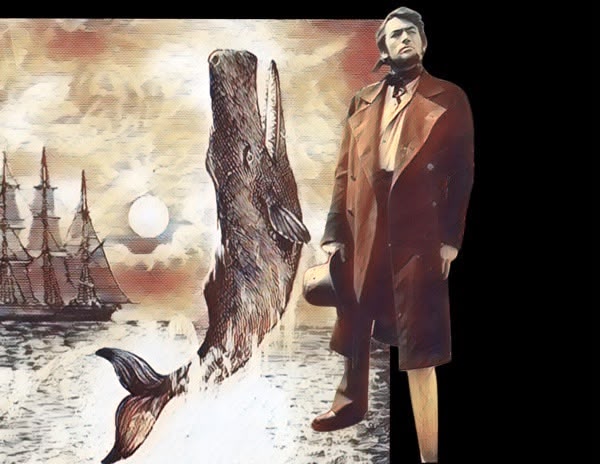
And if we are talking about classics, let us go to another one, both literary and cinematic: Moby-Dick. Ahab knows exactly what happened to him: Moby Dick took his leg. There is, therefore, a concrete, identifiable, brutal event. And yet it is far from explaining everything. The whale comes to mean much more than the animal responsible for his mutilation. Ahab turns that event into an interpretation of the world, depositing in it rage, humiliation, resentment, destiny, revenge and an almost religious need to give meaning to suffering. The original fact is known from the beginning, but the symptom still demands to be read. Perhaps because a symptom is not merely a scar from the past, but a way of organizing the present.
There is also the idea that the symptom is the metamorphosis of a repressed desire, and I especially like the word “metamorphosis” because it resists a simplistic reading. Desire does not disappear when it is repressed. It changes form, finds another outlet, returns displaced, disguised, transformed into something the subject can tolerate, even when that solution causes suffering. This is also why abandoning a symptom can be so difficult. If it were only unpleasant, it would probably be easier to eliminate. But it also offers a possible outlet for something the Ego cannot or does not want to recognize as desire.

That is where the contradiction appears that makes the symptom both so uncomfortable and so persistent. It produces displeasure for the Ego and, at the same time, a form of satisfaction for the unconscious. “Pleasure,” here, obviously does not mean happiness. The word that complicates the equation more accurately is jouissance: a form of satisfaction that can exist precisely inside what makes us suffer. The subject complains, wants to change, sometimes understands perfectly well what they are doing, and still keeps repeating it. Not because they are weak, nor because they “like suffering,” but because something in that repetition serves a function that consciousness does not control. There is a gain there, even if it is not a gain the subject necessarily recognizes or would be willing to confess. The mind really is complicated.
Severance turns that fantasy into science fiction. Its characters live as though memory and experience could be radically separated, one part of life kept on one side and the other elsewhere, as if eliminating conscious access to what hurts could also eliminate its effects. But the subject does not disappear along with memory. The body knows, anxiety appears, desire finds openings, repetition continues. The series is fascinating precisely because it pushes to an extreme the idea that forgetting is not the same as not knowing.
Another perspective strikes me as especially beautiful: the unconscious is the “knowledge of repetition.” It is not merely a secret archive of repressed memories waiting to be recovered, but that which ensures that something will return, even if in another form. Perhaps that is why we can change cities, jobs, partners and circles of friends and, after some time, discover that something strangely familiar has happened again. The characters change, the scene changes, but the script seems to have survived. Groundhog Day turned that condition into a perfect comedy: Phil Connors wakes up every day in the same place until he begins to understand that repeating the day does not necessarily mean repeating himself.
This is also why one symptom can disappear and another emerge in its place. The form changes, but something still seeks expression. Not because there is necessarily a secret event waiting to be unearthed, but because there is a logic that insists. Tony Soprano spends years trying to understand his mother, his father, his childhood, his panic attacks, the violence running through his family. The more intellectually he understands his own history, the clearer it becomes that the series never turns into a comforting answer: knowing where something came from does not mean we stop repeating it.
Perhaps this is one of psychoanalysis’s great frustrations for a culture in love with quick explanations. Discovering the cause is not necessarily the cure. Naming the trauma does not automatically end its effects. Recognizing a pattern does not mean being able to interrupt it. And yet we have never had so many words available to construct theories about ourselves. Trauma, trigger, narcissism, avoidant attachment, emotional dependency: terms that can certainly be useful, but that can also become new ways of explaining too much and asking too little.
“I do this because I have that trauma” may be a true explanation and still be insufficient. The next question may be more uncomfortable: how does it function today? What does this behavior prevent, guarantee, preserve, organize? What satisfaction exists there, even inside the suffering? What does it allow us not to know? What desire does it help us avoid recognizing? And, perhaps more difficult still, what would happen if that solution, however painful, ceased to exist?
The question “what happened to you?” remains important. There are real, violent, traumatic experiences capable of marking a subject deeply. And understanding our own history can be a fundamental part of analysis. But knowing our whys is not like finding the missing piece of a puzzle and finally seeing the whole picture. It is a possible journey, yes, but a complex one, because the person searching for the answer is also the person who has built ways not to find it.
In fiction, we can close the circle. We reveal the trauma, understand the character, reach the final chapter. In life, not always. Sometimes we find the scene and the symptom remains. Sometimes we never find the scene. And sometimes we discover that the hardest question is not why we began doing something, but why, after so many years, so many explanations, and even after understanding perfectly well what we do, we keep doing it.
Perhaps it is at that point that the symptom stops being only something we want to eliminate and begins to function as what psychoanalysis has always suspected it might be: a passage. Not a ready-made answer about the past, but a path toward understanding what continues to act in the present, first through the unconscious, then through repetition and, finally, through that which the subject would rather not recognize as their own.
Descubra mais sobre
Assine para receber nossas notícias mais recentes por e-mail.

