
Taylor Swift knows how to turn an awards night into another chapter of her biography. A trophy can confirm a record, open a new creative avenue and give fans another occasion to celebrate that she has “made history.” At the 2026 VMAs, the inaugural Artist Director Honors added recognition as a director to her acclaim as a singer and songwriter. Meanwhile, away from the stage, a music veteran was offering a considerably less enthusiastic assessment of her talents.
Todd Rundgren called Taylor the “apotheosis of mediocrity” in an interview with Vulture. He questioned her abilities as a singer, songwriter and dancer, and suggested there was an argument for holding her responsible for ruining music. It is such a sweeping rejection that it raises a question: what is he evaluating when practically nothing she does seems to deserve any recognition?
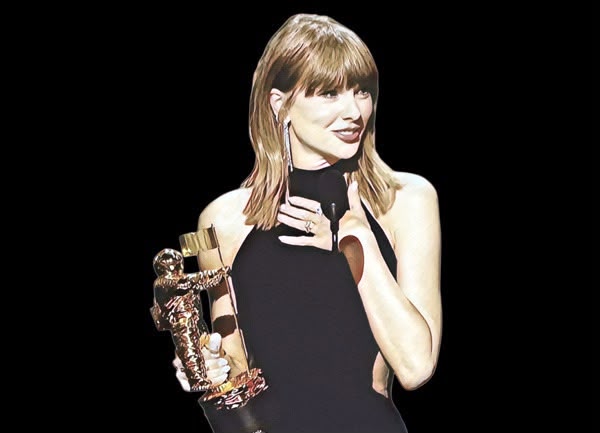
Before going further, it is worth introducing the person making these claims. Rundgren may not be immediately familiar to some of Taylor’s audience, but he has a significant career behind him. As a singer and songwriter, he gave us “Hello It’s Me,” “I Saw the Light,” and the album Something/Anything?. As a producer, he worked on the New York Dolls’ debut, Patti Smith’s Wave, XTC’s Skylarking and Meat Loaf’s Bat Out of Hell. His work spans experimentation, critical prestige and commercial success. Although his solo career occupies a very different space from Swift’s, he knows the mainstream from the inside.
That gives his opinion weight, but it does not make it a verdict. Nobody needs to sell as much as Taylor to assess her music, just as operating within a niche does not guarantee sophistication. Commercial success can coexist with artistic excellence, complacency, or a mixture of the two. Calling a body of work mediocre requires an explanation of where it falls short. When the argument includes a jab about the singer’s hair and a theory that women came to dominate the market because boys traded music for video games, the criticism begins to reveal its own limitations.
I have reservations about Taylor, and I do not need to hide them to recognize her value. There are good songs, an extraordinary ability to create a sense of connection and commercial intelligence that deserves respect. At the same time, as she approaches 37, she still seems to me, in parts of her work, to sing from the perspective of a 15-year-old. Not because an adult woman should stop talking about love or rejection. What bothers me is the recurrence of conflicts in which the characters change, but the need to respond, keep receipts and prove who was right remains.
Sometimes I miss a shift in perspective beyond a change of scenery. A disappointment can inspire songs for an entire lifetime; the interest lies in what each new approach discovers about it. Does experience bring ambivalence, self-examination, some element of surprise? Or does it merely provide new evidence for an accusation we already know? That is how I prefer to discuss the maturity of songwriting, rather than establish an age beyond which a particular subject would be off limits.
Nor do I consider vocal power a sufficient measure for deciding who deserves to endure in music. A modest voice can have personality and deliver an unforgettable interpretation. A magnificent voice can impress while repeatedly relying on the same devices. Range, tone, phrasing and interpretation are different things. What I sometimes miss is variety in intention, a way of singing that lets us hear something the lyrics alone would not convey.
It is impossible to discuss this subject without remembering Madonna. Singing and dancing were part of popular music long before her or Michael Jackson. What the two helped consolidate was a degree of integration in which the body, choreography and image became part of the songs’ identities. Michael established an extraordinary standard for performance. Madonna took the construction of spectacle and the reinvention of the female star to a scale that influenced generations. Judging her solely by her voice would always leave out a fundamental part of her contribution.
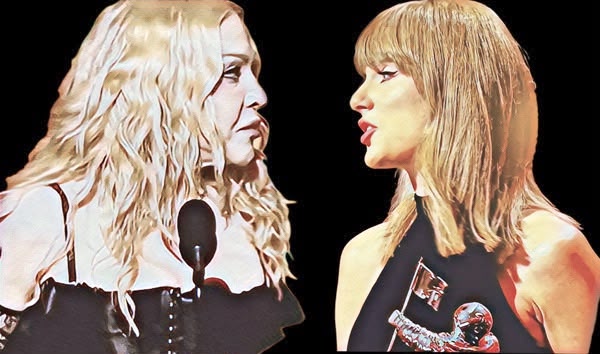
Within that model, costumes, dancers, characters and staging form part of the artistic proposition. The combination of live singing, recorded backing tracks and lip-syncing also involves a negotiation between vocal delivery and the physical demands of performance, with gains and losses we can assess. For many major pop stars, spectacle has become an audience expectation. Getting onstage and singing remains enough for many artists, but others work within a form in which much more is expected.
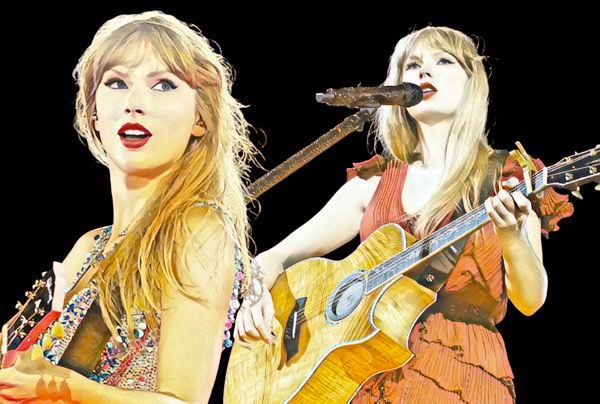
Taylor began with an identity rooted in country music, the guitar and the stories she sang. The scale of the Eras Tour shows how much her performances have incorporated that language of spectacle. She does not need to be an exceptional dancer to work with choreography, or have Beyoncé’s vocal power to organize an experience capable of filling stadiums. What matters is how she uses her resources. Madonna also faced accusations that reduced her importance to image and questioned her musical talent. Recognizing that similarity does not mean equating their work, but remembering that pop creation involves several different skills.
One of Taylor’s most evident skills is organizing her own trajectory. Her “eras” correspond to the albums and the musical and visual identities of each release, but they give fans a way to recognize stages in their own lives. People remember where they were, whom they were involved with and how they felt when a particular song entered their daily lives. The singer’s biography becomes a shared emotional calendar.
There is a self-celebration in this construction that contributes to both its charm and its irritation. A relationship, a breakup, a response and a change of image can all acquire the status of an event. I find a narcissistic element in this centrality of the self, as a feature of the public narrative. Taylor knows how to invite fans to interpret clues, recognize references and participate in her universe. The limitation emerges when that universe seems to offer less and less room for anything beyond confirming her own importance.
The numbers help sustain that position. She achieves extraordinary results and knows how to turn them into an argument. Sales, awards and records become part of a narrative in which each achievement confirms the previous one and announces the next. We do not need to question the authenticity of those results to discuss the meaning attached to them. Being the most awarded demonstrates concrete recognition; it does not, on its own, establish whether one song is better than another or whether a body of work will endure.
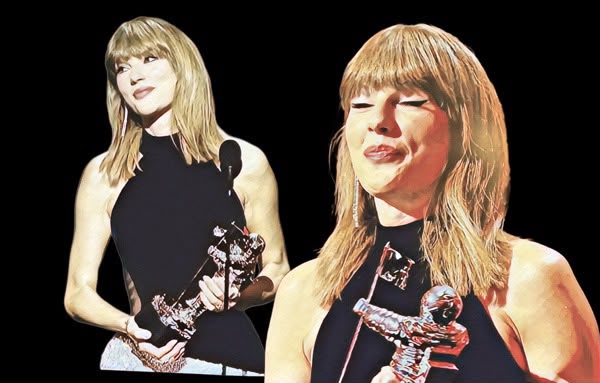
The new VMA award offers an interesting example. The Artist Director Honors is an honorary accolade, distinct from the competitive Best Direction category, which Taylor had already won. Producer Bruce Gillmer said the idea came from outside the organization, without identifying its source. That does not allow us to say she created an award for herself. It does allow us to observe how a newly created honor immediately produces another “first.” Being its first recipient is not the same as pioneering the role of singer and director.
The insistence on announcing firsts also runs through the way we follow Beyoncé. Both women’s achievements are frequently presented in terms of records and legacy, fueling a comparison that seems to require a definitive winner. Lady Gaga and other artists could broaden that conversation with their own approaches and qualities. But the competition between Beyoncé and Taylor carries a scene etched into pop culture.
In 2009, Taylor was receiving her first VMA for “You Belong with Me,” when Kanye West took the microphone to champion “Single Ladies.” “I’mma let you finish” became a meme, even though he had just prevented her from finishing. His intervention established a public hierarchy: Taylor could have the award, but Beyoncé possessed the artistic greatness that justified occupying that position. Beyoncé won Video of the Year that same night and invited Taylor back to finish her acceptance speech. The opposition was imposed by Kanye, not by her.
Part of that dynamic finds an echo in Rundgren’s remarks. A critical interview is very different from interrupting a young woman onstage, but the willingness to announce that Taylor occupies a larger space than she deserves resurfaces. Once again, a man assumes that role. This does not make all criticism from men misogynistic; it makes the way it is expressed relevant, especially when the contempt extends to the women who listen to the artist.
Such a sweeping dismissal can give fans another reason to defend her. A woman with power, money and recognition can still be seen as someone whose talent needs protection from those trying to diminish it. Curiously, the attempt to reduce her importance ends up feeding one of the most effective narratives of her career.
Recognizing that mechanism does not oblige anyone to consider Taylor a great poet, an exceptional interpreter or the best artist of her generation. We can discuss the repetition in her lyrics, her musical choices and the distance between a song’s ambition and its execution. Her cultural value exists, but it should not end the assessment of her work. Rundgren’s body of work also deserves respect without making his preferences a universal standard.
We still do not know what future generations will retain of Taylor Swift. Time may preserve songs that seem minor today and leave behind achievements announced as historic. When Rundgren rejects everything, he makes it easier to defend her without examining the songs. When every trophy becomes a certificate of excellence, something similar happens. Taylor knows how to make an awards ceremony tell her story; the music still needs room to tell the rest.
Descubra mais sobre
Assine para receber nossas notícias mais recentes por e-mail.

