
Contains spoilers.
Some stories endure for decades because we recognize in them what we still have not managed to resolve. The competition for our parents’ love, resentment between siblings, the difficulty of seeing the people we love clearly, and the fear of repeating what hurt us most keep finding new ways to surface. In East of Eden, Zoë Kazan’s adaptation for Netflix, these questions find expression in a gorgeous production with an extraordinary cast. I began watching with reservations about certain choices and finished admiring a work that understands the richness of John Steinbeck and makes room for his contradictions.
Published in 1952, East of Eden is a novel of more than six hundred pages that won over readers from the outset, although its critical reception was mixed. Steinbeck was already the author of Of Mice and Men and The Grapes of Wrath, for which he received the Pulitzer Prize in 1940. The Nobel Prize in Literature would follow in 1962, in recognition of his body of work. There is a particular harshness to his view of the American experience, an attention to defeat, poverty, and the distance between the promise of prosperity and the lives of those struggling to survive it. But there is also a profound compassion that keeps suffering from becoming mere spectacle.
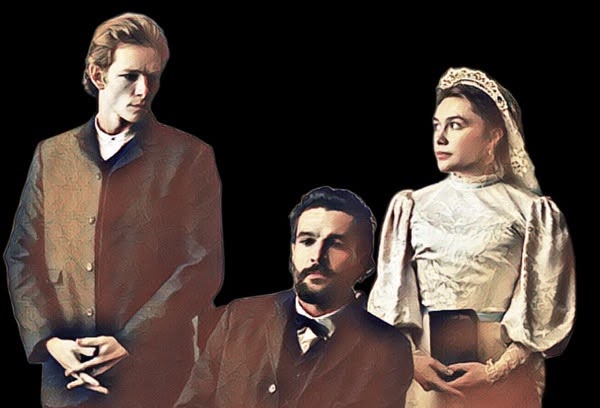
In East of Eden, that concern moves into the intimacy of family life. The story of Cain and Abel runs through two generations of the Trasks, in a repetition of rivalry, paternal favoritism, and resentment. What happens between Adam and Charles resurfaces, under different circumstances, between Cal and Aron. The biblical reference may be ancient, but we need only look at the damage caused by the unequal distribution of affection to understand how close the novel remains to us. The child who feels less loved is fighting for more than a place within the family. He is trying to discover what is wrong with him.
Zoë Kazan, granddaughter of Elia Kazan, who directed East of Eden in 1955, faced a challenge that went beyond the family comparison. She had to make choices within a sprawling book, full of stories, reflections, and characters that could not all fit into seven episodes. The major storyline to be reduced was that of the Hamiltons, the family inspired by Steinbeck’s maternal relatives. Samuel remains, but his children’s lives and the space they occupy in the novel are considerably diminished. Cathy’s childhood is also condensed, alongside a significant reinterpretation that I have already discussed in another piece.
Even so, I find the adaptation remarkably faithful to the power of the book’s conflicts. Fidelity also reveals itself in the ability to preserve what makes a story unsettling, complex, and emotionally recognizable. Zoë makes deliberate changes, but retains the cruelty, the ambiguities of love, and the weight of choices. Her contemporary perspective allows us to identify forms of violence that were long accepted as normal, without requiring the characters to stop belonging to the time in which they live. That sensitivity was one of the things that most surprised and reassured me as I watched.
The visual storytelling is another pleasure. Garth Davis directs the first four episodes, while Laure de Clermont-Tonnerre takes over for the final three, and a sense of unity sustains the passage between generations. Stuart Dryburgh and Sam Chiplin’s cinematography and Grant Major’s production design help give this world its scale and substance. The period recreation is gorgeous, but its effect goes beyond the appeal of the sets and costumes: it makes tangible the distance between the beauty of a place and the harshness of the relationships that unfold there. Such a heavy story finds a visual form that invites us to stay.
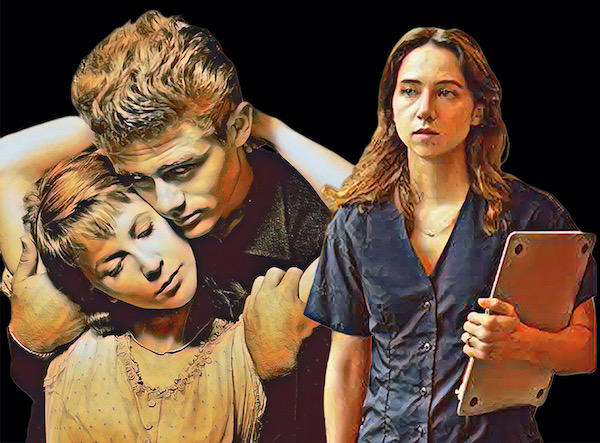
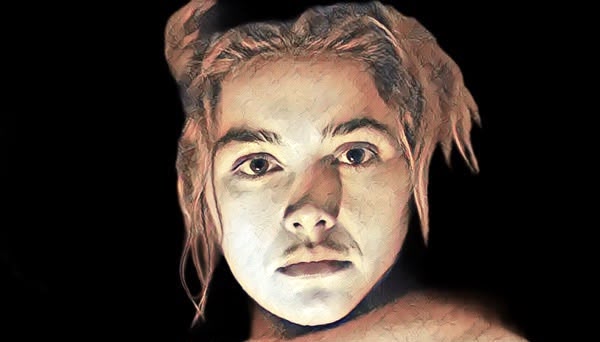
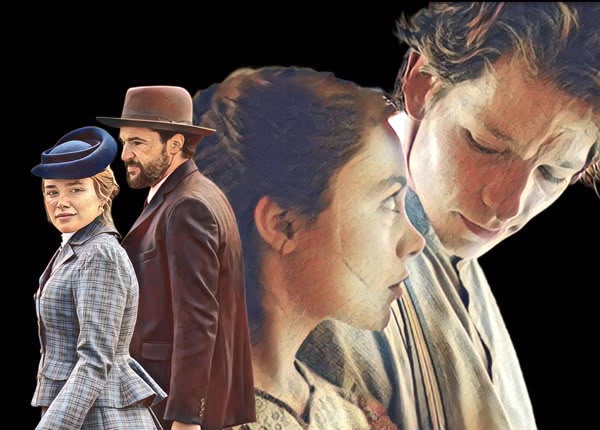
And what a cast. Florence Pugh is wonderful as Cathy Ames, with a presence that justifies the prominence the character receives in this version. She sustains the intelligence, menace, and contradictions of a woman who forces everyone around her to reveal something about themselves. I have already examined the risks and achievements of this reinterpretation at greater length; here, what deserves attention is how her performance belongs to an equally strong ensemble. The series has several centers of interest, and that makes an enormous difference.
Christopher Abbott and Mike Faist are outstanding as Adam and Charles. Their relationship establishes the wound that will continue to run through the family, and the actors give depth to its mixture of affection, competition, and resentment. Abbott allows us to see how Adam’s goodness coexists with his inability to listen to and truly see another person. He clings to what he wants to believe, and that idealization comes at a price. Faist, in turn, gives substance to the brother who lives in the shadow of paternal favoritism and does not know what to do with the pain it causes. Their dynamic lays the emotional groundwork for what we will see repeated in the children.
Ciarán Hinds is outstanding as Samuel Hamilton, even with the reduction of his family’s storyline. Samuel brings life experience and a humanity that broadens the series’ scope. His presence offers another way of looking at the Trasks, a possibility of conversation and reflection in a world where the characters are often trapped in their own suffering. It is a role that must convey a great deal without relying on grand gestures, and Hinds has that ability to give a presence weight.
But I must single out Hoon Lee, whom I was already a fan of in Your Friends and Neighbors. As Lee, he is extraordinary and occupies one of the adaptation’s most important places. The character combines care, intelligence, and an understanding of others that is not always matched within the family. He is both a maternal and paternal figure to Cal and Aron, someone who sustains everyday life and offers emotional continuity while the adults responsible for the boys are absent or emotionally distant. That role is already there in the novel, and the series gives it the space it deserves.
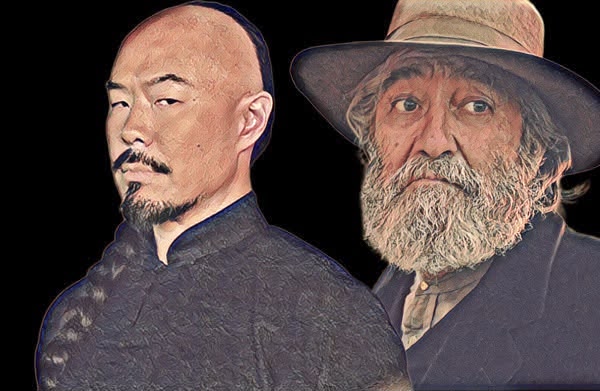
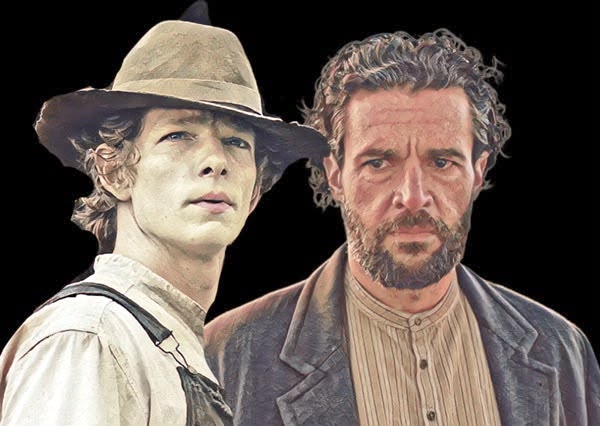
Lee also keeps the story from being entirely consumed by the violence of blood ties. There is something very beautiful in the presence of someone who cares without needing to possess, and who sees a child beyond the role their parents have assigned them. He observes, offers comfort, and thinks. His intellectual importance is tied to the book’s central discussion, but it is the daily work of caring that gives substance to what he says. Hoon Lee makes that combination of affection and intelligence profoundly moving.
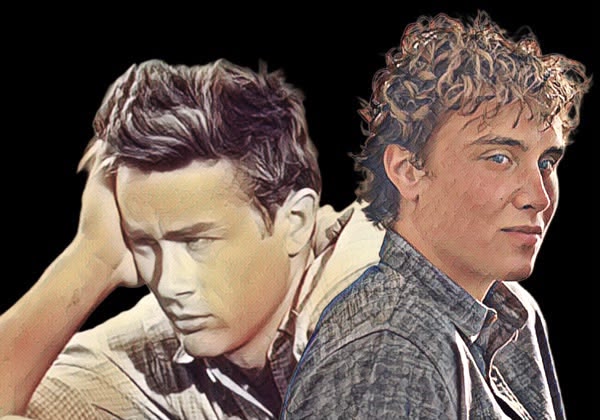
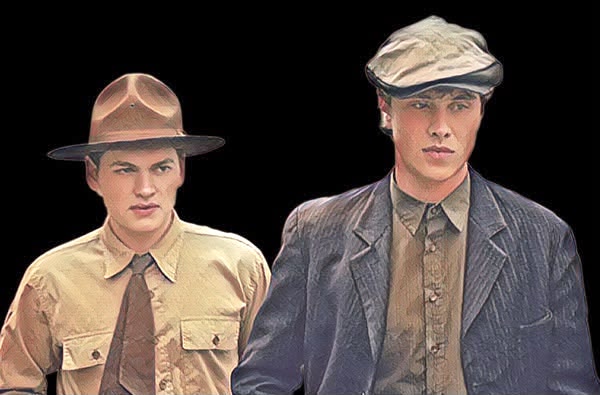
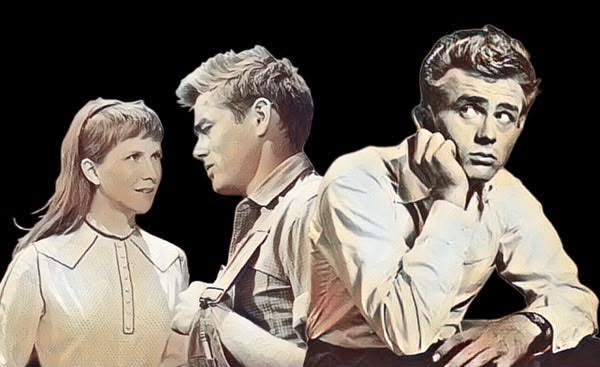
When the boys grow up, Joseph Zada and Joe Anders maintain the ensemble’s quality as Cal and Aron. I liked them both very much, and Zada faces a particularly difficult comparison: Cal is the character James Dean played in the 1955 film. He is very good, and the series allows him to arrive at this point carrying a family history we have followed since the previous generation. His conflict has a past that is visible to the viewer, adding weight to his need for love and his fear of being irredeemably bad.
It is in the final episodes that the comparison with her grandfather’s work becomes more direct. Elia Kazan focused his film on the final part of the novel; Zoë has the time to show how this family arrived there. The film has enormous emotional intensity, but the series builds its own path before reaching that more familiar territory. By the time Cal and Aron take center stage, we have already seen what Adam received from his father and how what wounded him resurfaces in his relationship with his sons. Repetition ceases to be merely an idea and becomes something we recognize in action.
That was what struck me most about a phrase used to introduce the story: relationships repeat themselves until someone breaks the pattern. It is a beautiful formulation, but watching the Trask family provokes a less comfortable response. For much of their journey, no one manages to break anything. Pain finds a new recipient, rejection resurfaces, and the desire to be loved continues to shape destructive decisions. Knowing suffering does not guarantee that we will stop causing it. Sometimes we cannot even see how we are passing it on.
It is here that the discussion of timshel gains its force. In the novel, Lee offers the interpretation “thou mayest,” the possibility of choosing how to act in the face of evil. The idea does not promise victory or erase what has already happened. It opens a possibility for someone who fears being condemned by their origins, their family inheritance, or their own previous choices. After so much suffering, that opening carries a weight that a generic message about overcoming adversity could never have.
East of Eden is too rich a story to be exhausted by a single reading. It contains religion, psychoanalysis, American history, power relations, and a profound exploration of love and its absence. Zoë Kazan’s achievement lies in allowing these layers to coexist, supported by a beautiful production and performances that keep us close to the characters even when their decisions are unbearable. I finished admiring the adaptation because it preserves Steinbeck’s discomfort and leaves us facing a demanding possibility: we can choose another path, but no one can make that choice for us.
Descubra mais sobre
Assine para receber nossas notícias mais recentes por e-mail.

