
Contains spoilers for East of Eden.
Understanding why we do something does not always stop us from doing it again. We may recognize a relationship that hurts us, notice our need for approval, and even hear our parents’ voices in the words we swore we would never repeat. And yet there we are, living through something painfully familiar. That distance between recognizing something and managing to change it is one of the things that interests me most about psychoanalysis — and it is what stayed with me after watching East of Eden.
A phrase used to introduce the story said that relationships repeat themselves until someone breaks the cycle. The problem was that, for much of the series, no one seemed able to break anything. Children suffered at their parents’ hands and, when they became parents themselves, inflicted similar wounds. The faces, circumstances, and generation changed, but the competition for love, rejection, and difficulty of truly seeing another person remained. That is why the word spoken at the end, timshel, struck me as so important. After so much repetition, there was a possibility.
The word, spelled this way in John Steinbeck’s novel, takes on the meaning “thou mayest.” Its place in the work comes from a discussion of Genesis 4:7, when God speaks to Cain after rejecting his offering and accepting Abel’s. Cain is consumed by resentment, but he has not yet killed his brother. Sin is presented as something lying in wait at the door, seeking to master him. The passage places before him the possibility of mastering that impulse. There is a moment before the violence when another path can be taken.
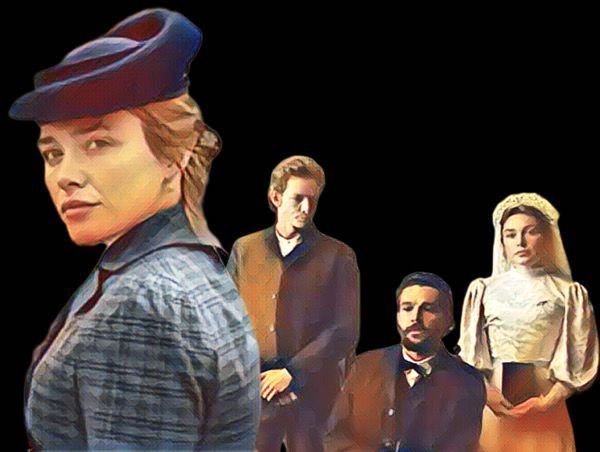
In the novel, Lee studies this passage and compares translations that profoundly alter its meaning. One formulation promises that a person will overcome sin; another commands them to do so. “Thou mayest” opens a possibility, without guaranteeing victory or determining defeat. It is the interpretation Steinbeck makes the moral center of his story. The translation and transliteration of the Hebrew have nuances and are debated, but what interests me here is the meaning the expression acquires within the work: what shapes us does not have to determine everything we do.
I remembered this passage because it had also come up in a Kabbalah class, during a discussion of free will. It is a connection that interests me, although a psychoanalytic reading requires us to consider how much we do not know about the motives that move us. A choice does not happen in a vacuum, entirely free of our history. We may believe we are deciding something and, without realizing it, be responding to an old demand, seeking approval, or trying to repair a rejection. The possibility of choosing differently also involves examining those forces.
We are shaped by unconscious desires, identifications, and ways of relating that develop long before we can explain them. The family contributes to that formation through the words it says and those it leaves unsaid, the affection it distributes, the expectations it imposes, and the places it assigns each child. One learns that they must be exemplary to deserve love. Another sees themselves as the family’s problem. Those positions can continue to organize our relationships long after we leave home.
Repetition, then, is not limited to consciously copying our parents’ behavior. Sometimes we swear we will do everything differently, only to find ourselves in a familiar position in another relationship. We seek approval where it remains out of reach, understand a refusal as proof that we have no worth, or try, at last, to win the love we once lacked. Some repetitions can be understood as attempts to give a conflict a different ending, yet they end up recreating the suffering. What we cannot work through finds ways to keep happening.
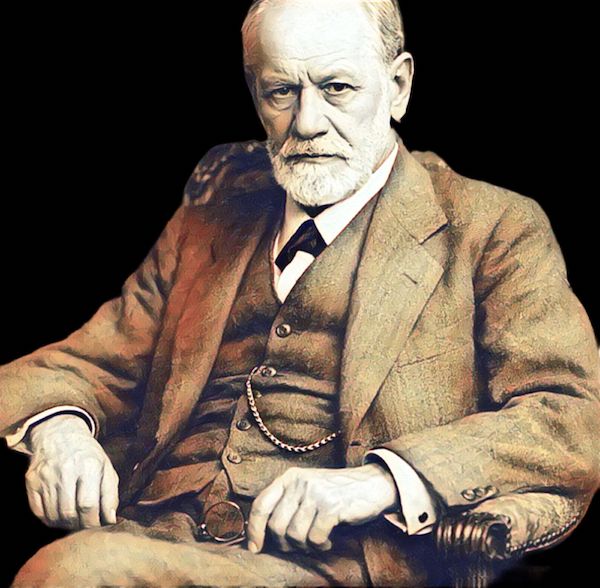
In Remembering, Repeating and Working-Through, published in 1914, Freud describes how a person can reproduce in actions what they cannot recognize as part of their history. They repeat without knowing they are repeating. That is why recognizing a pattern matters, but announcing a decision and expecting the whole of our psychic life to follow is not enough. Working through takes time and requires confronting resistance. Even a painful position can offer some security because it is familiar; leaving it means tolerating the fact that we do not yet know exactly who we will be outside it.
In analysis, that possibility gradually develops as we become able to hear something in what we say, recognize what we do, and examine what once seemed simply “the way we are.” Expressions such as “that’s just who I am” and “this always happens to me” may begin to lose their appearance of definitive truth. The analyst does not decide for the person or promise them change. Listening and working through can create room for them to recognize their part in relationships and find other ways of positioning themselves. “Thou mayest,” in this connection, appears when a certainty begins to give way.
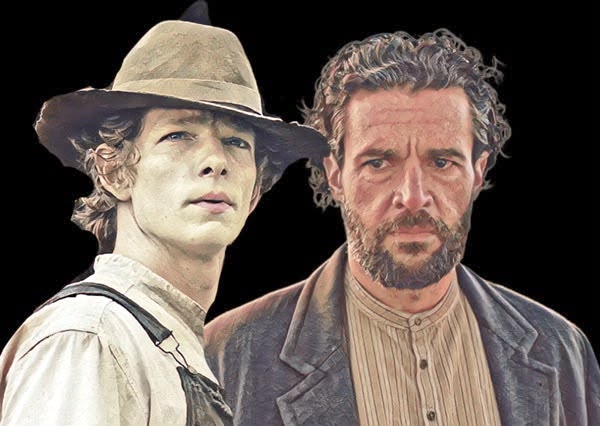
The Trask family allows us to follow the weight of those certainties across two generations. Charles loves Adam, but also envies and attacks him. He longs for recognition from Cyrus, their father, and cannot bear his preference for his older half-brother. When he meets Cathy, he recognizes in her a darkness he knows in himself. That identification allows him to see what Adam, caught in his idealization, cannot. But recognizing a resemblance does not make the two equivalent: Charles seeks a love he lacks, while Cathy often turns other people’s love into an instrument of control.
Cal experiences this conflict with particular intensity. When he meets Cathy, he finds a frightening explanation for what he recognizes in himself: if his mother is cruel and he, too, is capable of cruelty, perhaps he is condemned to be like her. The resemblance begins to threaten his entire identity. The uncertainty over whether Charles is his uncle or his biological father adds another layer to the story, but the twins’ paternity remains unresolved. The decisive question remains: does parentage determine what he can make of his own life?
From a psychoanalytic perspective, what matters is observing how Cal interprets those origins and identifies with them. A biological inheritance does not amount to a moral destiny. “I’m just like my mother” can become a way of explaining an impulse, but also of closing off an inquiry into oneself. If everything has already been decided, there would be neither responsibility nor any possibility of change. Lee intervenes precisely in that certainty, helping the boy see that recognizing something of his mother in himself does not mean he is entirely defined by her.
Adam’s rejection, however, returns Cal to the family wound. He wants to be recognized by his father and, when his attempt fails, lashes out at Aron. Suffering turns into violence against his brother, repeating something we have already seen between Charles and Adam. The possibility of breaking the cycle comes after that act. Cal must bear the guilt and recognize his part in what happened, without reducing himself to the idea that he is essentially evil and therefore incapable of living differently.
It is important to distinguish responsibility for an act from the condemnation of an entire life. Cal can recognize that he hurt his brother without concluding that everything he does will inevitably be destructive. Working through that guilt does not require erasing what happened, but finding a way to answer for it that allows him to go on living. In my reading, Cal is the one who begins to give substance to timshel. He has already repeated the violence; the ending offers him the possibility of not making repetition the only path he knows.
At this point, his father’s word acquires a force that goes beyond an explanation of free will. By saying timshel, Adam offers Cal the possibility of no longer identifying himself solely with his worst act. His father cannot undo Aron’s death, but he can still recognize his surviving son. There is an opening on both sides: Cal can stop occupying only the place of the condemned son, and Adam can interrupt, in that encounter, the rejection that has run through his own history.
Lee, who sustained the care when others were absent, helps make that encounter possible. His maternal and paternal presence shows how the boys’ lives have also been shaped by bonds that go beyond biological origins. An opening for change happens between people, through affection, listening, and recognition. That does not make Lee an analyst or turn the final encounter into an analytic session, but it allows us to consider the importance of someone who does not confirm the sentence a person has passed on themselves.
The word Adam speaks is also the last spoken in the novel. The series preserves that core and expands it through the physical closeness and affection between the characters. In the 1955 film, directed by Elia Kazan, Lee was removed and the explicit discussion of timshel was left out. The ending finds another way to bring father and son together, when Adam asks Cal to care for him. Zoë Kazan restores the word and the entire journey needed for it to reach us carrying the weight of two generations repeating their wounds.
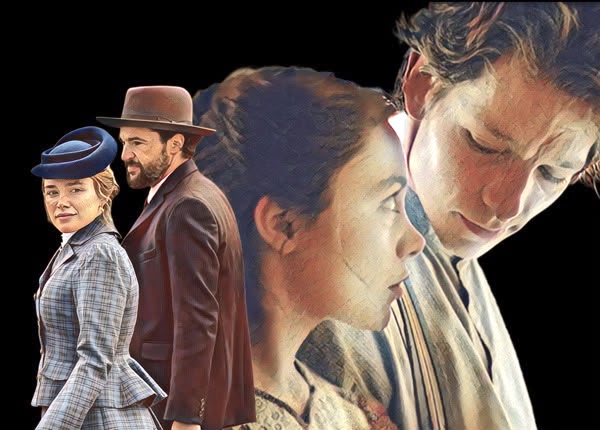
There is also something in the title itself that broadens this reading. In Genesis 4:16, after killing Abel, Cain goes to live in the land of Nod, east of Eden. It is not an address we can confidently locate on a present-day map. Within the story, it is the place where he lives after the crime, away from God’s presence. In thinking about Steinbeck, what also matters is the image of an existence outside paradise, where innocence can no longer be recovered and actions have consequences.
Through a psychoanalytic lens, that place allows us to think about relinquishing an ideal life in which nothing would have been missing, no one would have hurt us, and we ourselves would never have harmed anyone. Cal cannot return to the moment before his decision, just as he cannot choose different parents or retroactively receive all the love he wanted. He can, however, work on his relationship with that history. The possibility of change exists in this imperfect world, with its losses and responsibilities.
That is how I read the ending of East of Eden. The series does not allow us to know that Cal will never repeat the violence, but it leaves him facing another possibility. He can recognize his history, take responsibility, and begin to build a different relationship with what he has inherited. Breaking a repetition is painful work because it requires losing certainties, including the terrible certainties we hold about ourselves. “Thou mayest” gains its force at that point: when the past still exists, but ceases to be the only answer available for the future.
Descubra mais sobre
Assine para receber nossas notícias mais recentes por e-mail.

