
In 2021, I wrote here about Marie van Goethem, the little dancer Edgar Degas immortalised, but whose fate remains a mystery. Her image has endured across generations, spread through museums and become one of the most recognisable in art history, while the girl behind it had a brief stage career and disappeared from the surviving records. Now, that distance between the sculpture’s fame and its model’s anonymity is coming to the theatre in Little Dancer, a musical opening in London in 2027, with Tiler Peck in the leading role.
Performances at the Theatre Royal Haymarket begin on February 15 and continue through March 27. For those who follow dance, there is a particular attraction: Tiler, a principal dancer with New York City Ballet, has been part of this show’s history since its first production. She plays Young Marie, while Laura Pitt-Pulford portrays her adult self. Julian Ovenden will play Degas, and Josefina Gabrielle will be Martine, the dancer’s mother. Casting two performers as Marie already reveals one of the central choices in the storytelling: looking back at her adolescence from an imagined later life.
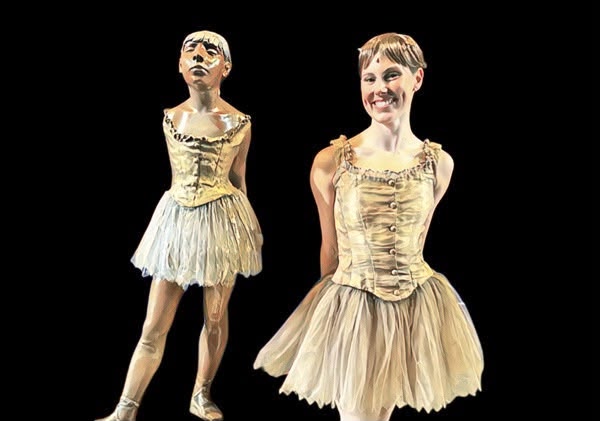
This is precisely where we need to distinguish the historical record from the musical’s creative freedom. We know that Marie was born in Paris in 1865 to a working-class Belgian couple and entered the Paris Opera’s ballet school in 1878. Her time with the company ended in 1882, when the records document her dismissal for missed attendance. After that, her fate remains unknown. The adult Marie whom the musical brings to the stage is therefore a possibility imagined by its creators, a theatrical way of filling the silence left by the documents.
The circumstances surrounding her, however, were very real. Behind the tulle skirts and the apparent lightness of their movements, many young dancers were responsible for helping to support their families. The work was demanding, their prospects limited, and their proximity to wealthy men who presented themselves as “protectors” made these girls vulnerable to exploitation. The beauty audiences saw concealed a reality we need to consider when looking at Degas’s dancers. It helps us understand Marie’s world, although it cannot give us certainty about what happened to her.
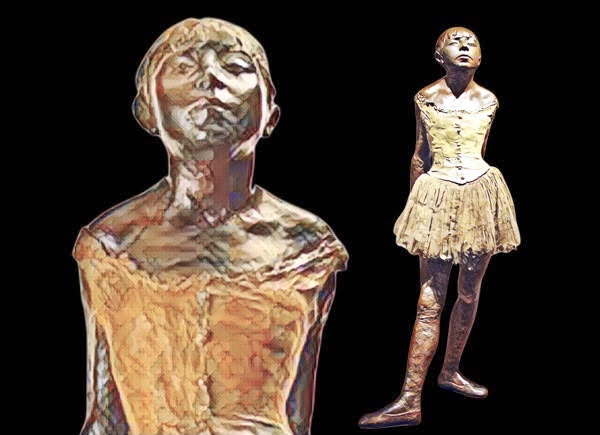
It is also worth remembering that the sculpture we find so familiar today met with rejection when it was exhibited in 1881. The girl with her chin raised, her hands behind her back and her feet in fourth position did not resemble the idealised ballerina some viewers expected to see. Degas used wax, textiles and human hair, bringing his figure disconcertingly close to a real presence. The work revealed a young working girl and the tension between the discipline of dance and the exhaustion of the person performing it. The original is at the National Gallery of Art in Washington; the familiar bronze casts were produced after the artist’s death.
To bring this world to the stage, Little Dancer brings together major names in musical theatre. Lynn Ahrens wrote the book and lyrics, and Stephen Flaherty composed the music. They are the partnership behind Ragtime, Anastasia and Once on This Island. Direction and choreography are by Susan Stroman, whose credits include The Producers, Crazy for You and Contact. In previous versions, ballet contributes to the dramatic storytelling alongside songs and other forms of dance, allowing Marie’s body to express what the narrative also seeks to understand.
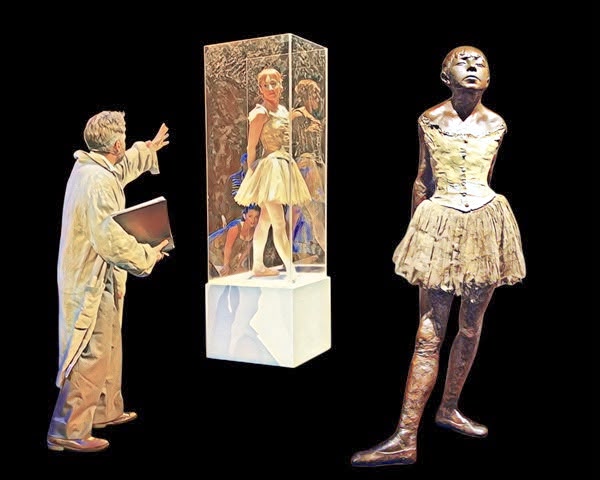
Although billed as a new musical, the project has been developing for more than a decade. Its first production was staged at the Kennedy Center in Washington in 2014. In 2019, a revised version opened in Seattle under the title Marie, Dancing Still. London hosted a concert performance in July 2025, already featuring Tiler Peck, Julian Ovenden and Laura Pitt-Pulford. The 2027 engagement will be the full West End production, with sets by Beowulf Boritt and costumes by William Ivey Long. A world tour has been announced, although its itinerary has yet to be released.
For anyone planning to attend, one detail deserves attention: although the show continues through March 27, Tiler is currently scheduled to perform only until March 20. Her presence is an important part of this undertaking, bringing an artist with an established dance career face to face with the story of a teenager who never had the same opportunity to remain onstage.
We still need to see how the new production handles the relationship between Marie and Degas, and how fully it gives the girl a perspective of her own. But there is something moving about this attempt to rediscover her in motion. More than a century later, we recognise her posture, her costume and her face. The musical may lead us to ask what that familiar image has yet to tell us about the person who had to hold the pose.
Descubra mais sobre
Assine para receber nossas notícias mais recentes por e-mail.

