
Hollywood has always liked ambition, as long as it does not show too much. To win an Oscar, actors have to spend months campaigning, attending screenings, talking to voters, giving interviews, showing up at events, and taking part in a machine that costs millions of dollars. The strange part is that, while doing all of this, they are expected to maintain the appearance that the statuette does not matter that much. There is a very peculiar line between wanting to win and looking as if you want to win too badly, and historically, crossing it can be just as risky as campaigning too little.
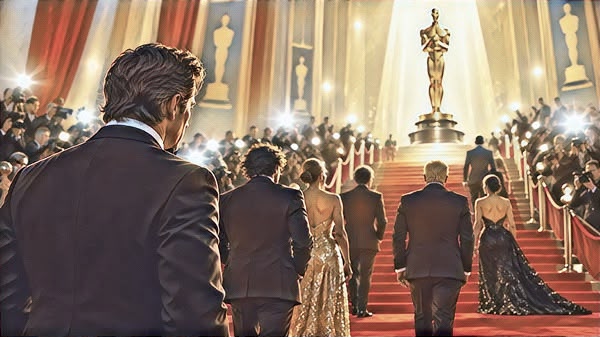
Tom Cruise is finding out exactly where that line lies. At 64, after more than four decades at the top of Hollywood, three acting nominations and an honorary Oscar received in 2025, he arrived at Digger surrounded by a narrative that is no longer only about the film. It is also about the possibility of finally winning the competitive acting Oscar that has always eluded him. Cruise has done interviews, appeared at premieres around the world, attached himself to major events, made himself more available than he has in years and turned the release into a visibility operation remarkable even by his standards. The problem is that Digger arrived divided between enthusiastic reviews and brutal dismissals, while its opening box office came in below what might be expected from a production of this scale. Suddenly, the Oscar campaign itself became more visible than may have been useful.
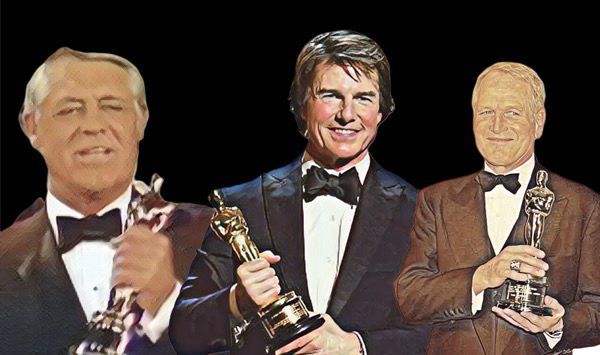
But there is an important difference between Cruise and some of the more recent contenders accused of “wanting it too much.” It would be unfair to treat Digger as if this were the first time Tom Cruise had steered his career toward the Oscars. For nearly the first 30 years of his career, he did something that is easy to forget now: he alternated massive commercial successes with projects that were clearly interested in prestige, major directors and recognition for his acting. In some ways, he lived for decades with a modern version of the Cary Grant paradox. Oscars kept happening around him. Hardly ever to him.
Paul Newman won Best Actor for The Color of Money, directed by Martin Scorsese, while Cruise was not even nominated. Dustin Hoffman won for Rain Man, which also took Best Picture, and again Cruise was left out. Born on the Fourth of July finally brought him his first acting nomination, but Daniel Day-Lewis won for My Left Foot, while Oliver Stone left that night with the directing Oscar. Years later, Jerry Maguire put Cruise back in the Best Actor race, but Geoffrey Rush won for Shine, while the person who actually walked away from Cruise’s own film holding an Oscar was Cuba Gooding Jr., who won Supporting Actor.
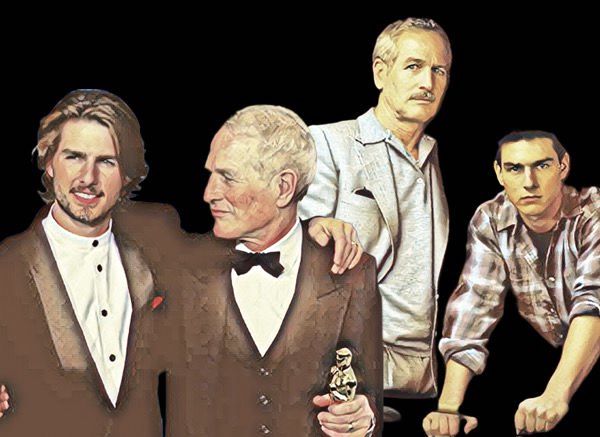
Then came Magnolia. And perhaps that was the most unquestionable opportunity of his career up to that point. Paul Thomas Anderson pulled Cruise away from the comfortable territory of the charismatic hero and gave him Frank T.J. Mackey, a man who was aggressive, vulgar, wounded, profoundly unpleasant and, gradually, devastatingly vulnerable. It was exactly the kind of role that usually puts an end to the lazy assumption that stardom and serious acting are somehow incompatible. Cruise was nominated in supporting, seemed finally to have found his moment, but Michael Caine won for The Cider House Rules. Once again, nothing.
What is interesting is that something appears to have changed after that. Eyes Wide Shut, with Stanley Kubrick, and Vanilla Sky, with Cameron Crowe, still clearly belong to the period in which Cruise seemed interested in testing his own persona, taking risks and working with filmmakers who could push him somewhere different as an actor. After that, however, the axis of his career shifted. Not necessarily toward smaller or less ambitious films- quite the opposite- but toward high-quality commercial success, toward preserving his status as a star and, increasingly, toward building a legacy that is almost unique in Hollywood.
Even then, there are important exceptions. Michael Mann’s Collateral remains one of them. Cruise did something he rarely did: he played the villain, stripped away much of his usual charisma and created a killer who was cold, methodical and frightening. To this day, many people argue that the performance deserved an Oscar nomination, and some would even argue that it deserved the win. The Academy, however, looked elsewhere in the same film: Jamie Foxx was nominated in supporting for Collateral in the same year he won Best Actor for Ray. For Cruise, once again, recognition came very close.
After that, he seems to have accepted — or chosen — a different definition of greatness. Instead of chasing the role that would prove he was a “serious actor,” he began building the idea that he would be the last great movie star. Mission: Impossible, Edge of Tomorrow, Oblivion, Top Gun: Maverick: the conversation stopped being only about acting and became one about scale, spectacle, physical commitment, protecting the theatrical experience and, at times, keeping alive a way of making movies that Hollywood itself seemed ready to abandon. Cruise began selling not only characters, but the very idea of movies on the big screen. The Oscar became almost secondary.
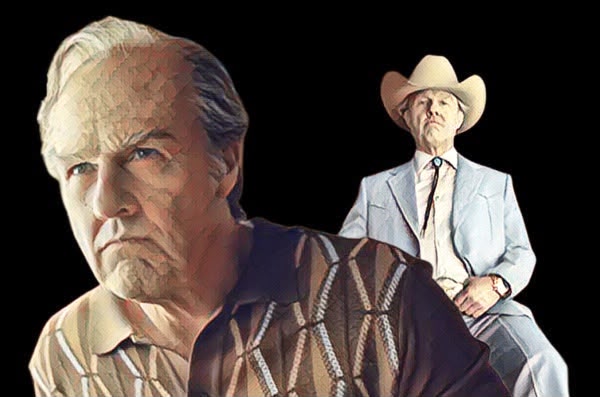
That is exactly why Digger is so interesting. Cruise is not a young actor trying to prove that he belongs in the club. He is not even a forgotten veteran looking for a comeback. He has already become bigger than the absence of a competitive Oscar. His career no longer needs the statuette to validate it. And perhaps that is precisely why, now, as he becomes so explicitly associated with an acting campaign again, the question becomes more interesting: what happens when someone who spent years looking as though he no longer needed the Oscar begins to show that perhaps he still wants it?
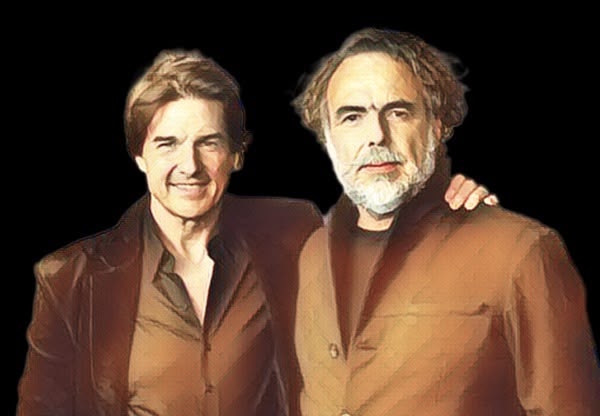
Even the honorary Oscar he received in 2025 takes on a different meaning in retrospect. Cruise chose Alejandro González Iñárritu, the director of Digger, to honor him at the ceremony, even though the film had not yet been released. Traditionally, those tributes tend to involve someone deeply connected to the recipient’s career. By choosing the director of his next film, Cruise unintentionally created the impression that the night might also have functioned as the first act of a campaign that would not officially begin until months later.
If Cruise spent much of his career learning not to display anxiety about the Oscar, Timothée Chalamet is currently dealing with almost the opposite problem. He reached very young the place where Hollywood stops asking whether someone will win and starts asking when. His nomination for Call Me by Your Name came at the very beginning of his career, followed by prestige films, major directors, commercial successes and an extraordinarily rapid construction of a generational image. Chalamet does not hide the fact that he is ambitious, nor should he. The problem is that the Marty Supreme awards season turned that ambition into part of the narrative.
The campaign was big, highly visible and, at times, deliberately attention-grabbing. Chalamet appeared on top of the Sphere in Las Vegas, piled up public appearances, went viral over ballet and opera missteps, and spoke openly about wanting to be one of the greats. None of this should be particularly strange in an industry built on desire and competition. But there is an unwritten rule: you are allowed to want a place in history, you are just not supposed to say it too loudly. Little by little, Chalamet’s enthusiasm began to be read by some as overconfidence, and the campaign started generating the one question no contender wants to hear: is he promoting the film, or promoting his own desire to win?
He ultimately lost to Michael B. Jordan for Sinners, and that makes his case even more interesting because Chalamet will probably continue arriving at awards season for many years. The risk now is carrying too early the narrative Leonardo DiCaprio knew so well: that of the great actor who “needs” an Oscar. And the larger that story becomes, the less any single performance can be judged on its own. Every new film starts being treated as “the next attempt.”
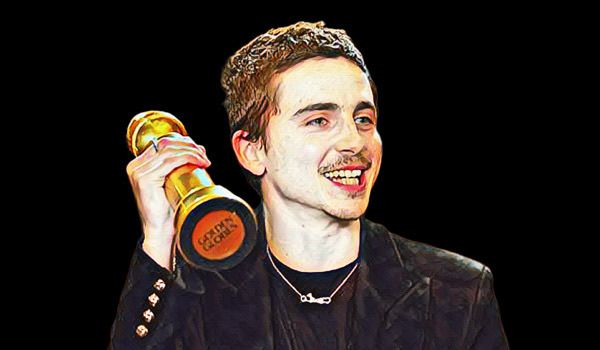

Bradley Cooper lived through an even more explicit version of this phenomenon with Maestro. As cowriter, director and star, he spent years on the project, studied conducting, physically prepared for the role and turned Leonard Bernstein into an evidently obsessive undertaking. All of this should have worked in his favor. The problem is that, during awards season, the story of his effort became so large that it began to swallow the film itself. The more people talked about the years of preparation, the famous orchestra sequence, the emotional interviews and his desire to do justice to the character, the more another interpretation emerged: that Cooper desperately wanted that Oscar. The line that “nobody wants an Oscar as much as Bradley Cooper” came to summarize the campaign. Perhaps unfairly, ambition stopped looking like a virtue and became a source of mockery.
Social media has made this mechanism even more ruthless. In the past, an overaggressive campaign might have been discussed behind the scenes or among awards journalists. Today, any sentence, gesture or appearance can become a clip, a meme and evidence of supposed desperation for recognition. The contender has to seem available, likable and interested, but never anxious. They have to campaign, but cannot look calculating. They have to talk about the work, but cannot seem to be thinking about the trophy. In other words, they have to spend months asking for votes without ever appearing to ask for a single vote.
Leonardo DiCaprio may have taken this situation to its most absurd extreme. For years, his lack of an Oscar practically became its own genre of meme. After What’s Eating Gilbert Grape, The Aviator, Blood Diamond and so many other performances, every awards season brought the same question back: is this finally the year? The obsession grew to the point where the film almost stopped mattering; what mattered was that DiCaprio still had not won. The internet turned his wait into a recurring joke, with endless images, GIFs and jokes about what exactly he would have to do to finally receive the statuette.
In the end, he practically had to be attacked by a bear.
Of course, the famous attack in The Revenant is part of the fiction, and much of the physical hardship associated with the production became perfect fuel for the campaign narrative. But the irony is impossible to ignore. After years of complex characters, major directors and nominations, DiCaprio finally won in 2016 for a film whose campaign also emphasized physical endurance, extreme cold, mud, snow, survival and suffering. The joke seemed ready-made: apparently, acting was not enough to get Leonardo DiCaprio an Oscar; he practically had to die on screen.
When he finally won, the feeling was less surprise than the settlement of a debt. Hollywood was not only rewarding Hugh Glass. It was ending a story that had gone on for too long. And, curiously, once it was over, everything changed. DiCaprio still campaigns when he needs to, attends events, takes part in Q&As and promotes his films, but the anxiety is gone. He is already in the club. He can joke, become a meme, disappear for months and reappear whenever he wants because there is no longer that public urgency surrounding his validation. His ambition itself looks lighter because it no longer has anything to prove.

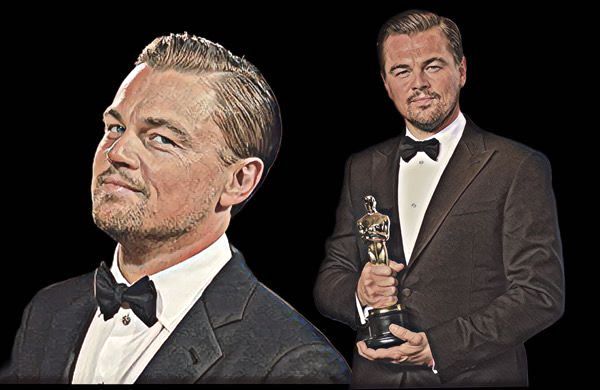
Martin Scorsese is an even more absurd case. By the time he won Best Director for The Departed in 2007, there was no serious argument left to be made about his importance to cinema. He was the director of Taxi Driver, Raging Bull, Goodfellas, The Last Temptation of Christ, Gangs of New York and The Aviator. The Academy’s failure to reward him had become almost embarrassing. That is why, when Steven Spielberg, Francis Ford Coppola and George Lucas walked onto the stage to present the statuette, the moment carried a weight that went far beyond that particular awards season. It felt as though Hollywood were finally acknowledging a historical debt.
Spielberg also knows this complicated relationship between prestige, popularity and the Oscars very well. For years, he was the most famous director on the planet, responsible for some of the biggest commercial successes in film history, yet his enormous popular appeal seemed to work against him. There was a kind of silent prejudice against the filmmaker who knew too well how to move huge audiences and sell too many tickets. It was with Schindler’s List, a brutal, historical and unquestionably “serious” work, that the Academy finally gave him the directing Oscar. As though the man behind Jaws, E.T. and Indiana Jones first needed to prove that he also knew how to suffer artistically.
And that may be the most interesting point in this entire story. The Academy loves to reward ambition after ambition has already become legacy. Once the narrative becomes “after everything he has done, it is his time,” victory turns almost into a collective celebration. The discomfort appears when we can actually see ambition happening in real time. When an actor makes it obvious that they want a place in history, desire begins to be interpreted as arrogance, desperation or calculation.
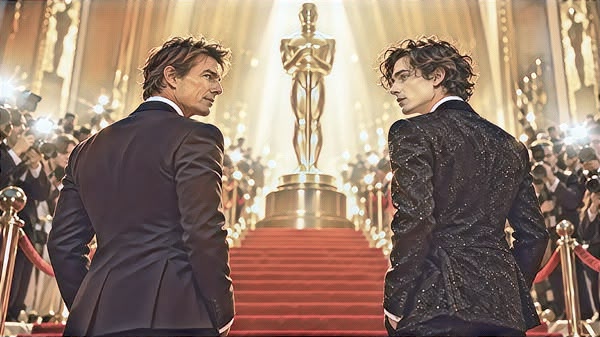
Tom Cruise is particularly fascinating because he has already moved through almost every version of this story. He was the young star who sought out major directors and dramatic roles. He was the actor who watched colleagues win Oscars around him. He was the nominee who lost when he seemed to have reached his best chance. Then he became the man who apparently decided that his career would be measured by another standard and built a superstar legacy that very few have been able to sustain. And now he returns to the starting point with one fundamental difference: this time, he no longer needs to prove that he is great.
None of this, of course, means that he is doomed to lose. The Oscars have rewarded brilliant performances in divisive films, box-office disappointments and movies that barely interested the wider public. Acting races have their own logic, and Cruise remains one of the biggest living movie stars. But his case, like those of Chalamet, Cooper and DiCaprio, reveals an unwritten rule of Hollywood that remains fascinating: everyone wants the Oscar, but nobody is supposed to look as if they want it too much.
Perhaps that is the real trick of awards season. Not convincing voters that you deserve to win, but convincing them that you would very much like to win without ever having to admit it.
Descubra mais sobre
Assine para receber nossas notícias mais recentes por e-mail.

