
There are images that seem to have been born iconic. Audrey Hepburn stepping out of a taxi onto an almost empty Fifth Avenue in the early morning, dressed in black, covered in pearls, holding a coffee and something to eat while looking into the Tiffany window is one of them. On October 5, 1961, exactly 65 years ago, Breakfast at Tiffany’s opened in American theaters and, without anyone being able to predict the full dimension of what they were creating, turned that sequence into one of the most recognizable in film history. More than that, it fused Audrey, Holly Golightly, Givenchy, “Moon River,” New York, and Tiffany itself into a fantasy we are still reproducing six decades later.
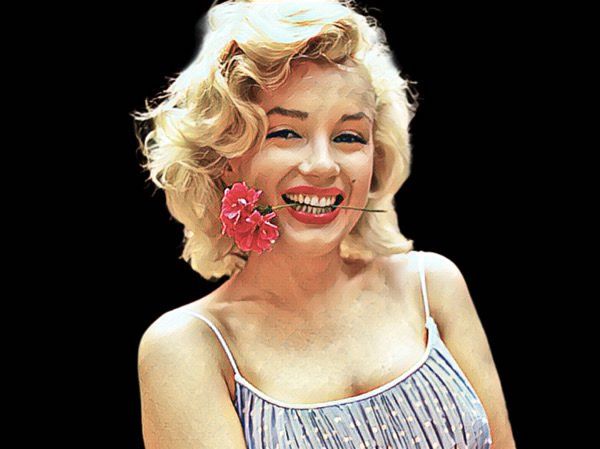
Perhaps that is why it is so entertaining to remember that almost nothing about that combination seemed obvious while the film was being prepared. To begin with, Truman Capote did not want Audrey Hepburn. The novella Breakfast at Tiffany’s, published in 1958, was darker, more sexually ambiguous and far less romantic than the film Blake Edwards would make a few years later. Holly Golightly was not exactly the delicate creature Audrey immortalized either. Capote envisioned Marilyn Monroe in the role and argued for her casting with conviction. To him, Marilyn better understood the mix of vulnerability, sexuality, abandonment and self-preservation he had put into the character.
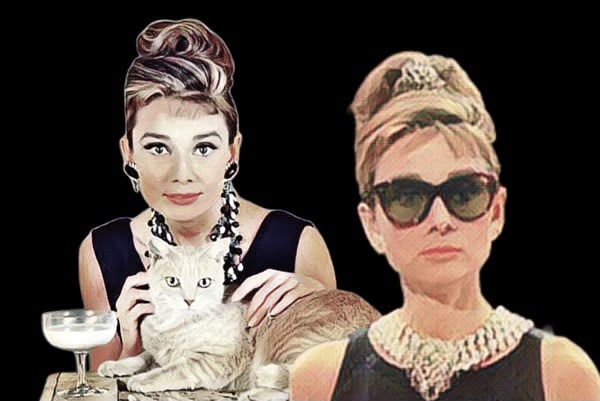
George Axelrod, who wrote the screenplay, even worked with Marilyn in mind, but the actress ultimately turned the project down after being advised that playing a woman who, to a considerable extent, survived on men’s money and attention could damage her image. Shirley MacLaine and Kim Novak were also considered. When Paramount finally chose Audrey, Capote made no secret of his irritation. As far as he was concerned, they had gotten the central character wrong.
The curious part is that Audrey herself was not sure she should make the film either. At 31 during filming — Holly is 19 in the novella — she considered herself almost the opposite of this extroverted, sexually liberated woman improvising her way through New York nightlife and dreaming of a wealthy marriage as a form of security. Audrey carried an almost aristocratic image of elegance and discretion; Holly essentially lived by improvisation. And yet it was precisely in that incompatibility that something new was born. Audrey did not become Capote’s Holly. Holly became, to a great extent, Audrey Hepburn.
That may be why the character in the film is so difficult to separate from the actress. Audrey does not erase Holly’s darker side, but she reorganizes it. Her character can be at a crowded party, surrounded by men, champagne and extraordinary dresses, and still look profoundly lonely. She can talk nonstop while clearly hiding something. She can appear completely self-assured while desperately trying to build a life in which she will never have to return to being the poor girl she left behind. When Doc Golightly appears and reveals her past, the façade begins to crack. The woman who seemed to have been made for New York had, in fact, invented herself.
If Audrey came into the film insecure because she felt she was not Holly, George Peppard seems to have arrived with the opposite problem: he had very clear ideas about who Paul Varjak should be. Perhaps too clear. The two worked in very different ways. Audrey was essentially intuitive, while Peppard, trained in the Method tradition, liked to break down every scene, analyze motivations, intentions and movements. To her, that process could feel excessively intellectualized. To Blake Edwards, it quickly became a much larger problem.
Peppard questioned blocking, argued over decisions and insisted on playing scenes the way he believed they should be played. His relationship with Edwards deteriorated throughout filming, and there are accounts that one argument came close to becoming physical. It is almost impossible to imagine that atmosphere when looking at the finished film, so controlled, elegant and seemingly effortless, but behind the scenes things were far from smooth.
Patricia Neal felt the consequences of that conflict even more directly. She plays 2E, the wealthy woman who supports Paul, and originally her character held even more power in the relationship. Peppard disliked the idea of Paul appearing so dominated by a woman and pushed to reduce some of 2E’s dialogue and authority. Neal would later recall that he seemed concerned with protecting a more conventionally masculine image of the character.
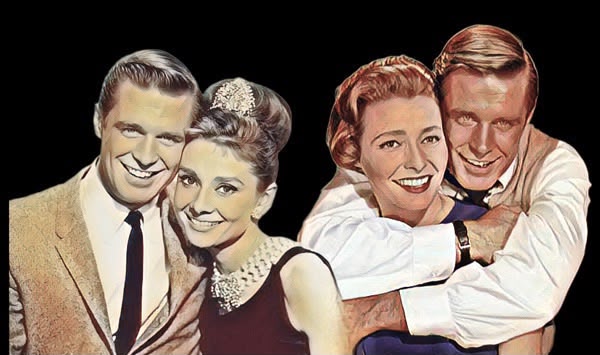
And that is far more than a piece of set gossip, because Paul and Holly were designed as mirrors of each other. Holly accepts money from men and uses charm, companionship and appearance to survive; Paul accepts money from an older woman and also lives, in a sense, off a version of himself offered to someone else. Both try to convince the other — and perhaps themselves — that this does not define them. By weakening Paul’s relationship with 2E, the film loses some of that symmetry, precisely in a screenplay that had already softened much of the ambiguity in Capote’s work.
Perhaps that is also why Paul is the less fascinating part of Breakfast at Tiffany’s. Peppard is good, especially when he has to remain restrained, but the film belongs so completely to Audrey that any attempt to balance those forces feels futile. She does not merely dominate the scenes. She dominates the memory that remains of them.
And Peppard was not even the first choice. Steve McQueen was approached to play Paul but was tied up by contractual commitments. Jack Lemmon and Robert Wagner were also among the names considered before the studio settled on Peppard, then regarded as a rising star. It is one of those decisions that feels inevitable today only because we already know how everything turned out.
The director changed along the way as well. John Frankenheimer worked on the project for months with Axelrod before being replaced during pre-production. Audrey and her representatives wanted someone with greater stature to guide her through a role so far removed from her established image, and Blake Edwards took over. He also supported the changes that transformed Capote’s text into a much more accessible and romantic story.
Those changes were enormous. The novella’s unnamed gay narrator became Paul Varjak, a heterosexual writer financially supported by an older woman. The sexual ambiguity was reduced, romance moved to the center of the story, and Hollywood gave Holly something Capote never had: a romantic ending. In the book, she leaves and disappears. In the film, we get the cat, the rain, the ring and the kiss. It is a radical transformation, perhaps even a betrayal of the original spirit, but it is also difficult to imagine Breakfast at Tiffany’s without that conclusion.
The result is a curious blend of romantic comedy, melancholy, sophistication and sadness that is not always remembered when the film is reduced to the image of Audrey standing outside Tiffany. Because Holly is always running away from something. She changes her name, invents versions of her own life, avoids putting down roots and does not even give the cat a name because she insists that neither of them belongs to anyone. The elegance is, to a large extent, armor.
And then there is “Moon River.” Henry Mancini composed the song specifically with Audrey and her limited vocal range in mind, which is precisely part of what makes the scene so beautiful. Holly does not sing like a great singer; she sings like someone sitting alone by a window with a guitar, and for a few minutes, not having to perform for anyone. Johnny Mercer wrote the lyrics, and together they created one of the most famous songs in cinema.
It almost did not remain in the film.

After a test screening, there were calls for “Moon River” to be removed. Today it is difficult to imagine a more absurd decision. The song not only stayed, it came to express part of Holly’s melancholy in a way no line of dialogue ever could. It won the Academy Award for Best Original Song, while Mancini also won for the score. Audrey, meanwhile, received another Oscar nomination for Best Actress.
Tiffany was not simply a beautiful backdrop either. The film was the first allowed to shoot inside the famous Fifth Avenue store, something that seems almost inevitable today given the absolute association between the two brands, but at the time required a considerable operation. The opening sequence began filming in New York in October 1960, and accounts of that morning are almost as contradictory as they are delightful. There are versions in which crowd control was a nightmare, Audrey hated the type of pastry she had to eat, and a crew member was nearly electrocuted. Others remember that an unexpected lull in traffic made filming easier.
Either way, those few minutes ultimately did more for Tiffany’s image than entire advertising campaigns could have dreamed of doing. The store stopped being merely a luxury jeweler and, within Holly’s imagination, became a place where nothing bad could happen. It is not really about diamonds. It is about safety.
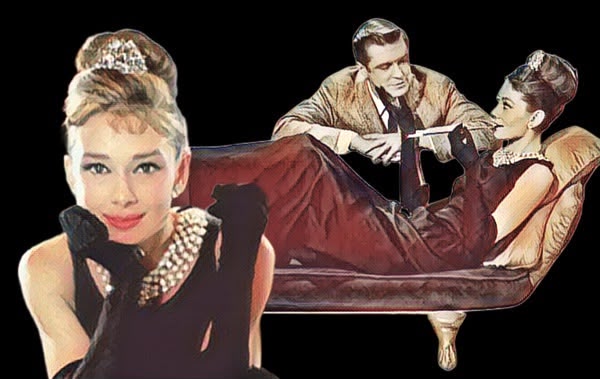
Naturally, fashion became another character. Hubert de Givenchy, who already had a very close creative and personal relationship with Audrey, designed the principal costumes she wore, while Edith Head supervised the wardrobe. The black dress from the opening became perhaps the most famous little black dress in cinema history. The oversized sunglasses, high chignon, gloves and pearls helped create a Holly so visually powerful that, in many ways, her iconography nearly swallowed the character herself.
That may be one of the paradoxes of Breakfast at Tiffany’s. Holly is often remembered as a synonym for elegance, when the character is actually profoundly unstable. The woman who became a poster, a costume, a fashion editorial and inspiration for shop windows is constantly on the edge of financial, romantic or emotional collapse. Luxury is less an identity than a projection.
And not everything deserves to be celebrated without reservations. If Breakfast at Tiffany’s remains beautiful at 65, there is one element that has aged indefensibly: Mickey Rooney as Mr. Yunioshi. Rooney, a white actor, was given makeup, a dental prosthetic and a stereotyped characterization to play a Japanese man, turned by Edwards into comic relief. It is impossible to watch those scenes today without recognizing the racism of the caricature.
What makes it even more uncomfortable is knowing there was resistance even during production. George Axelrod was uneasy with the prominence given to the character and tried to reduce his presence. Audrey reportedly was even willing to reshoot scenes to make cuts easier. Blake Edwards insisted. Years later, Edwards himself admitted he wished he could go back and cast someone else, and producer Richard Shepherd also expressed regret. It is a stain that does not disappear simply because the rest of the film remains charming. If anything, the contrast makes it even more visible.
Even so, few choices that initially seemed wrong turned out as successfully as Audrey Hepburn. Capote continued to believe she was not his Holly Golightly, and he was probably right. She was not. The film altered his character, simplified some of her ambiguities and inserted a love story where originally there was none. But Audrey created a third Holly, different from Capote’s character and also different from the conventional figure Hollywood might otherwise have produced.
There is a very particular vulnerability hidden beneath all that elegance, and that is what keeps the film from becoming merely a beautiful display window.
Perhaps that is exactly why it is so interesting that, 65 years later, Hollywood wants to return not to Holly Golightly’s story, but to the story of Audrey Hepburn trying to become her. Lily Collins will play Audrey in a new film about the making of Breakfast at Tiffany’s, based on Sam Wasson’s Fifth Avenue, 5 A.M.: Audrey Hepburn, Breakfast at Tiffany’s, and the Dawn of the Modern Woman.
It is not a remake, then. And that makes all the difference. Lily Collins will not be a new Holly. She will be Audrey facing Holly.
Alena Smith, creator of Dickinson, is writing the screenplay, while Collins is also among the producers. The visual association is inevitable. Lily has the large eyes, strong eyebrows, a face that easily echoes Audrey’s image and an elegance that Emily in Paris, incidentally, has already explored many times. But perhaps that is exactly where the danger lies.
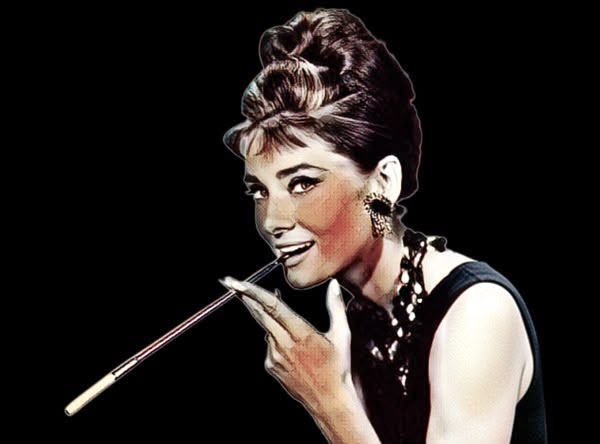
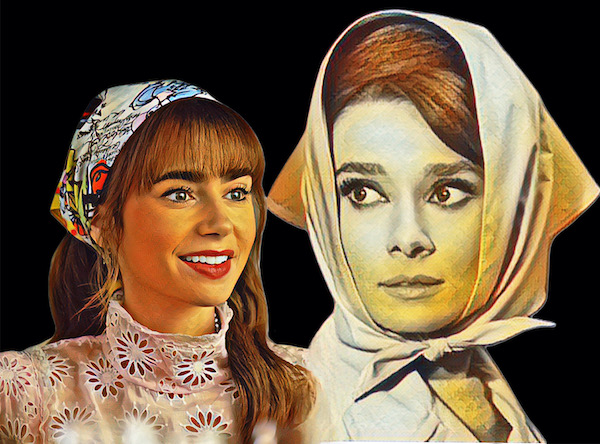
Playing Audrey Hepburn cannot mean simply putting on a chignon, dressing in black and reproducing the posture of one of the most photographed women of the 20th century. Lily has already said she has admired Audrey for many years and has been working on this project for nearly a decade. If the film finally reaches the screen, the real challenge will be to find the woman behind the image we know so well.
And there is more than enough material for it. Marilyn Monroe turning Holly down. Truman Capote furious. Audrey insecure. A director replaced. A leading man at war with Blake Edwards. Patricia Neal watching her character lose ground. A screenplay radically transforming the book. “Moon River” nearly being discarded. The opening filmed on an unexpectedly empty Fifth Avenue. Givenchy helping create an eternal image. And an actress ending the process completely fused with a character that, at the beginning, almost no one thought she should play.
It is not exactly the story of how a classic was carefully planned.
It is almost the opposite.
Sixty-five years later, we still see Audrey standing in front of that window and feel as though no one else could possibly have been there. That may be the greatest trick of Breakfast at Tiffany’s. The image only feels inevitable because we already know how the story ended. Behind the scenes, almost everything could have been different.
Descubra mais sobre
Assine para receber nossas notícias mais recentes por e-mail.

