
When Lanterns was first announced, plenty of reasons existed to be skeptical. Green Lantern was still carrying the ghost of a film adaptation almost no one seemed interested in defending; the DC universe was being reorganized yet again; and, on top of that, the series was arriving without fully embracing what one might expect from a story about intergalactic police officers capable of creating almost anything through sheer willpower. No immediate plunge into space, no overdose of mythology, and certainly no urgency to prove, scene after scene, that this was a superhero production. Curiously, that is precisely what made Lanterns work.
Across eight episodes, the series preferred to behave like a dark crime drama set in the American heartland. Hal Jordan and John Stewart might wear rings capable of challenging the laws of physics, but they spent much of their time questioning people, following clues, mistrusting one another and trying to understand a death. The strategy could easily have frustrated viewers expecting weekly cosmic battles. Instead, it created something increasingly rare in comic-book adaptations: personality.
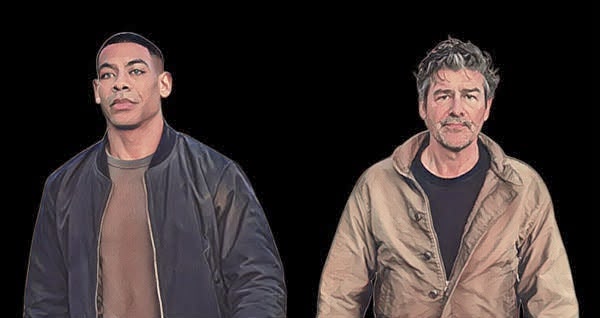
The numbers suggest audiences bought into the idea. The premiere reached 9.3 million global viewers in its first three days and placed Lanterns among HBO Max’s five biggest series debuts. By the third episode, that figure had already climbed to 10 million over the same period. By the time the finale approached, the season was averaging more than 12 million viewers per episode in the United States alone and close to 19 million when international audiences were included. More important than any isolated number, perhaps, is the trajectory: this was not a huge premiere followed by abandonment. Audiences stayed, and new viewers kept arriving.
There is a fairly simple reason for that. Lanterns never depended solely on curiosity surrounding DC. Kyle Chandler and Aaron Pierre turned Hal and John into characters who would have worked even without the rings. And that may be the season’s greatest victory.
Hal Jordan entered the story as a legend who had already moved beyond his own peak. Not the young hero discovering power, but someone who knows perfectly well what power costs. Chandler found a character who is tired, ironic, frequently irritating and, little by little, profoundly sad. It is almost the reverse of the usual superhero journey: instead of watching the birth of a legend, we are watching the man left behind after the legend has already been built.
John Stewart was standing at the opposite end of that journey. Aaron Pierre had the harder task because he had to build a hero who didn’t yet want to become one. His resistance to the ring was never simply a plot convenience; it was tied to childhood, to his mother’s expectations, to the idea of destiny and to the constant fear of becoming whatever other people had decided he was supposed to be. That is why the finale works so well when Lanterns finally stops asking who John is supposed to replace and begins showing us who he chooses to become. And that is precisely where the final episode, “Dirt and Stars,” finds the best synthesis of the season.
The answer to the question driving the investigation is more painful than spectacular. Kerry killed Hal. Not Noah, as everything had led us to suspect, but the very woman Hal loved. When he discovered that Noah was a Manhunter and tried to protect mother and son, Kerry panicked. She fired just as Hal was telling her he loved her. It is a very small death for such a large character — and perhaps that is exactly why it works. There is no cosmic battle, no sacrifice before millions, no heroic farewell. Hal Jordan dies because of fear, love and a split-second impulse.
But Lanterns does not end the discussion there. Noah really is a Manhunter, a product of the technology surrounding Zoe, and he could easily confirm everything the Guardians say about his species. The programming exists. So does the possibility of violence. Noah knows that well enough to ask John to kill him before he eventually becomes something he can no longer control. John refuses.
It is probably the most important decision of the entire season because, suddenly, a series about willpower places something much more complicated at its center: are we condemned by what we inherit? John’s answer is no.
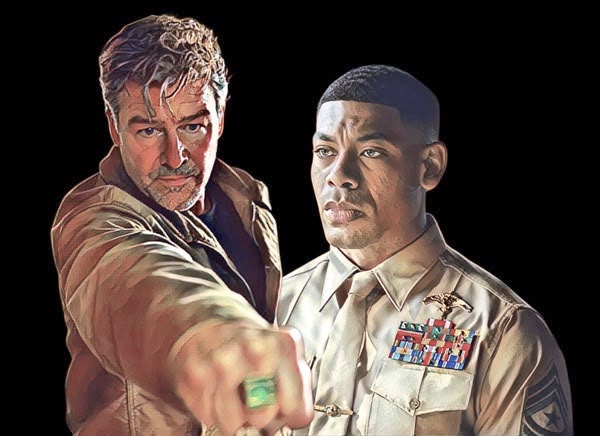
Noah gave up the ring. He protected his mother. He confessed to a murder he did not commit to save her. He is afraid of what he might become. For John, all of that means there is something beyond programming. Nature and nurture come directly into conflict, and John chooses to believe that someone can decide not to repeat what they were created or prepared to become.
It is impossible not to notice how this reasoning circles back to John himself. Since childhood, he too had been prepared for something. His mother tried to eliminate his fear because she believed her son’s destiny was to assume a greater power. John spent much of the season resisting precisely because he did not want his story to have been written before he had the chance to choose it. That is why fear becomes so important in the finale.
Traditionally, the Green Lanterns exist through willpower while Sinestro represents the opposite path, yellow power fueled by fear. Lanterns refuse that comfortable division. John needs to use a lantern created from that fear and realizes that courage does not mean its absence. His new oath makes that explicit: fear does not have to disappear for will to exist.
In practice, John does with fear what he has spent the entire season trying to do with himself: he integrates rather than denies it.
There is something almost psychoanalytic in that conclusion. What we try to expel always finds a way to return. Fear does not disappear because someone orders it to disappear; it can be recognized, processed, and used without necessarily taking control. John does not become a Green Lantern because he finally stops being afraid. He becomes one because he no longer needs to pretend he is not. And then comes Hal’s farewell.
The hologram asks what his final words were. John knows. “I love you.” Hal answers the young man who now carries what he left behind, and disappears. Kyle Chandler manages to make the scene surprisingly intimate for a series about men who fly using alien rings. After an entire season discussing succession, legacy, and replacement, there is no formal passing of the torch. There is simply a goodbye.
John then makes the decision that finally defines the character. He has no intention of obeying the Guardians, does not want to simply become part of a structure created by others and tells Guy Gardner that he will stay on Earth. The others can take care of the stars; he will take the dirt. And, for the first time, he flies.
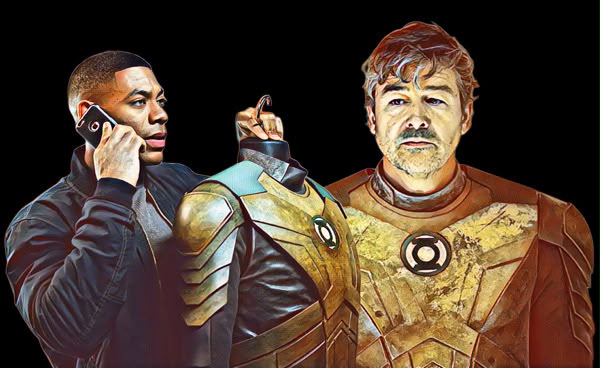
It is a simple image, but it closes the season perfectly. John spent eight episodes trying to escape a destiny that seemed to have been decided for him since childhood. When he finally accepts becoming a Green Lantern, he can only do so after changing the rules of what that means.
Perhaps that also explains the success of Lanterns. At a time when superhero fatigue can no longer be ignored, HBO did not try to convince audiences that they needed yet another superhero show. It made a crime drama, placed two excellent actors at its center, built a mystery, and allowed the mythology to enter from the edges. By the time the rings finally mattered, we were already invested in the men wearing them. And that made all the difference.
Descubra mais sobre
Assine para receber nossas notícias mais recentes por e-mail.

