
The film version of Romeo and Juliet, released on October 6, 1966, was not simply the cinematic consecration of a historic Royal Ballet production. It was also a far more ambitious artistic and cultural gesture: an attempt to prove that the West could answer, in its own way, the Soviet monument the Bolshoi had created a little more than a decade earlier. When Paul Czinner brought Kenneth MacMillan’s choreography to the screen, he was not merely preserving a stage success. He was recording a work already surrounded by tension, rivalries, egos and astonishment, while placing it inside a larger conversation — almost a symbolic contest — between two different ways of understanding ballet, cinema and cultural prestige at the height of the Cold War.
By then, the Bolshoi’s Romeo and Juliet with Galina Ulanova was already legendary. Filmed in 1954 and released the following year, it stood as a model of Soviet grandeur: a cinematic version conceived on an epic scale, with open spaces, the ambition of a superproduction, and that typically Soviet conviction that ballet was a national treasure that should also be projected through film. It was not simply a matter of recording a performance. The ballet was reshaped for the camera, expanded into locations and large-scale sets, and treated as a genuine cinematic spectacle.
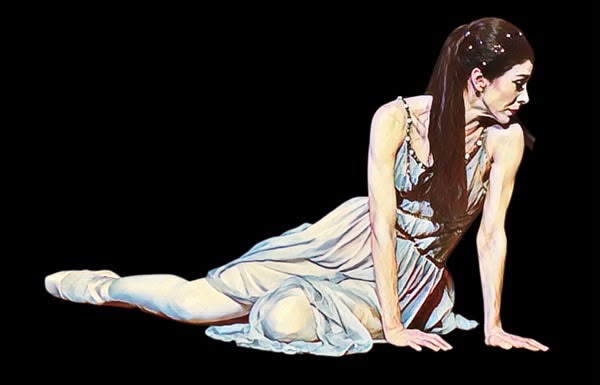
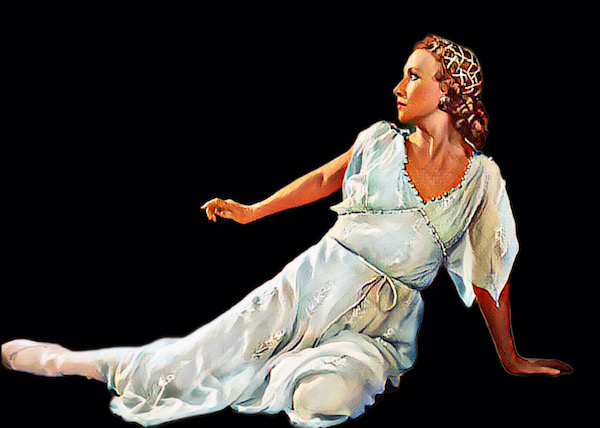
Britain did not have the same tradition. In the West, filming a complete ballet still encountered economic, union and even artistic resistance. There was fear that cinema might empty theatres, complicated contracts involving musicians, technicians and dancers, and, in certain circles, the belief that film and television were incapable of reproducing the experience of so-called high culture. The Soviet Union, by contrast, financed such productions as cultural policy. The difference between the two systems could hardly have been clearer.
That is precisely what makes the 1966 film so fascinating. Paul Czinner does not try to copy the Soviet model. He does not attempt to compete on the terrain of epic scale, real locations or the complete transformation of ballet into conventional narrative cinema. He does almost the opposite. Instead of tearing the work away from the stage, he tries to preserve the theatrical experience and creates a hybrid language: unmistakably cinema, but cinema deeply committed to the choreographic integrity of MacMillan’s production.
That technical choice is one of the keys to the film’s historical importance. Czinner uses multiple cameras to capture the work without destroying the physical continuity of the dance, avoiding a cinematic grammar that might fragment the bodies and choreographic phrases too aggressively. In ballet, this matters enormously. A close-up can intensify emotion, but it can also erase what the dance itself is saying: the position of the body, the spatial relationship between characters, the quality of a lift, a run, a fall, a suspension.
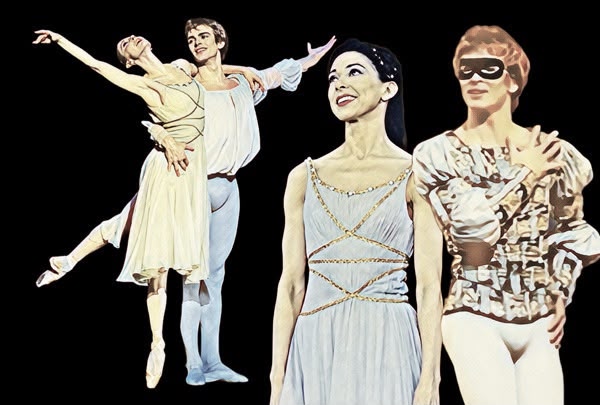
That is why the film so often prefers wide and medium shots. The camera does not invade the movement; it follows it. It was a decision that displeased some film critics at the time, accustomed to expecting more cuts, more close-ups, more manipulation of the image. But sixty years later, that apparent restraint is one of the film’s most precious qualities. We can actually watch the choreography, not merely the faces of the people dancing it.
It is true that this choice came at a cost. Some scenes were considered too dark, especially the nighttime passages such as the famous balcony pas de deux. There is a dimness and density of shadow that can feel strange to viewers accustomed to the much cleaner, brighter images of modern recordings. But that darkness also serves the production’s design. Kenneth MacMillan and designer Nicholas Georgiadis never imagined Verona as a comfortable romantic backdrop. It is a heavy, oppressive, hierarchical, almost claustrophobic Verona.
The sets, inspired by the architecture of the Italian Quattrocento, seem almost too large for the young protagonists. Walls, columns, staircases and structures frame and diminish them. Romeo and Juliet appear small in relation to a society that dictates whom they should love, how they should behave and to which family they must belong. The tragedy does not happen simply because two young people fall in love at the wrong time. It happens because the structures around them are enormous.
Colour plays a decisive role in that construction. Nicholas Georgiadis did not use costumes merely to create historical beauty, but as a dramatic instrument. The Capulets appear in deep, warm tones, with reds, burgundies, ochres, golds and heavy fabrics. Other groups appear in cooler and darker shades. The audience understands families, alliances and atmospheres almost instinctively.
Everything has weight. The velvets, the brocades, the silks, the metal ornaments. Ballet loses that ethereal lightness we so often associate automatically with classical dance and acquires matter. There is sweat, volume, heat, gravity. It is a choice that speaks directly to MacMillan’s own approach, because his choreography also rejects the idea of a merely beautiful Romeo and Juliet. He is interested in flesh, impulse, violence, sexuality, fear and despair.
And then there is the cast.
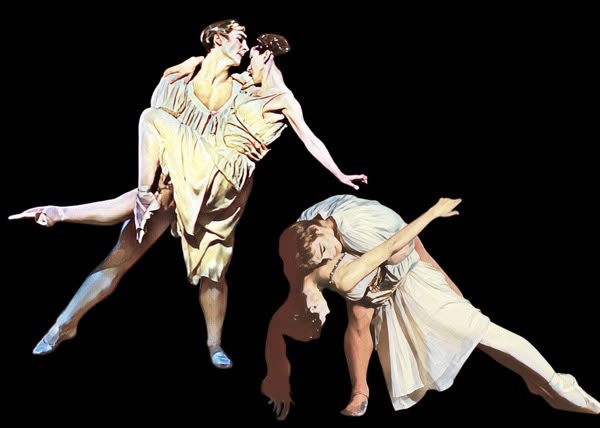
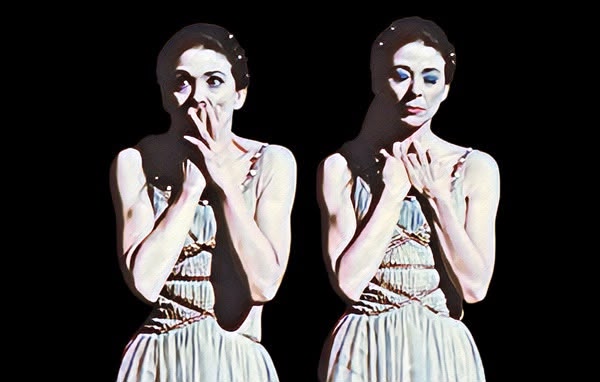
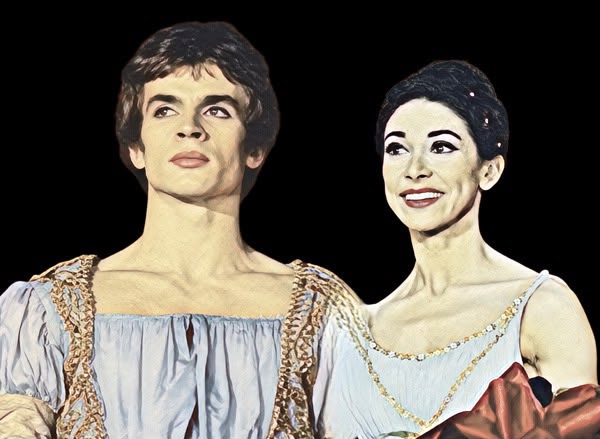
Margot Fonteyn and Rudolf Nureyev were, at that point, far more than stars. They had already become one of the most famous partnerships in the history of dance, surrounded by an aura that mixed technique, affection, mystery and public fascination. Cinema helped immortalise that chemistry, but the film reveals something far more interesting than simply two celebrities sharing a stage. It shows two opposite artistic natures that seem to complete one another perfectly.
Fonteyn was 46 when she first danced Juliet. Shakespeare’s character is 13 going on 14. On paper, the distance seems absurd, and it caused considerable concern behind the scenes. But the camera shows exactly why it worked. Fonteyn does not try to “look young” through caricature. She finds youth in gesture, reaction, curiosity, in the way Juliet discovers desire and, above all, in the character’s psychological transformation.
There is also a beautiful historical irony in this. Galina Ulanova was likewise 46 when she brought her Juliet to London audiences during the Bolshoi’s historic 1956 season. Fonteyn was among those watching and was profoundly impressed. A decade later, it was her turn to prove that a mature woman could be completely convincing as Shakespeare’s most famous teenager.
Yet the two Juliets are very different. Ulanova’s has a lyrical, poetic, almost supernatural quality. MacMillan’s Juliet, even when danced by Fonteyn, grows out of the personality he had originally developed with Lynn Seymour: she is more stubborn, more rebellious, more physical. Juliet stamps her foot, confronts, desires, chooses. She is not simply swept along by tragedy. Through her own decisions, she also helps set it in motion.
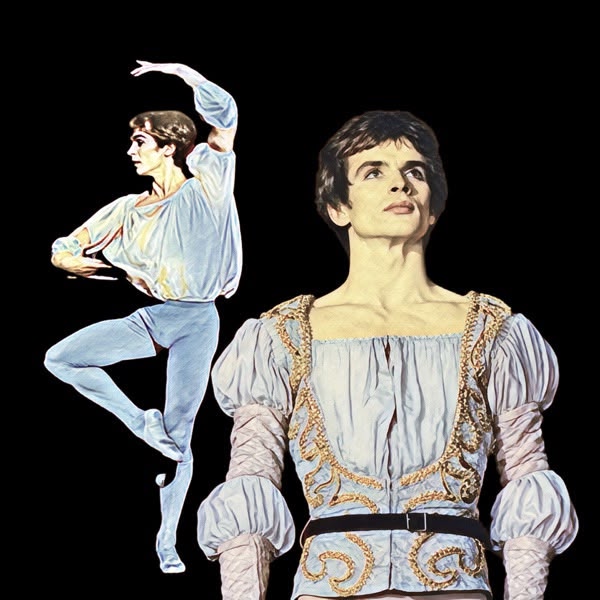
Nureyev, in contrast to Fonteyn’s refined restraint, arrives with electricity. His Romeo is impetuous, feverish, intense. There is an almost animal urgency in him, the feeling that the body thinks before reason has time to catch up. That difference between the two creates much of the chemistry running through the film. Fonteyn’s experience and precision meet Nureyev’s untamed energy.
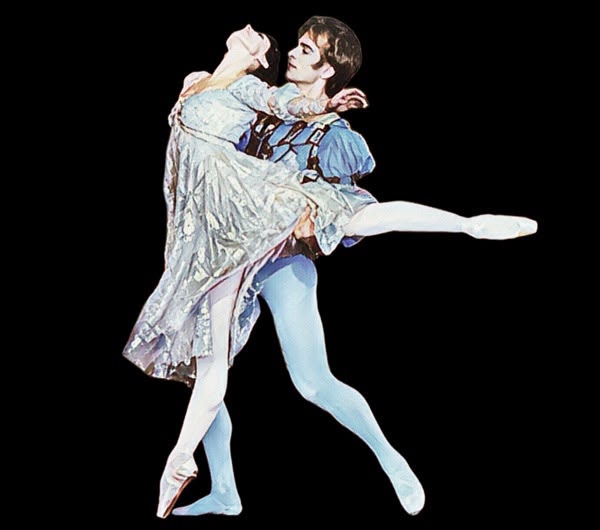
And there is something particularly beautiful in the way Czinner records that partnership. Because the camera does not fragment them excessively, we can see the physical trust between them. A ballerina who throws herself into a movement has to believe absolutely that she will be caught. A male dancer lifting her must know her centre of gravity almost instinctively. In this film, the love of Romeo and Juliet is also that bodily trust.
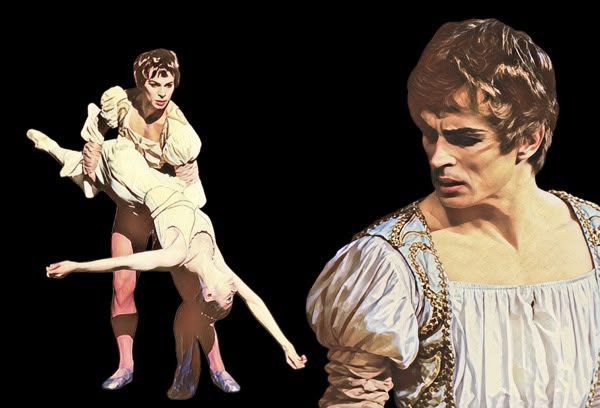
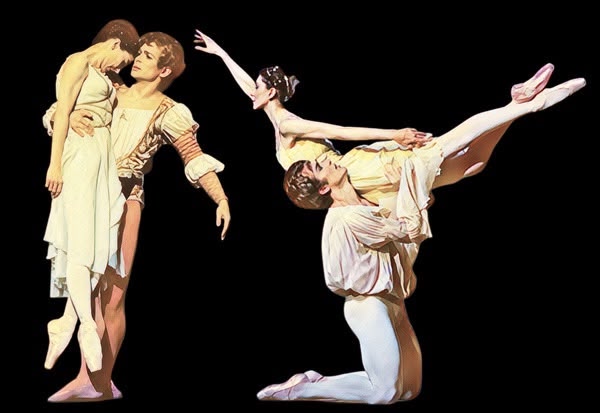
The major pas de deux makes this clear. Their encounter at the ball still carries hesitation and surprise. The balcony pas de deux explodes with impulse and movement. They run towards each other, pull away, return, launch themselves again. MacMillan turns passion into displacement. This is not a love that poses; it is a love that cannot stay still.
The bedroom pas de deux, after their wedding night and Tybalt’s death, destroys that earlier lightness. The movement becomes heavier, more desperate, more bound to the floor. Lifts that once suggested ecstasy begin to suggest weight and loss. Romeo carries Juliet in a way that already foreshadows the body he will carry in the crypt. This is one of MacMillan’s greatest gifts: movement never exists simply because it is beautiful. It is always saying something the story has not yet finished telling us.
But it would be unfair to treat the rest of the cast as mere framing for Fonteyn and Nureyev. Seen today, the film feels like a time capsule of an extraordinary Royal Ballet generation.
David Blair is a magnificent Mercutio: quick, witty, insolent and, when the moment comes, devastating. His death is almost a small tragedy inside the larger tragedy. Wounded by Tybalt, Mercutio tries to keep the joke going, disguises the seriousness of his injury and insists on remaining upright. For a few moments, his friends still seem to believe he is merely performing. Slowly, the body stops obeying him.
That is when the film changes temperature.
Until then, there is still youth, provocation, parties, street fights that seem like games that have become too dangerous. After Mercutio’s death, everything changes. Violence stops being play and acquires consequence. Blair manages to show that transition without turning the scene into melodrama. The irony disappears almost at the same moment as the strength leaves his legs.
Desmond Doyle, as Tybalt, is equally striking. There is rigidity, pride, and menace even before he draws his sword. His Tybalt seems to carry violence inside his body. He does not need to announce danger; his posture already does it. For Brazilian viewers, the performance has an added dimension because Doyle would later develop an important connection with dance in Rio de Janeiro, working as a ballet master and leaving his mark on the environment of the Theatro Municipal. Watching him here means rediscovering not only a historic Royal Ballet performer, but an artist who would later cross into the history of Brazilian dance as well.
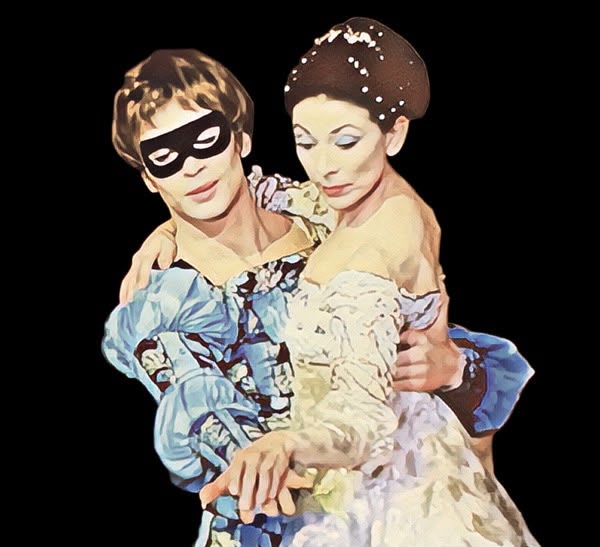
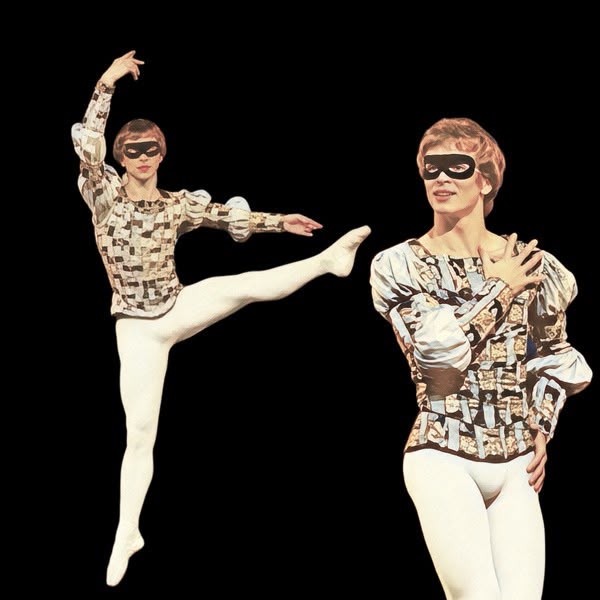
And then there is the young Anthony Dowell as Benvolio. He was barely in his twenties and already possessed the purity, elegance and musicality that would make him one of the great British dancers of his generation and, decades later, artistic director of the Royal Ballet itself. Dowell would also appear on the stage of the Theatro Municipal in Rio a few years later during the company’s international tours, creating another curious bridge between this 1966 document and the history of dance in Brazil.
Michael Somes, Julia Farron, Derek Rencher, Georgina Parkinson, Gerd Larsen, Ronald Hynd: once we start going through the credits, there is almost no such thing as a minor role. We are watching an entire company at an extraordinary moment in its history.
And then there is the story that does not appear on screen.
Kenneth MacMillan did not originally create Romeo and Juliet for Fonteyn and Nureyev. He created the ballet for Lynn Seymour and Christopher Gable. For months, the choreographer and dancers worked together, shaping movement around the personalities of the two performers. The stubborn, sensual, impulsive Juliet grew out of Seymour. The emotionally swept-away Romeo grew out of Gable.
When the production was ready, ballet politics entered the room.

Impresario Sol Hurok, responsible for the forthcoming American season, knew perfectly well the commercial value of the Fonteyn-Nureyev partnership and pressed for them to open the new production. His argument was simple: if the Royal Ballet wanted to turn the ballet into an international event, it needed the two biggest stars in dance in the leading roles.
The result was one of the most famous injustices in ballet history. Seymour and Gable lost a premiere that could have defined their careers. The decision caused deep resentment and marked MacMillan’s relationship with the company. And, ironically, it helped create something else: one of the most legendary nights in the history of the Royal Opera House.
At the 1965 premiere, Fonteyn and Nureyev were called back to the stage again and again. The famous count reached 43 curtain calls. That night established the production as a phenomenon before Paul Czinner’s cameras ever began transforming it into film.
Cinema did the rest.
There is a fundamental difference between this film and Ulanova’s Soviet version, and perhaps that is precisely what makes the two remain so fascinating. The Bolshoi film tries to expand ballet into cinema. The British film tries to bring cinema closer to ballet. One opens the work out into the external world; the other preserves the compression of the stage. One asserts the monumentality of a state art form; the other records a company, a choreography and its dancers in full creative combustion.
And there is also the unavoidable political irony of Rudolf Nureyev. The man playing Romeo in the great British answer to Soviet ballet had defected from the Soviet Union only five years earlier. There is no need to turn this into an official propaganda statement to recognise the symbolism. The dancer Moscow had lost was now one of the greatest cultural stars of the West, starring in a work that directly competed with one of Soviet ballet’s most prestigious calling cards.
The 1966 film did not erase Ulanova. Nor did it need to. The two films ultimately did something far more interesting: they preserved two extraordinary ways of thinking about the same work.
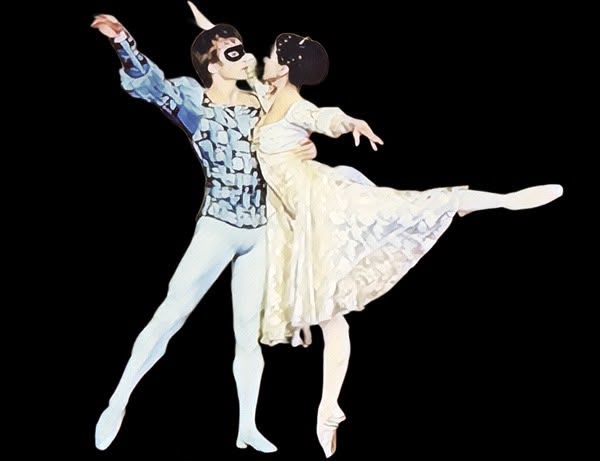
One grew out of a Soviet tradition that understood ballet and cinema as instruments of cultural grandeur. The other came from a British company reinventing dance drama, with MacMillan using the classical vocabulary to speak about desire, violence, youth and death in increasingly psychological terms.
Sixty years later, perhaps that is what remains most striking. Paul Czinner’s film is not merely a chance to watch Fonteyn and Nureyev at the moment when both already belonged to mythology. It is the chance to see MacMillan just as his language was changing dramatic ballet, Nicholas Georgiadis building a visual world that seems to crush its characters, David Blair turning Mercutio’s death into an event, Desmond Doyle creating a Tybalt who threatens before he ever attacks, and a young Anthony Dowell beginning the path that would turn him into another legend of the company.
Some films survive because they documented something important.
This one survives because what it documented still feels alive.
Descubra mais sobre
Assine para receber nossas notícias mais recentes por e-mail.

