
Ninety years ago, in 1936, the public received what appeared to be impossible access to Vaslav Nijinsky’s mind. The greatest dancer of his time had written for six weeks in 1919 while progressively losing contact with reality. His diaries allowed readers to follow, almost in real time, a great artist’s descent into psychosis. The problem is that this was not exactly Nijinsky’s diary. It was the Nijinsky his wife, Romola, had decided to give the world.
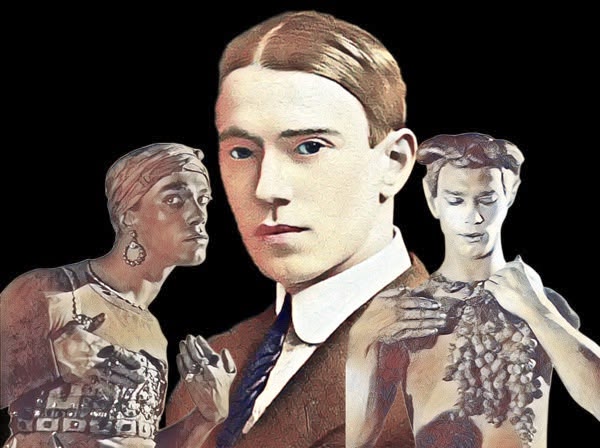
She eliminated nearly half of the original material, removed sexual references to Sergei Diaghilev, softened criticism directed at herself, and rearranged passages she considered inconvenient. In place of the contradictory, sexual, resentful, politically anguished, and often hostile man who emerged from the notebooks, Romola helped construct a more palatable figure: the pure, almost saintly genius whose brilliant mind had been destroyed by schizophrenia.
The complete version of the diaries would not be published until 1995. Until then, for nearly six decades, the world knew not only a censored text but an edited illness. Even so, however mutilated, the book was enormously important. Nijinsky was a global celebrity, and his diary became one of the first widely known documents to allow the public to observe psychosis from within, written not after recovery but as it was happening.
The publication also helped unite two ideas that the 20th century would endlessly repeat: genius and madness. From that moment on, practically everything about Nijinsky was reread through the lens of his diagnosis. His shyness, his sexuality, his relationship with Diaghilev, his difficulty communicating, his revolutionary choreography, his final performance, and even his famous leaps retrospectively acquired the weight of signs that had supposedly always been there.
But had they?
Before the Illness, the God of Dance
Nijinsky did not become famous because he went mad. By the time his mental health began to deteriorate, he was already the most celebrated dancer in the Western world. With Diaghilev’s Ballets Russes, he helped restore the male dancer to a central position in an art form that, in Europe, had spent decades focused almost entirely on women.
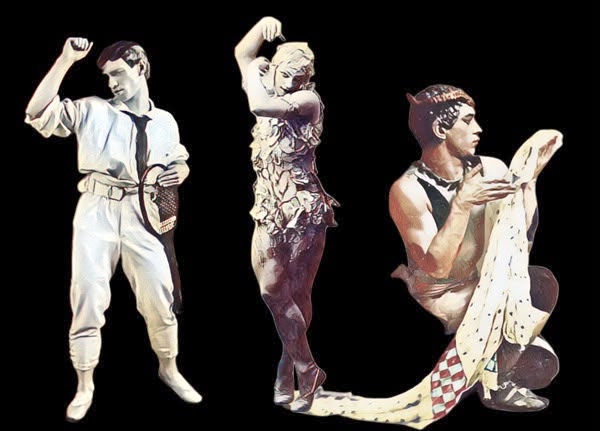
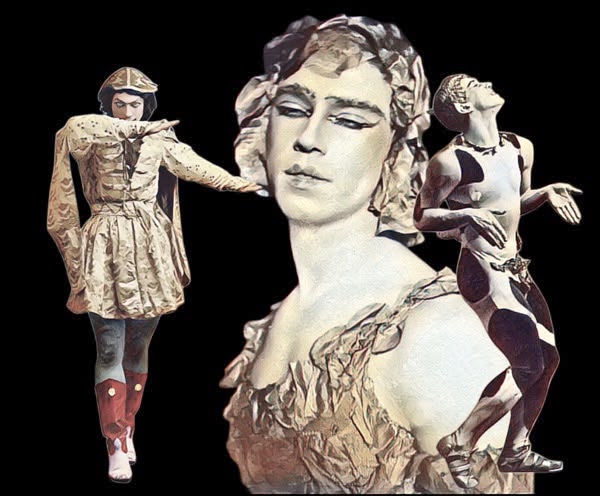
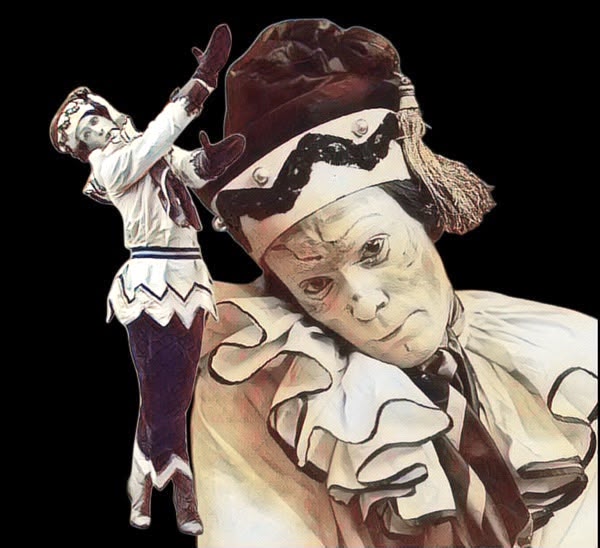
His technique seemed impossible. Accounts spoke of leaps so high they created the illusion that he paused in midair before coming down. But his singularity did not depend on virtuosity alone. Nijinsky transformed himself completely with each character. He became the tragic, grotesque spirit of Petrushka, the sensual creature of Le Spectre de la Rose, the Golden Slave of Scheherazade, and then the choreographer who would begin dismantling the grammar of classical ballet.
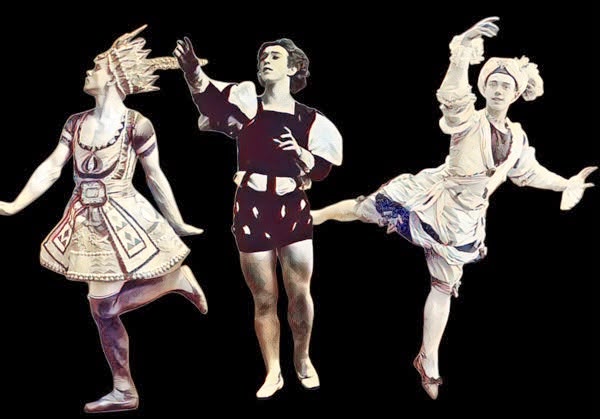
In L’Après-midi d’un faune, in 1912, he replaced elegant lines with flattened bodies, angular arms, and lateral movements inspired by the Egyptian and Greek art he had observed at the Louvre. In Jeux, he broke with academic movement once again. In The Rite of Spring, he made the dancers perform with turned-in feet, bent knees, and the weight of their bodies pulled toward the ground. Everything ballet had spent centuries training dancers to conceal—effort, gravity, instinct, and brutality—became the center of the stage.
Audiences reacted with scandal. After his diagnosis, however, it became tempting to find schizophrenia in those distorted forms. An article published by the British Journal of Psychiatry suggests that the hyperextended wrists, inverted feet, and twisted necks in his choreography may have been influenced by movements Nijinsky witnessed among patients at the hospital where his brother Stanislav lived. It is possible. But influence is not a symptom. An artist can transform an illness he observes into a language without manifesting the same illness himself.
Reducing Faune or The Rite of Spring to warnings of psychosis would, in fact, strip Nijinsky of precisely what was most impressive about him: his artistic consciousness. The gestures were rigorously constructed, difficult to teach, and deeply connected to the modernism simultaneously transforming painting, music, literature, and dance. The strangeness was not disorganization. It was design.
What Is Schizophrenia?
Schizophrenia is not a “split personality,” although the origin of the word continues to encourage that misunderstanding. It is a serious mental disorder that can affect a person’s perception of reality, organization of thought, language, emotions, motivation, behavior, and ability to sustain relationships and perform ordinary daily activities.
Its symptoms are generally divided into three broad groups. So-called psychotic symptoms include delusions, hallucinations, and disorganized thinking or speech. Negative symptoms are not “bad” behaviors but losses or reductions: diminished emotional expression, difficulty experiencing pleasure, lack of motivation, limited speech, and social withdrawal. There are also cognitive changes that can compromise attention, memory, and decision-making.
Not everyone experiences the same symptoms, with the same intensity or for the same amount of time. Nor is there a blood test, brain scan, or single examination capable of confirming schizophrenia. The diagnosis remains clinical: it depends on observing the symptoms, their duration, the impairment they cause, and ruling out other medical, neurological, affective, or substance-related conditions.
The illness usually emerges between late adolescence and early adulthood, although more gradual changes in mood, thought, and social functioning may appear before the first psychotic episode. We also now understand that its course is not inevitably degenerative. Effective treatments exist and, according to the World Health Organization, at least one in three people with schizophrenia can achieve full recovery. That reality is very different from the nearly definitive sentence Nijinsky received in 1919.
How the Word Was Born
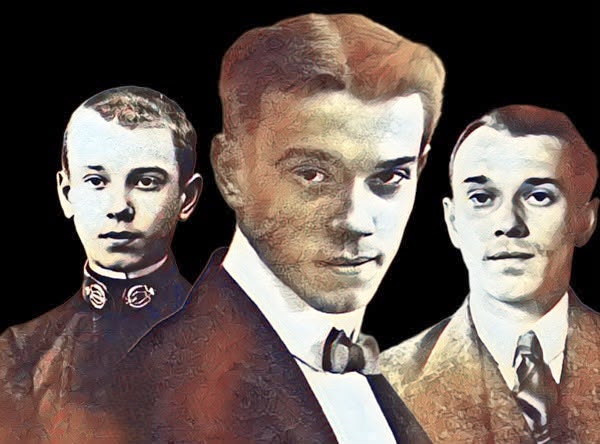
Before schizophrenia, there was dementia praecox, or premature dementia. In the late 19th century, German psychiatrist Emil Kraepelin brought together under this classification conditions that had previously been treated separately, including paranoia, catatonia, and hebephrenia. The expression contained both a hypothesis and a prognosis: it was believed to be an illness beginning at a young age and destined to lead to progressive mental deterioration.
Eugen Bleuler disagreed that every patient would inevitably become demented. In 1908, he publicly introduced the word “schizophrenia,” which he would develop in his 1911 book Dementia Praecox or the Group of Schizophrenias. The plural mattered. Bleuler did not necessarily believe in a single disease with one cause and one course, but in a group of conditions.
The term was created from Greek words related to “splitting” and “mind.” Bleuler was referring to a split among different psychic functions—thought, emotion, association, and the relationship with reality—not to the emergence of two personalities within the same person. That mistaken popular interpretation would survive for more than a century.
Bleuler organized the fundamental symptoms into four groups: disturbances of association, affectivity, ambivalence, and autism. Bleuler’s “autism” meant a withdrawal from external reality into an inner world and did not correspond to autism spectrum disorder as we understand it today. Hallucinations and delusions were considered important but accessory symptoms because they did not appear in the same way in every patient.
The name was beginning to circulate among doctors when the most famous patient of Bleuler’s career entered his office.
Nijinsky’s Breaking Point
There is no single moment when Nijinsky “left reality” and never returned. The process was gradual and uneven.
After marrying Romola de Pulszky in 1913, he was dismissed by Diaghilev, his former lover, impresario, and the principal organizer of his career. For the first time, Nijinsky had to manage contracts, money, and a company. He was not prepared for it. An attempt to work as an impresario in London ended in financial disaster, and in 1914 he received the then-imprecise diagnosis of “neurasthenia with a depressive state.”
The First World War made everything worse. As a Russian citizen in Austro-Hungarian territory, he spent approximately 18 months under house arrest. His return to work depended on the intervention of authorities, diplomats, and even members of European royalty—evidence of the scale of his celebrity. He temporarily rejoined the Ballets Russes, but his relationships with Diaghilev and Romola became increasingly tense.
During a South American tour in 1917, colleagues noticed more serious changes. Nijinsky would pause for long periods before answering questions, look at people suspiciously, and insist that he was going to be murdered. He imagined physically impossible dances and appeared convinced that unidentified forces were pursuing him. At the end of that year, he moved with his family to St. Moritz, Switzerland. He was isolated, unable to dance, deeply affected by the war, and increasingly withdrawn from the outside world.
On January 19, 1919, he gave his final public performance at a hotel in St. Moritz. He sat in front of the audience and remained motionless, staring at the guests for what seemed like an interminable amount of time. Then he laid two strips of velvet on the floor, one white and one black, forming a cross, and announced that he would dance “the war which you did not prevent.”
It could be read as a radical modernist performance, a political accusation directed at a European elite that had watched the continent destroy itself without preventing it. But it also took place at a time when Nijinsky believed himself united with God and entrusted with delivering a message capable of saving humanity.
That is precisely where art and psychosis become impossible to separate with any certainty. The dance does not cease to be art because its creator was becoming ill. Nor must we deny the illness to recognize the artistic intelligence of the accusation.
On that same January 19, Nijinsky began writing his diaries.
The Man Who Wanted to Prove He Was Not Mad
For six weeks, until March 4, 1919, Nijinsky wrote compulsively. He discussed war, poverty, money, vegetarianism, sexuality, Diaghilev, Romola, God, and the absence of feeling that, in his view, was destroying the world. He believed the diary would be published and distributed free of charge. He wanted the manuscript reproduced in facsimile because he considered his own handwriting alive and capable of transmitting what he felt directly to readers.
At the same time, the text recorded sound associations, repetitions, contradictions, persecutory thoughts, and delusions of influence and grandeur. Nijinsky said that God guided his hand, spoke through him, and interfered even with the smallest movements of his body. In certain passages, he declared himself to be a worker, an aristocrat, an emperor, God, life, and eternity. He also believed that he might be murdered or imprisoned for the truths he was revealing.
The diary appears to have begun as an attempt to demonstrate exactly the opposite of what everyone around him suspected. Nijinsky wanted to prove that he had not gone mad but had reached a higher form of understanding based on feeling. The document intended to save him from psychiatry was ultimately used by doctors as evidence of his illness.
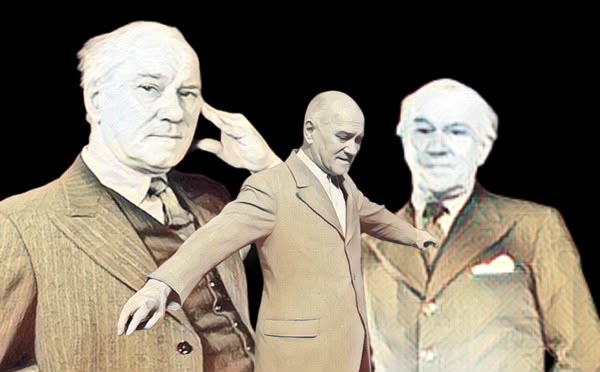
Hans Curt Frenkel, the physician attending to Nijinsky in St. Moritz, had studied with Eugen Bleuler and asked his former professor to examine him. On March 6, 1919, at Burghölzli Hospital in Zurich, Bleuler encountered a man whose intelligence had once been exceptional but whom he now described as “a confused schizophrenic with mild manic excitement.”
Nijinsky was not one of the first people diagnosed with schizophrenia. The concept had already circulated for more than a decade. But he was one of the first great celebrities to receive the new diagnosis publicly—and from the very doctor who had created the term.
Treated Throughout Almost the Entire Early History of Psychiatry
Bleuler did not initially recommend hospitalization. He changed his mind two days later, following a crisis. Nijinsky was taken by the police to Burghölzli and, shortly afterward, transferred to Bellevue Sanatorium in Kreuzlingen, directed by Ludwig Binswanger.
By the standards of the period, Bellevue offered a relatively humane approach. It functioned as a therapeutic community, employed psychodynamic methods, and sought education and reintegration while avoiding physical and chemical restraints. That did not make the experience any less traumatic. During his more lucid moments, Nijinsky asked why he was locked up, why the windows remained closed, and why he was never allowed to be alone.
During his first months there, he experienced persecutory ideas, hallucinations, mutism, abrupt mood changes, violent episodes, and periods of catatonia. At times he remained motionless and unreachable; at others he became agitated. There were moments when he said that his arms and legs belonged to someone else. He was also diagnosed with psychogenic catatonia.

He would spend the next 15 years moving in and out of clinics and hospitals. He was taken to Steinhof in Vienna, directed by Julius Wagner-Jauregg, who would later win the Nobel Prize for treating paralysis caused by syphilis by inducing malaria. There is no evidence that Nijinsky underwent that procedure, and the records from his stay were destroyed.
In Paris, there are indications that doctors deliberately induced an abscess with turpentine in an attempt to produce a fever, based on the belief that high temperatures might relieve psychosis. Alfred Adler examined him in 1934, agreed with the diagnosis, and wrote a foreword for the diaries. Romola rejected the text because she disliked his interpretation based on the inferiority complex, and it would only be recovered decades later.
In 1938, Nijinsky underwent the most brutal treatment. Romola sought out Manfred Sakel, creator of insulin coma therapy. High doses of insulin induced extreme hypoglycemia, seizures, and loss of consciousness. Nijinsky received 224 injections. His catatonia temporarily improved, but he soon returned to mutism, motor inhibition, disorganization, and violent episodes.
Nijinsky’s medical history crossed almost the entire early history of schizophrenia treatment: institutionalization, psychodynamic psychiatry, the therapeutic community, induced fever, and insulin coma. The first antipsychotic drugs, beginning with chlorpromazine in the early 1950s, arrived too late for him.
Today, treatment combines antipsychotic medication, psychological interventions, psychoeducation, family support, and psychosocial rehabilitation. The goal is not merely to eliminate delusions or hallucinations but to enable autonomy, relationships, education, work, and participation in decisions about one’s own life. The distance between that model and the succession of institutions imposed upon Nijinsky shows how far psychiatry has progressed—and how much his story belongs to a period when diagnosing was far easier than treating.
Did He Never Return to Reality?
The most honest answer is: not permanently, but neither was he absent for 30 uninterrupted years.
After 1919, Nijinsky never regained enough autonomy to return to his career, create regularly, or direct his own life. He spent long periods in mutism, withdrawal, catatonia, and dependence on relatives, nurses, and institutions. His speech frequently became disorganized, and he required assistance even with basic daily activities.
But there were fluctuations. At certain moments, he spoke coherently, understood what was happening around him, and reacted when someone invaded his personal space. The most moving episode occurred in 1945, when Soviet soldiers arrived in the region of Hungary where he was living. Some recognized him. Surrounded by men who spoke his language and knew his past, Nijinsky temporarily became sociable, spoke, and even spun and danced with them. The improvement did not last, but it prevented his later life from being reduced to 30 years of emptiness.
Nijinsky died in London on April 8, 1950, at the age of 60, from uremia associated with chronic nephritis. He did not die of schizophrenia. Nor had he ceased to exist in 1919, even though his career had ended and the narrative built around him frequently treats the diagnosis as an early death.
The Fame That Publicized—and Distorted—the Illness
Nijinsky’s diagnosis did not create or scientifically legitimize schizophrenia. When Bleuler examined him, the term was already being discussed within European psychiatry and beginning to replace the older dementia praecox. His fame, however, gave the word a face and a narrative.
The man who appeared to control his body perfectly became the symbol of a mind described as fragmented. The story was irresistible: the man who flew had fallen; the artist capable of embodying any character could no longer recognize himself; the “God of Dance” now claimed to be God. The press, doctors, biographers, and Romola herself helped organize those coincidences into a tragedy almost too perfect.
The diaries reinforced this interpretation by offering something exceedingly rare: the voice of someone entering psychosis. But the 1936 edition also taught the public to look at Nijinsky in a particular way. His illness was used to reinterpret his art; his art was then summoned as evidence that the illness had always been present.
Perhaps that is the question that remains relevant 90 years later. We still struggle to accept that a person can be both an artist and a patient without one identity consuming the other. We search for schizophrenia in the turned-in feet of The Rite of Spring, the erotic gestures of Faune, and the young dancer’s social difficulties because knowing the ending gives us the illusion that we could have predicted everything.
But the illness does not explain Nijinsky’s genius, just as genius does not explain his illness. His choreography was revolutionary because it contained thought, research, rigor, and intention. His psychosis became recognizable when delusions, hallucinations, paranoia, disorganization, and catatonia appeared—not when he decided to challenge the rules of ballet.
In 1936, Nijinsky wanted to prove, through his own writing, that he understood the world better than everyone else. Romola transformed that writing into the story of his madness. Ninety years later, perhaps we can finally return something to him that both psychiatry and legend took away: the right not to be explained entirely by his diagnosis.
Descubra mais sobre
Assine para receber nossas notícias mais recentes por e-mail.


Wow what a delightful read, I had no idea about the whole picture!
CurtirCurtido por 1 pessoa